
Every day, life unfolds within walls, across streets, and under open skies, yet most move through these spaces as if they were only background. In truth, architecture shapes more than the scenery; it shapes time itself. The height of a window can decide when the day begins, the layout of a route can dictate the pace of thought, the arrangement of a table can alter the course of a conversation, and the feel of a hallway can smooth the shift from one moment to the next.
This article traces four of those everyday stages where design quietly directs the rhythm of living: spaces where the day begins and ends and the tone is set; purpose-driven spaces, where focus and flow are sustained; social zones, where architecture acts as a host; and the subtle but powerful transitions, the overlooked passages that guide the mind between them. Divided this way, the narrative follows the arc of a day from waking to working, connecting, and moving onward revealing how space, in all its forms, is the silent author of routine.
Where the Day Begins and Ends

Most of our mornings start in a bedroom that knows us better than we think. The first sensation is light, a soft wash of gold through the curtains. Even before the body is fully awake, that light whispers, It’s time. A faint breeze slips through the open window, carrying the scent of last night’s rain. Somewhere, the ceiling fan hums in a steady rhythm, as if keeping time for the start of the day.
These subtle design choices are more powerful than often acknowledged. Properly placed windows that deliver that early soft light regulate circadian rhythms, aligning internal clocks more naturally than alarms can. Moreover, natural light positively affects mood by modulating neurotransmitters like serotonin and reinforcing healthy sleep patterns. Cross-ventilation ensures fresh air, which supports alertness and well-being, while an uncluttered layout allows smooth movement and mental calm. Here, storytelling in architecture becomes clear: the home is not merely where the day begins, but where its emotional tone is set.
The Stage for Focus: Places of Purpose
We, as humans, spend a significant part of our lives in spaces that define our purpose and shape how we work. Some of these spaces become so deeply intertwined with daily rhythms that they begin to form part of our identity. For a chef, it might be a kitchen alive with the rhythm of chopping boards and the slow simmer of pots; for a pilot, the cockpit’s familiar dials and switches, each one part of the morning ritual; for an artist, the paint-stained studio where daylight falls exactly where it’s needed. These places are not merely backdrops to work, they are living instruments, finely tuned to support precision, creativity, and flow.
Their design is never accidental. Counters set at the right height reduce fatigue after hours of repetition. Light is directed to enhance clarity and focus. Sound is either softened to encourage concentration or allowed to echo for vibrancy and energy. The arrangement of tools, the balance between open space and enclosure, even the texture underfoot, each element contributes to readiness, confidence, and the assurance of belonging. With the rise of remote work, homes are increasingly shaped to include dedicated work zones that protect personal life while sustaining productivity. Architecture’s influence on daily routines here is unmistakable, merging the comfort of the familiar with the focus of the professional.
Architecture as a Host: Social Spaces
For many, certain spaces become stitched into the fabric of daily life, the café on the corner before work, the courtyard passed through on the way home, the rooftop garden where afternoons slow down. People return not just for what is served, but for how they are held within these places. The chairs seem to know how far to lean back for comfort without stealing alertness. Tables are close enough to catch a friend’s laughter, yet far enough to keep a secret safe.
In summer, filtered light falls through leaves in a dappled rhythm, casting moving shadows that make time feel slower. In winter, the sun finds its way through tall panes of glass, pooling in corners where conversations grow warm. The clink of cups, the softened murmur of voices, and the faint hum of background music form a soundscape tuned for lingering.
Every element is a cue: the grain of the wooden table that invites a hand to rest upon it, the proportion of seat to backrest that eases the spine without making departure too tempting, the subtle scent of brewing coffee that blends with fresh air from an open door. Here, architecture is not simply a container for interaction, it is the unseen host, setting the mood, deciding the tempo, ensuring each guest feels both part of the room and entirely themselves. This is architecture’s storytelling at its most social, influencing routines through shared experience.
The Spaces Between: Transitions
Some parts of the day exist not in the destination, but in the movement toward it. Corridors, lobbies, staircases, and even the streets we take these are often overlooked, yet they carry emotional weight. They are the buffers between one part of life and the next, quiet moments that prepare the mind for what comes after.
Out of three possible routes to a building, the longest can become the chosen one, not out of habit, but intention. A smooth, well-paved walkway invites steady steps. Natural, non-cropped trees line the divider, offering shade and a quiet barrier from traffic. In spring, branches droop low enough to brush the top of the head, a gentle, living interaction with nature. The one-way road is regulated by a signal, bringing order so that crossing feels calm, intuitive, and unhurried. Urban and transportation design work in tandem here: pavement textures slow footsteps, benches are oriented to invite pause, and awnings protect from sudden rain. Landscape architects shape these transitions, ensuring green buffers filter noise, guide movement, and create moments of sensory reprieve.
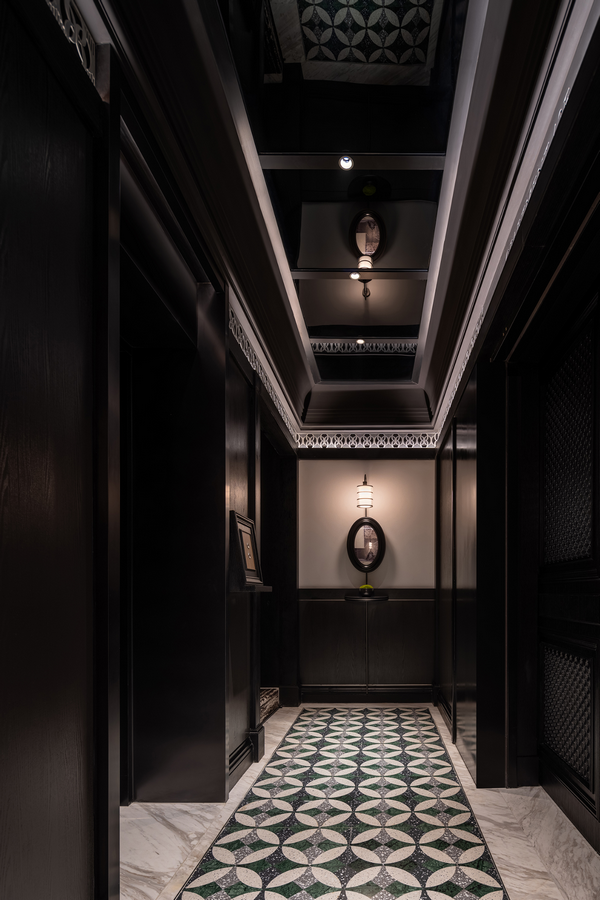
Indoors, transitions work much the same way. In some apartment buildings, a corridor shifts in temperature as it nears the stairwell, then grows warmer toward the lift lobby. Freshly painted walls soften echoes, while a faint scent of wood polish mingles with floral notes drifting from a neighbor’s doorway.
These spaces whether outside under trees or inside between walls use gradients of light, sound, or texture to ease the shift from one state of mind to another. The effect is a day that feels more fluid, less interrupted, as each passage quietly shapes readiness for what lies ahead. Architecture’s influence on daily routines is felt most deeply in these in-between spaces, where design teaches us how to move gently from one moment into the next.
Final Notes
A path lined with drooping spring branches, a corridor where echoes fade into warmth, a café table worn smooth by familiar hands: these are not coincidences, but chapters in the quiet story spaces tell. Good design rarely announces itself; it works in whispers, in the angle of morning light that sets a pace, in the hush of an entryway that slows a heartbeat, in the gentle framing of a view that shifts thought. South-facing windows quietly harness seasonal light, drawing in winter sun while shielding against summer heat. Covered walkways offer shelter from rain without blocking the breeze. A slight curve in a hallway can instinctively guide movement, while a widened landing invites pause. Even the choice of materials; wood that softens footsteps, stone that cools the skin, plays its role in how we move, rest, and interact.
From the first step out of bed to the last switch of a light, architecture accompanies each movement, shaping not only how the day unfolds but how it feels. It carries us from solitude into conversation, from focus into rest, from the outside world into the shelter of our own. The position of architecture in our lives is “a form of daily storytelling we live inside.”
Citations:
- Pallasmaa, J. (2005) The Eyes of the Skin: Architecture and the Senses. Chichester: Wiley.
- Zumthor, P. (2006) Atmospheres: Architectural Environments, Surrounding Objects. Basel: Birkhäuser.
- Norberg-Schulz, C. (1980) Genius Loci: Towards a Phenomenology of Architecture. New York: Rizzoli.
- Holl, S. (1994) ‘Questions of perception: Phenomenology of architecture’, Japan Architect, 10, pp. 28–35.
- CABE (2006) Design and the quality of life. Commission for Architecture and the Built Environment. Available at: https://www.designcouncil.org.uk (Accessed: 16 August 2025).