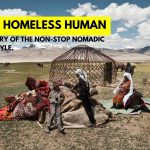
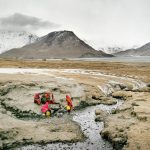
At some point in human history, there was a time when there was no settlement to develop an extended stay; humans wandered from here and there, trying to find the resources they needed, chasing animals for food and accommodating caves for shelter. Eventually, human intelligence evolved in a way that allowed people to give up the non-stop nomadic lifestyle and use natural materials to build places to settle down. That breakthrough brought us to where we are today. But what would have happened if human intelligence hadn’t considered architecture as part of evolution?

Fueling the Non-Stop Nomadic Lifestyle
Trying to portray life without architecture may sound nearly impossible. Since humans left the caves and began experimenting with natural resources, new forms of human shelter appeared. Cities were developed to allocate an organized structure of population and to maintain order. Architecture evolution has led to the creation of the most amazing artificial structures ever seen, making the non-stop nomadic lifestyle an obsolete way of living. When it comes to thinking about what would have happened if the non-stop nomadic lifestyle continued, maybe one of the first things that come to mind is the untouched outdoors and the preservation of animal life, no deforestation, no water, and air pollution. All in place harmoniously sufficing humans’ needs to all extents.
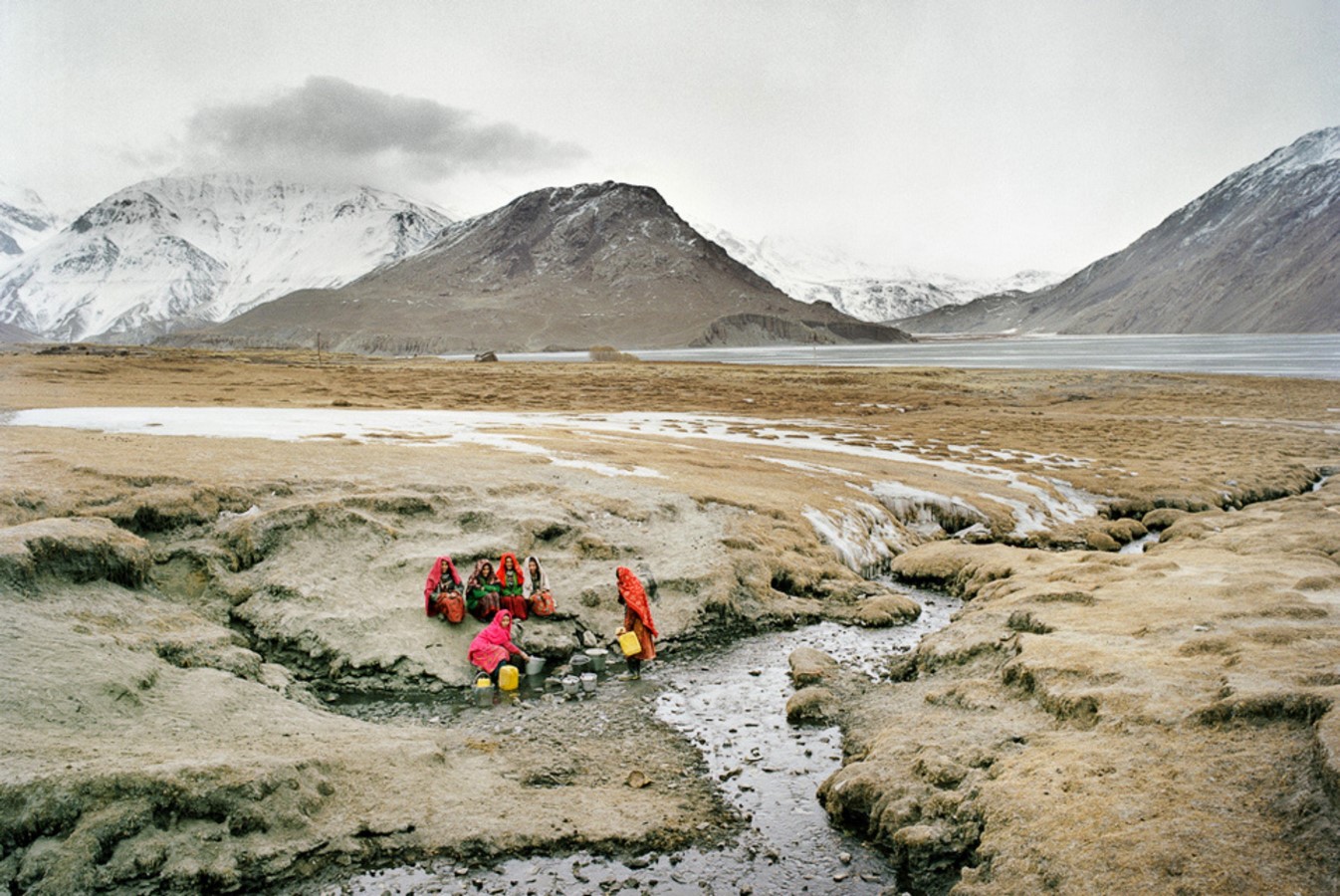
Architecture has played a critical role in human life, yet, it has also been the culprit for harming the natural conditions of the World and irreversible damage. With no presence of architecture, the human lifestyle would have had to find a way to use every natural resource without harming the surroundings, meaning that there would have been no permanent structures or buildings. Maybe the word “building” hadn’t even existed, as all the settlements would have been made up of untransformed natural materials. The latter would have fueled the non-stop nomadic lifestyle endlessly, with an unforeseeable future and unpredictable human conditions.
The Paradoxical Sustainability
By not transforming natural resources into artificial materials, the World would have kept its ecosystems untouched. The only critical changes would have been the ones made by the Earth itself. But without humans devastating every site to make a city out of that, humans would have been encouraged to live within the unaltered outdoors and respect every form of life. Paradoxically, that could have turned all nomadic people into sustainability advocates, at least to an extent where human shelter is provided using untransformed natural resources.

Of course, other human needs like food or clothes would have had to be treated as human shelter to achieve holistic sustainability. The term paradoxical is used here as a hypothetical way to envision a human lifestyle without altering the Earth’s conditions. Even with a non-stop nomadic lifestyle, the need for exploring new ways of doing things would have forced the human brain to evolve, leading to new technological advancements and scientific discoveries. To maintain a high level of environmental consciousness, humans would have had to constrain every action within the paradoxical sustainability framework explored before.
The World with no Boundaries
Architecture has contributed to setting the territory delimitation from region to region, defining a physical boundary between several groups of people. Throughout history, enormous stone walls have been built to protect entire populations against invaders. Imagining a world where humans don’t need that level of architectural sophistication, there would have been no boundaries between territories, and everyone would have hypothetically been welcome in every single place on Earth. Without architecture, the non-stop nomadic lifestyle would have created a world with no races and maybe no religion or political biases. It’s hard to imagine how a life without the latter would have worked, as humans have evolved thanks to the common agreements derived from settling down at some point in history.

On an Earth with unstoppable and unpredictable transformations, where no architecture had been present to protect humans from it, the nomadic lifestyle would have been forced to travel more frequently than required. Volcano explosions, ice ages, predators, and more factors, would have made people’s life even more overwhelming. Imagining a world without architecture, without shelter from altered materials, creates a scenario of more catastrophes than benefits. While the World would have remained with its ecosystems untouched, the need for being protected would have possibly made humans extinct.
The Value of Architecture
The non-stop nomadic human lifestyle without architecture might have created the right conditions for the Earth to evolve without the damage the current and real lifestyle is causing. However, the World without architecture might have potentially been a chaotic place with no agreements and rules, no boundaries, and people claiming themselves as the owners of every piece of land. Architecture’s most valuable contribution to the human lifestyle is shelter. Then the exploration of other ways to accommodate people in more complex structures made cities a reality. After thousands of years of technological and scientific evolution, humans have been able to refine the building methods to bring in new concepts of architecture, enabling living conditions in extreme weather places like deserts and polar regions, creating the most defying structures ever and adding more beauty to the natural World.