How long can Earth sustain its natural order? Will the rising growth of the capitalist system be the downfall of humanity?
A radical shift in prioritising nature and its well-being is imperative. A planetary focus pursuing environmental values and socio-economics must coexist. Hitherto, the core basis of human civilisation was its never-ending appetite for growth. But do all the sectors of the economy need to grow constantly?
New Typology of Architecture
At the brink of change, It is unlikely to solve the planetary crisis with today’s mindset. Anthropocentric architecture is no longer feasible, as architecture should not be humancentric but also designed for other inhabitants of Earth. A new typology of design, an ecocentric architecture, could shape the neo-future. Third, Nature, the co-existence of social, economic, and environmental values, is interconnected through architecture. The new typology can help humans integrate into the sophisticated ecosystem developed for billions of years. In this new architecture, nature embodies the new technology, and technology represents how the natural environment works.
Nature’s technology
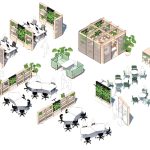
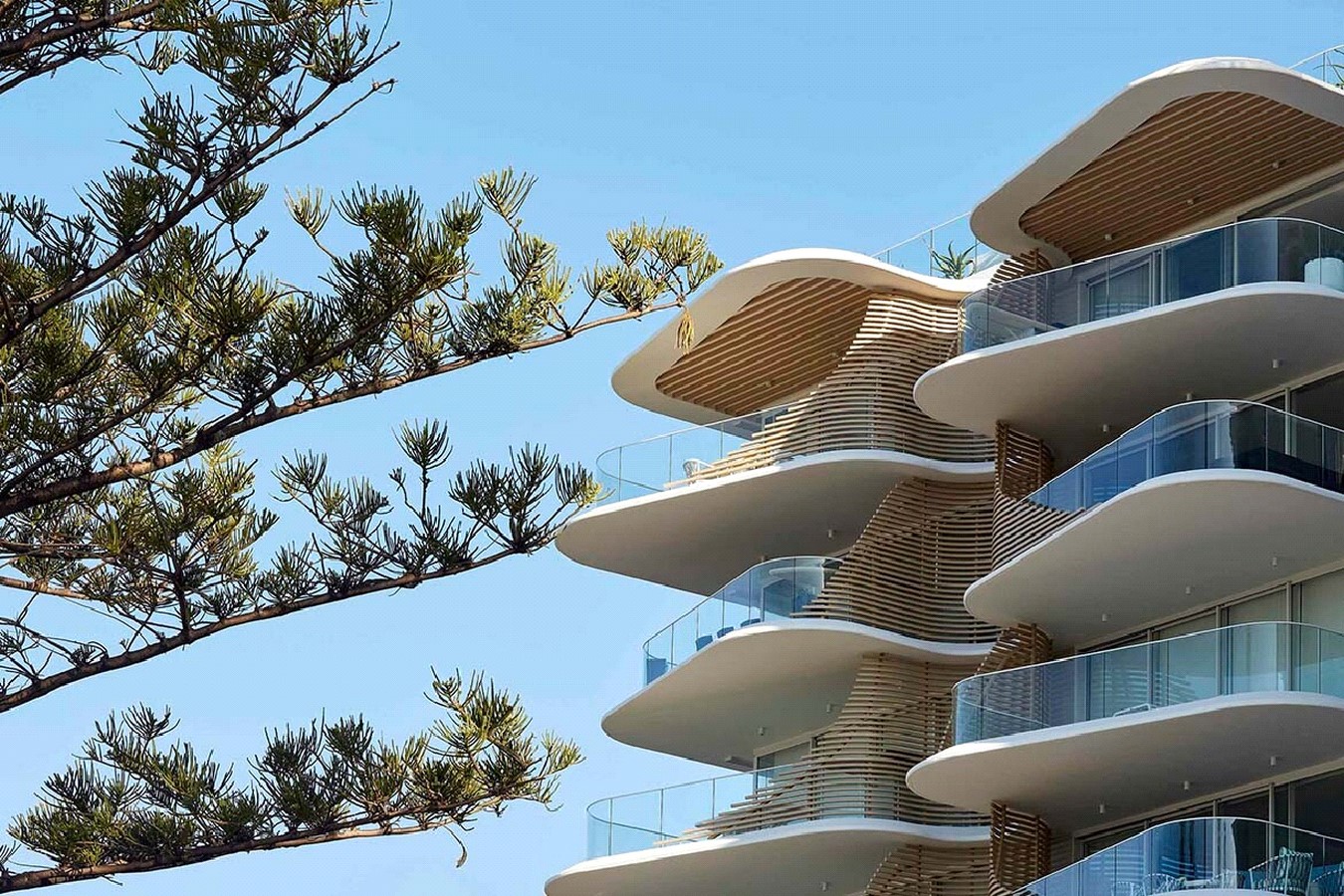
Humans are in-built with the urge to reposition themselves in nature. The built environment has always been tailored around to suit the modern landscape. The result of human intervention has always led to humancentric benefits. However, it is possible to foster a mutualistic relationship among the species found in nature and build a co-existing habitat. Anything that contributes to boosting human health and sustainable well-being within the overall environment is part of biophilia. Biophilic styles have already been introduced as a prelude at the heart of the design. Incorporating nature not just into the outer landscape but also welcoming nature into the interior landscape aids in transposing humans to their innate nature within the built environment – constantly reminding them of the reality of life and the essentials of staying grounded.
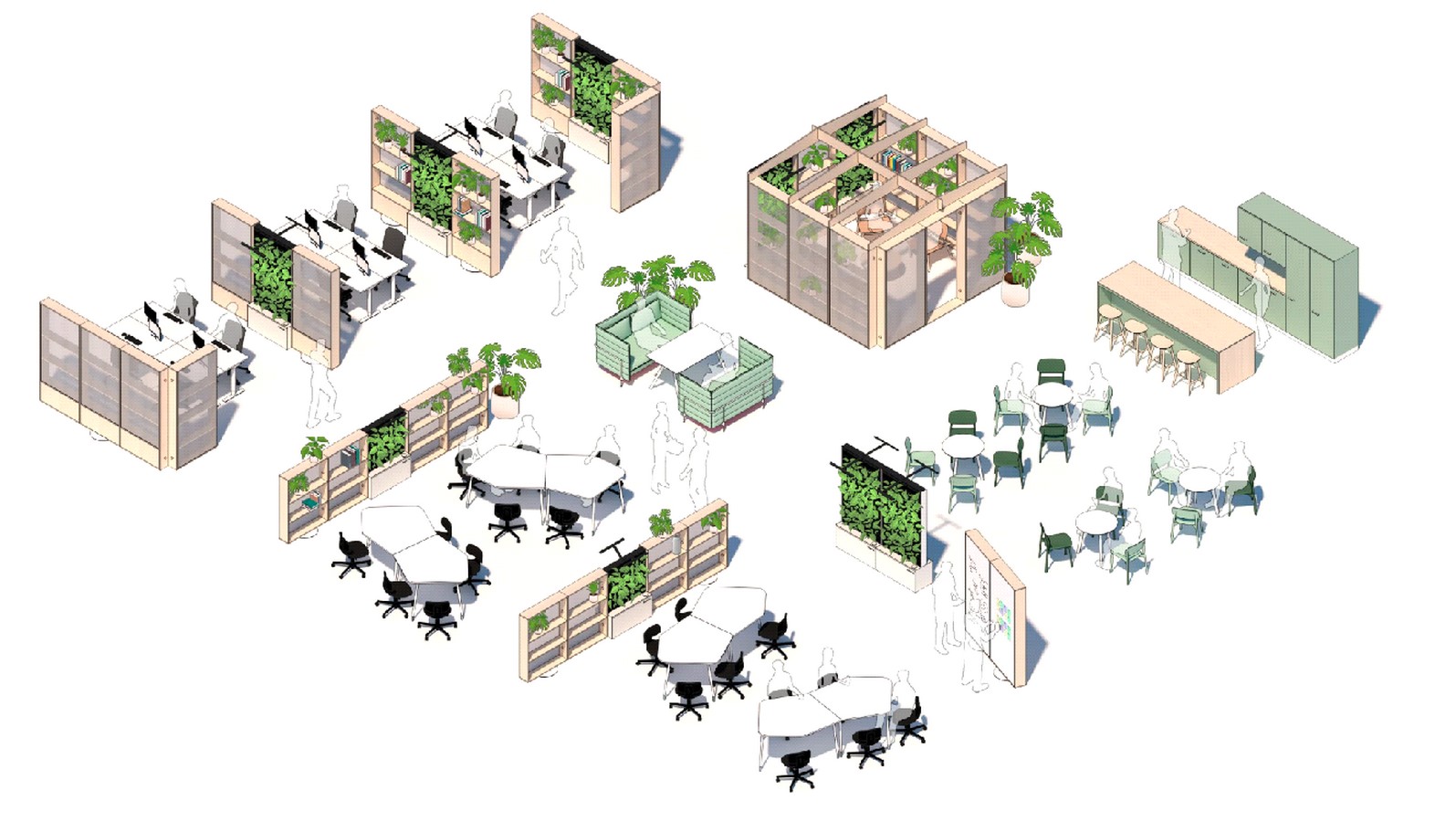
Human beings are social animals, and the spaces where they interact shape their social interactions’ mood. The future of biophilic architecture advances to create a sensory experience that reflects nature visually and through perceiving touch, smell, and hearing – making them appreciate the feel of the wooden bark, the flow of the water, and the scent of petrichor.
Biomimicry, on the other hand, is an aspiration for human innovation. By learning from nature and translating it into emulating designs, nature has continued to inspire the greatest creations over the years. It will continue to do so in the future – As the answers are always hidden in nature if one digs deep enough.
Simulated realities
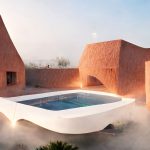
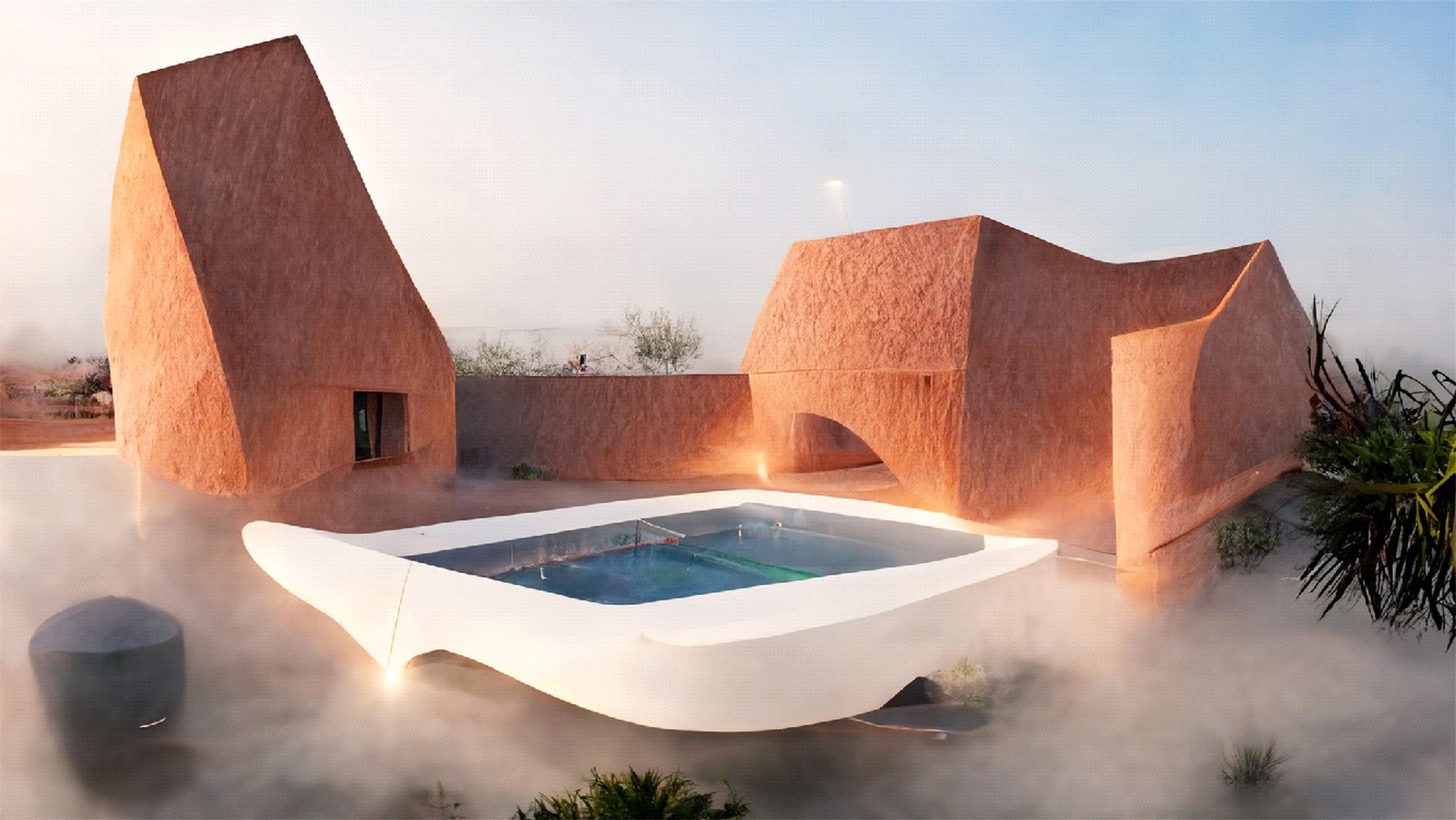
At present generative AI is soaring through the digital realm like anything before in the history of technology and media, the architecture industry hasn’t missed out much. The bandwagon of AI apps has risen to 640 within a few months. Using AI as a tool, the creation of photorealistic images through text prompts has revolutionalised the way architects have started to communicate their ideas. The infamous DALL-E 2 is a perfect example of a text-to-image generator tool. Even Photoshop has introduced a Generative Fill text prompt command, enabling users to fill the desired area with just a text away. The shape and course of the design modality have been completely reshaped with such tools that provide opportunities for nonprofessionals to visualise their ideas – and also make it easy during the conceptual process for professional designers. While the growth of AI is at a level of concern, it creates a platform for innovation and creativity as an instant burst of spectacular images can be presented beyond their wildest imagination.
Like any sci-fi movie, the future might be on the cusp of becoming a dystopian landscape or a “black mirror” reality. Simulated programs are already booming into the architecture and construction practice that help clients and architects perceive the design with real-time projections – speeding up the design process and reducing costs time, and errors. Simulated realities create photorealistic scenes from a 3d model that accurately helps to visualise the project even before being built, displaying the exact feel of the constructed reality. With AR and VR making dire breakthroughs in the industry, it could only be a matter of time before “the future is now”.
With the advancement in technology moving with haste, it is imminent that automation and artificial intelligence will replace most of the cognitive and physical work. People will have an abundance of “leisure” time – the idea of leisure in the future is defined by what society values. Suppose humans immerse themselves back into the ecosystem. In that case, it is likely for the true meaning of “leisure” to uncover – A shift towards the benefit of the built environment by reflecting on the needs of its diverse inhabitants, putting nature at the centre of the equation while pondering technology.
Reference List:
Anooi. Biophilic moodboards: designing interiors for all 5 senses. [online]. (Last updated: May 1, 2020). Available at: https://anooi.com/blog/biophilic-moodboards-designing-interiors-for-all-5-senses [Accessed 2 June 2023]
Elena Canorea/Plain Concepts. Augmented and Virtual reality: the future of architecture. [online]. (Last updated: July 13, 2022)
https://evergine.com/augmented-virtual-reality-architecture/#:~:text=Augmented%20reality%20and%20virtual%20reality,real%20world%20in%20record%20time.
[Accessed 3 June 2023]
Gertie Goddard/BBC Science Focus. Biomimetic design: 10 examples of nature-inspiring technology. [online]. https://www.sciencefocus.com/future-technology/biomimetic-design-10-examples-of-nature-inspiring-technology/ [Accessed 3 June 2023]
Stephen R. Kellert/Metropolis (2015). What Is and Is not Biophilic Design?. [online]. (Last updated: October 26, 2015). Available at: https://metropolismag.com/viewpoints/what-is-and-is-not-biophilic-design/ [Accessed 2 June 2023]
Image Citation
- Naava. (2015) Naava Oasis: Your Perfect Biophilic Companion. [Digital Illustration]
https://www.naava.io/editorial/biophilic-design-bringing-nature-indoors
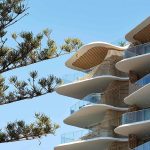
2. Burrows.S (2022) Norfolk Burleigh Heads [Photograph]
https://www.habitusliving.com/architecture/surfside-curves-norfolk-koichi-takada-architects
3. Coorlas.S (2022) Artificial Intelligence Applied to Architecture [AI generated Image]
https://www.floornature.com/design-trends/artificial-intelligence-applied-architecture-research-projec-17202/