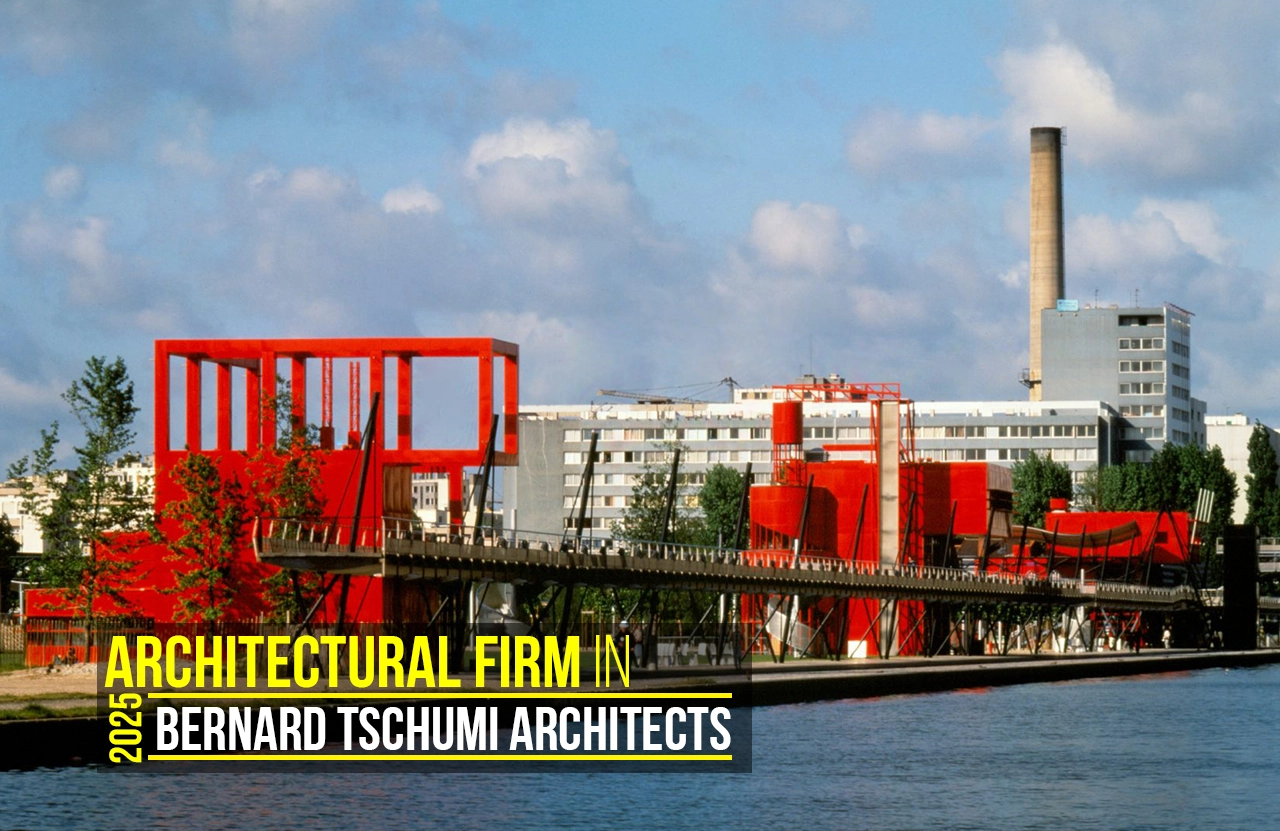
Bernard Tschumi Architects is one of the most influential and experimental practices in the contemporary architecture world. It is globally recognised for its bold built works and radical theoretical foundations (Tschumi, 2024). The practice has consistently challenged the conventional links between the forms, function, and event through their iconic projects from the Parc de la Villette in Paris to the Acropolis Museum in Athens. Barnard Tshumi Architects, an evolving architectural practice in 2025, demonstrates the transformation of the profession and embraces cutting-edge technologies, sustainability methods, and deepens community engagement, along with maintaining its responsibility towards spatial innovation and conceptual rigour.
The year 2025 is a pivotal moment for Bernard Tschumi Architects as the practice addresses climate urgencies and social responsibility amid digital innovations. This change goes beyond technological adoption, representing a thorough reinvention that places Bernard Tschumi Architects at the centre of 21st-century design thinking.
The New Practice Paradigm: Digital Intelligence and Generative Design
Bernard Tschumi Architect’s approach is altered to spatial narratives and formal experimentation since they have strategically assimilated the concept of artificial intelligence into their design systems (GBD Magazine, 2025). As recognised by the firm, artificial intelligence is a potent collaborator that improves conceptual exploration and elevates design solutions, and is not a replacement for architectural creativity. This collaboration agrees with a broader industry trend, where 59% of architectural firms employ AI technologies presently, representing a substantial increase from 41% in 2024 (Architecture.com, 2025).
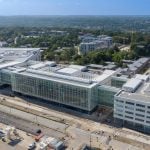
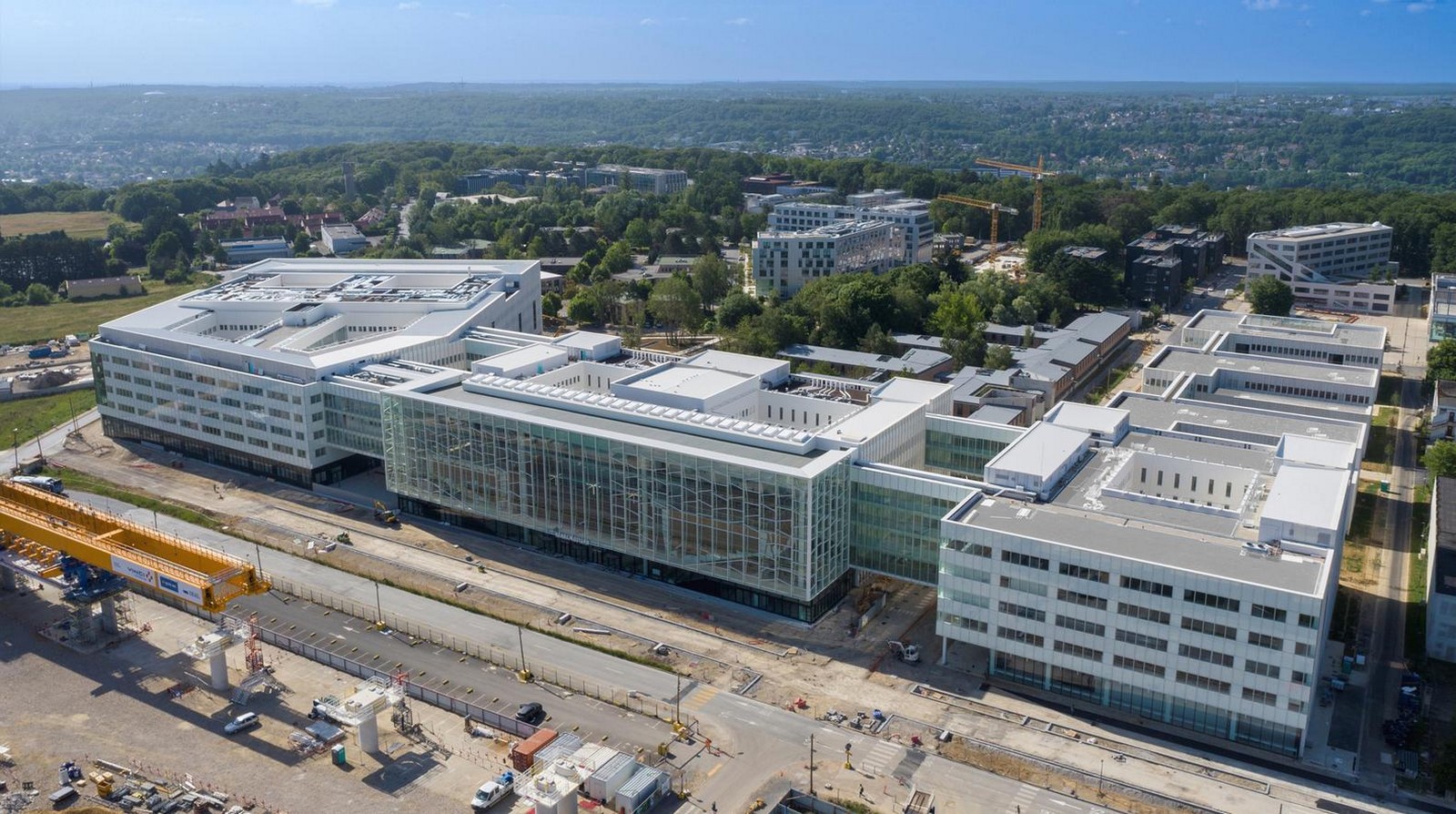
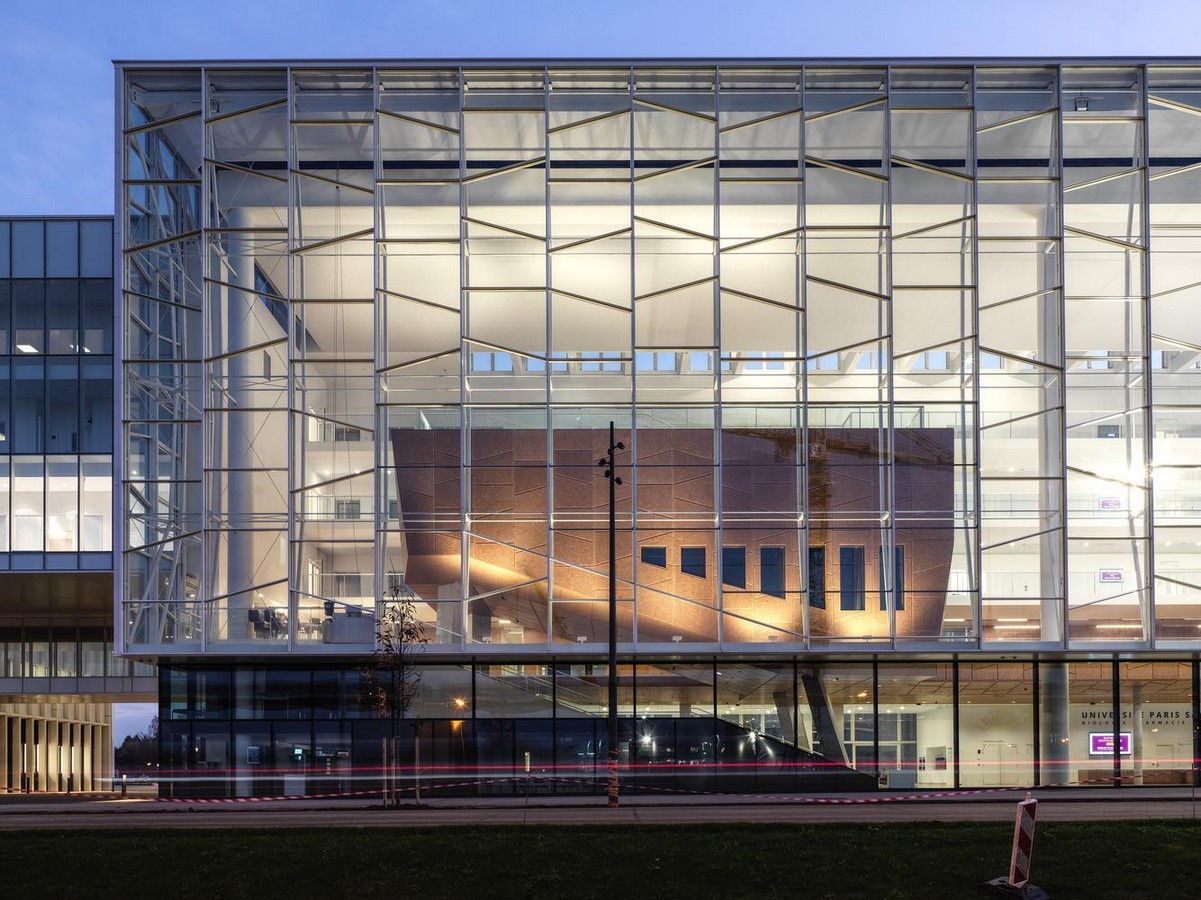
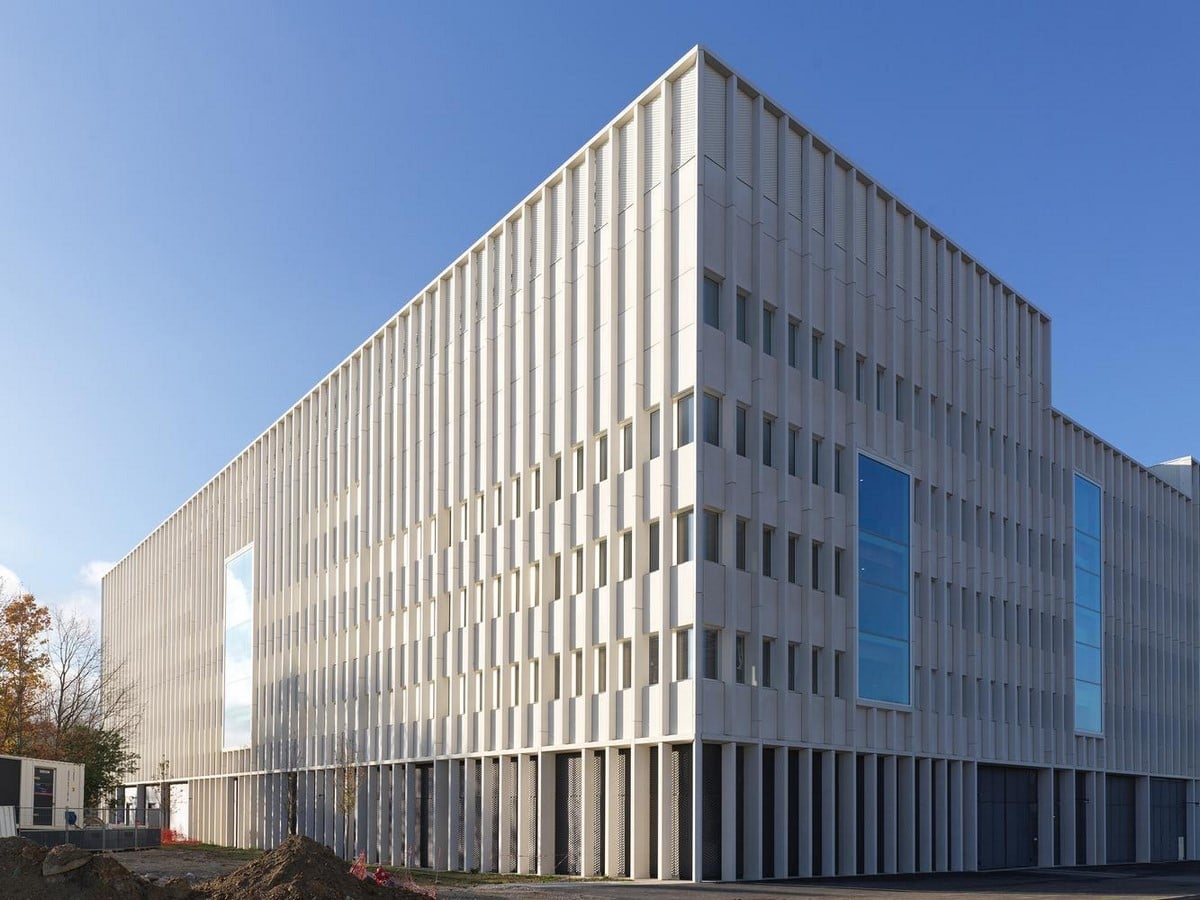
The implementation of AI-driven generative design tools allows an exploration of complex spatial relationships and programmatic designs, which in turn adds to Tschumi’s persistent interest in the intersection of concepts, context, and content (Paul, 2012). These digital tools are used for the making of juxtaposition and to cross-program strategies that have been defined by the firm’s theoretical foundations since the 1970s. Bernard Tschumi Architects are now able to analyse the various datasets on urban environments and factors, the user behaviours, to make design decisions with exceptional precision through the use of machine learning algorithms (Novatr, 2025). The firm’s urban design capabilities are also improved due to the application of artificial intelligence in context planning. In a recently completed project at the Paris-Saclay University, the biology-pharmacy-chemistry centre has a very sophisticated integration of the three distinct programmatic wings because of the AI-assisted analysis for optimised circulation patterns, spatial contiguity, and environmental performance (Designboom, 2023).
Emphasis on Sustainability and Reuse
Circular Construction and Low-Carbon Materials
Bernard Tschumi Architects has showcased an insightful commitment towards sustainable architecture through unique and thoughtful material-related strategies and circular construction principles. This approach of the practice towards sustainability extends beyond technical compliance, incorporating the environmental factors with the conceptual framework of each project. The Paris-Saclay University complex project by Bernard Tschumi is a good example of this holistic approach since the quality of the space and the environmental performance are closely linked (ArchDaily, 2023).
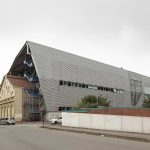
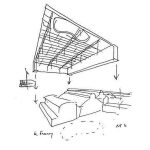
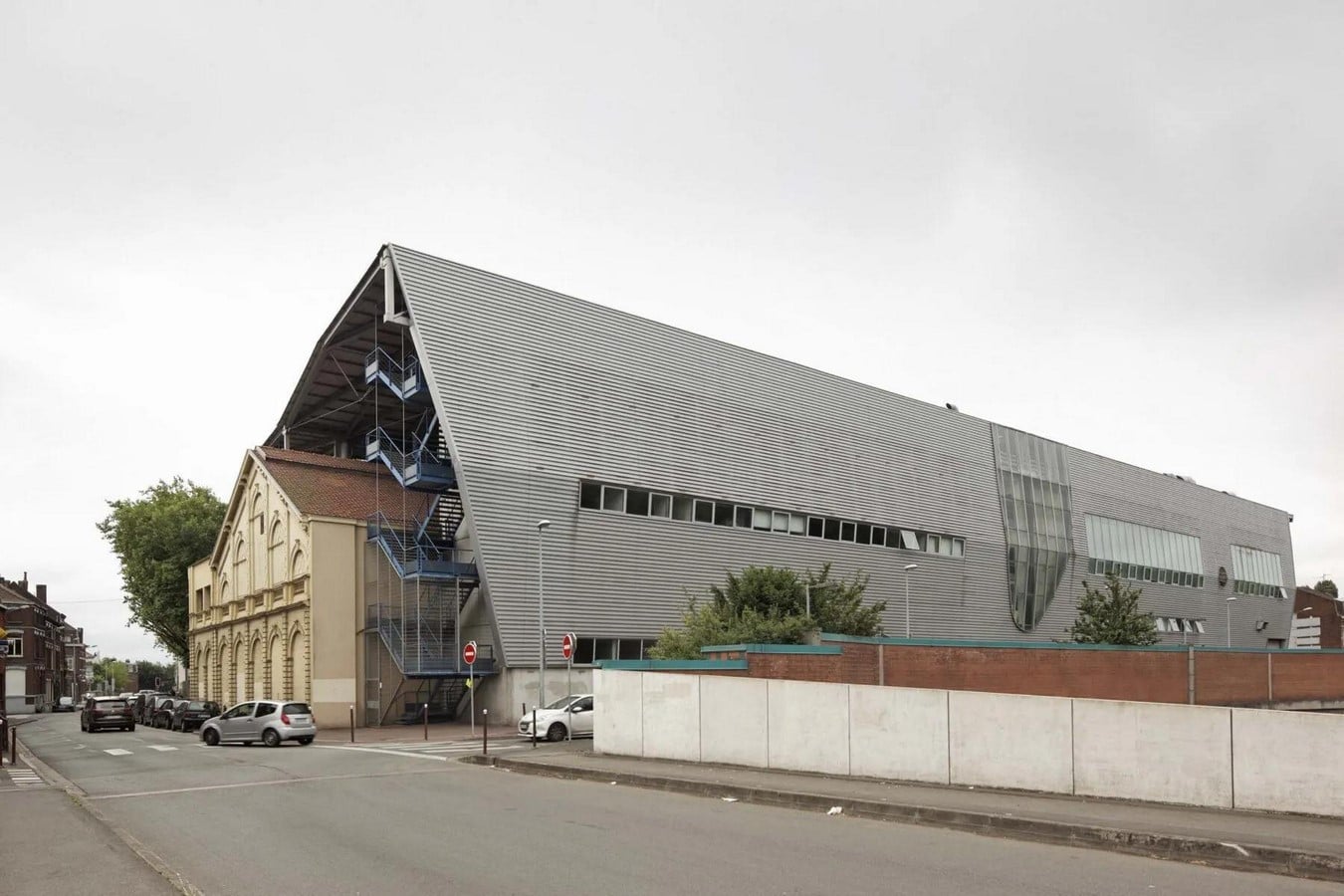
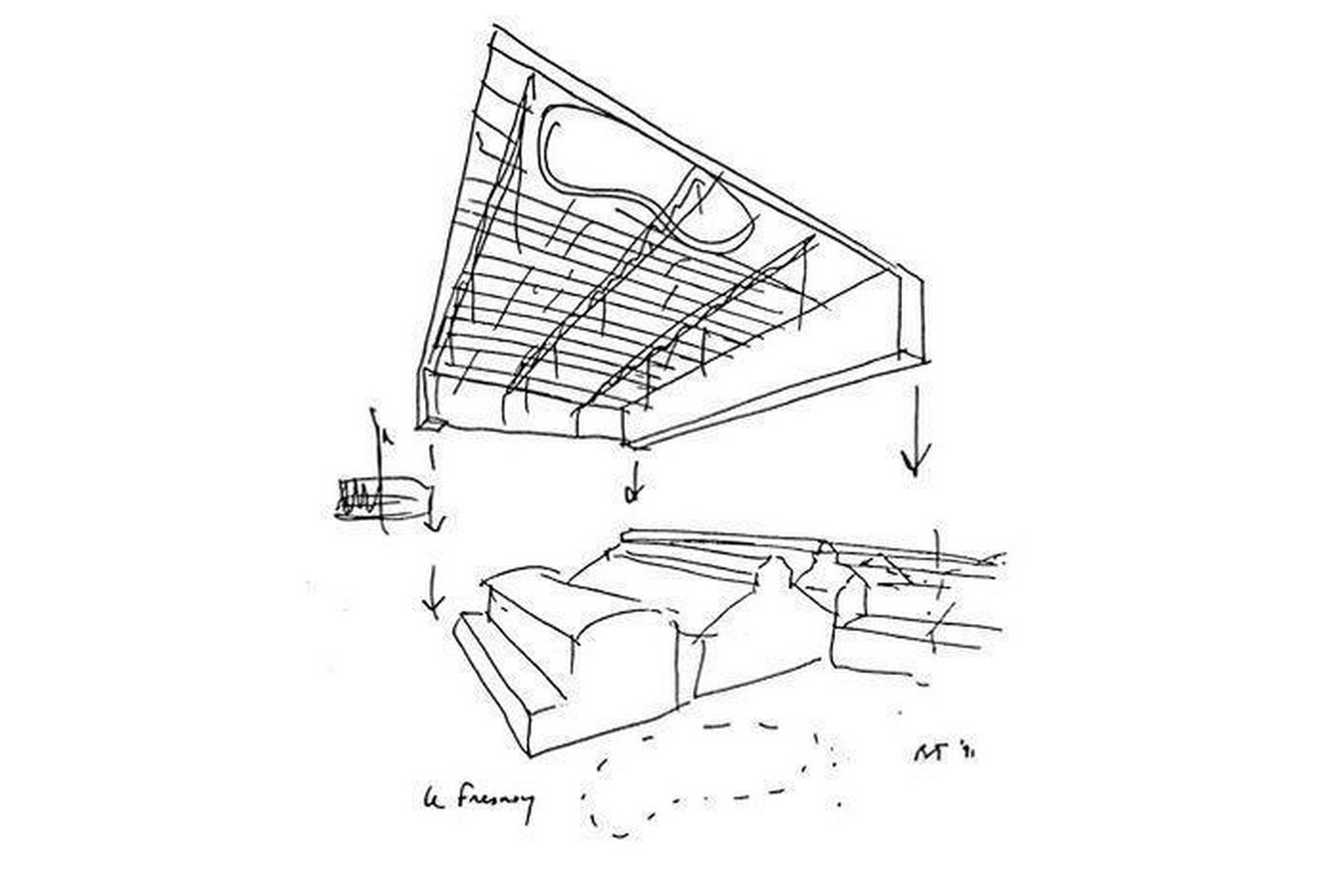
The Le Fresnoy National Studio for Contemporary Arts is a notable example of Bernard Tschumi Architects, for their expertise in adaptive reuse. This project was completed in 1997. The method of covering the 1920s leisure complex with a giant metal canopy creates a novel spatial relationship, along with preserving the existing structure, which made it possible to take an innovative approach towards adaptive reuse (Tschumi Architects, 2025). The Le Fresnoy has been recognised by the Architectural Review recently as a seminal reference in the history of adaptive reuse, which emphasises its relevance to contemporary sustainable practices.
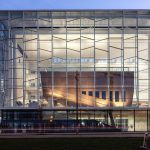
A dedication towards low-carbon building by Bernard Tschumi Architects is explicit through the choice of materials and methods of building a structure. The recently inaugurated Centre for Sciences and Entrepreneurship at Institut Le Rosey uses cutting-edge green technology, but also follows the firm’s signature style (Tschumi Architects, 2025). This building demonstrates how a circular structure can be both sustainable and meet educational needs.
Renewable Technologies and Performance Optimisation
Bernard Tschumi Architects have recognised that renewable energy and performance optimisation are an important part of architectural design and have made it possible too. The most recent projects by the firm include advanced environmental control systems that change based on weather and the number of users of the building. Such technologies are a big part of the overall story of each part rather than just being added to the architectural plans.
As mentioned before, the Biology-Pharmacy-Chemistry Centre is a good example that showcases this integrated approach. The ambience of the building has the best conditions for scientific research and education because of the advanced air recycling systems and natural cooling strategies that are employed to reduce energy consumption (Wallpaper, 2008). The orientation of the building and glazing strategies let in natural light but also make sure to keep out the solar heat. This demonstrates that architectural strategies can be employed to improve the environmental performance.
Deepening Social and Urban Engagement: Community Resilience and Participatory Design
There is an enhanced focus on community engagement and social resilience due to the evolution of Bernard Tschumi Architects in 2025. The firm’s methodologies now incorporate participatory design processes that involve local communities in project conceptualisation. This shift reflects the firm’s recognition that architecture must address the modern world’s challenges of climate change, social inequality, and urban fragmentation.
The firm’s theoretical foundation is rooted in the relationship between space, event, and movement, which provides a framework for community-centred design (Arena Architecture, 2020). Bernard Tschumi Architects create spaces that are adaptable to evolving community needs and aid diverse forms of social interaction through the emphasis on dynamic interplay between the built form and human activity.
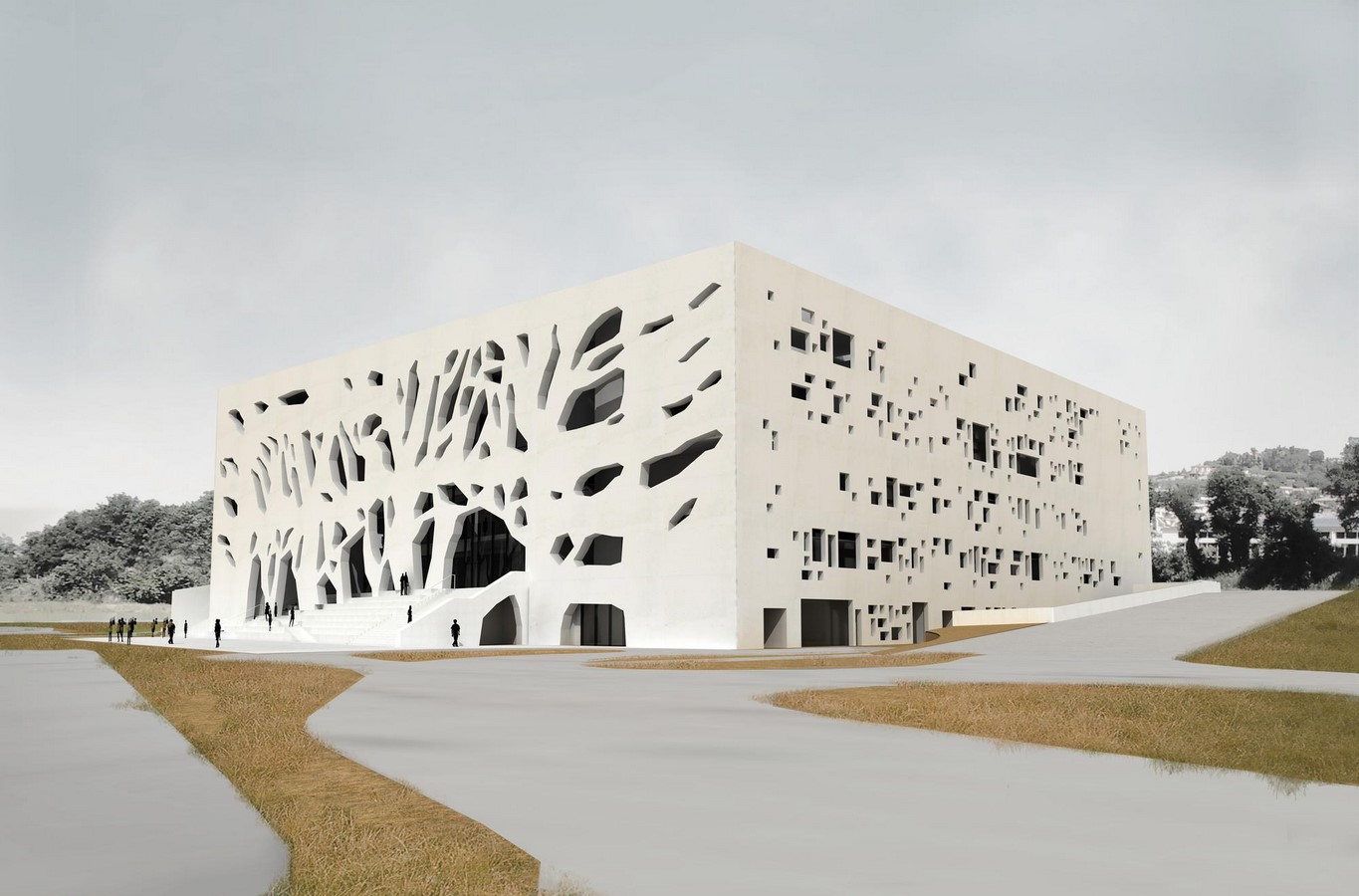
This firm approach is exemplified through the flexible spatial configuration and programmatic adaptability in the ANIMA Cultural Centre proposal in Grottammare, Italy (ArchDaily, 2013). The project has five programmatic components: Art, Nature, Ideas, Music, and Action. These components reflect the community-involved design process that prioritises local cultural expression and social engagement.
The Evolving Role of Architects: Architectural Practice as Knowledge Formation
The changes in the ideas and practices of the architectural profession are portrayed in how changes are made by Bernard Tschumi Architects in 2025. According to Bernard Tschumi’s idea, “architecture is not about knowledge of form but is a form of knowledge”, which is how the practice works (LinkedIn, 2024). This point of view visualises architecture as a way to learn about the relation between spaces and how people interact with each other, and how the environment functions.
The way in which built projects add to the architectural knowledge through the process of documentation and analysis of the design process is showcased in a recent book by Bernard Tschumi Architects, The Event-Cities 5: Poetics. This book is a theoretical aspect of the firm, which guarantees that every project adds to the overall disciplinary comprehension, along with following particular programmatic and contextual necessities.
The overall inclusion of digital technologies into design practices has enhanced the firm’s ability to gain and generate knowledge, which facilitated an advanced analysis of spatial performance and user behaviour. Bernard Tschumi Architects have opened up new possibilities for architectural innovation while keeping their theoretical rigour.
Bernard Tschumi’s dedication to innovation goes beyond his firm’s projects. His focus includes larger issues in architectural education and professional development. His ongoing teaching at Columbia University ensures that budding architects learn about the theoretical foundations and modern technology, which helps them deal with the various issues that architects will encounter in the 21st century (Columbia GSAPP, 2024).
Bernard Tschumi Architects in 2025 portrays how the field of architecture is shifting towards a more integrated, responsive, and technologically advanced practice model. The firm’s success is driven by digital intelligence, environmental stewardship, and community involvement, demonstrating that architectural excellence results from synthesis rather than compromise. The firm continues to explore concepts that engage contemporary issues while adhering to theoretical roots and utilising modern tools and methodologies.
References:
AIANY (2025). Book Talk: Bernard Tschumi’s Event-Cities 5. AIANY Calendar. Available at: https://calendar.aiany.org/2025/05/13/book-talk-bernard-tschumis-event-cities-5/ [Accessed 3 September 2025].
Architecture.com (2025). RIBA AI report 2025. Royal Institute of British Architects. Available at: https://www.architecture.com/knowledge-and-resources/resources-landing-page/riba-ai-report-2025 [Accessed 3 September 2025].
ArchDaily (2013). ANIMA Cultural Centre Proposal / Bernard Tschumi Architects. Available at: https://www.archdaily.com/341890/anima-cultural-center-proposal-bernard-tschumi-architects [Accessed 3 September 2025].
ArchDaily (2023). Paris-Saclay University Biology-Pharmacy-Chemistry Centre / Bernard Tschumi Architects + Groupe-6 architects. Available at: https://www.archdaily.com/1007544/paris-saclay-university-biology-pharmacy-chemistry-center-bernard-tschumi-architects-plus-groupe-6-architects [Accessed 3 September 2025].
Arena Architecture (2020). Simultaneously Space and Event: Bernard Tschumi’s Conception of Architecture. Available at: https://ajar.arena-architecture.eu/articles/10.5334/ajar.250 [Accessed 3 September 2025].
Columbia GSAPP (2024). Bernard Tschumi. Available at: https://www.arch.columbia.edu/faculty/31-bernard-tschumi [Accessed 3 September 2025].
Designboom (2023). Bernard Tschumi delivers one of France’s largest university buildings. Available at: https://www.designboom.com/architecture/bernard-tschumi-groupe-6-paris-saclay-university-france-05-11-2023/ [Accessed 3 September 2025].
Dezeen (2023). Glazed “street” cuts through the university in Paris by Bernard Tschumi. Available at: https://www.dezeen.com/2023/07/11/henri-moissan-centre-paris-bernard-tschumi/ [Accessed 3 September 2025].
GBD Magazine (2025). AI in Architecture: Trends, Tips, and Examples in 2025. Available at: https://gbdmagazine.com/ai-in-architecture/ [Accessed 3 September 2025].
LinkedIn (2024). Architects: Architecture is not about the knowledge of form. Available at: https://www.linkedin.com/posts/evelynlee_architects-architecture-is-not-activity-7266851868394315776-cQF4 [Accessed 3 September 2025].
Novatr (2025). Top AI Tools for Architectural Design in 2025. Available at: https://www.novatr.com/blog/top-ai-tools-for-architectural-design [Accessed 3 September 2025].
Paul, R. (2012). Appraisal of the works of Bernard Tschumi. Krishi Sanskriti. Available at: https://krishisanskriti.org/vol_image/09Sep201509090521.pdf [Accessed 3 September 2025].
Swiss Learning (2021). Le Rosey’s new Centre of Science and Entrepreneurship. Available at: https://www.swisslearning.com/news/the-hub-of-intelligence-and-culture/ [Accessed 3 September 2025].
Tschumi Architects (2023). Atmosphere Park. Available at: https://www.tschumi.com/projects/63 [Accessed 3 September 2025].
Tschumi Architects (2024). Paris-Saclay University’s Henri Moissan Centre. Available at: https://www.tschumi.com/news/207 [Accessed 3 September 2025].
Tschumi Architects (2025). Construction Update: Centre for Sciences and Entrepreneurship. Available at: https://www.tschumi.com/news/210 [Accessed 3 September 2025].
Tschumi Architects (2025). Le Fresnoy Featured on the Cover of The Architectural Review. Available at: https://www.tschumi.com/news/211 [Accessed 3 September 2025].
Tschumi, B. (2024). Event-Cities 5: Poetics. MIT Press.
Wallpaper (2008). Bernard Tschumi Q&A exclusive. Available at: https://www.wallpaper.com/architecture/bernard-tschumi-qa-exclusive [Accessed 3 September 2025].