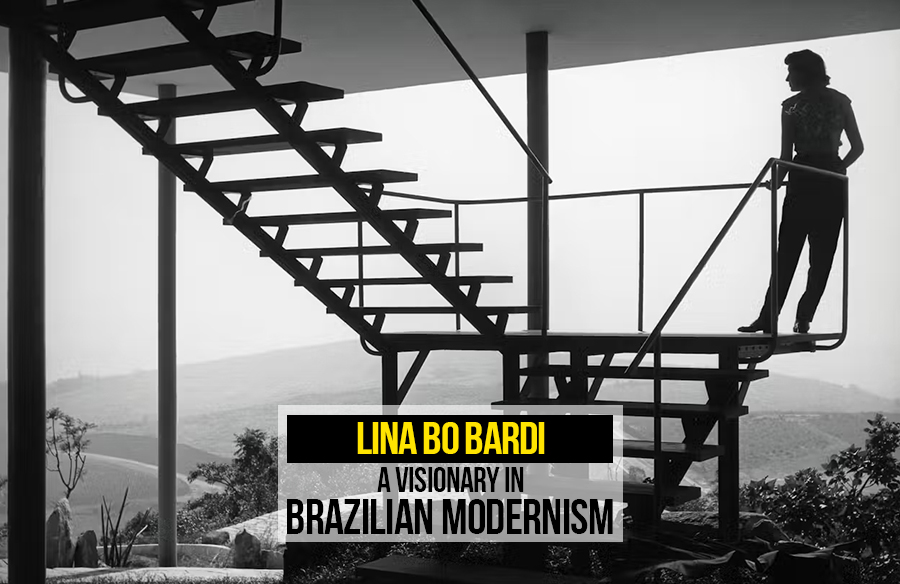
Thinking beyond the boundaries of any field demands a visionary mind-set, but turning those ideas into reality requires unwavering determination. Such was the spirit of Lina Bo Bardi, a visionary who pushed limits and changed our understanding of design, and a force to be reckoned with in the architectural community. She saw architecture as a living, breathing organism that was designed to serve the people, rather than as a static art form. Even though she was born in Italy and spent a part of her life there, her career bloomed in Brazil. Her audacious, unrepentant style embraced Brazil’s rich culture, customs, and communities while rejecting elite ideas of modernism. By combining architecture with art, nature, and a profound sense of humanity, she promoted architecture as a vehicle for social transformation.

Early Life and Education
Born in 1914 in Rome, Bo Bardi developed a deep passion for art and design from an early age. This passion led her to pursue a degree in architecture at the University of Rome, where she graduated in 1939. At the time, modernism- characterised by a break from traditional architectural styles and a shift toward minimalism- was flourishing across Europe. Bo Bardi initially embraced modernist principles during her early career in Italy, influenced by prominent architects and mentored by figures such as Marcello Piacentini. However, as she progressed, she became increasingly critical of modernism’s detachment from everyday life, particularly its elitist tendencies and focus on form over social function.
After her graduation, Bo Bardi contributed to esteemed design publications like Domus and Lo Stile, which sharpened her critical thinking and deepened her understanding of architecture’s societal role. Her career faced a major setback during World War II when her Milan studio was destroyed in a 1943 bombing, wiping out much of her early work. This event, coupled with the hardships of war, profoundly affected her outlook.
In 1946, disillusioned with Italy’s political climate and the devastation caused by the war, Bo Bardi relocated to Brazil with her husband, art critic and curator Pietro Maria Bardi. Initially, she struggled to adapt, facing language barriers and the contrast between Italy’s structured environment and Brazil’s vibrant, chaotic culture. Yet, this turbulence soon became a wellspring of inspiration, allowing Bo Bardi to blend her modernist training with a deep commitment to human-centred, socially conscious design.

A Move from Italy to Brazil
Upon arriving in São Paulo, Brazil, in 1946, Lina Bo Bardi faced significant challenges, including language barriers and unfamiliar customs. Yet, rather than retreating into the comfort of her past, she embraced the vibrancy and complexity of her new environment.

Gradually, she developed a passion for designing architecture that resonated with and served the local community, immersing herself in Brazil’s rich cultural diversity. São Paulo’s dynamic landscape and artistic scene captivated her, and she quickly began collaborating with local artists and intellectuals. Through these connections, Bo Bardi established her architectural practice, channelling her modernist ideals into designs that reflected the essence of Brazilian identity.

Human-Centred Design
Lina Bo Bardi’s architectural philosophy was rooted in the concept of human-centred design, which prioritised the needs, desires, and well-being of the people who would use and inhabit her buildings. For her, architecture was not merely about aesthetics or structural suitability; it was about fostering social interactions and enhancing the quality of life. This approach emerged from her keen observations of Brazilian society, where she saw architecture’s potential to bring together diverse communities and create inclusive environments.
A key element of Bo Bardi’s design was her emphasis on the seamless connection between indoor and outdoor spaces. She often integrated natural elements into her buildings, blurring the line between built and natural environments, creating a harmonious and immersive experience.
Bo Bardi consistently challenged the notion that architecture was an exclusive, elite pursuit. Her collaborative approach, which drew on the skills of local artisans and incorporated traditional craftsmanship, enriched her architectural vocabulary while empowering communities. Her work remains a powerful example of the transformative power of human-centred design.
Bo Bardi’s ability to fuse modernist ideals with the cultural richness of Brazil set her apart as a pioneering figure in the country’s architectural history. Her designs, a unique blend of her Italian roots and her deep connection to Brazil, left a lasting legacy that continues to inspire architects and redefine the possibilities of architecture.
Iconic Works
Lina Bo Bardi’s extensive body of work includes a variety of projects spanning architecture, interior design, furniture design, and urban planning, showcasing her multifaceted approach to human-centred design. Her commitment to creating spaces that resonate with the communities they serve is evident in each project, reflecting her innovative spirit and dedication to social transformation.
The Museu de Arte de São Paulo (MASP), completed in 1968, is one of her most iconic contributions. This remarkable museum features a bold design, characterised by a glass and concrete structure elevated on two lateral beams. This innovative approach not only creates a striking visual impact but also allows for an expansive public space underneath, fostering community interaction. Inside, the museum houses a diverse collection of Western art, reflecting Bo Bardi’s belief in making art accessible to all.

Another significant project is SESC Pompéia, designed and completed in 1982. This cultural and leisure centre transformed an old factory into a vibrant space for a variety of activities, including sports, arts, and recreation. Bo Bardi’s thoughtful integration of existing industrial elements with new construction creates an inviting atmosphere that encourages visitors to explore, engage, and interact. The design reflects her philosophy that architecture should serve the community and promote well-being.


Casa de Vidro, or the Glass House, built in 1951, served as Bo Bardi’s personal residence and is a testament to her innovative approach to design. Renowned for its extensive use of glass, the house creates a seamless connection between indoor and outdoor spaces, inviting nature into the living environment. The minimalist aesthetic and open floor plan reflect her belief in transparency and fluidity in architecture, emphasising the relationship between the inhabitants and their surroundings.

Teatro Oficina, completed in 1960, is another innovative work by Bo Bardi. Designed to create an intimate connection between performers and the audience, the flexible layout allows for various configurations, fostering a dynamic space for theatrical performances. Bo Bardi’s use of raw materials and an open design philosophy highlights the importance of artistic expression within the architecture itself, encouraging a participatory experience that engages the audience on multiple levels.

Igreja da Pompéia, completed in 1973, is a striking church that beautifully blends modernist architecture with traditional elements. Bo Bardi’s design emphasises community and worship, creating a space that invites reflection and connection. The church features a unique geometric structure that is both functional and aesthetically compelling, embodying her vision of architecture as a means to foster social interaction and cultural identity within the community.
These works exemplify Lina Bo Bardi’s innovative spirit and her dedication to creating architecture that resonates with and serves the community, leaving an enduring legacy in Brazilian modernism.
Legacy and Influence
Lina Bo Bardi’s legacy is profoundly embedded in the fabric of Brazilian architecture, transcending her physical structures and extending to her enduring influence on the global architectural community. Though her recognition came later in her career, she is now celebrated as one of the most prolific women architects of the 20th century. Bo Bardi’s human-centred, innovative approach has inspired architects worldwide, blending modernist ideals with Brazil’s rich cultural context to redefine how architecture addresses social and environmental issues.
In the mid-1980s, Lina Bo Bardi partnered with André Vainer and Marcelo Carvalho Ferraz to expand her renowned Glass House, creating the Instituto Lina Bo e P.M. Bardi. This institution was designed to safeguard the Bardis’ archives and promote Brazilian art and architecture. Her contributions were revisited during the centennial of her birth in 2012, marked by the re-release of her iconic bowl chair, a significant retrospective organised by the British Council in London, and the publication of an extensive monograph highlighting her life’s work.

In 2021, Bo Bardi was posthumously awarded the prestigious Golden Lion for Lifetime Achievement at the Venice Biennale, becoming the first woman to receive the honour for her architectural work. Her visionary approach to inclusive, socially responsive architecture continues to influence today’s architectural discourse, ensuring her legacy remains an integral part of the conversation on architecture and society.
Conclusion
Lina Bo Bardi’s journey from Rome to Brazil embodies the transformative power of design rooted in humanity. Her bold spirit and commitment to social engagement revolutionised architecture, merging modernism with the rich cultural tapestry of Brazilian life. Bo Bardi crafted spaces that are visually stunning and deeply resonant with the communities they serve.

As we confront today’s urban challenges, her vision of architecture as a living dialogue urges us to create environments that reflect diversity and inspire collective action. Bo Bardi’s legacy, marked by her understanding of the relationship between space and society, continues to inspire architects and designers to push boundaries and embrace their responsibility to foster connection and understanding. Her story reminds us that architecture can transcend mere structure; it can become a powerful force for change and a celebration of humanity itself.
References:
- Camacho, S. (2021) Retrospective: Lina Bo Bardi, The Architectural Review. Available at: https://www.architectural-review.com/essays/retrospective/retrospective-lina-bo-bardi (Accessed: 23 October 2024).
- Lina Bo Bardi (no date) Encyclopædia Britannica. Available at: https://www.britannica.com/biography/Lina-Bo-Bardi (Accessed: 23 October 2024).
- Lina Bo Bardi: Side Gallery (2024) Side Gallery |. Available at: https://side-gallery.com/designer/lina-bo-bardi/ (Accessed: 23 October 2024).
- Gestalten EU Shop (no date) How Lina Bo Bardi Shaped Brazilian modernism, Gestalten EU Shop. Available at: https://gestalten.com/blogs/journal/how-lina-bo-bardi-shaped-brazilian-modernism?srsltid=AfmBOooQf2ZQNMmlFdByitGecycDnXHx6ljCtNjgRHvF55GAnDpvcbAS (Accessed: 23 October 2024).
- Fakharany, N. et al. (2024) ArchDaily. Available at: https://www.archdaily.com/tag/lina-bo-bardi (Accessed: 23 October 2024).