The conservation of architectural heritage has enjoyed a long development over recent decades. Conservation practice is based on the values offered by the architectural heritage resources for different individuals, groups, societies, and governments. It is indeed fulfilling to witness these improvements taking charge across various country regions. In the context, of the varied and continuous culture of India, the formal practice for conservation grandly began with the establishment of the Archeological Survey of India (ASI)(Asi.nic.in. (2021) by the British in 1902, the synthesis of Indigenous culture and global collaboration takes a grand entry. Tradition and culture are in constant negotiation with modern approaches, and global trends, given design and architecture. Can’t disagree with implying ancient architecture and styles cast a strong shadow and overlap contemporary architecture at every juncture. Methods of construction, involving craftsmen, artisans, and residents in the making of statement structures are foreign to the concrete culture today, this is where the subject of architectural conservation helps us analyse past and present, inducing cultural relevance that is backed with scientific references. After all, that’s how intensified and relevant the Indian architecture of the past era stands.
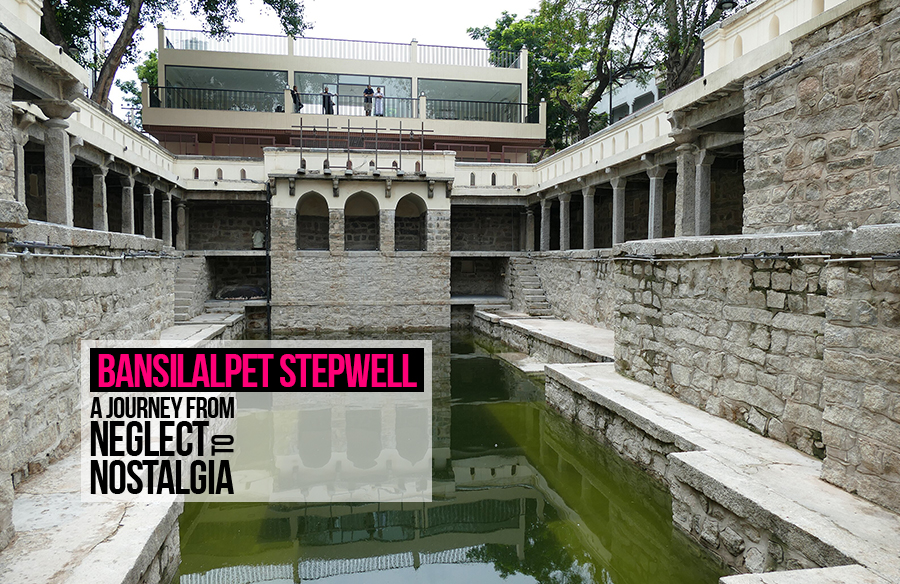
On the premise of conservation architecture, one of the most interesting, with intriguing architectural heritage, is the city of pearls! Welcome to Hyderabad! Although several structures catch attention aligning with architectural heritage, Bansilalpet Stepwell is one structure that is an age-old stepwell in the heart of Hyderabad, which once served hundreds of residents with drinking water. Over time has led into oblivion and lost trace, has finally been re-explored, and recently assigned new functions. Dive into the story of this stepwell, and it surely will be something one would visit on a trip to Hyderabad.
The Stepwell Story
Stepwells, natively called Baolis, are vertically layered wells that hold groundwater. These structures are essential landscape elements contributing to water conservation. History suggests this stepwell belongs to the 17th century, with a short story for its existence. The stepwell is mentioned as Naganah Kunta in a 1954 map published by Pharaoh & Co. The map further notes that a garden of tamarind and palmyra trees surrounded the well. In 1933, Britisher T.H. Keyes developed a planned model village around the stepwell. This project was funded by a local businessman, Seth Bansilal; hence the present name — Bansilalpet stepwell. Activity around the stepwell went well until 1933. After a series of tragic incidents, the stepwell’s usage gradually deteriorated, turning into a spot for debris over a few years. Residents recalled a time when the stepwell was actively used for community events, but by the late 20th century, it had transformed into a neglected pit, contributing to urban flooding issues due to its inability to function as a rainwater harvesting structure. By the time restoration began in 2021, it was buried under waste and had not been maintained for decades, resulting in a congested area with limited access and visibility. Almost forgotten by all, the fate of this architectural marvel was left unfinished.

Restoration Begins
The Bansilalpet Stepwell exemplifies ancient Indian engineering with its elaborate stone carvings and well-aligned steps. The design includes multiple levels for accessing water. Intricate decorations typical of the era reflect skilled craftsmanship. The underground nature provides a cool environment during the hot season, until the 1980s due to increased urbanisation. By the late 20th century, the stepwell lost its functional significance. However, in 2022, things began to change for good, pioneer of the esteemed project- The Rainwater Project, Ar. Kalpana Ramesh envisioned bringing life to Bansilalpet. Kalpana Ramesh, a water conservationist and environmentalist, planned to establish a practice in Hyderabad, when she encountered multiple questions about sourcing water every day, wondering how residents can minimise their dependence on water tankers to be self-reliant. Progressing further, she joined hands with local and government-run organisations to pave the way for Bansilalpet. The primary challenge was to clear 2000 tons of garbage, silt, and debris, this obscured the structure later desilted and dewatered. The teams repairing the well’s damaged portion involved rebuilding damaged sections and applying lime plaster for finishing. While the project began initially with the intent of restoration of the stepwell, it has become much more than that. It is an initiative to boost the local economy and make it a “people’s project”.
Restoration revealed an elaborate water management system that was more sophisticated than previously understood. The design included not just the stepwell itself but also channels and drainage systems that indicated advanced engineering practices for rainwater harvesting, crucial for sustaining local communities. The project highlighted the stepwell’s role in local culture and community life. It was not merely a water source; it served as a gathering place for social interactions and cultural events. This aspect was often overlooked, but the restoration process rekindled interest in reviving these communal practices. To communicate the rich culture around the story, the Stepwell features a museum with 3 galleries that educate visitors about the history and restoration journey. The galleries also demonstrate the importance of water conservation. Gallery 1 is centred around a model of the stepwell and the walls contain photos of the stepwell before and after restoration. Gallery 2 focuses on water conservation. There are also photos and drawings of the stepwell. Gallery 3 is located on the first floor- During the journey of restoration, a variety of ancient weaponry was found, including- swords, spearheads, metal tools, and smaller weapons used in daily life, all of which are displayed here. All of these roar aloud multiple stories of conflict and defence of that era, implying the stepwell witnessed various aspects of life, beyond the source of water.


In acknowledgment of the exceptional restoration work, the Bansilalpet Step Well has been honoured with an award from the UAE government. This prestigious recognition underscores the project’s excellence in heritage preservation and its triumph in rejuvenating a significant historical landmark. This journey of Bansilalpet Stepwell is nothing less than architectural poetry, it not only stands as a remarkable project belonging to the city of Hyderabad but is also a valuable critical case study for architects and planners. It strongly communicates the urge for sustainable initiatives to uplift our surroundings not limiting ourselves to concrete creativity besides. Immense effort, vision, and execution are pillars of this project, making it possible for Bansilalpet Stepwell to see the light of the day again.
References:
- (Asi.nic.in. (2021). Archaeological Survey of India. [online] Available at: https://asi.nic.in/HQ/history-view [Accessed 5 Oct. 2024].
- Datta, R. (2023) Hyderabad’s Bansilalpet Stepwell: Ravaged, reimagined, then revived, Heritage structure | Hyderabad’s Bansilalpet stepwell: Ravaged, reimagined, then revived – Telegraph India. Available at: https://www.telegraphindia.com/my-kolkata/places/hyderabads-bansilalpet-stepwell-ravaged-reimagined-then-revived/cid/1922205 (Accessed: 03 October 2024).
- Kalyan, P. (2024a) Bansilalpet Step well: Rediscovering a historical gem in Hyderabad, Explore Hyderabad. Available at: https://explorehyderabad.in/bansilalpet-step-well/#Also_Read_New_Landmarks_Of_Hyderabad_Secretariat_Ambedkar_Statue_Martyrs_Memorial (Accessed: 03 October 2024).
- The architect leading restoration of Telangana’s historic stepwells (2022) Vikalp Sangam. Available at: https://vikalpsangam.org/article/kalpana-ramesh-the-architect-leading-restoration-of-telanganas-historic-stepwells/ (Accessed: 03 October 2024).