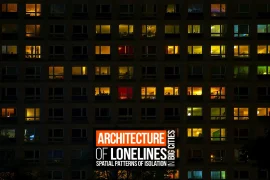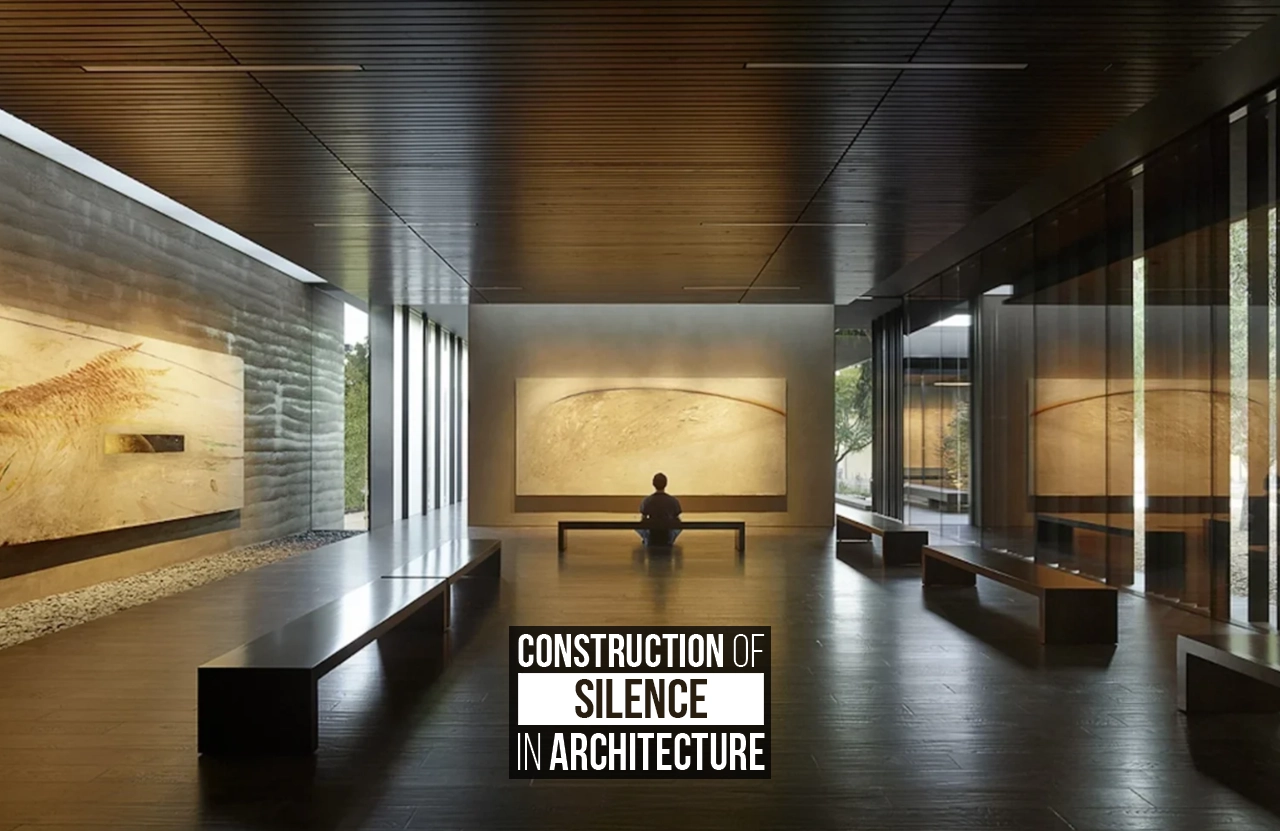
In a world of constant noise and clutter, it’s vital to reflect on silence. How do designs foster calm or rekindle neglected passions?
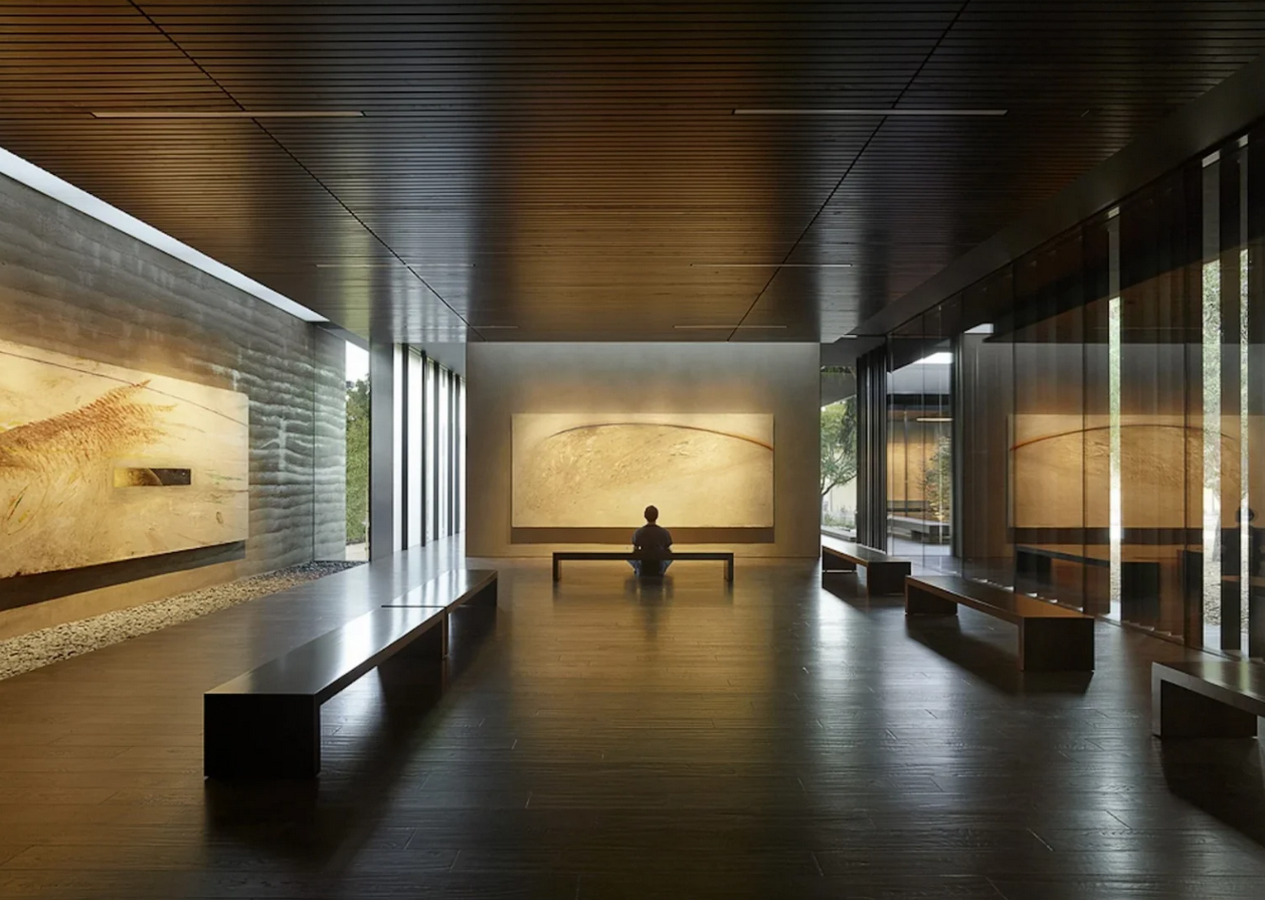
What constitutes silence, and how does it influence the design and experience of spaces?
Some associate silence with breathing, or consider it simply the absence of sound. While each individual’s perception of silence can differ, spaces often reflect a balance of it. In current times, trends shift constantly, visual appeal dominates, and expectations run high; yet a quiet yearning for calm emerges. This desire challenges the fast-paced world to slow down and invites one to fully experience a space or moment. Thus, the experience of spaces goes beyond impressing users and aims to connect them to their natural surroundings.
“Silence can be described as experiencing the contrast when entering from a different atmosphere.” (Engels-Schwarzpaul and Mika, 2020)
How is Silence Related to Architecture?
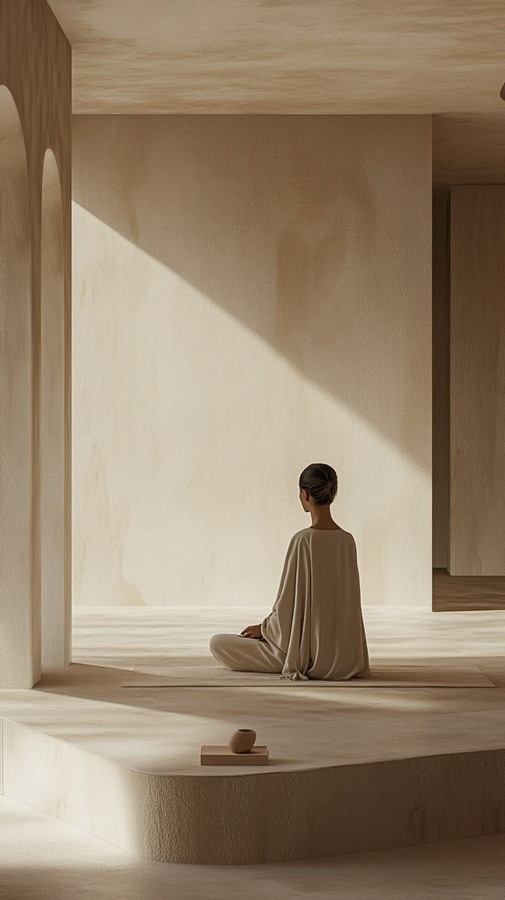
The organisation of space and its ability to communicate with its users at the sensorial, experiential, and associational levels enable aspects such as silence to be explored at their core. An architectural structure can be envisioned as making a statement, i.e., conveying one’s intent, which, in turn, is expressed through a sensorial experience of the spaces to the user.
Where does silence fit into the fabric of architecture? When thoughtfully designed, spaces can create moments of pause, using spatial design, materiality, and programming, prompting reflection on the importance of the pause. It also proves relevant when there is a deliberate use of transition spaces, thresholds to differentiate spaces, and circulation spaces offer a chance for this pause to be written in. (Hegde, 2025)
Exploration of Silence through Tadao Ando and Peter Zumthor’s works
Tadao Ando’s Works
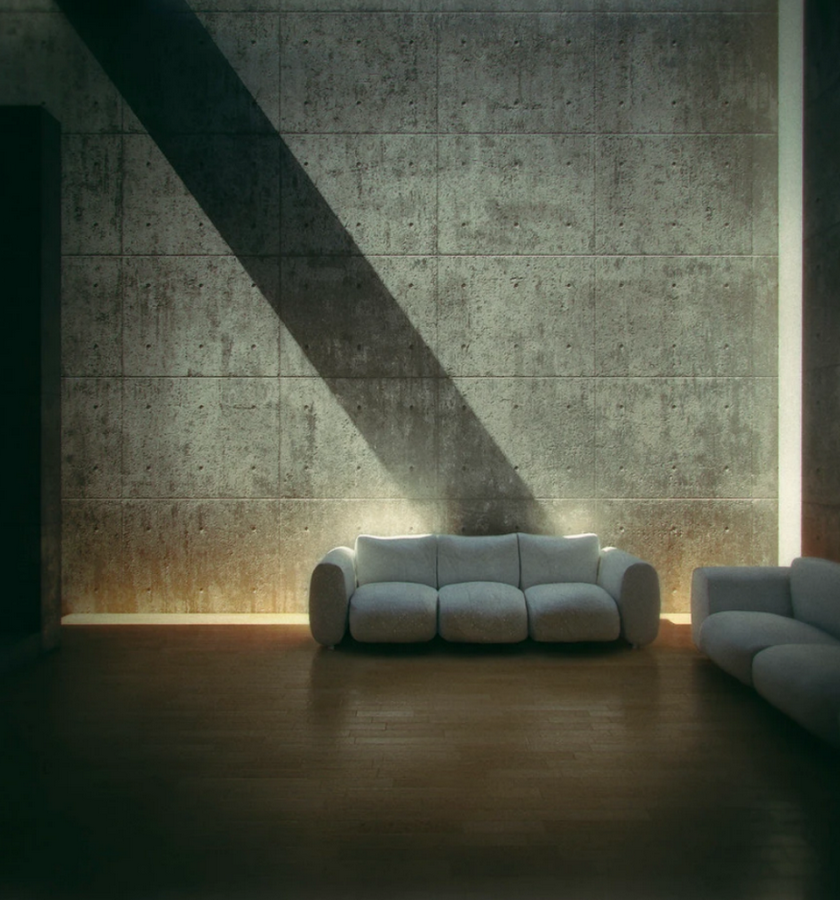
A quote that resonates on the same lines as the relation between the meaning of silence and its relation to architecture.
“When I design buildings, I think of the overall composition, much as the parts of a body would fit together. On top of that, I think about how people will approach the building and experience that space. If you give people nothingness, they can ponder what can be achieved from that nothingness.” (Ando et.al.2011)
Here, silence arises from nothingness, leaving the space open to a user’s perception and choice. In Tadao Ando’s Koshino House, the concrete surface shows a pattern on interior and exterior walls, with evenly spaced holes for the moulding board screws. Empty space reflects restraint and calm, creating solitude and stimulating the senses.
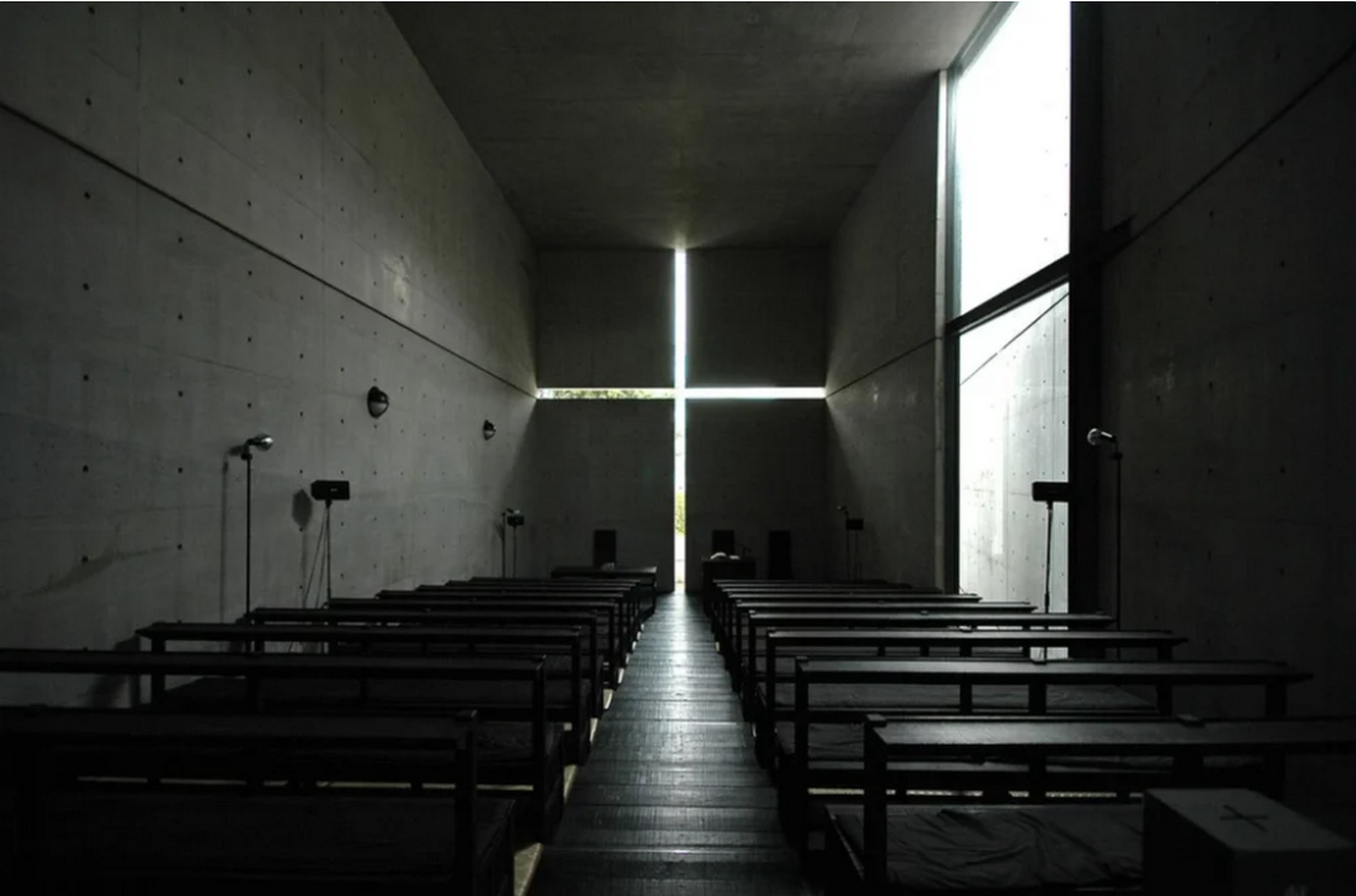
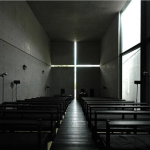
Another example is the Church of Light, where the interplay of light and space creates a tranquil atmosphere that encourages communal and spiritual connection among users. Through a precisely placed slit and the thoughtful arrangement of walls, Tadao Ando demonstrates how minimal elements can achieve a profound sense of silence in architecture, reinforcing a connection to simplicity. (Mishra, Shrivastava and Singh , 2019)
Peter Zumthor’s Works
“To me, buildings can have a beautiful silence that I associate with attributes such as composure, self-evidence, durability, presence and integrity and with warmth and sensuousness as well; a building that is being itself, being a building, not representing anything, just being.” – Peter Zumthor from “The Hard Core of Beauty”.
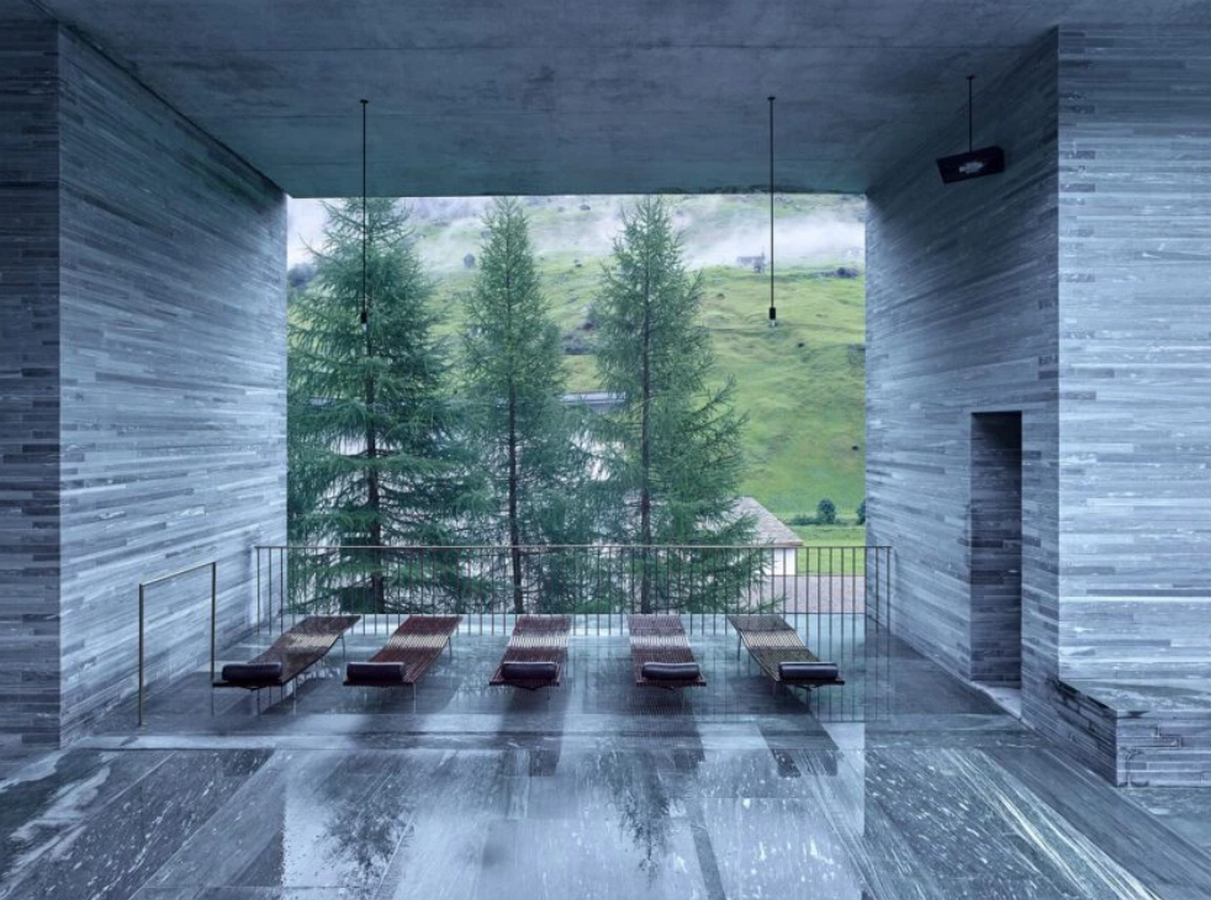
Peter Zumthor’s architectural designs communicate in distinctive ways. His process evokes contemplation, observations of the natural world, material properties, and intuition. For Zumthor, architecture is a means to restore a sense of wholeness within society.
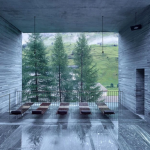
Therme Vals, a bathhouse finished with concrete and 60,000 slabs of gneiss stone cut from the surrounding mountains of Vals is carved directly into the side of a mountain, featuring labyrinthine paths and pools that seem to dissolve into the mist; it’s as if one loses their sense of direction while traversing the spaces, making one want to carve their own path. What sets Peter Zumthor apart is the fact that his built forms are not meant to be just glanced at through photographs; rather, they invite a user to experience the natural elements for what they are, the bare essence of it that ignites curiosity and seems mysterious; thus, creating silence. (Wendy Redfield, 2016)
A prominent characteristic of his works is that they don’t demand anything of the user; the spaces extort silence on their own. It drives a user to set off wandering about, taking note of each echo that emphasises a tiny sound, making one whisper consciously.
“To plan the building as a pure mass of shadow, then, afterwards, to put in light as if you were hollowing out the darkness, as if the light were a new mass seeping in” – Peter Zumthor.
Zumthor incorporates the natural urge to provide comfort and to layer multiple perceptions of people through his choice of organising space, geometry, natural setting, materials and textures, and the play of light, among others. (Wendy Redfield, 2016)
Silence in architecture is part of creating experiences in spaces; for some, it’s a way to embrace solitude, draw attention to the surrounding elements of nature, or merely experiment with the factors that shape a space. Regardless of the many perceptions of silence, it is evident that without it, one isn’t rooted to each moment. For example, picture a scene of endless chatter with no room for reason, spaces that simply begin where the previous one ended- devoid of expression or transition, to name a few instances. It doesn’t paint a steady picture. Construction of silence can take many forms, and elements are put together to support it. It matters to pay attention to how this construct is carried out, so as to ensure that the intention of each built form is fully met while incorporating this aspect.
-
Online sources
Citations for websites:
Dekeyser , J. (2013). 9 nov. 2013 | The rhythm of silence (on the work of architect Peter Zumthor / DAY 1). [online] Diary and Thoughts. Available at:https://jandekeyserdiaryandthoughts.wordpress.com/2013/11/16/8-nov-2013-the-rhythm-of-silence-on-teh-work-of-arch-peter-zumthor/ [Accessed 10 Apr. 2026].
Engels-Schwarzpaul, A.-C. . and Mika, C. (2020). Silences generating space. The Place of Silence, [online] (10.5040/9781350076624.ch-011), pp.139–148. doi:https://doi.org/10.5040/9781350076624.ch-011.
Hegde, A.N. (2025). The Architecture of Silence: How Design Helps Us Unplug. [online] Medium. Available at: https://medium.com/@nishahegde66/the-architecture-of-silence-how-design-helps-us-unplug-06f81d699a23.
Maqbool, S. (2025). The Architecture of Silence: Designing Spaces for Solitude. [online] Youlinmagazine.com. Available at: https://www.youlinmagazine.com/story/the-architecture-of-silence-designing-spaces-for-solitude/MzEwNQ== [Accessed 10 Apr. 2026].
Mishra, J., Shrivastava, V. and Singh , A.K. (2019). Silence of Architecture. [online] Academia.edu. Available at: https://www.academia.edu/41414951/Silence_of_Architecture [Accessed 10 Apr. 2026].
Wendy Redfield (2016). Peter Zumthor’s Beautiful Silence – Architecture, Culture, and Spirituality Forum (ACSF). [online] Architecture, Culture, and Spirituality Forum (ACSF). Available at: https://acsforum.org/peter-zumthors-beautiful-silence/.
- Images/visual mediums
Citations for images/photographs – Print or Online:
ArchEyes (2024). Peter Zumthor’s Therme Vals: Sensory Architecture in an Alpine Retreat. [online] ArchEyes. Available at: https://archeyes.com/peter-zumthors-therme-vals-sensory-architecture-in-an-alpine-retreat/ [Accessed 10 Apr. 2026].
Shah, P. (2026). Stillness by Design: Minimalism in Architecture That Slows the Mind. [online] PA | Architecture & Technology. Available at: https://parametric-architecture.com/minimalism-architecture-slows-the-mind/?srsltid=AfmBOorzXrgudbySCN2evLW1KjmairRuYVZnBqqdU0_gwD-ekQfeQg3Y [Accessed 10 Apr. 2026].
Editor thenub (2025). The House of Silence: Mental Health & Architecture. [online] The NUB. Available at: https://thenub.co.in/the-house-of-silence-mental-health-architecture/ [Accessed 10 Apr. 2026].