Designers and architects are pushing the boundaries of human settlement by focusing on some of the most challenging and unknown environments on Earth and beyond. From the harsh conditions of space travel to the arid expanses of deserts and the ocean’s depths, each extreme environment demands unique architectural solutions that defy conventional norms. When humanity explores the ocean’s depths, travels across arid deserts, and experiences the harsh reality of space flight, each extreme environment brings its difficulties that call for creative architectural solutions. It is more important than ever to design resilient architecture because of the world’s growing population and the necessity to reconsider living arrangements due to climate change. These days, architects are creating environments that foster social interaction and overall well-being in addition to withstand harsh weather conditions.
Innovative Approaches in Extreme Environments
Desert Architecture
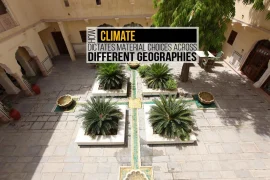
In desert regions, architecture places a strong emphasis on sustainable and adaptable solutions to deal with extreme temperatures and limited resources. To minimise energy usage, passive cooling technologies, and locally available materials are used in carefully designed buildings to resist harsh weather conditions. To preserve comfortable indoor conditions while reducing environmental effects, cutting-edge insulation techniques are combined with creative architectural tactics like earth-sheltering and shaded courtyards.

Underwater Architecture
Designing for underwater habitats means addressing particular difficulties like isolation, buoyancy, and pressure. To support endeavours such as resource exploitation, tourism, and research, submerged habitats are designed to withstand deep-sea conditions. To guarantee structural integrity under severe pressure and corrosive sea environments, advanced materials and construction techniques are being investigated.

Space Architecture
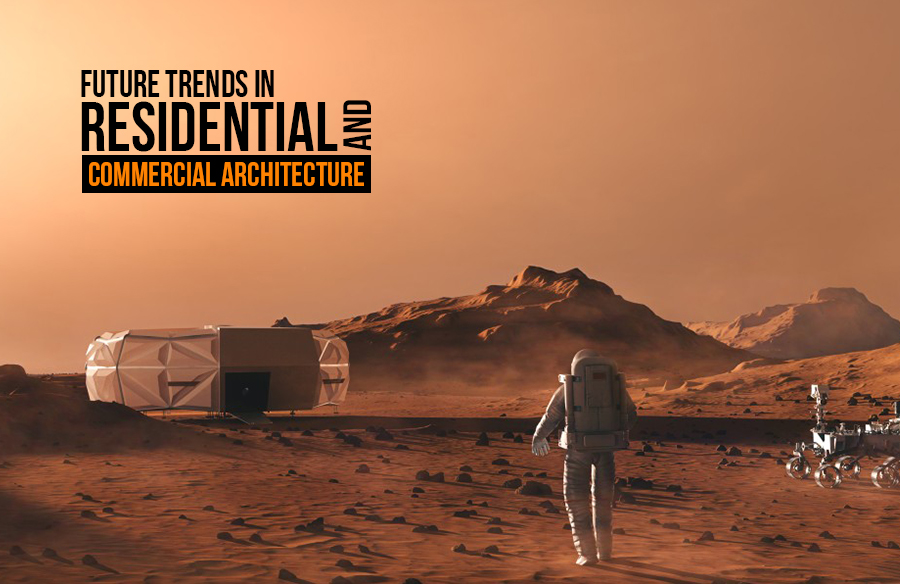
Space architecture is tackling the complex problems of living in zero gravity and rethinking possibilities for life beyond Earth. To construct radiation-resistant dwellings that protect astronauts from cosmic radiation, cutting-edge technology is used. Moreover, maintaining livable circumstances in the harsh vacuum of space requires the development of novel life support systems, such as AI-driven environmental controls and closed-loop ecosystems.

Technology Shaping Future Architecture
Technological developments will have a significant impact on how architecture will develop in harsh conditions in the future. One noteworthy invention is 3D printing, which makes it easier to employ locally available materials like Martian or lunar dirt and so lessens the need for supplies from Earth. The development of robust, useful homes suited to extraterrestrial circumstances is made possible by this technology.

Furthermore, autonomous robotics improve building processes by enabling remote structure assembly, which reduces labour and human risk. These self-sufficient systems are capable of managing intricate assignments in risky or isolated areas, guaranteeing effective and secure construction methods.
Artificial intelligence (AI) powered life support systems also control temperature, water, air quality, and other vital resources, protecting ecosystems that are necessary for long-term settlement in harsh conditions.
Design Considerations for Extreme Environments
When designing for extreme environments, architects must balance practicality with innovation to ensure both survival and comfort. One key aspect is habitat design and construction, where inflatable and modular structures provide a versatile solution. These can be transported compactly and expanded on-site, creating adaptable, scalable living spaces. Using regolith-based building materials from local sources, like lunar or Martian soil, reduces dependence on Earth resources, fostering sustainable, efficient construction.

Life support systems are crucial for maintaining habitable conditions, emphasising the importance of closed-loop ecosystems that recycle air, water, and waste to minimise the need for constant resupply. Technologies such as hydroponics or aeroponics can support food production, while reliable energy generation, often from solar panels or nuclear reactors, ensures consistent power adapted to the specific conditions of extraterrestrial environments.

Radiation protection is vital in space and other extreme environments. Advanced shielding materials and construction techniques protect habitats from cosmic radiation and solar flares, while subsurface habitats offer natural insulation from harmful radiation and extreme temperature fluctuations. Thermal regulation is another critical aspect. Effective insulation and state-of-the-art temperature control systems help manage drastic temperature swings. Heat rejection systems dissipate excess heat, which is especially important in environments with significant thermal variations, such as the Moon or Mars. Structural stability is a significant consideration in low-gravity environments. Designs must account for low gravity conditions that affect the stability and integrity of structures. Additionally, addressing seismic activity—particularly on Mars—is essential to maintain the resilience of habitats.

Human factors also play a vital role in extreme environments. Design elements that enhance psychological well-being, such as simulated natural light and recreational areas, are vital for mental health. Efficient use of space through modular, multifunctional furniture optimises living conditions and helps combat the feeling of confinement. Additionally, the creation of social and communal spaces supports collaboration and morale, while maintaining a balance between communal and private areas to ensure that personal well-being is preserved in shared living environments. Future habitats must also be designed with adaptability and expansion in mind. As technology evolves and the needs of inhabitants change, flexible designs allow for growth and reconfiguration, ensuring that these living environments remain functional and future-proof.
Example: Biosphere 2

Located in the Arizona desert, Biosphere 2 represents an influential project in climate and sustainability research. Initiated in the late 1980s, it aimed to create self-sustaining environments mimicking extraterrestrial conditions. Despite its challenges, Biosphere 2 provided valuable insights into closed ecological systems, food production, climate management, and resource recycling, laying the groundwork for future space colonisation.

Inspired by the work being done in hydroponic farm classrooms, the glass structure is a large-scale example of controlled environment agriculture that uses soil gardening and allows for climatic experimentation. Designed to resemble Biosphere 1 (Earth), Biosphere 2 is home to seven model ecosystems, such as three desert hillslope grass-shrubland landscapes, a 91,818 cubic-foot ocean, and a mature rainforest with over 90 tropical tree species.
This 3-acre research facility, which is identifiable by its famous 6,500 windows that make up the outside of the glass complex, is defined as “a unique large-scale experimental apparatus.” More than 500,000 students have visited it since the construction of its main equipment ended in 1991, and they are encouraged to perceive themselves as scientists. Mostly recognized for the two-year research project that saw eight men and women self-sufficiently survive on the food, air, and water found there, the facility’s unique design has given us new perspectives on intricate environmental systems and their sustainability.
Future architecture in harsh areas promises creative and durable solutions as technology develops. Through the integration of innovative technology and imaginative design methodologies, architects are expanding the realm of viable living and working environments in some of the most demanding environments known to humankind. These developments are not only changing the face of architecture for habitats beyond Earth, but they are also establishing new benchmarks for flexible and sustainable building designs here on Earth.