Today it is almost impossible to picture Paris without it. Yet when the Eiffel Tower opened in 1889, it was never meant to last. It was built as the entrance to a world’s fair on city-owned land, with a permit that ran for only twenty years. Leading artists had called it monstrous before a single rivet was in place. So how did a temporary structure that so many people disliked become the symbol of a nation? The answer lies in archives, permits, photographs and, unexpectedly, radio.
A Tower Built for a Fair
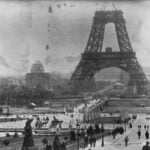
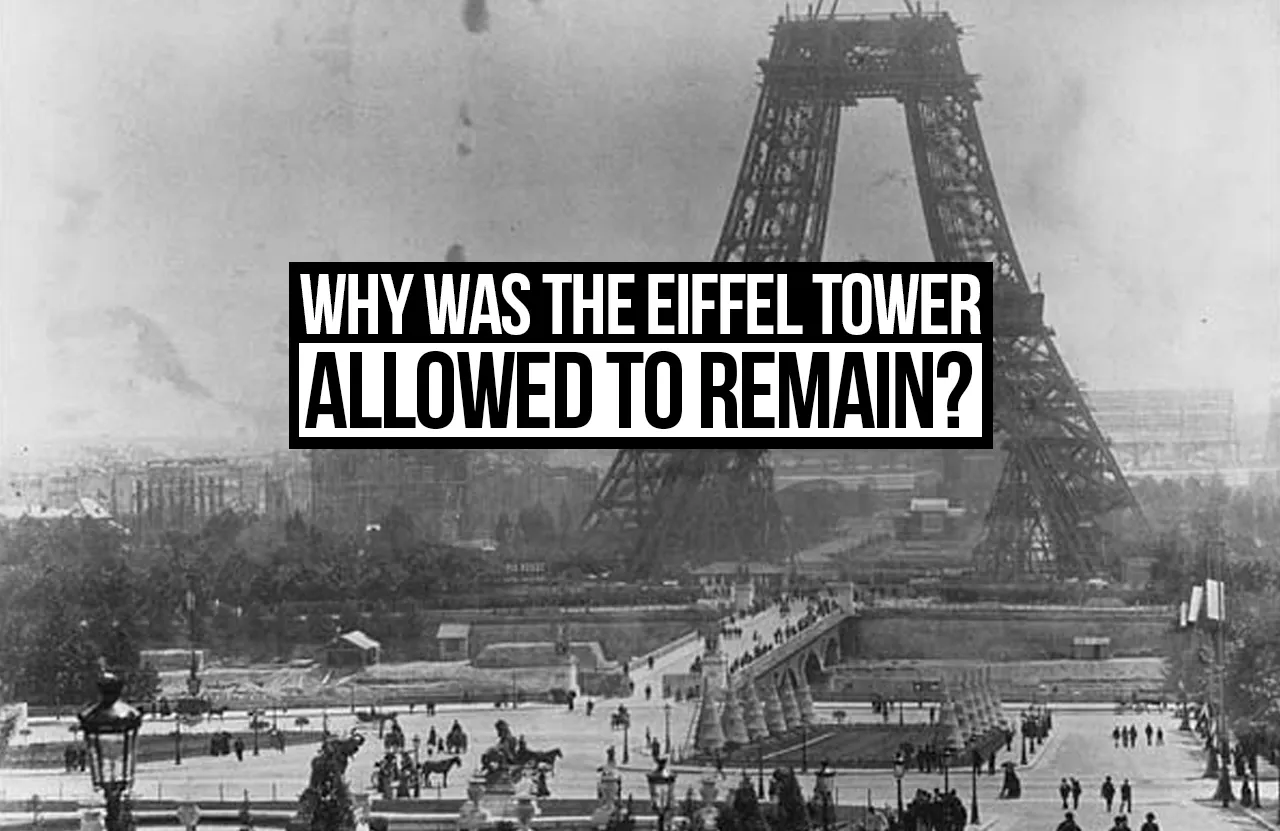
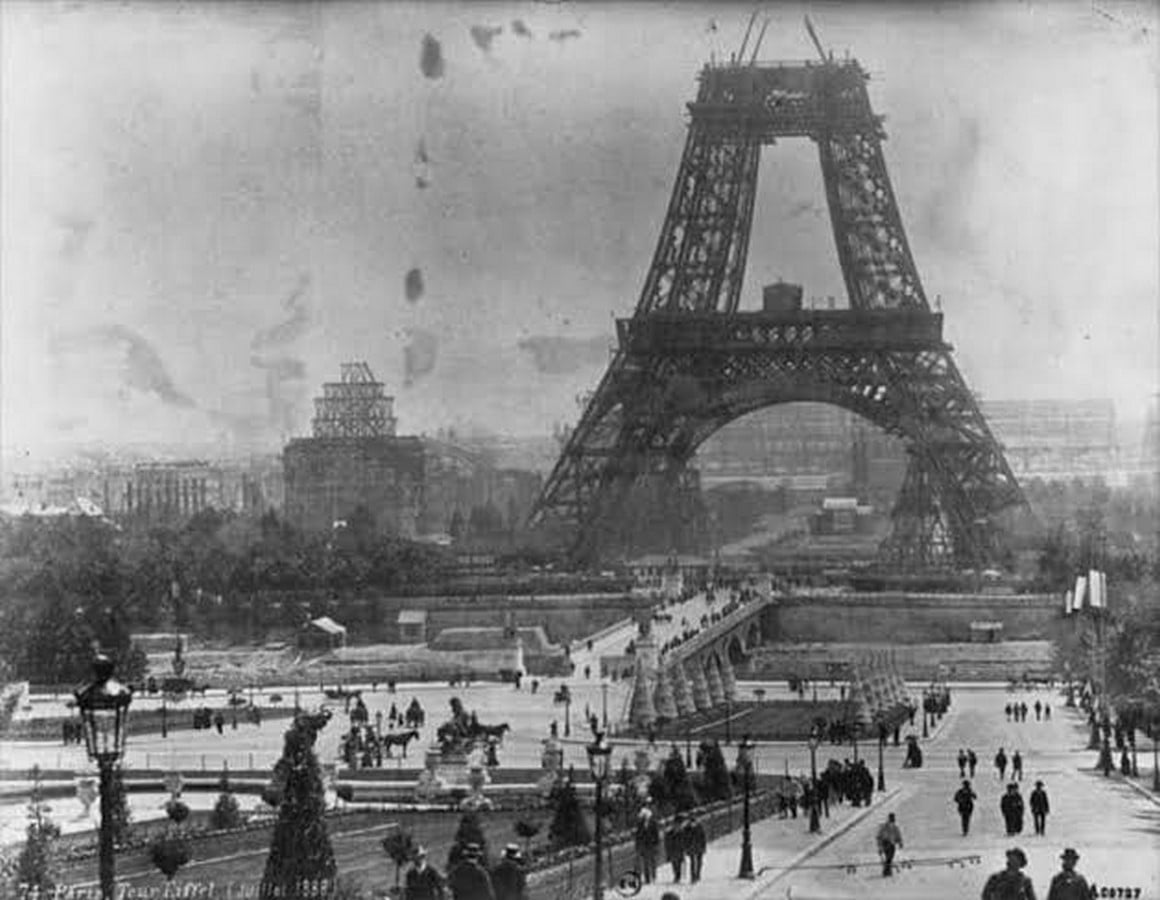
The tower was designed for the Exposition Universelle of 1889, the fair that marked one hundred years since the French Revolution. Two engineers at Gustave Eiffel’s company, Maurice Koechlin and Émile Nouguier, created the first sketch, and architect Stephen Sauvestre later added the decorative arches and softened its outline. Work began in January 1887 and finished in March 1889, a little over two years later. At 300 metres, the Eiffel Tower was the world’s tallest structure, built from thousands of prefabricated iron pieces joined by about 2.5 million rivets. The photographer Louis-Émile Durandelle recorded each stage of construction, and his images show the four legs rising separately before meeting at the first platform, an engineering problem solved in full view of the city.
The Artists’ Protest Against the Eiffel Tower
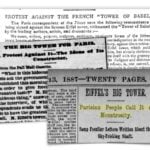
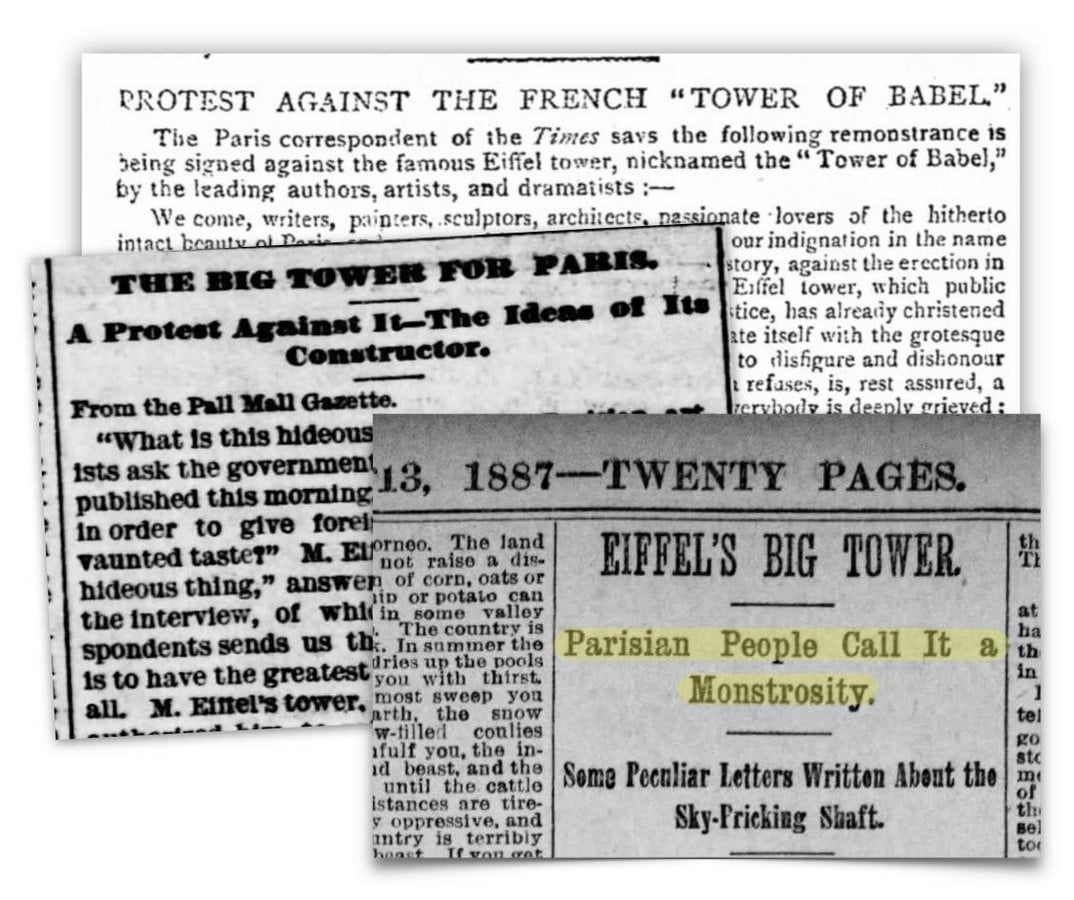
Not everyone was impressed. On 14 February 1887, the newspaper Le Temps published a letter titled ‘Protest against the tower of Monsieur Eiffel’. It was signed by some of the best-known names in French culture, including the architect Charles Garnier, the composer Charles Gounod and the writer Guy de Maupassant. They described the tower as useless and monstrous, comparing it to a giant black factory chimney looming over Paris’s monuments. For them, the city’s beauty lay in stone, in Notre-Dame and the Louvre, and a bare iron frame was an insult to that tradition.
Eiffel answered in the press. He argued that engineering had its own beauty, that the tower’s curves followed the forces of the wind, and that a structure built with such precision deserved the same respect as any palace. A popular story, which Roland Barthes later repeated, says that Maupassant often ate lunch in the tower’s restaurant because it was the only place in Paris from which he could not see it.
A Permit With an Expiry Date
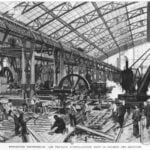
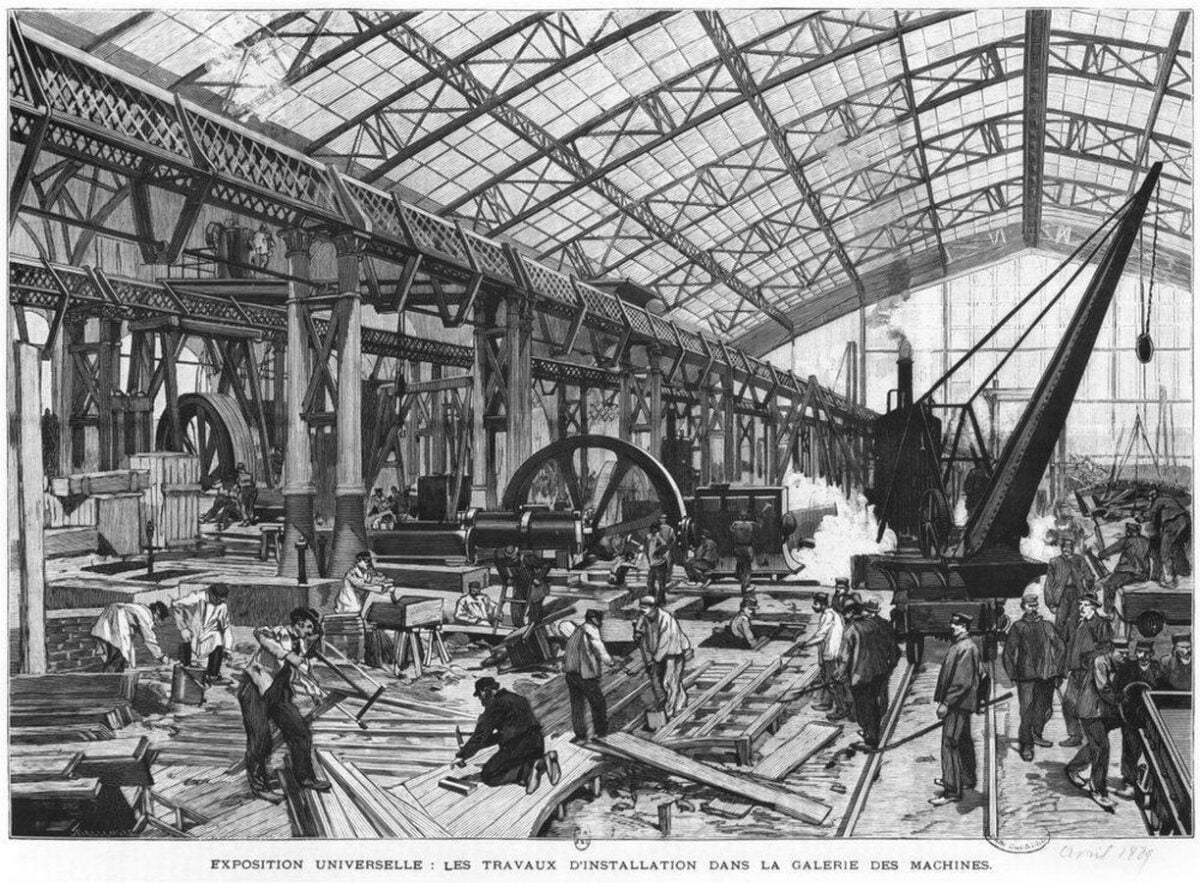
The real threat was not criticism but paperwork. Eiffel paid for most of the construction himself, and in return he was allowed to run the Eiffel Tower and keep the income for twenty years. After that, ownership would pass to the City of Paris, which was free to take it down. This was normal for exhibition buildings. The enormous Galerie des Machines, built for the same fair and admired in its day, was demolished in 1910. Old photographs of the 1889 grounds show both structures standing side by side. Only one of them survived, and the reason has little to do with looks.
The tower was a commercial success from the start. Close to two million people visited during the fair alone, and ticket sales covered much of the building cost within the first year. Still, popularity did not guarantee success. Eiffel understood that to keep the tower, he had to prove its usefulness.
Science as a Survival Strategy
From the 1890s onwards, Eiffel turned the tower into a laboratory. He installed weather instruments near the top and recorded wind, temperature and pressure. He dropped objects from the second platform to study air resistance, and later built a small wind tunnel at the foot of the Eiffel Tower. In 1898, Eugène Ducretet sent a wireless telegraph signal from the tower to the Panthéon, about four kilometres away. Eiffel published the results of these experiments in a large illustrated volume in 1900, a document that reads partly as a scientific report and partly as an argument for the tower’s future (Eiffel, 1900).
The Army Steps In
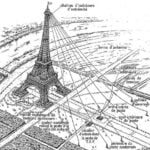
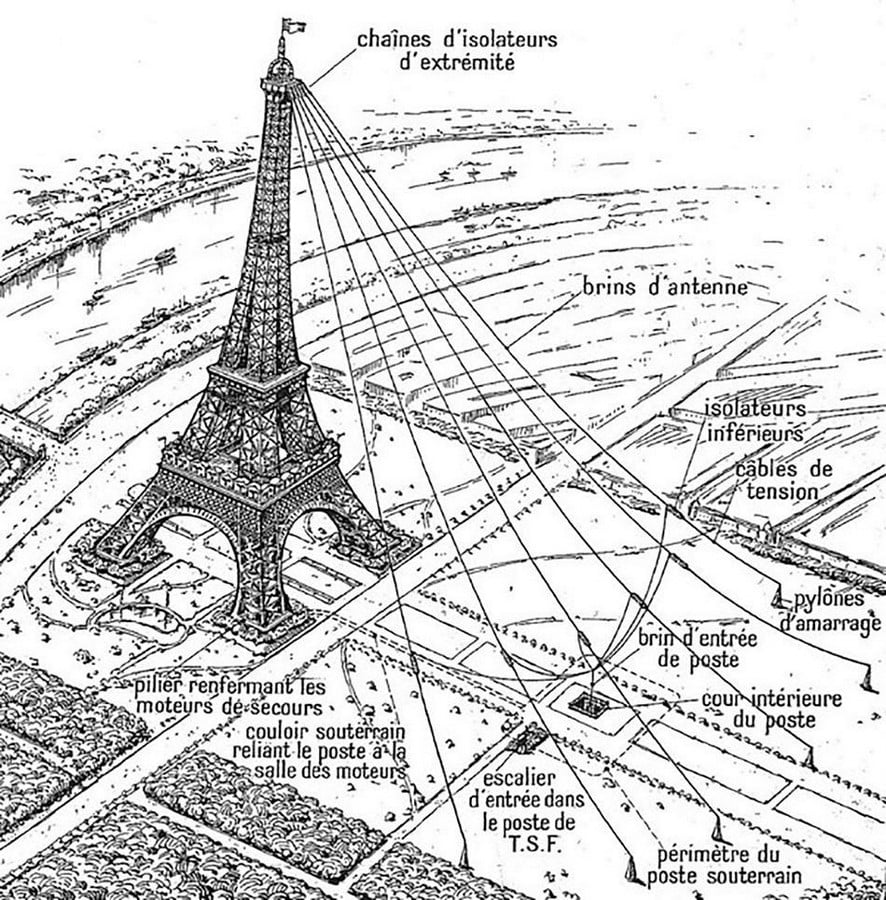
The French army became the most important supporter. In 1903, Eiffel offered the tower to the military for radio experiments and paid some of the costs himself. Captain Gustave Ferrié set up a radiotelegraphy station, and soon the tower could communicate with forts and ships far beyond Paris. In 1910, as the original permit neared its end, the city renewed Eiffel’s concession for another seventy years. A tall iron mast that could send and receive messages across Europe was now a matter of national security, not taste.
War, Radio and a Change of Heart
The First World War settled the question. During the war, the tower’s station intercepted enemy radio traffic, and these messages are often credited with helping French commanders before the Battle of the Marne in 1914. The station is also linked to the intercepted messages used against Mata Hari, who was arrested in 1917. A structure once dismissed as useless had become a working part of the country’s defence.
Public feeling changed with it. Painters such as Robert Delaunay made the tower the subject of bright, broken-up canvases, and photographers and filmmakers used it to stand for everything modern about Paris. The ‘black factory chimney’ of 1887 had become a sign of national pride. Later, the tower hosted regular radio broadcasts and then television transmissions, giving it new reasons to stay.
The Eiffel Tower Today
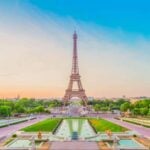
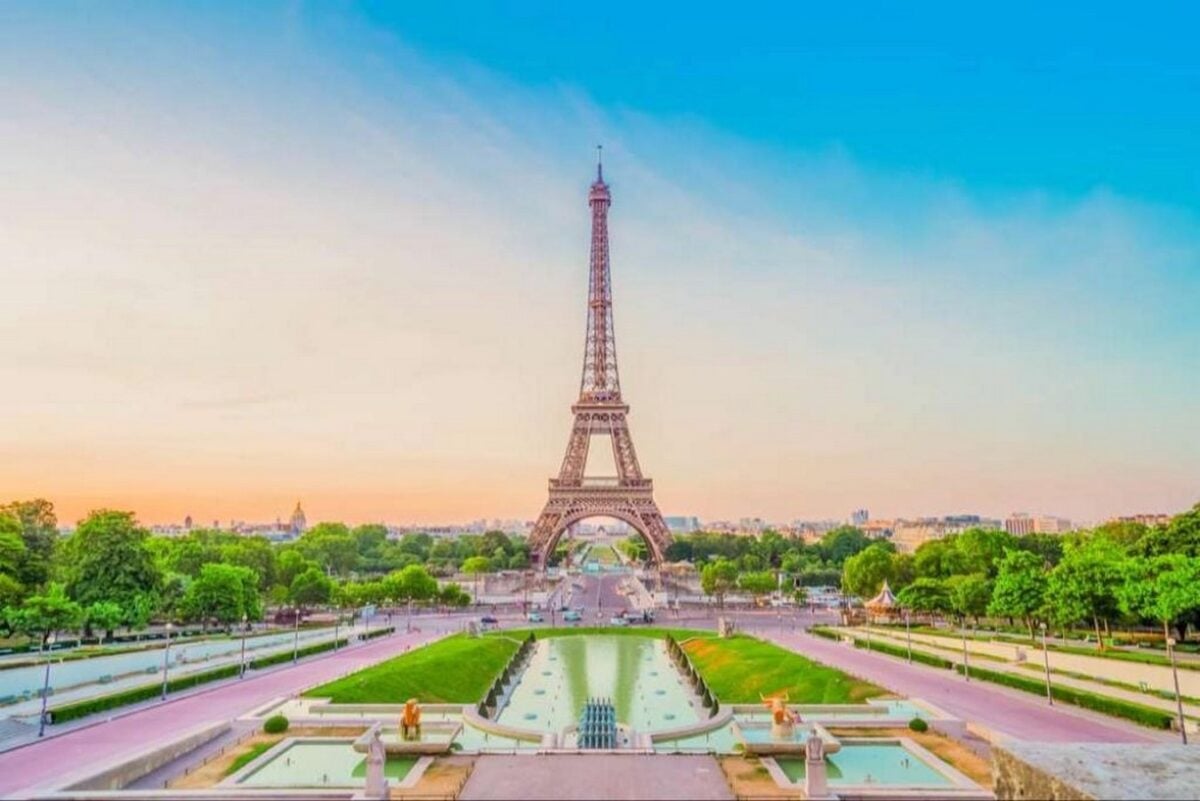
Placing the construction photographs beside images of the tower today shows how little the structure itself has changed. The iron is the same, though it is repainted roughly every seven years to protect it from rust. What has changed is its status. The Eiffel Tower was listed as a historic monument in 1964, and since 1991 it has been part of the UNESCO World Heritage Site covering the banks of the Seine. It now welcomes millions of visitors every year. For the Paris 2024 Olympic and Paralympic Games, small pieces of original iron removed from the tower during renovation were set into the medals, turning a once temporary building into something athletes could take home.
What the Archives Reveal
The records tell a clear story. The tower survived not because critics changed their minds about its beauty, but because its builder found it a job. Construction photographs show the engineering, the 1887 protest shows the opposition, the expiring permit shows how close it came to demolition, and the radio experiments show how it was saved. Beauty came later, once people had lived with it long enough to love it. Few buildings show so clearly that usefulness, money and politics can matter as much as design in deciding what a city keeps. The Eiffel Tower is the proof.
Image source:
- Image 1: The Eiffel Tower under construction, photographed by Louis-Émile Durandelle, 1888. Source: https://www.facebook.com/FranceHotelGuide/posts/this-rare-photo-captures-the-%F0%9D%97%98%F0%9D%97%B6%F0%9D%97%B3%F0%9D%97%B3%F0%9D%97%B2%F0%9D%97%B9-%F0%9D%97%A7%F0%9D%97%BC%F0%9D%98%84%F0%9D%97%B2%F0%9D%97%BF%F0%9D%98%80-construction-in-1888-just-one-year-be/1193883272738542/
- Image 2: The Protest against the tower of Monsieur Eiffel as printed in Le Temps, 14 February 1887. Source: https://newsletter.pessimistsarchive.org/p/the-eiffel-tower-was-called-techno
- Image 3: General view of the Exposition Universelle of 1889, with the Galerie des Machines in the distance. Source:https://www.meisterdrucke.uk/fine-art-prints/French-School/77257/Building-site-of-the-Galerie-des-Machines-at-the-Universal-Exhibition-of-1889,-Paris,-April-1889.html
- Image 4: Radiotelegraphy antennas strung from the summit of the Eiffel Tower, early twentieth century. Source: https://read.nxtbook.com/ieee/antennas_propagation/antennas_propagation_apr_2023/historically_speaking.html
- Image 5: The Eiffel Tower today, seen from the Trocadéro. Source: https://www.hotelbleudegrenelle.com/news/articles/the-trocadero-its-esplanade-towards-the-eiffel-tower-47201