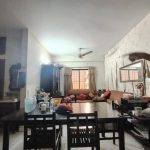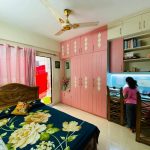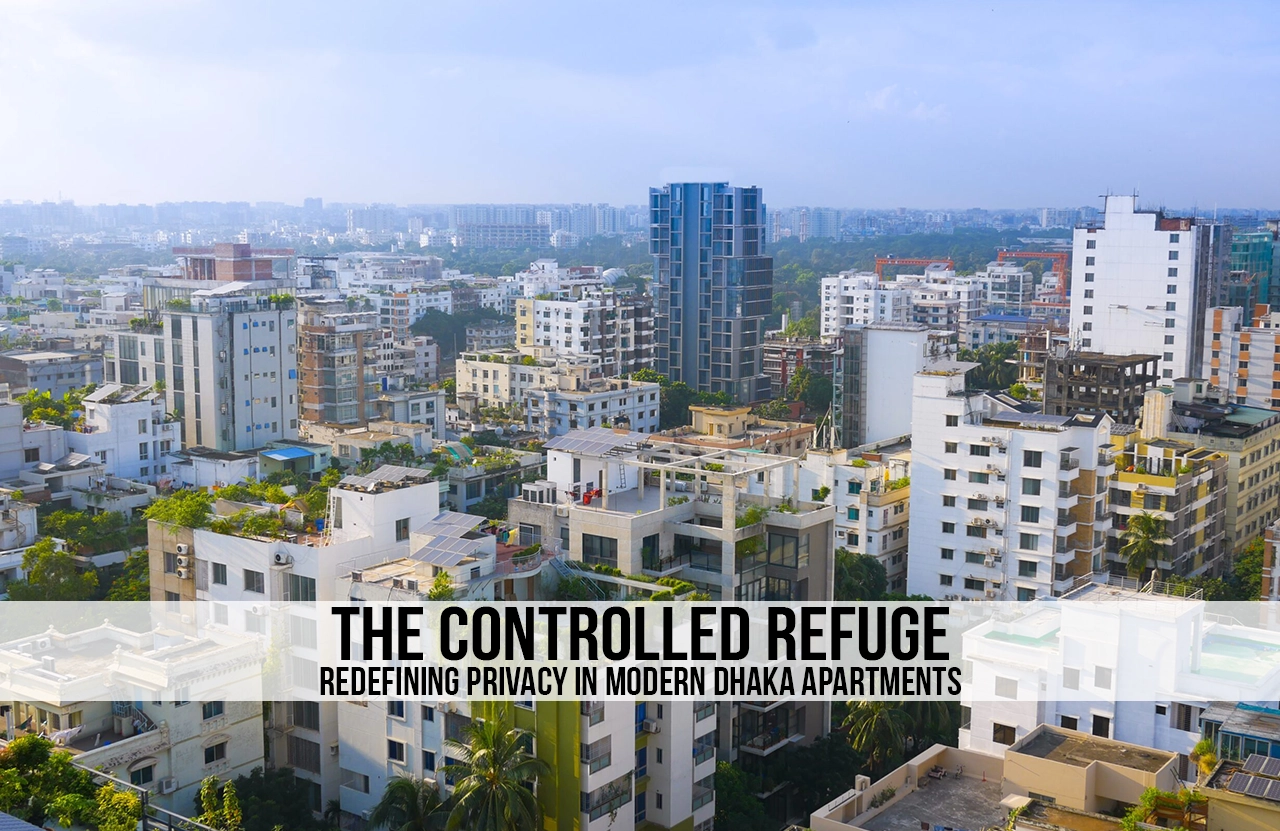
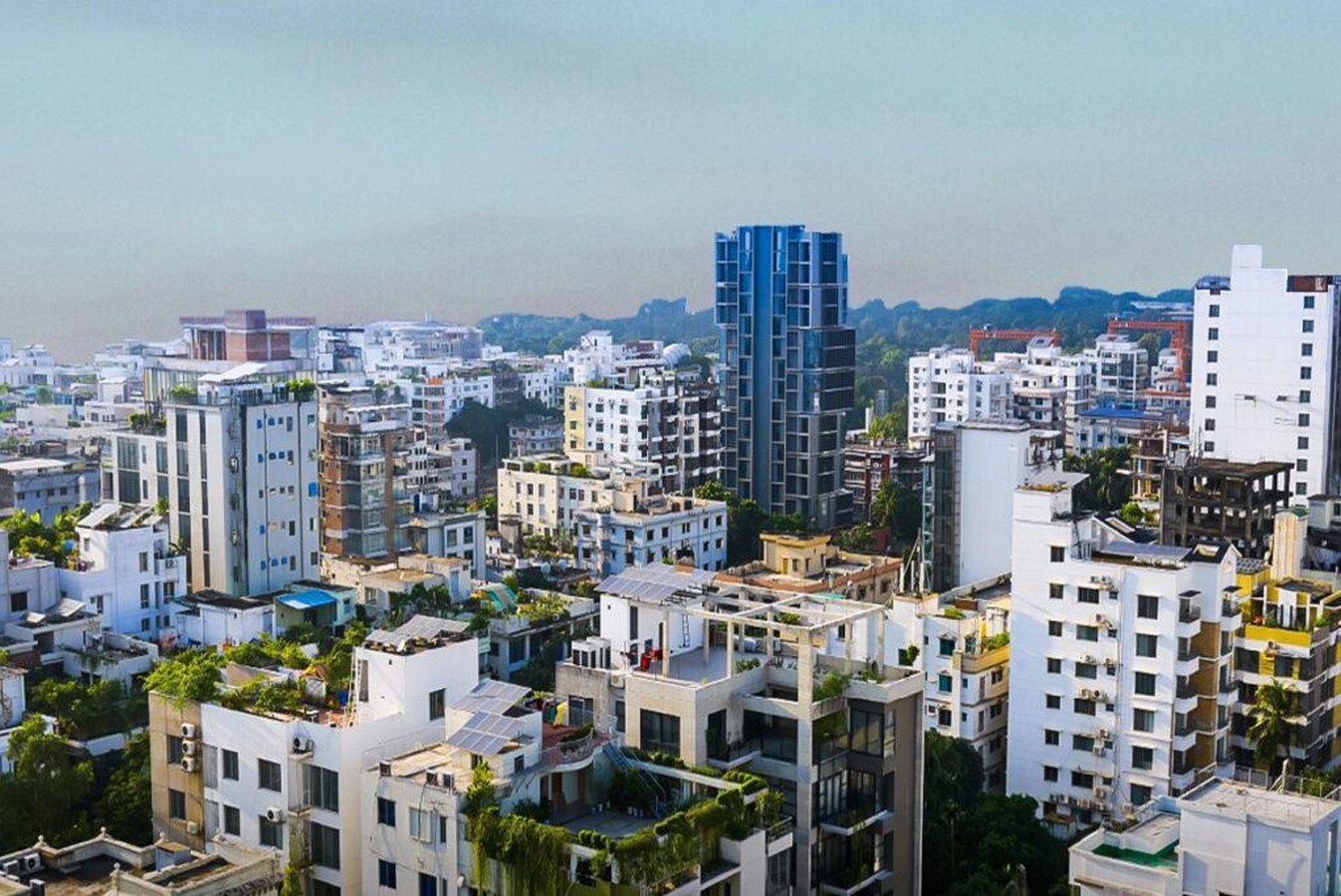
The concept of modernity has altered the common types of housing. People are no longer residing in houses with courtyards, but are instead opting for apartments. This change has led to a shift in the lifestyle and behavior of people. The role of architecture in the lives of people can be clearly seen. The lifestyle of a homemaker residing in a modern apartment complex in Dhaka, within a densely populated urban setting, can be used to illustrate this. To the homemaker, the apartment where she resides is not merely a physical entity; instead, it is a site where negotiations are constantly taking place. Many studies on home spaces have shown that a home is not merely designed but constantly shaped. This way, the homemaker acts as the choreographer of the home.
The interior as a World of Routine
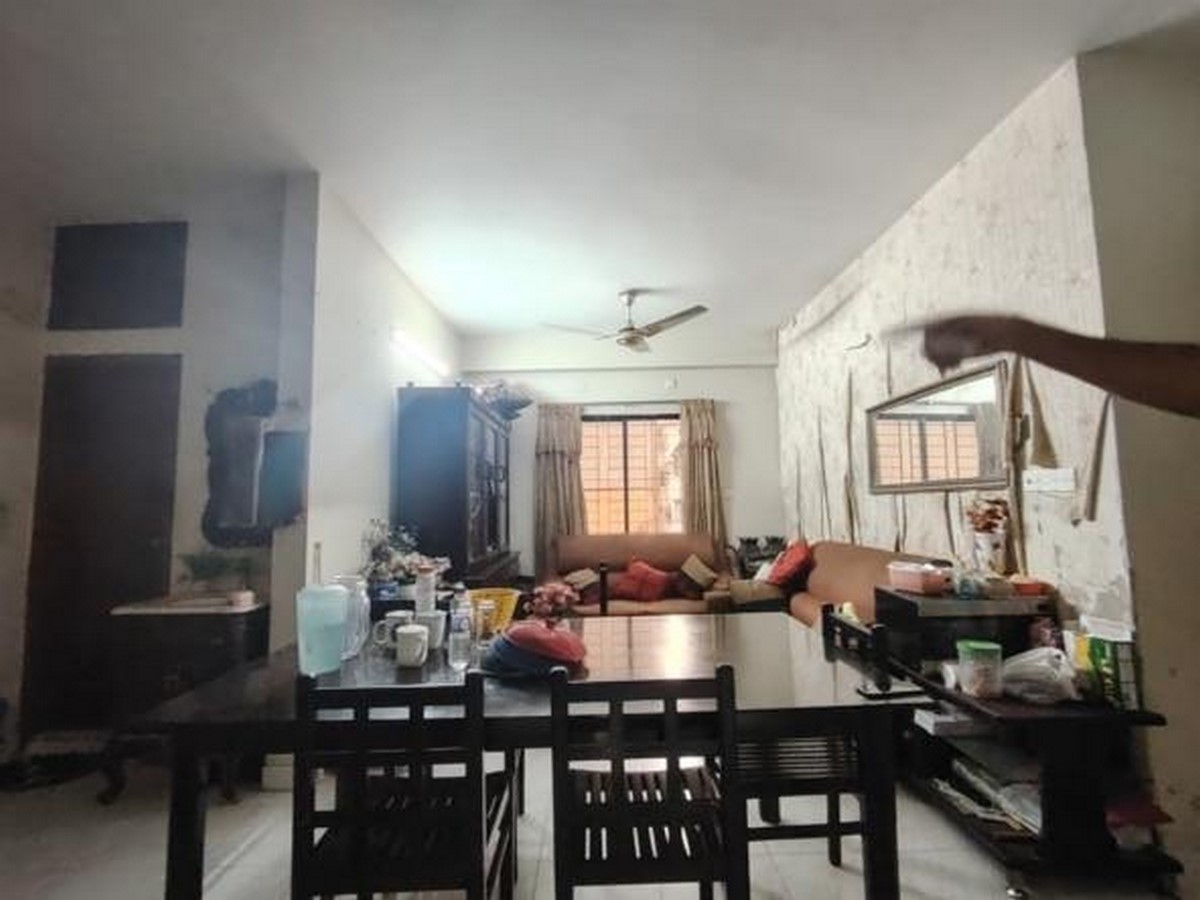
The day begins with the homemaker making some adjustments. She draws the curtains enough to allow light to enter, but not enough to reveal what is going on inside. Similarly, the windows are left open enough to allow the wind to blow through them. All these actions are not random; instead, they are refined over time. The apartment provides a controlled connection to the outside but does not offer openness. Light enters the home, but within limits. Similarly, the wind blows through the windows but within limits. The homemaker uses these conditions to her advantage.
The movement within the apartment follows predictable patterns. The kitchen, dining space, and adjacent spaces form a single entity of activity. Routes such as those between the stove and sink, rooms, and windows are repetitive. Gradually, these movements become an integral part of the body. Studies of domestic spaces reveal that space is not only occupied but also created.
Thresholds: Between Inside and Outside
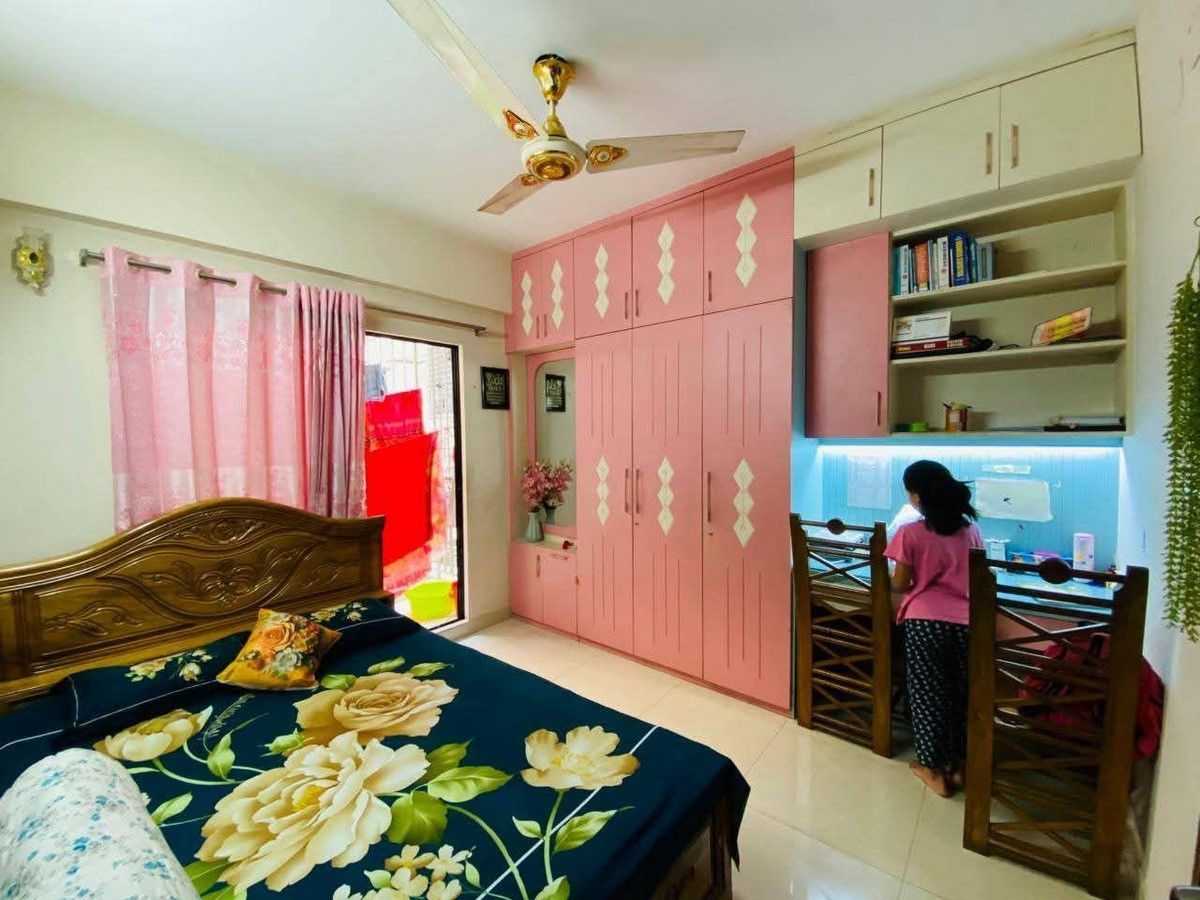
Certain spaces within the apartment function as thresholds. These spaces lie neither entirely inside nor outside.
Windows
These spaces frame the outside world without really connecting to it. The outside is there, but it is still quite removed. You look outside, but you remain inside.
Balconies
These spaces provide an extension of space, albeit temporary. These spaces provide space to stand, space to pause, space to view. Additionally, these spaces are used in a particular way. Their usage is limited due to their visibility from adjacent buildings and streets.
Curtains
These spaces are perhaps the most active within an interior space. These spaces control light, visibility, and privacy. These spaces change throughout the day. These spaces provide subtle transitions between open and closed. These spaces function as critical components of modern apartments. These spaces function as tools by which the homemaker controls what of the outside world intrudes into the interior space and what of the interior space is revealed to the outside world.
Privacy as Practice
Traditionally, in houses, privacy was achieved by incorporating it into space. Multiple levels of space functioned as transitions between spaces that were public and those that were private. In modern apartments, these levels of space are compressed, bringing spaces of privacy close to spaces of entry.
As such, privacy is no longer just an architectural concept; it is now behavioral. Research carried out in housing in Dhaka indicates that privacy is achieved by residents, particularly women, in behavioral ways rather than in physical ways.
Doors are kept partially closed. Movements are timed. Certain areas are used differently based on the presence of individuals. The homemaker controls the visibility within the home, ensuring the interior remains protected even when the layout doesn’t support it completely.
In this context, privacy is not provided; it is maintained.
The Apartment as a Controlled Refuge
The city outside the walls is crowded, noisy, and unpredictable. The apartment, on the contrary, has its own predictable environment. The sound, the air, and the light are all controlled. The area inside the apartment is confined.
The apartment has its own specific function due to the difference between the two environments. It becomes a refuge. It is a controlled interior space where activities can take place within certain predetermined parameters, not an open area of freedom. Research on apartment living in Dhaka has commonly described the apartment as an intentional removal from the chaotic cityscape.
Moreover, the control is limited in its own right. There is limited openness, limited movement, and no complete connection with the outside world.
Architecture and the Everyday
The apartment is not defined by the way it is structured. The apartment is defined by the way it is lived. Some of the small and day-to-day activities are: opening the window, adjusting the curtain, entering the balcony for a short time, moving from one place to another, etc. Spaces are constantly being reshaped and shaped. The apartment is not occupied by the homemaker. Instead, the homemaker makes the apartment through her own schedule, adjustments, and concerns. The day-to-day activities are of great significance in defining the way people see and understand the interior.
Architecture is not seen as a passive entity in this context. Instead, it is seen as a passive entity that constantly influences the day-to-day life of the people and also gets molded.
A Lived Architecture
The architecture of the apartment in Dhaka is not so prominent. Instead, it works silently through the process of opening and closing boundaries and possibilities. The apartment is not seen as a physical entity for the homemakers. Instead, it is seen as a lived space.
Architecture is not constructed in this context. Instead, it is constantly being redefined and lived.
References:
- Cieraad, I., 2002. “Out of my kitchen!” Architecture, gender and domestic efficiency. Journal of Architecture, 7(3), pp.263–279.
- Gomes, C.D., 2014. Study of spatial organization of the contemporary residential apartments in Dhaka with special attention to gender aspect. PhD thesis. Bangladesh University of Engineering and Technology (BUET).
- Gomes, C.D. and Nilufar, F., 2016. Understanding privacy in domestic space: A study of transformation of urban houses in the context of Dhaka. In: Cities in Transformation: Research & Design. Dhaka: BUET.
- Gürel, M.Ö., 2009. Defining and living out the interior: The ‘modern’ apartment and the ‘urban’ housewife in Turkey during the 1950s and 1960s. Gender, Place & Culture, 16(6), pp.703–720.
- Mridha, M., 2015. Living in an apartment. Journal of Environmental Psychology, 43, pp.42–54.