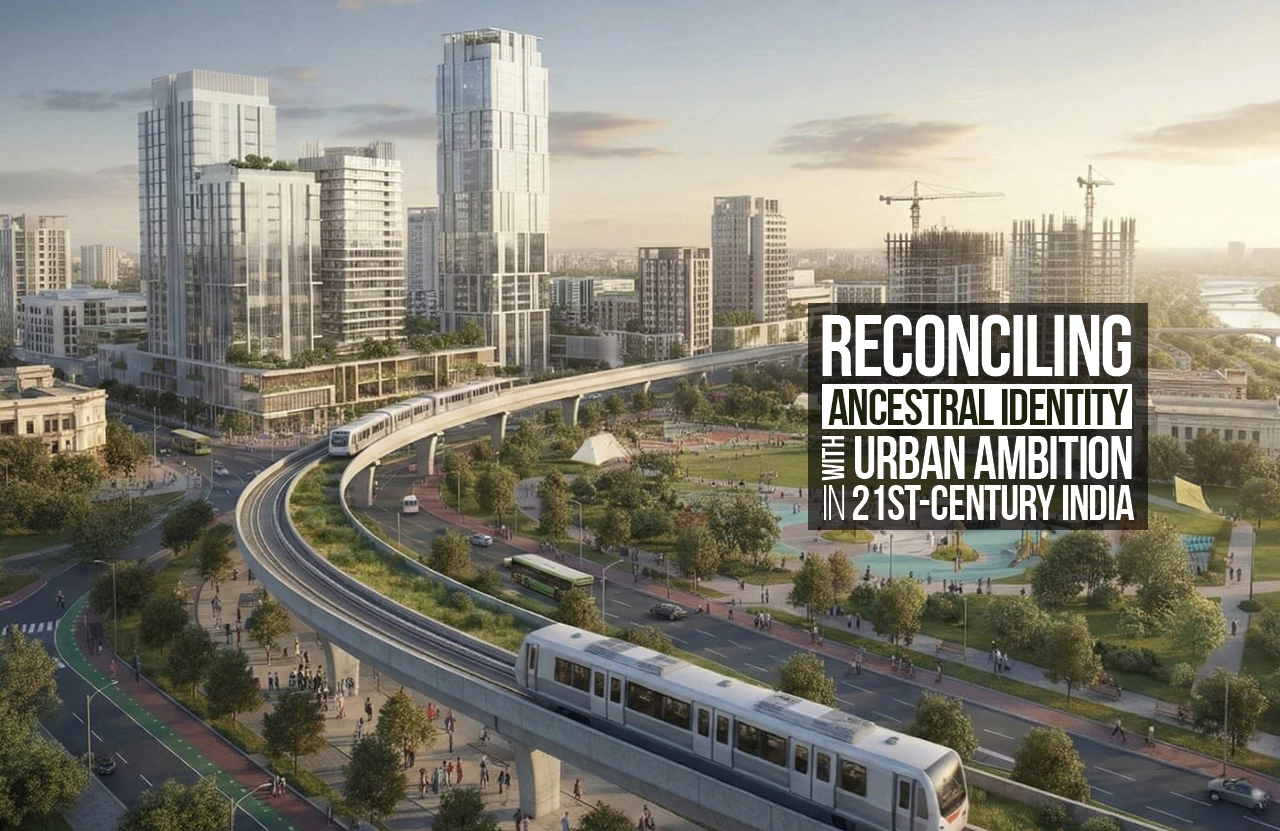
India’s urban areas are growing at an unprecedented rate. Infrastructure corridors, metro systems, smart city projects, and international real estate investments are rapidly changing city landscapes. At the same time, these cities maintain strong ties to their historical identities, shaped over centuries by rituals, craftsmanship, social norms, and cultural traditions. The conflict between inherited urban memory and modern goals has become a major challenge in 21st-century Indian urbanism. Merging these aspects is not only a matter of architectural design or planning rules; it also involves how cities pursue progress while preserving the cultural and social frameworks that support urban life.
Ancestral Identity as Living Urban Memory
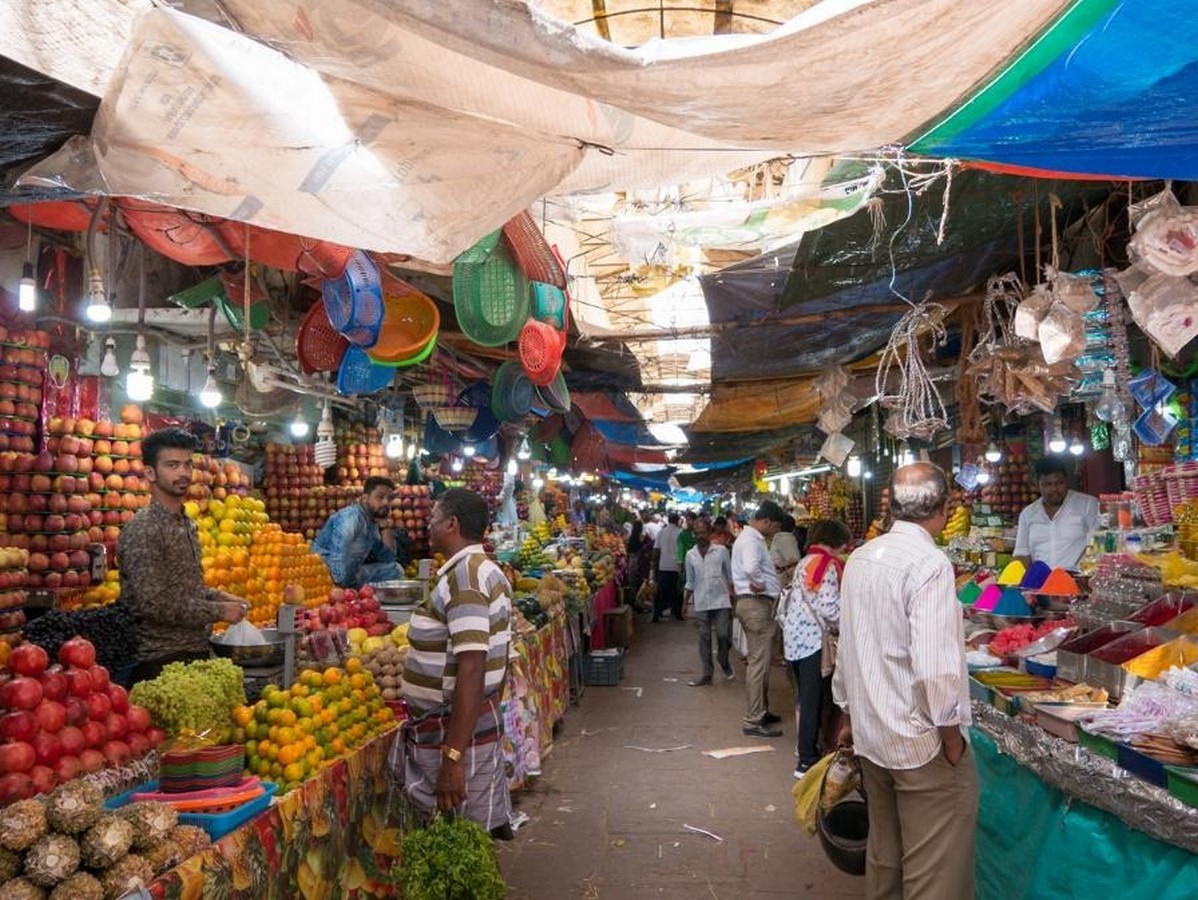
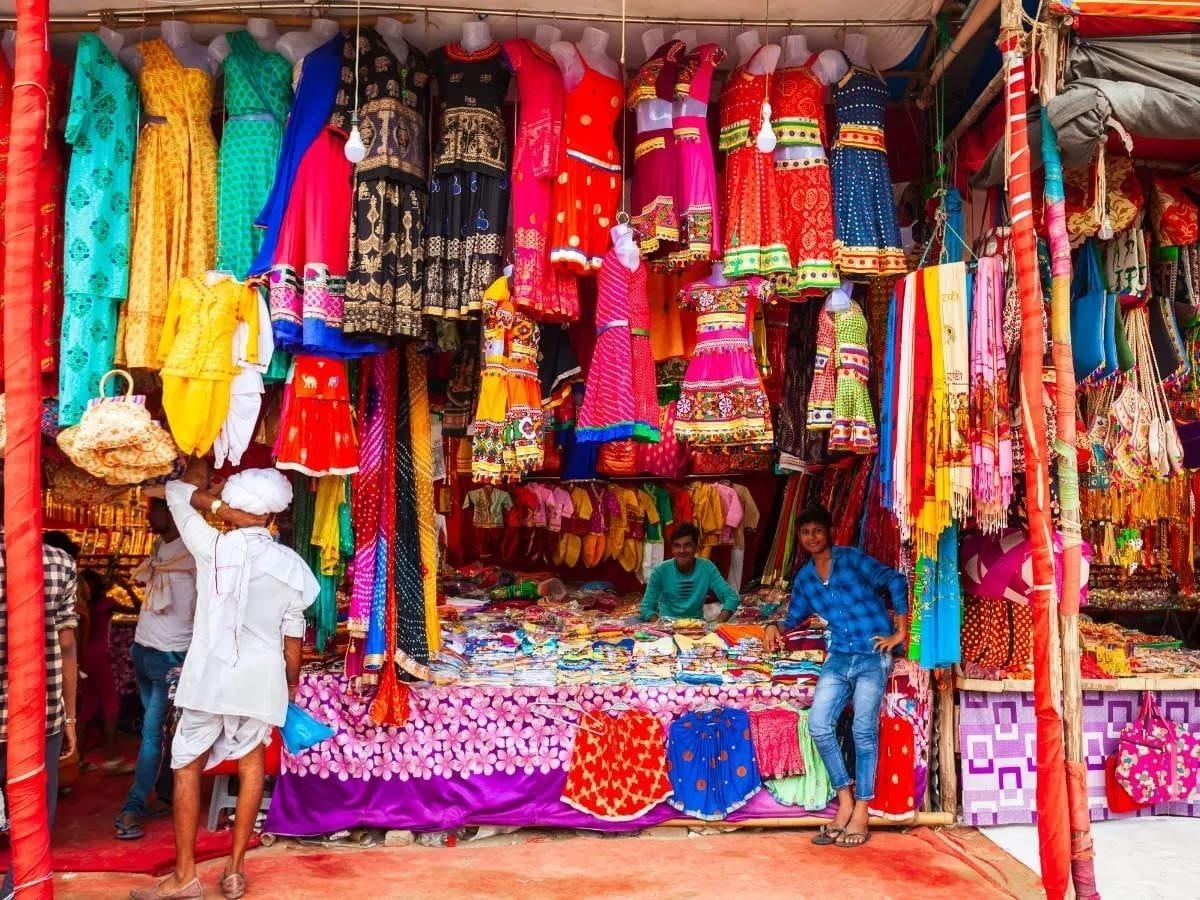
In India, ancestral identity goes beyond protected monuments or historical sites. It’s woven into everyday city life, including street layouts, types of housing, marketplaces, water systems, places of worship, and gathering spaces. Pols, mohallas, bazaars, temple lanes, and ghats represent complex living systems that developed over time due to climate, economic factors, and social organization. These settings are not simply remnants of the past. They continue to support close social networks, informal economies, and adaptable architecture. Their layout reflects communal living rather than isolation, emphasizing closeness, shared resources, and social interaction. When these areas are changed or standardized in the name of modernization, cities lose more than their physical spaces; they lose social cohesion, shared memories, and local knowledge systems that have sustained urban life for many generations.
Urban ambition and the development Narrative
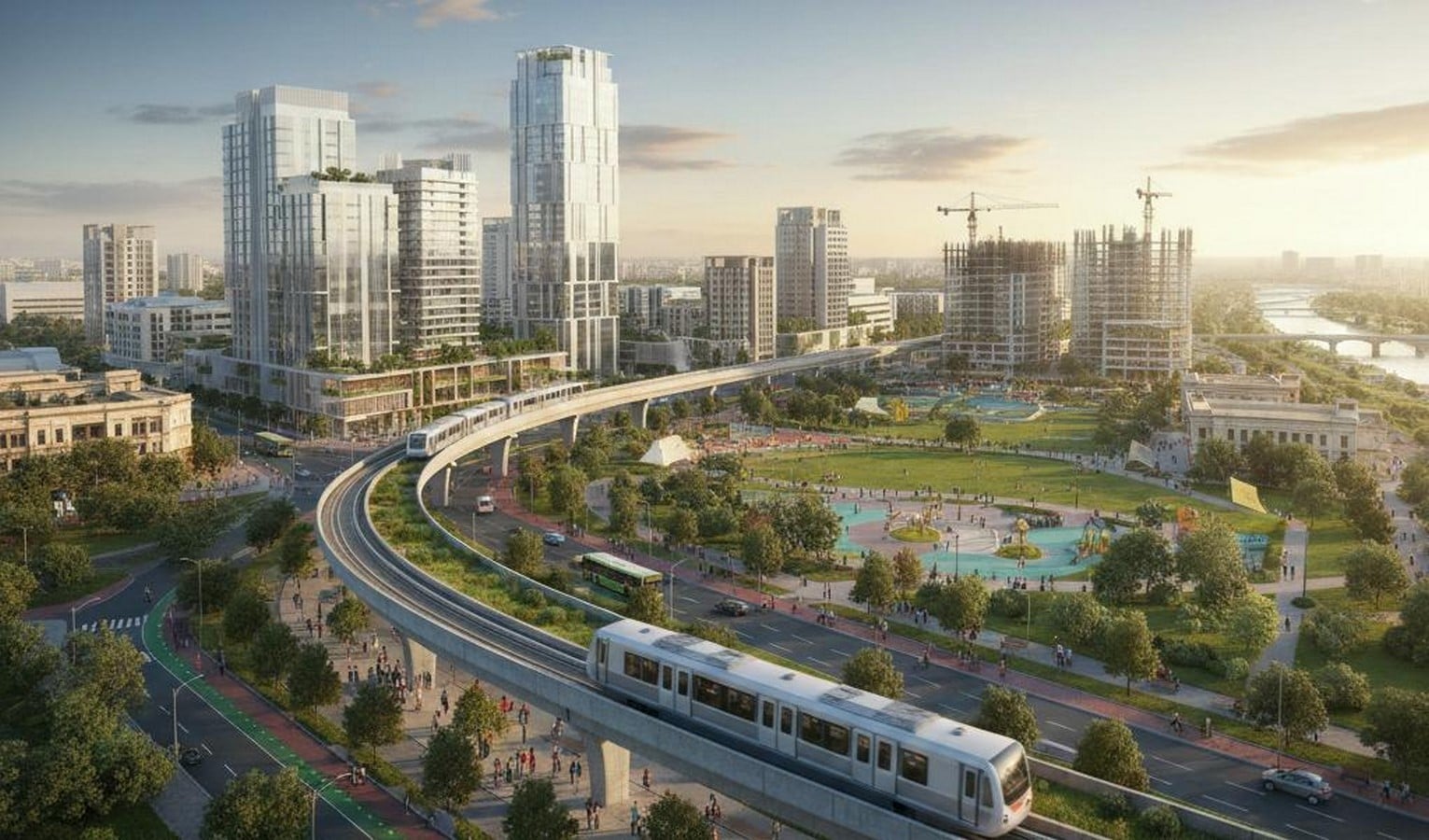
In modern India, people often show their urban ambitions through growth and visibility. This includes global rankings, infrastructure capabilities, investment prospects, and the use of technology. Master plans focus on transportation, density, and property value, often borrowing from international development examples. While this ambition is crucial for handling population growth and creating economic chances, it often leads to major redevelopment efforts that view the existing urban landscape as inefficient or outdated. Long-established neighborhoods are frequently seen as crowded, inefficient, or unhealthy, which leads to calls for their replacement with uniform housing developments, shopping centers, and wide main roads.
Even though these changes can make infrastructure work better, they usually result in areas that are socially divided and urban spaces that lack cultural diversity. When ambition ignores local contexts, it can create urban environments that function well but feel strange to the people who live and work there.
False binary between tradition and progress
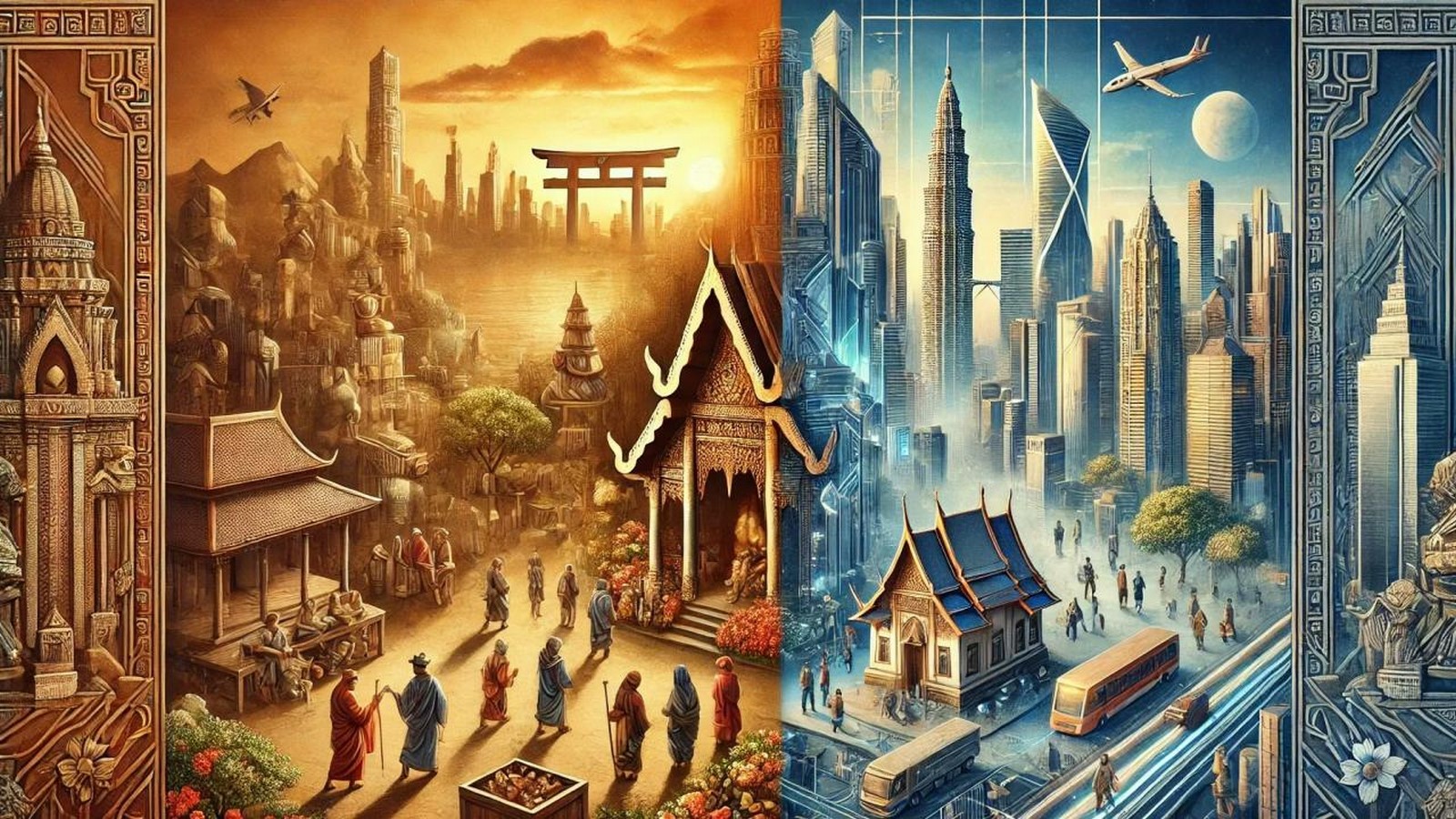
The common narrative shows ancestral identity and urban aspirations as opposing forces. Tradition is considered fixed, while progress is viewed as ever-changing. This view is misleading. Indian cities have historically grown by adding new elements rather than removing old ones. They evolved over time, responding to societal needs rather than following strict planning theories. Our current challenge is not about choosing between the past and the future. It is about redefining what ambition means. If we measure progress only by speed, size, and looks, ancestral identity will always seem like an obstacle. However, if we include resilience, social continuity, environmental awareness, and cultural memory in our definition of ambition, we will recognize traditional urban systems as valuable resources rather than problems.
Architecture and planning as mediator
Architecture and urban design play an important role in promoting integration. Strategies that consider the local context, such as adaptive reuse, gradual densification, and mixed-use development, show that modernization does not require a complete overhaul. By preserving street layouts, repurposing old buildings, and improving infrastructure without disturbing social structures, cities can grow naturally. In Indian cities, architects increasingly face ethical dilemmas. They must choose between prioritizing efficiency and creating a sense of belonging or focusing on innovation rather than tradition. Planning frameworks should evolve beyond strict zoning. They need to acknowledge informal economies, cultural practices, and daily social interactions as key components of urban life, rather than problems to be fixed.
The New Kashi Stadium: Ambition Meets Memory
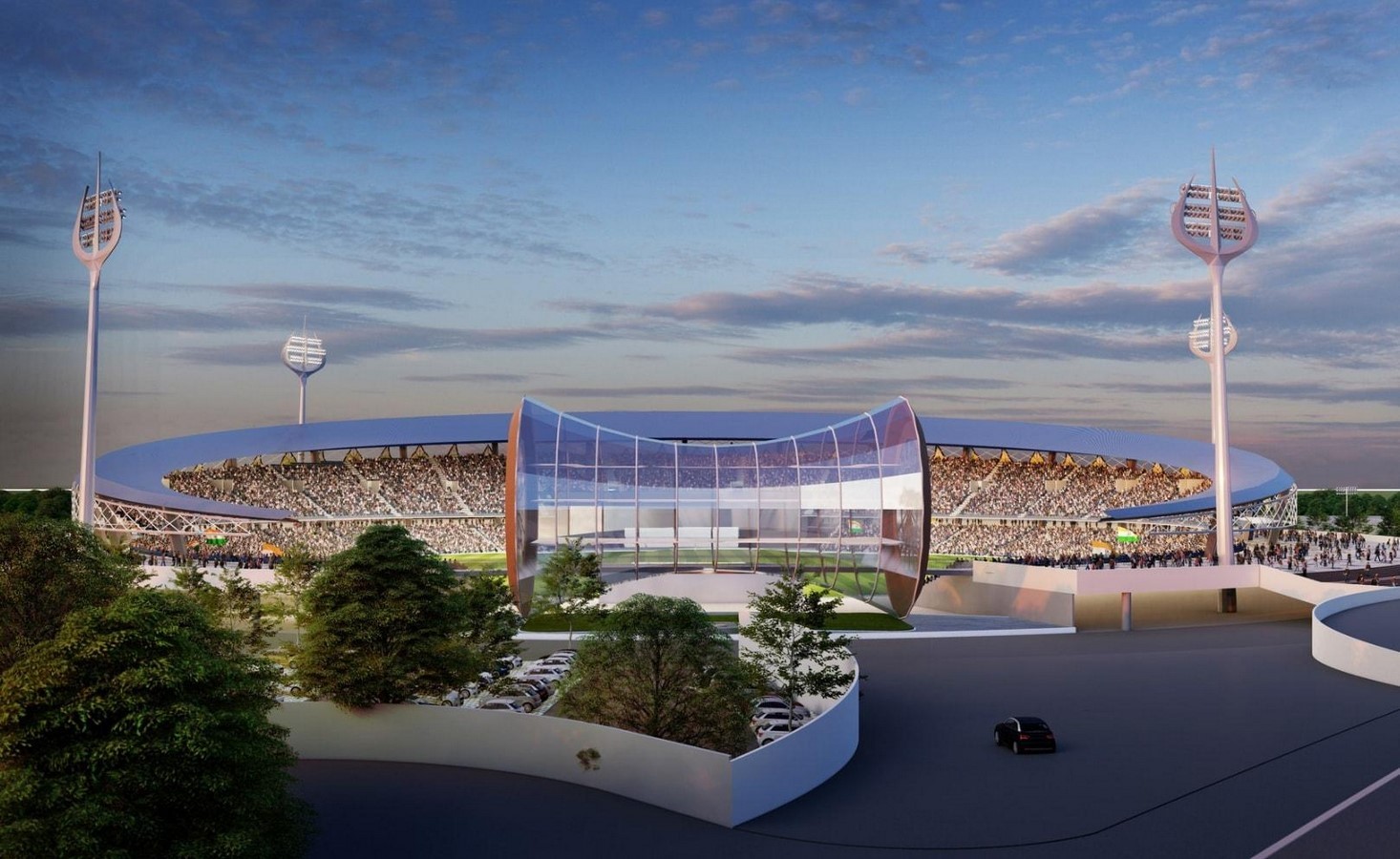
The proposed New Kashi Stadium in Varanasi shows the challenge of balancing ambition with a historically rich setting. Designed as a world-class sports facility, it reflects India’s goal to bring its oldest cities into modern economic and cultural life. The design includes elements that reference ghats and processional forms to connect the project with local symbolism. However, the stadium’s size and infrastructure raise important questions about how it will fit into the daily urban environment. Simply including traditional symbols is not enough if it does not address deeper issues of access, community use, and spatial flow. This project highlights a larger national concern: can major development truly incorporate traditional values, or does it risk turning tradition into just a visual element?
Cultural Identity in a Globalized Urban Future
Globalization has driven Indian cities to showcase themselves as “world-class.” Well-known skylines, reflective buildings, and uniform public spaces often replace unique community identities. While global connectivity is unavoidable, cultural identity cannot rely on just surface-level symbols. Heritage-inspired facades or separate conservation areas do not address deeper spatial and social displacements.
Real reconciliation requires integrating ancestral identity into everyday urban life, including housing, roads, public spaces, and governance. Cultural practices should be allowed to change rather than being preserved as fixed relics. In this context, identity is not something to protect from change; it is something that grows through it.
Harmonizing ancestral identity with urban aspirations is one of the most pressing issues facing Indian cities in the 21st century. The real danger isn’t that cities won’t modernize; it’s that they might modernize while forgetting their roots. This leads to erasing the memories and social structures that give cities their meaning. Projects like the New Kashi Stadium show that the question isn’t whether tradition and progress can coexist. Instead, it’s about how much cultural identity can shape modern urban development. Ultimately, the future of urbanism in India depends on whether we can redefine ambition not as breaking away from history, but as a complex continuation of it.