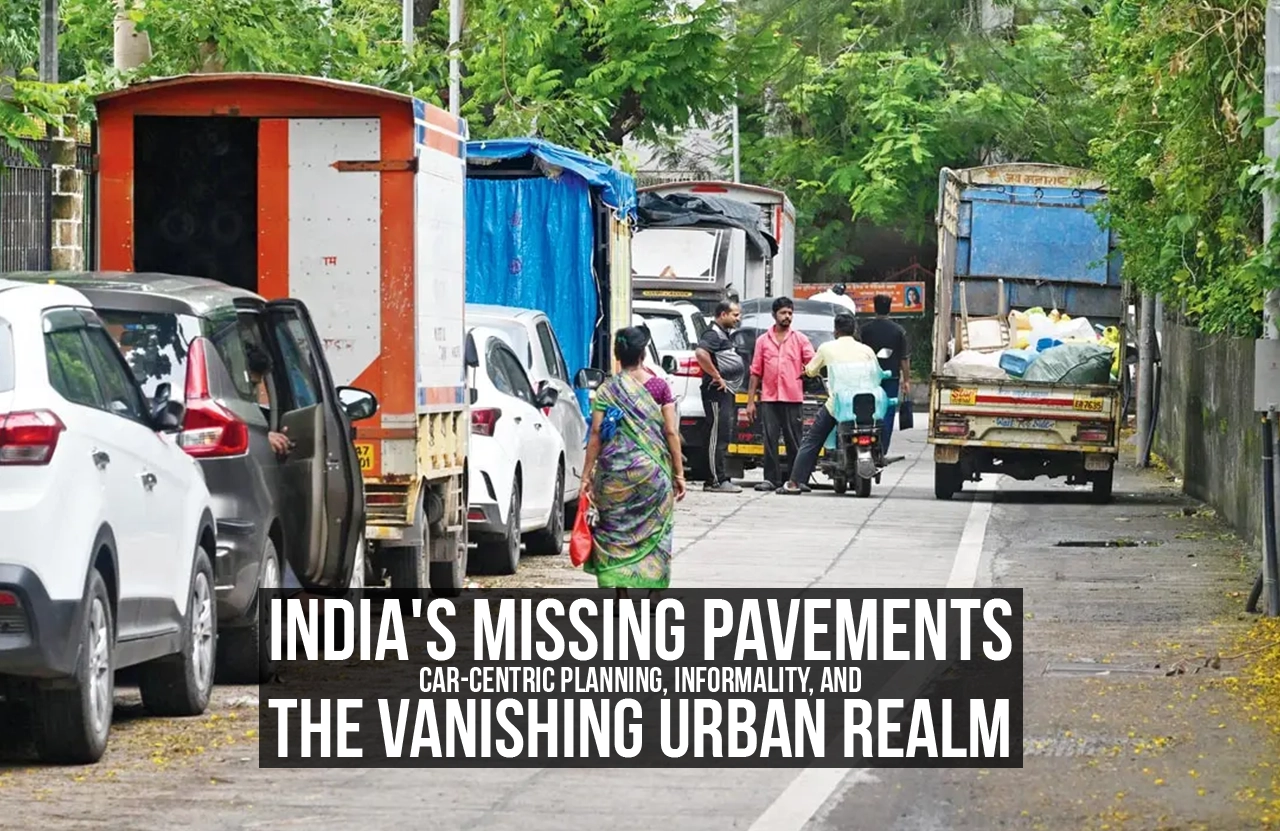
This paper examines the systemic erasure of pedestrian infrastructure in Indian cities, situating the phenomenon of “missing pavements” within the larger context of car-centric planning, governance apathy, and informal urban practices. Using Indore as a case example, the study explores how footpaths—once crucial transitional spaces mediating public and private realms—are disappearing due to skewed infrastructural priorities. Drawing upon Jane Jacobs’ (1961) concept of the “sidewalk ballet” and contemporary urban design research, this paper argues that the neglect of sidewalks signifies not just infrastructural decay but a deeper socio-cultural loss: the erosion of everyday urban vibrancy and pedestrian democracy. It concludes by suggesting policy and design measures to reclaim walkability and inclusivity as central to urban futures in India.
- Introduction
Sidewalks are the most democratic of all urban spaces. They represent freedom of movement, social encounter, and public participation in the life of the city. In the Indian context, sidewalks have historically been vibrant transitional zones—spaces that host multiple uses and users, from vendors and pedestrians to informal gatherings and street performances. They form the urban realm’s connective tissue, mediating between the private domain of buildings and the public sphere of streets (Hertzberger, 2001).
Yet, through three decades of rapid motorisation and infrastructure-driven urbanism, India has systematically marginalised pedestrians. Streets designed for human-scale interaction have become increasingly dominated by vehicles. The outcome is not just the absence or deterioration of footpaths but the symbolic erasure of pedestrian rights and collective urban life.
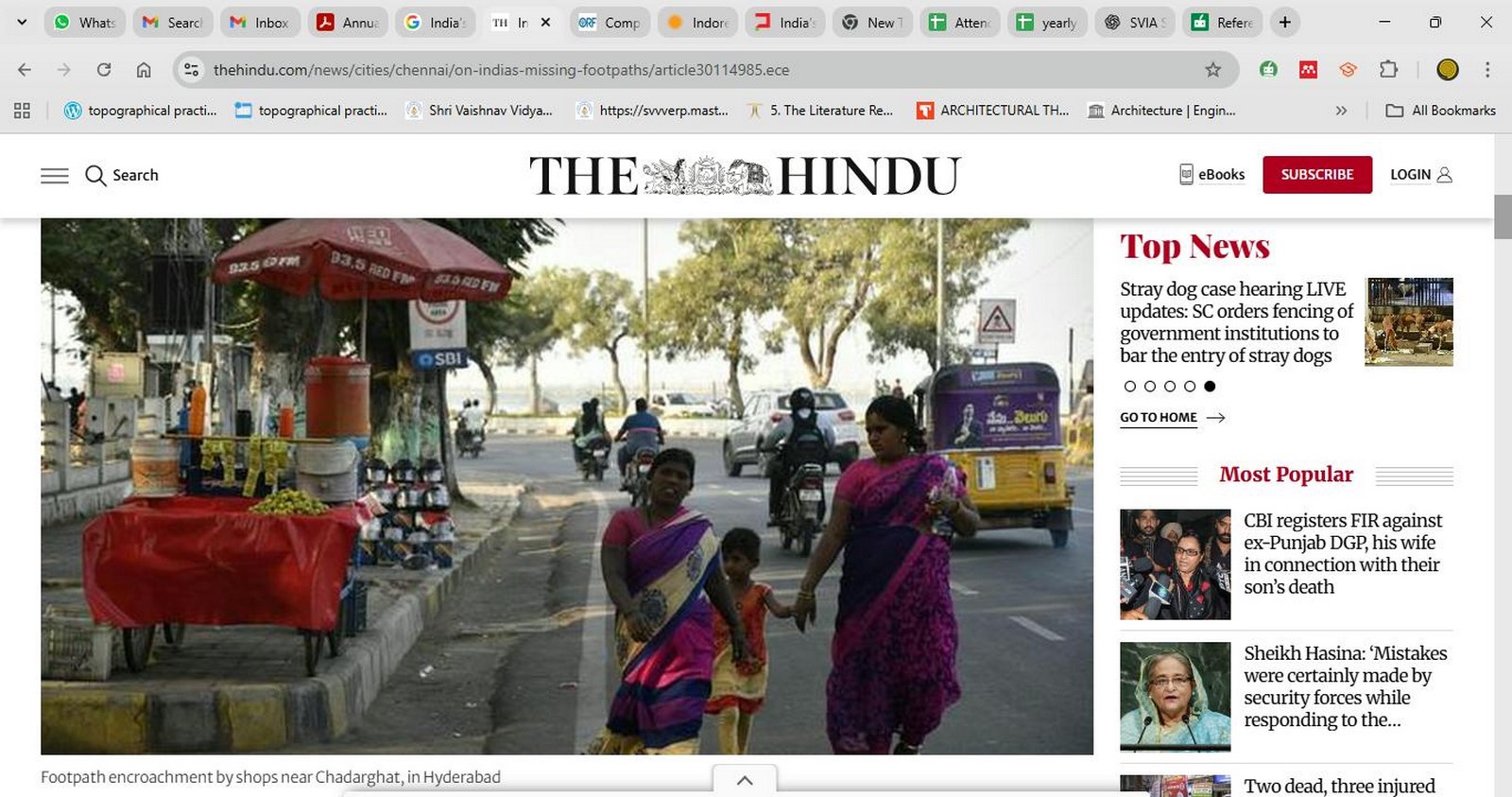
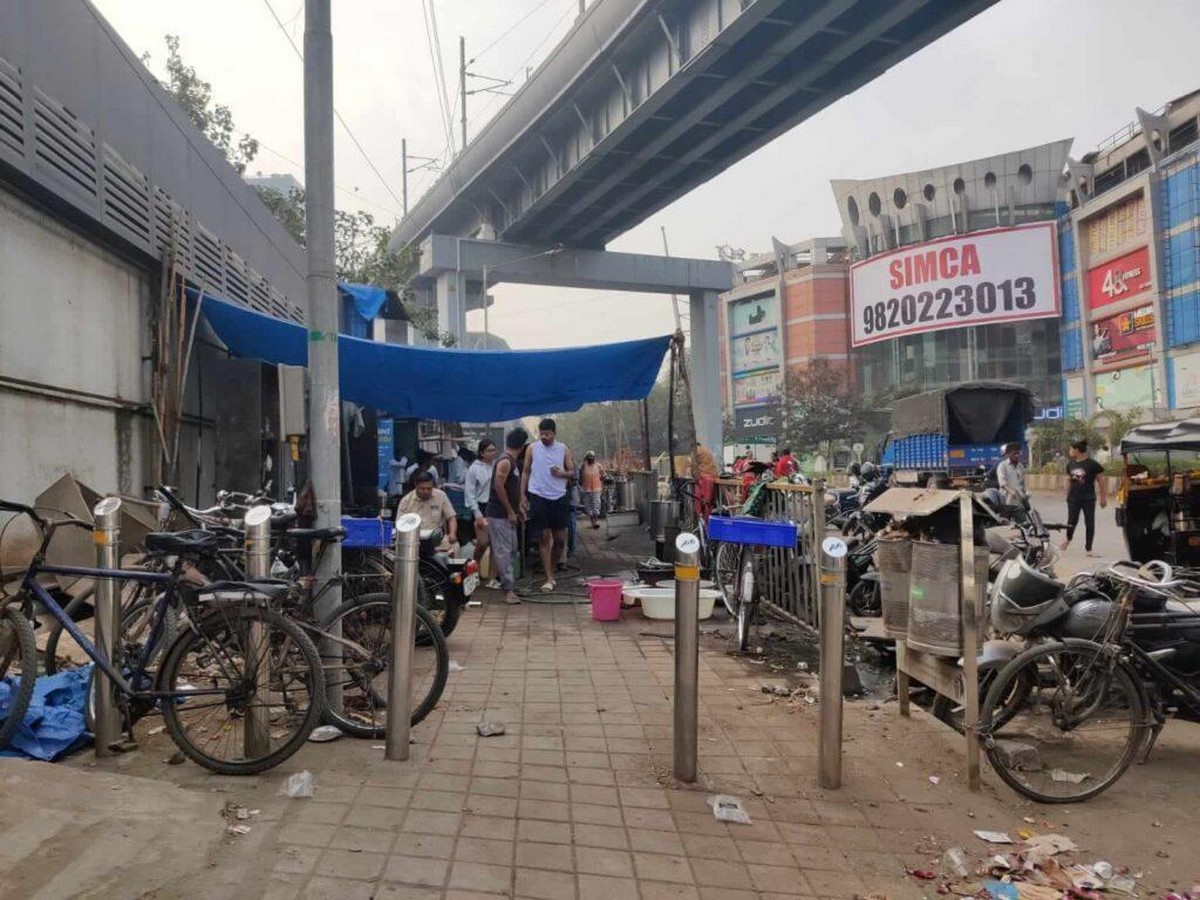
Jane Jacobs (1961) emphasised that the vitality of cities depends on “eyes on the street,” a phrase that captured her belief in the social function of sidewalks as sites of safety and interaction. Yet, in contemporary Indian cities, these sidewalks have been reduced to narrow margins, encroached by vendors, utilities, or parked vehicles, and often nonexistent beyond central business districts.
This study investigates this phenomenon through the lens of Indore, a city that paradoxically ranks as India’s cleanest urban centre under the Swachh Bharat Mission but continues to exhibit broken, discontinuous, or missing pavements. The paper situates Indore’s condition within national patterns of car-centric planning and governance apathy, linking it to broader debates on informality, pedestrian justice, and urban vibrancy.
- Conceptual Framework: Sidewalks as Transitional Urban Realms
- 2.1 Sidewalks Beyond Infrastructure
Sidewalks serve more than utilitarian functions; they epitomise socio-spatial interaction. According to Hertzberger (2001), a transitional space negotiates between private and public life. Such ‘in-between’ places, including verandahs, courtyards, platforms, and shaded footpaths, thus support both movement and encounter.
In Indian urbanism, the sidewalk has conventionally merged with these typologies. It is a fluid territory accommodating formal and informal exchanges, rituals, and micro-economies. The absence of such spaces disrupts not just pedestrian continuity but the cultural rhythm of urban life.
- 2.2 The Sidewalk Ballet
Jane Jacobs (1961) introduced the metaphor of the “sidewalk ballet” to describe the intricate choreography of everyday city life: shopkeepers sweeping, children playing, commuters passing, and neighbours greeting. She argued that this everyday diversity generates both safety and community.
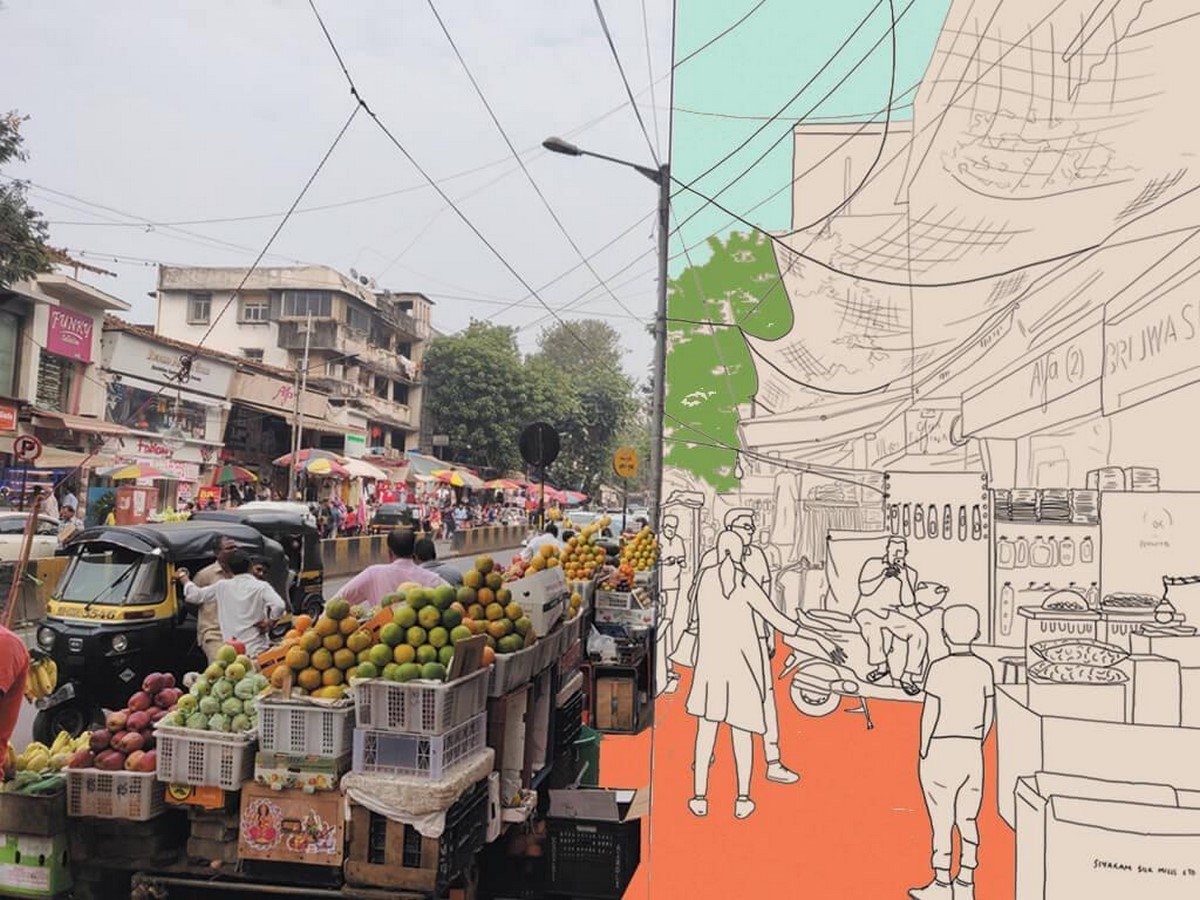
It plays out with a particularly local rhythm in Indian cities, where vendors sell tea, barbers set up roadside stalls, and families stop to converse. For this reason, sidewalk erosion represents the disruption of this urban choreography; it leads to alienation and isolation, and a decline in the sensory experience of cities.
- Methodological Orientation
The qualitative, interpretive approach of the paper rests on an interpretive analysis that draws upon the existing literature, government reports on mobility, and observational data for Indore. The analysis integrates, at a secondary level, policy documents of the India Urban Mobility Report (MoHUA, 2019) and Complete Streets Toolkit for Indian Cities (ITDP, 2023). It integrates theoretical standpoints from urban design literature, highlighting spatial experience, informality, and pedestrian rights (Jacobs, 1961; Bhan, 2020; Anjaria, 2022).
Because this research does not gather empirical data from the field, its interpretive framework places these sources into context to draw out the deeper implications of missing pavements as a design and governance failure.
- India’s Car-Centric Planning Paradigm
- 4.1 The Rise of the Automobile City
Post-1990s liberalisation saw the automobile emerge as a symbol of modernity in India. Policy and investment patterns began favouring highways, flyovers, and expressways, often at the expense of pedestrian infrastructure. The Ministry of Housing and Urban Affairs (2019) reports that over 40% of daily trips in Indian cities are made on foot, yet over 70% of road space is allocated to vehicles.
This imbalance reflects a developmental bias: roads are seen as economic infrastructure, while sidewalks are treated as afterthoughts. The notion of “mobility as throughput” has replaced “mobility as accessibility”, undermining human-scale planning.
- 4.2 Planning and Institutional Apathy
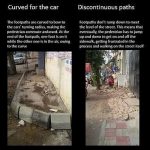
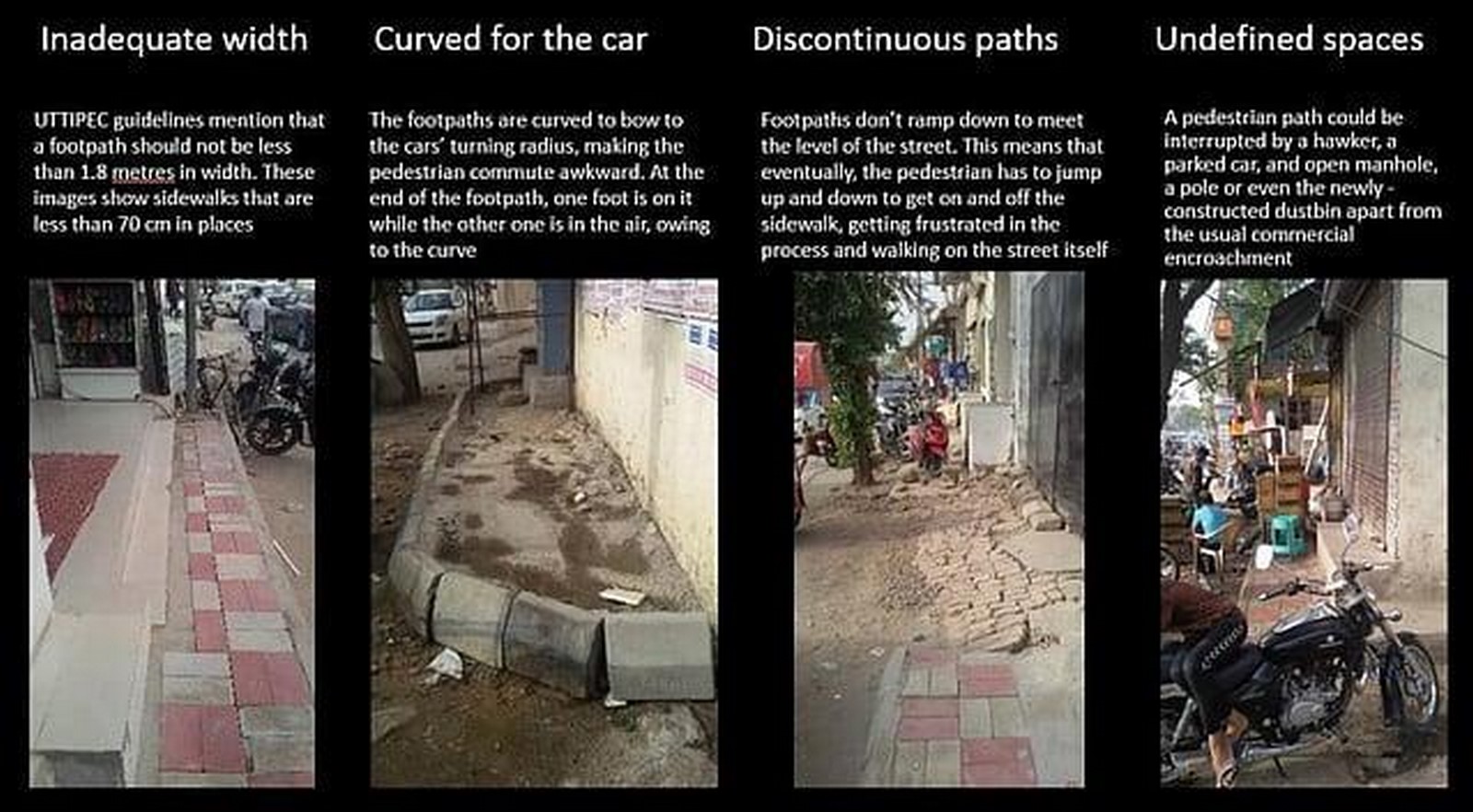
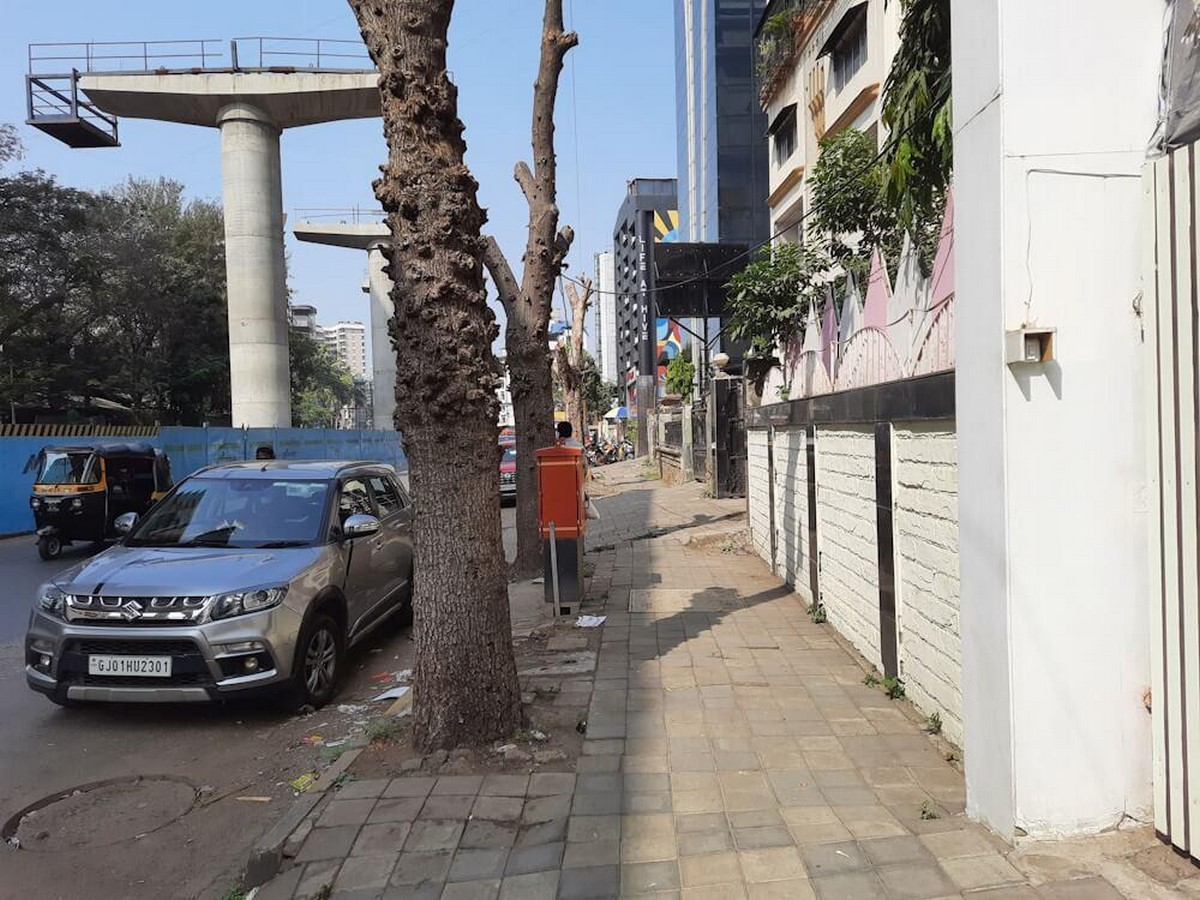
Urban local bodies seldom have the coordination to keep pedestrian networks continuous. The responsibility is fragmented between road, transport, and utility agencies, leading to discontinuity. Poor enforcement allows encroachments and illegal parking to dominate footpaths.
Where schemes such as AMRUT and the Smart Cities Mission do talk about “walkable” streets, the implementation is largely about beautification: colored tiles, railings and signage. The result is a cosmetic urbanism that cleans but does not connect.
- Indore: Clean City, Broken Sidewalks
- 5.1 The Paradox of Urban Cleanliness
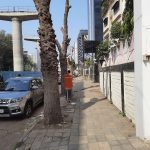
Indore has been ranked as India’s cleanest city since 2017, mainly because of successful waste management and cleanliness campaigns. Ironically, this achievement masks a contradiction: public spaces in the city are physically clean but spatially fragmented. Pavements are narrow, obstructed, or altogether missing.
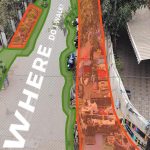
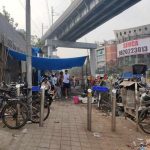
Field-based visual documentation of key arteries like Rajwada, M.G. Road, and A.B. Road in 2024 demonstrates an erratic pedestrian network. While the central areas are sporadically upgraded, the peripheral neighbourhoods contain neither continuous nor shaded walkways.
This paradox suggests that spatial justice has been sacrificed at the altar of visual order. In the name of tidiness, street vendors and informal users-most crucial contributors to the vibrancy of the city-are often displaced, with erasure of a lived complexity defining urban India.
- 5.2 Informality and the Negotiated Edge
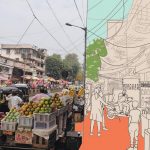
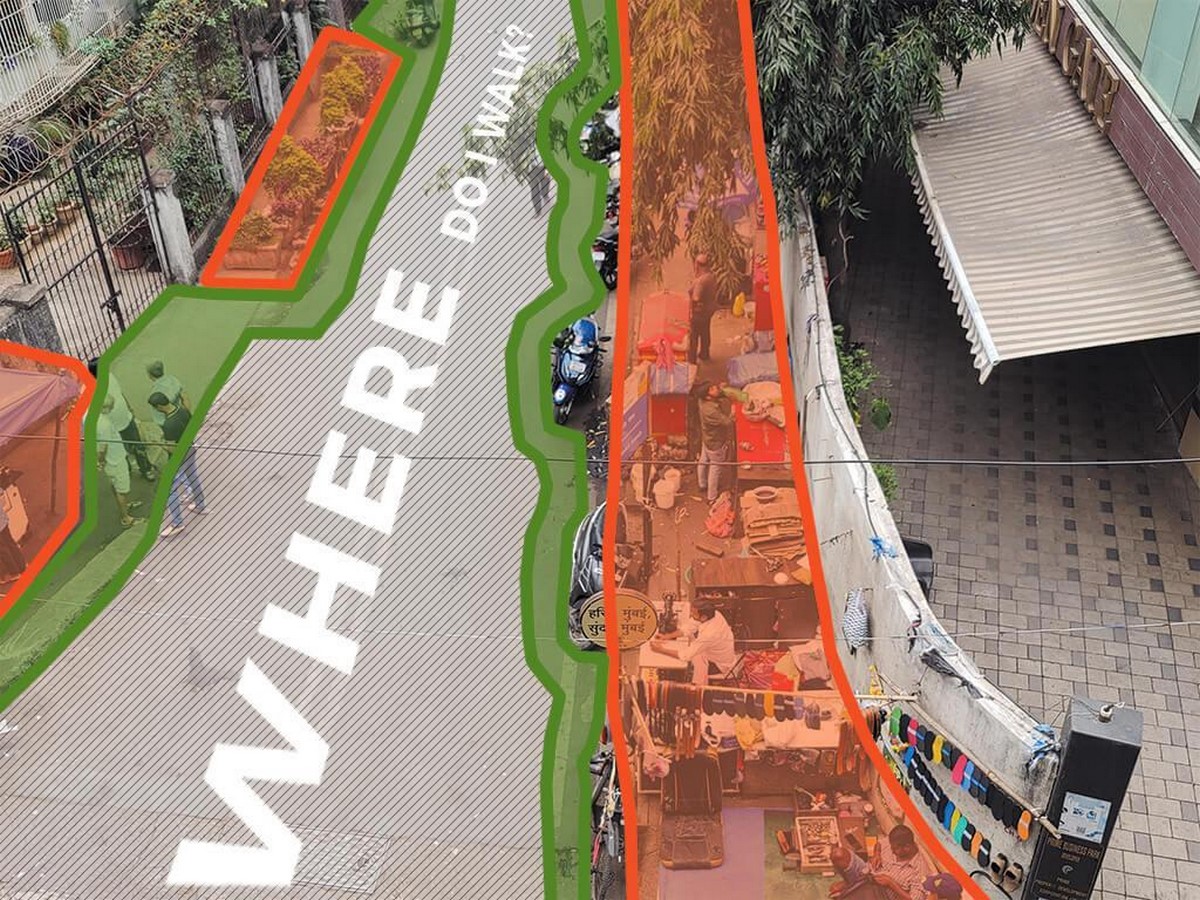
Despite regulatory exclusion, informality persists. Street vendors, paan stalls, and tea carts continue to populate Indore’s sidewalks, demonstrating the resilience of urban informality (Anjaria, 2022). However, without infrastructure support—such as designated vending zones, waste disposal, or seating—these users occupy carriageways, increasing conflicts between pedestrians and traffic.
This dynamic builds a negotiated realm, which comprises an ever-shifting interface between the formal and the informal city. Without institutional recognition, however, the negotiated edge remains precarious.
- The Disappearance of Transitional Spaces
The erosion of pavements also speaks to a more significant loss—the disappearance of transitional public space from urban morphology. Traditionally, Indian streets featured graduated transitions: otlas in Gujarat, chabutras in North India, and verandahs in the South. These built forms created continuity between home, commerce, and street.
Modern redevelopment has disrupted this continuity through compound walls, gated complexes, and widened roads. The result is a hard boundary that disconnects architecture from the street and people from one another.
This trend undermines the sensory and social richness of Indian urbanism. The city, once experienced through walking, smelling, and hearing, is increasingly reduced to a drive-through visual field. Pedestrian absence translates into the loss of human scale, a decline in street safety, and a weakening of urban empathy.
- Rethinking the Footpath: From Infrastructure to Public Life
- 7.1 Revisiting Jacobs’ Sidewalk Ethos
Jacobs (1961) argued that the health of a city depends on the vitality of its sidewalks. Her “eyes on the street” thesis asserts that diversity of use generates safety and social trust. For Indian cities, this insight has renewed relevance. Footpaths populated by vendors, shopkeepers, and residents naturally sustain surveillance and interaction—conditions formal policing cannot replicate.
Therefore, reclaiming pavements should not mean sterilising them but rather the reintroduction of diversity into their design. That means looking at sidewalks not as neutral conduits but as living social infrastructure.
- 7.2 Global and National Trends
Recent global research recognises walkability as a cornerstone of sustainable urban development. The Institute for Transportation and Development Policy (ITDP, 2023) promotes Complete Streets—designs that allocate equitable space for pedestrians, cyclists, and vendors. Cities like Chennai and Pune have implemented successful models integrating vending zones and shaded pathways, proving that coexistence is possible.
The 2024 revision of the National Urban Transport Policy stresses “moving people, not vehicles.” But without institutional reform and local-level enforcement, these guidelines risk remaining rhetorical.
- Pathways to Inclusive Pedestrian Urbanism
For cities like Indore, restoration of sidewalks requires a multiscale approach that integrates design, governance, and culture.
- 8.1 Design Principles
- Continuity and Accessibility: Provide continuity in pedestrian routes, with tactile paving, ramps, and crosswalks.
- Porous Edges: Encourage shaded colonnades, street seating, and shopfront setbacks to blur the demarcation between public and private.
- Integrated Informality: Instead of excluding them, designate vending bays and micro-kiosks within sidewalks.
- Ecological Comfort: Introduce tree-lined avenues, permeable surfaces, and street furniture that enhance comfort.
- 8.2 Governance and Policy
- Use pedestrian-first zoning within city mobility budgets.
- Implement the Street Vendors (Protection of Livelihood and Regulation of Street Vending) Act, 2014, effectively.
- Provide unified urban design cells that would ensure the maintenance of footpaths and street quality.
- Institutionalise participatory planning with citizen audits for walkability.
- 8.3 Cultural and Educational Shifts
Urban awareness must evolve to revalue walking as a civic right, not a poor person’s necessity. Architecture and planning schools should embed human-scale urban design and behavioural observation into their pedagogy. Public campaigns can celebrate walking through art, heritage trails, and neighbourhood events—reclaiming the sidewalk as a cultural commons.
The missing pavements of India epitomise a larger urban paradox: as cities modernise, they are losing those very spaces that made them human in the first place. Once the most inclusive of public domains, the footpath has been squeezed between automobiles and apathy.
The case of Indore underlines the fact that infrastructural cleanliness without spatial justice results in hollow urbanism-orderly, yet lifeless. The disappearance of sidewalks testifies to the decline of the public sphere as a democratic stage.
Reinstating pavements is not an aesthetic or engineering task; it is a political and ethical imperative. Cities must recognise walking as an act of citizenship—an assertion of the right to exist visibly in urban space. The future of Indian cities lies not in more roads but in more room for people.
References:
Anjaria, J. S. (2022). Street Politics: Poor People’s Movements in Mumbai. Stanford University Press.
Bhan, G. (2020). In the Public’s Interest: Evictions, Citizenship, and Inequality in Contemporary Delhi. Orient BlackSwan.
Hertzberger, H. (2001). Lessons for Students in Architecture. 010 Publishers.
Institute for Transportation and Development Policy (ITDP) India. 2023. Complete Streets Toolkit for Indian Cities. ITDP India Programme.
Jacobs, J. (1961). The Death and Life of Great American Cities.
Random House. Ministry of Housing and Urban Affairs. 2019.
India Urban Mobility Report. Government of India. National Crime Records Bureau. 2023.
Accidental Deaths and Suicides in India 2023. Government of India.
Sugeet Grover. (2019, October 15). The deficient design of India’s streets. Down to Earth. https://www.downtoearth.org.in/urbanisation/the-deficient-design-of-india-s-streets-67244
Adlakha, N. (2019, November 29). India’s missing footpaths. The Hindu. https://www.thehindu.com/news/cities/chennai/on-indias-missing-footpaths/article30114985.ece
Question of Cities. (2024, January 13). India’s missing pavements, thanks to car-centric planning and official apathy – Question of Cities. https://questionofcities.org/indias-missing-pavements-thanks-to-car-centric-planning-and-official-apathy/