Sidewalk Boulders in San Francisco, USA – Examples of Hostile Architecture around the World
In the eclectic cityscape of San Francisco, USA, a unique architectural phenomenon has emerged in response to challenges in public spaces—the deployment of sidewalk boulders. This article delves into the distinctive features of these urban interventions, exploring their role in addressing hostile environments, statistical insights into their effectiveness, and the broader implications for urban design in San Francisco.
The Context of Sidewalk Boulders
San Francisco, renowned for its diverse neighborhoods and hilly terrain, faces unique challenges in managing public spaces. Sidewalk boulders, strategically placed in specific areas, serve as a response to issues related to homelessness, loitering, and other social challenges that can transform public spaces into potentially hostile environments.
Tackling Homelessness
One primary consideration behind the deployment of sidewalk boulders is the city’s approach to homelessness. While seeking to balance the rights and needs of all residents, San Francisco aims to discourage the formation of makeshift encampments in public spaces, ensuring accessibility and safety for everyone.
Architectural Characteristics: Form and Function
The design of sidewalk boulders is marked by a combination of form and function, reflecting an intentional effort to reshape the use of urban spaces and enhance overall safety.
Natural Aesthetics
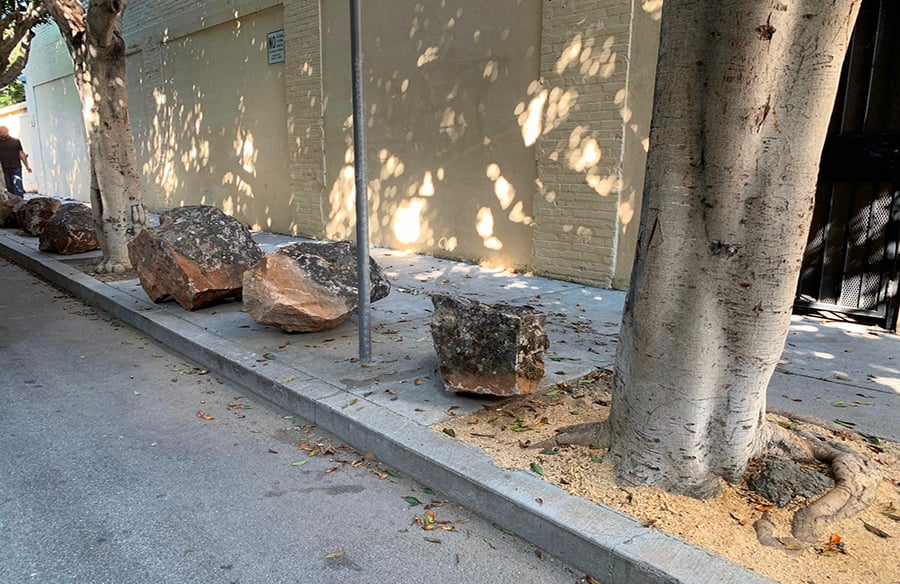
One notable feature of sidewalk boulders is their natural aesthetics. Architects and urban planners in San Francisco opt for boulders that blend seamlessly with the surrounding environment, avoiding a stark or intrusive appearance. This intentional design choice aims to integrate the boulders into the existing urban fabric while addressing practical concerns.
Strategic Placement
The placement of sidewalk boulders is strategic and aims to deter specific activities without completely restricting access. Placed at intervals along sidewalks, these boulders create barriers that discourage the setup of temporary shelters or lingering in certain areas, contributing to a more orderly urban environment.
Statistical Insights: Assessing Effectiveness
Analyzing statistical data provides insights into the effectiveness of sidewalk boulders in reshaping urban dynamics and mitigating the challenges associated with hostile environments.
Reduction in Encampments
Cities that have implemented sidewalk boulders report a significant reduction in the formation of encampments in public spaces. The intentional placement disrupts the continuity of spaces often favored for makeshift shelters, encouraging individuals to seek alternative locations.
Community Perceptions
Data indicates a shift in community perceptions following the installation of sidewalk boulders. Residents often report feeling safer and more comfortable using public spaces, attributing these positive changes to the visible impact of the boulders in deterring certain activities.
Community Engagement and Challenges
While sidewalk boulders aim to address specific challenges, their deployment is not without controversy. Community engagement and ongoing dialogue are crucial components of their implementation.
Collaborative Design Processes
In some instances, architects engage with local communities in the design process, seeking input on the placement and aesthetics of sidewalk boulders. Collaborative efforts ensure that the architectural interventions align with the needs and values of the community.
Addressing Concerns
However, challenges arise, with some members of the community expressing concerns about the visual impact of the boulders or their potential to displace vulnerable populations. Balancing the needs of the community with compassionate solutions for homelessness remains an ongoing challenge.
Designing for Inclusivity
Sidewalk boulders, while aiming to address specific issues, prompt considerations about inclusivity in urban design.
Universal Accessibility
Architects and urban planners strive to ensure that sidewalk boulders do not impede the universal accessibility of public spaces. Careful consideration is given to maintaining clear pathways for pedestrians, including those with mobility challenges.
Alternatives and Support Services
Efforts are underway to complement the deployment of sidewalk boulders with alternative solutions and support services for individuals experiencing homelessness. The aim is to strike a balance between creating safe public spaces and offering compassionate support for those in need.
Future Implications for Urban Design
The success and challenges associated with sidewalk boulders in San Francisco prompt reflections on the future implications for urban design and the evolution of strategies to navigate hostile environments.
Iterative Design Approaches
Architects adopt iterative design approaches, continually refining the placement and design of sidewalk boulders based on community feedback and evolving social dynamics. This adaptability ensures that urban interventions remain responsive to the changing needs of the city.
Comprehensive Urban Strategies
The deployment of sidewalk boulders underscores the importance of comprehensive urban strategies that address the root causes of social challenges. Architects and planners collaborate with social services to create holistic solutions that go beyond physical interventions.
Conclusion: Navigating Urban Challenges
Sidewalk boulders in San Francisco represent an innovative architectural response to the complex challenges posed by hostile environments in public spaces. While serving as physical barriers to certain activities, these boulders also prompt discussions about the broader issues of homelessness, safety, and community engagement.
As San Francisco continues to evolve, the lessons learned from sidewalk boulders contribute to ongoing dialogues about the role of architecture in shaping urban experiences. The balance between functionality, community engagement, and inclusivity remains at the forefront of discussions, guiding architects in their pursuit of creating cities that are both safe and compassionate.