An Analysis of the correlation between diseases, colonisation, and town planning, along with the effect of growing industrialisation.
My research in this essay primarily focuses on how disease outbreaks in cities influenced city planning, as well as the effects of industrialization on the workforce, colonization, and long-term residents of the town. The primary reason the British ruled India was to fulfill their own self-interest; they also exercised control over common issues such as sanitation, policing, water supply, disease control, and street lighting. Naturally, the British viewed Indian issues from the perspective of Britain’s first era of rapid industrialization, urbanization, and popular democracy. In England, attempts to effectively plan towns lacked proper resources and manpower; in India, these deficiencies were much more severe. Nonetheless, British planning had both beneficial and detrimental legacies in India, affecting urban architecture, town planning, and administrative governance mechanisms. (Spodek, 2013, 53-61). The primary factors considered in urban planning were urban disorder and disease. The initial mediations in town planning were made possible by the initiation of installing drainage facilities and sanitation. Higher caste groups intervened and argued that the traditional mode of sanitation is provided by the caste system. (Singh, n.d.). Protests also emerged from landlords and private reclamation companies, who would face higher taxes and see their power and local land prices adversely affected by drainage schemes. (Singh, n.d.). These events can be observed in the evidence provided later in the essay, which includes data from various cities, including Bombay, Lucknow, and New York City. These three cities were selected to illustrate the impact of disease outbreaks in urban areas and their effects on existing residents. This includes evidence of how the outbreak affected city planning and the growing industrialisation. The correlation here lies in industrialisation, British colonisation in major cities, and the impact of plague and other poor sanitary conditions on town planning.
The Effect of Disease Outbreak on Bombay City Planning
According to Sud (2020), the primary cause of the outbreak of diseases throughout the city of Bombay was mostly due to unsanitary conditions in the poor people’s homes. Sud also noted that the third highly infectious pandemic of plague began in Yunnan province and dispersed to other countries such as India, Brazil, Madagascar, and the United States, mainly through shipping routes, killing about 15 million people worldwide. Urban improvement, as practiced by colonial planners, involved enhancing the value of urban space and its facilities through reliable property and remedial behavior. Indeed, urban improvement guaranteed betterment and integration (Ranganathan, 2018). The British government in India responded by enacting invasive and large-scale plague mitigation measures to control the disease.
The outbreak of disease further widened the divide between the British rulers and native Indians in Bombay, reinforcing social and spatial separations. In reaction to these divisions and the epidemics, authorities promoted the improvement of native living conditions, leading to the creation of the City Improvement Trust in 1898. The Trust’s initiatives to construct new streets, decongest crowded areas, and provide sanitary housing—including a ten-year plan to benefit 50,000 residents—were structured ambitions meant both to address health crises and manage the city’s growth. (Kidambi, 2007, 79).
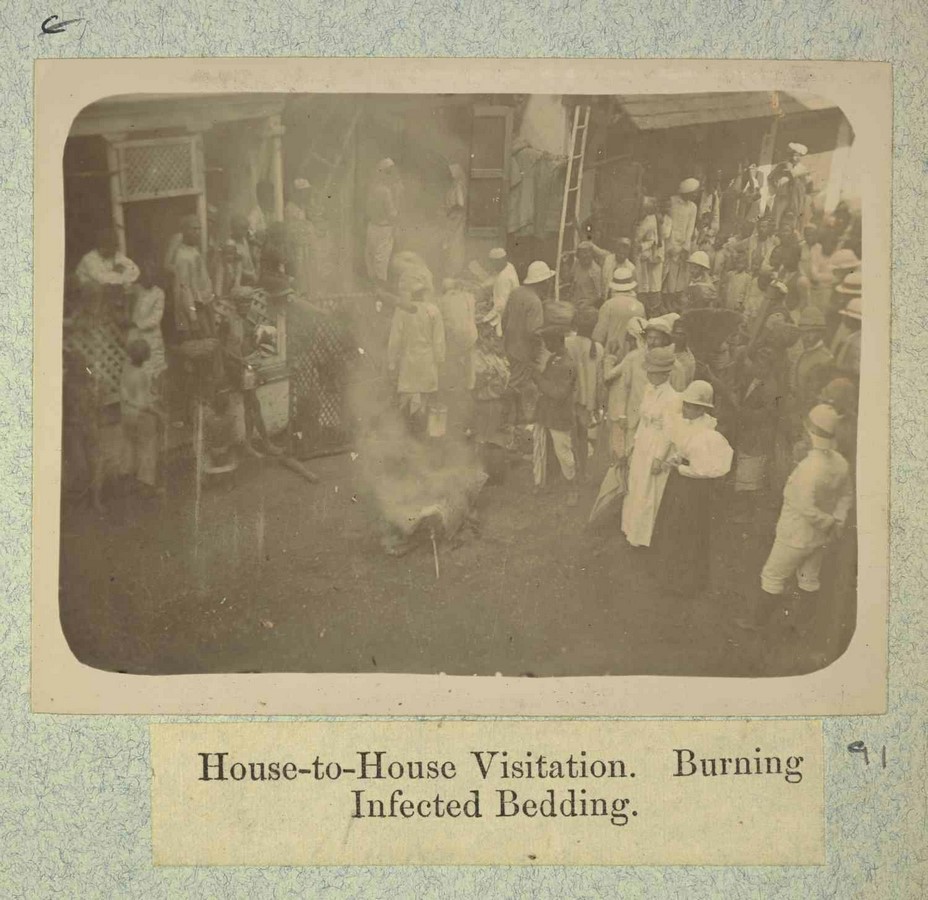
The British government in India, from the outbreak’s onset, employed invasive and lethal plague control methods. As the pandemic spread, harsh municipal measures were enforced to contain it. Both British and Indian officials were authorized to search private residences for the ill or deceased. The sick were moved between hospitals but often died, and the possessions and clothing of the victims were burned on street corners. Others were directed to plague camps for vaccination, home drainage, fumigation, lime-washing, and destruction of personal belongings (Sud, 2020).
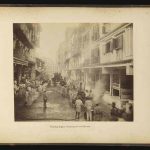
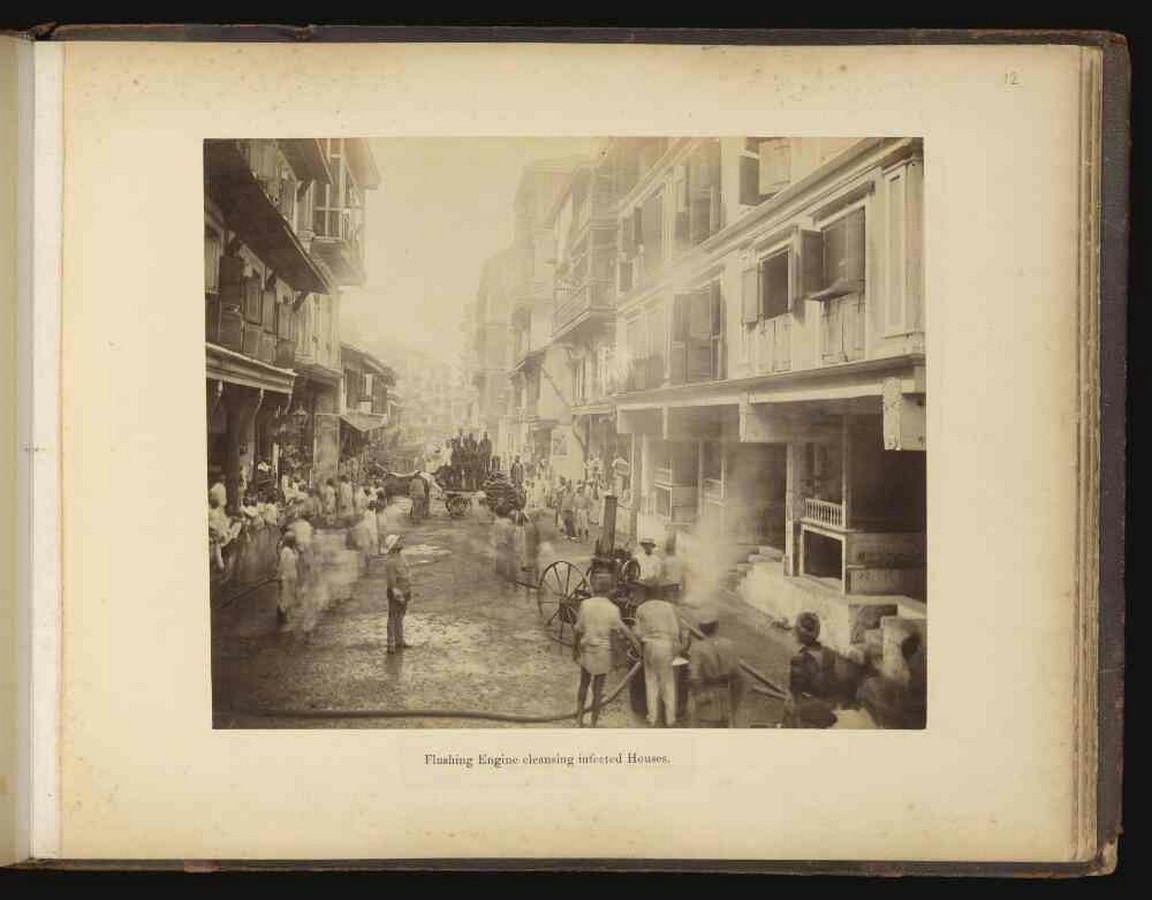
Amidst all these control strategies, the colonial state was incapable of controlling the diseases. As it spread all around the world, along with a hike in mortality, it also left a record of the highly visual significance of the first large-scale bio-political conflict captured through the lens of the camera in colonial India and around the world. The collection of these photographs seems to narrate a story of colonial intervention and plague reform. For instance, in the photograph of “Flushing engine cleaning infected houses”, the sanitation workers from the government are seen spraying the plague-infected dwellings with fresh seawater to sanitise the place. (Sud, 2020).
Lucknow: Colonial City Planning
The need to keep the city clean was also inspired by the wartime experience. The horrific tale of the high death toll among European soldiers during the rebellion was in the War; illness claimed more lives than battle. These disclosures made maintaining the city’s cleanliness as important as ensuring its tactical security. However, there was no quick fix for the issue of eradicating the disease from cities. The illnesses that threatened lives throughout Europe were many and recurrent. (Oldenburg, 1984,96).
It was also stressed that the Royal Commission on the Health of the Anglo-Indian Army in 1863 mentioned “ indeed impossible to separate the question of health, as it relates to troops, from the sanitary condition of the native population, especially concerning the occurrence of epidemics.”(Oldenburg, 1984, 99). The forming of a local “agency” (a municipal committee) in every town with a sizable European population as a response to this etiological investigation into the causes of the ill-health of British soldiers, which included an inspection of the sanitary conditions in native cities and the personal habits of the natives, was done to “secure a minimum standard of health and comfort for themselves at least.” (Oldenburg, 1984, 99)
This ritual, which was initially colonial and abhorrent, is nevertheless practised today since it has become a part of the subcontinent’s way of life. The continuous chain of command is represented by postcolonial administrators. They propose solutions from a time when overcrowding and movement from the countryside were non-existent, when the spectres of unemployment and inadequate housing were relatively modest and did not stalk the city as they do now. They, like their predecessors, prefer social control to “risk” social transformation. (Oldenburg, 1984, 264)
Effect on Tenements of New York City due to Industrialisation
Beginning with a brief background overview, Riis introduces his most well-known work. To accommodate the multitude, single-family residences were first converted into tenements and partitioned into apartments. Later, speculators started building them from the ground up, using low-quality materials and taking shortcuts in every step of the process, creating homes that were dangerous, unhygienic, and inconvenient even when they were brand new. (Riis, 1970)
Although it took a decade before the writing was translated, the very first tenement New York ever knew bore Cain’s mark from the beginning. It was the “back home,” which became notorious throughout the history of our city. Tenant homes existed in the past, but they weren’t constructed with that use in mind. Because these were the elegant residences of the ancient Knickerbockers and Manhattan’s prideful aristocracy in the early days, nothing would have shocked the original inhabitants more than the thought of housing a reckless rabble. They were driven out by the commotion of trade and the massive immigration that came as a result of the War of 1812. The city, with a population of fewer than 100,000 people, became home to half a million people in 35 years, for whom housing had to be found. Their comfortable homes in the once-trendy districts along the East Riverfront were taken over by real estate brokers and boarding-house owners. Here, according to the report to the Legislature of 1857, when the ills engendered had only caused worry, “the tenant-house became a true gift to that class of industrious people whose tiny earnings regulated their expenses, and whose job in workshops, stores, or around the warehouses and factories provided them with a steady source of income,” (Riis, 1970).
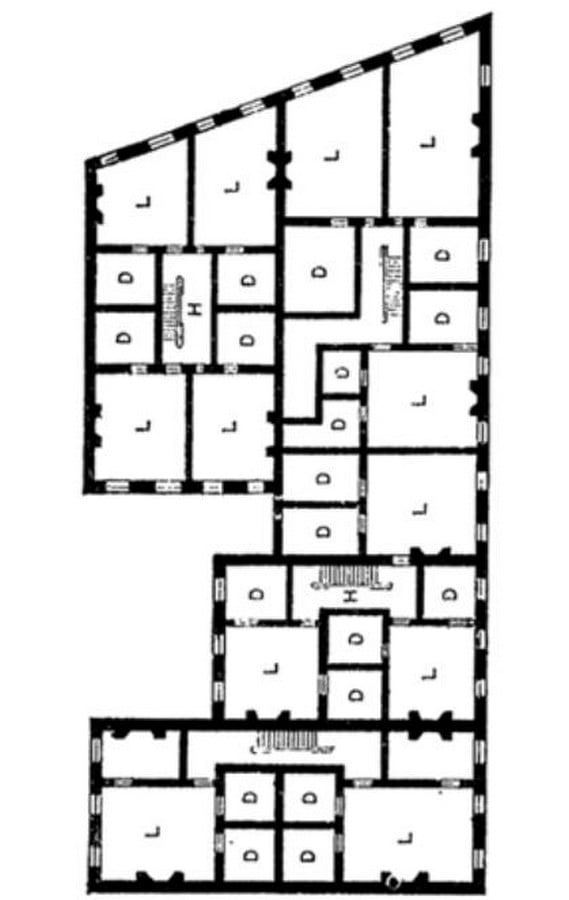
As trade blossomed and the city developed swiftly, the poor’s necessities became possibilities for their wealthier neighbours, and the ancient dwellings suddenly gained worth, which the greatest efforts of following generations have vainly sought to obliterate. Because the rent was lesser in correlation to the space or height from the street, their “large rooms were divided into several tiny ones, without due consideration to light or ventilation; and they soon became packed from basement to garret with a category of tenantry residing from hand to mouth, weak in moral standards, improvident in habits, demeaned, and pitiable as beggary itself.” Thus, the dark bedroom, home to countless vices, entered the globe. It had to endure the ancient houses. (Riis, 1970).
The primary goal of this essay is to outline the evolution of modern urban development in India, with a particular emphasis on planning insights during British rule. However, it is impossible to dispute that the motivation for colonial design was primarily motivated by worries about disease, functional impairment, and brutality that the colonial metropolis offered. Fears about population health, cleanliness, segregation, and discipline affected colonial urban design in India, as did a basic awareness of towns as significant centres of economic output.
References:
Spodek, H. (2013) ‘City Planning in India under British Rule’, Economic and Political Weekly, 48(4), pp. 53–61. Available at: http://www.jstor.org/stable/23391350
Kidambi, P. (2007) Housing the Poor in a Colonial City: The Bombay Improvement Trust, 1898-1918. Wolfson College, University of Oxford.
Ranganathan, M. (2018) ‘Rule by difference: Empire, liberalism, and the legacies of urban “improvement”’, Environment and Planning A: Economy and Space, 0(0), pp. 1–21. Available at: https://doi.org/10.1177%2F0308518X18781851
Sud, S. (2020) ‘Bombay Plague of 1896: The first bio-political crisis to be captured on camera in colonial India’. Available at: https://scroll.in/article/968584/bombay-plague-of-1896-the-first-bio-political-crisis-to-be-captured-on-camera-in-colonial-india
Oldenburg, V.T. (1856-1877). The Making of Colonial Lucknow. Princeton, N.J.: Princeton University Press. (Vol. Chapter Four)
Riis, J.A. (1970.) How the Other Half Lives. Genesis of the Tenement. London: Penguin Books.
Singh, B. (n.d.) ‘Origins of Urban Planning in India’. Available at: https://epgp.inflibnet.ac.in/epgpdata/uploads/epgp_content/Sociology/07._Sociology_of_Urban_Transformations/04._Origin_of_urban_planning_in_India/et/7557_et_04ET.pdf