Architects and designers are responsible for the spaces we occupy, and there are also visionary non-architects, dynamic individuals driven by ambition whose influence has left a lasting mark on architecture. Like in the Renaissance, patrons played a crucial role in supporting artists, scientists, and intellectuals, alleviating their financial burdens. They championed humanist ideals by promoting literature, philosophy, and the arts that celebrated personal experience and classical knowledge. They financed public art and architecture, beautifying cities while showcasing their influence. This contributed to a rich cultural legacy that inspires contemporary artists and thinkers.

Others were not patrons but individuals with no background in construction whose ambition saw them rise to positions where they could execute their visions in marble and stone. Lastly were communities whose convergence of minds created ancient wisdom of creating buildings that were a tribute to the places they inhabited. This is a historical look into how some of these non-architects shaped the built environments with impactful experiences, creating some of the most iconic structures. Their determination defied conventional norms, proving that architecture is a collaborative endeavor, and an invitation to all, especially non-architects, to actively participate in realizing dreams and ambitions in construction.
1. The Gold Smith Turned Builder. Filippo Brunelleschi (Italy)
Filippo Brunelleschi, although not formally trained as an architect but rather as a goldsmith, showcased his engineering genius in the design and construction of the Dome of Santa Maria del Fiore (Florence Cathedral), which stands as the largest brick dome in the world and a revolutionary feat of Renaissance architecture. It is an insight into how creativity and innovation can transcend conventional boundaries. The several years spent in Rome studying ancient ruins and meticulously sketching various structures, extracting techniques from these historical edifices was like a meditation that the ancient wisdom of construction and design provides. This created an appreciation and understanding of the design and structure.

The tragic death of the original architect came like a calling to Brunelleschi with an opportunity to write his name into history. His innovation allowed him to construct the dome without the traditional wooden centering, bypassing the need for scaffolding through his self-bracing brickwork, a technique that defied convention. His invention of a sophisticated wooden crane, a pioneering construction device of its era, was like a benchmark for which others would follow, the simple but innovative approach utilized pulleys and animal power for efficiency to facilitate the raising of materials into the heavens.

2. Patronage and Romanticism in the Mughal Era. Shah Jahan (India)
Considered a patron of the arts during a time when the Mughal dynasty was one of the richest in the world, and at its peak, Shah Jahan’s ambition was to enhance the legacy of the Mughal Empire originally began by his father. The exquisite white-marbled Taj Mahal he commissioned is a testament to this cause. Created a mausoleum for his beloved wife Mumtaz Mahal, a symbolic representation of eternal home in paradise fueled also by his inconsolable grief. It is a display of one man’s enduring affection and ambition to mark his place and legacy done in white marble and stone-influenced architecture. The 20,000 workers and over 1,000 elephants collaborated to bring this vision to life, serving as the quill that inscribed this masterpiece into the annals of architectural history. The combination of elements from Islamic, Indian, Persian, Ottoman, and Turkish art was used to add cultural richness to the story of the masterpiece.

This wave of ambition continued to sweep further in a bid to cement his legacy with the commissioning of Red Fort in Delhi and Jama Masjid in Agra. His legacy swept through the empire like a wave, fundamentally altering the Mughal Empire and creating reverence for him. The development of music, poetry, and other art forms also his commissioning of the Red Fort in Delhi and Jama Masjid in Agra are testaments of his influence on the physical and cultural landscapes.

3. The Divine Guided Pope Julius II (Italy)
As a religious leader, his ambition seemed to be guided and supported by the divine because he managed to boost the prominence of the Catholic Church in terms of size and significance to great success. His decisive step of tearing down the old St. Peter’s Basilica, which resembled Roman basilicas, and was deemed old marked a turning point. The new basilica that he sponsored was intended to create an overwhelming spiritual experience with exquisite architectural design, symbolic sculptures, and descriptive paintings.
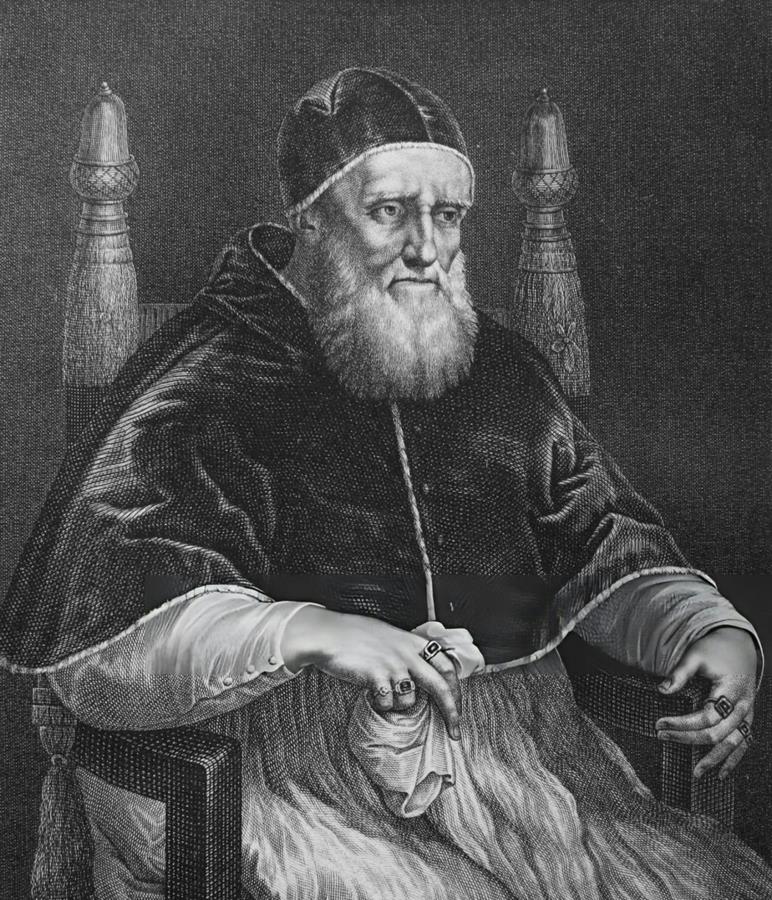
His passion for the arts transformed him into a catalyst for progress that artists could use to express themselves artistically and further the progress of their crafts to reflect the beauty and magnificence of the Catholic church and create a spiritual appreciation through the arts that would transcend generations. Such was the case with Michelangelo whose exceptional skills in all three fields saw him get commissioned to paint the ceiling of the Sistine Chapel and sculpt the tomb of Pope Julius II himself. These commissions aimed to foster beauty, spiritual appreciation and authority that transcend generations.


4. The Convergence of Minds of the Dogon People (West Africa)
The architecture of the Dogon people, viewed through a historical lens, merges timeless knowledge accumulated over generations with a deep awareness of their surroundings to shape both physical and cultural landscapes. This is a narrative of minds brought together that can create vernacular architectural poetry.

The harmonious blend of traditional religion and architectural heritage within a stunning natural environment showcased advanced spatial planning through unique granaries, shrines, and cliffside villages. The region was marked by exceptional geological features, and inhabited since Palaeolithic times, reflecting the guidance of the landscape. The landscape also became a protector and served as a natural refuge for the Dogon, preserving their culture against invaders. The architecture here followed the way of the landscape, with villages featuring square granaries and gin’na family houses that are windowless, and adorned with sculptured motifs. The history of architecture here is a meditation on how the whisper of the natural landscape can guide us to create architecture deep with meaning that stands the test of time creating this uniqueness that can be replicated only because it only fits that particular space.

The Pope’s divine guidance and Shah Jahan’s ambition illustrate how individuals with resources and wealth can leave a lasting impact through architecture. These structures carry deep symbolic and cultural significance, crafting narratives that resonate across generations. Brunelleschi’s innovations highlight that anyone, regardless of their background, can contribute significantly to the architectural field through determination and education, showcasing the possibilities inherent in the craft. Additionally, the cooperative nature of the Dogon people demonstrates how communities can design their buildings in harmony with the surrounding landscape, emphasizing that architecture can be responsive to both climate and culture. Ultimately, the history of architecture teaches us that architecture transcends mere materials; it’s about creating enduring human experiences shaped by these powerful narratives.
References:
Art History 101 (2020). Introducing Pope Julius II. [online] YouTube. Available at: https://www.youtube.com/watch?v=ZHsscGUO9Vc [Accessed 12 Dec. 2024].
www.youtube.com. (n.d.). The Warrior Pope: Raphael’s ‘Pope Julius II’ | Talks for All | National Gallery. [online] Available at: https://www.youtube.com/watch?v=3Y3lkw-A_30.
Storytrails (2021). The triumphs and tragedies of Shah Jahan | Taj Mahal, Agra. [online] YouTube. Available at: https://www.youtube.com/watch?v=jR8Z6W6jsY4 [Accessed 12 Dec. 2024].
The Trailblazing Tales (2023). Shah Jahan: The Taj Mahal and the eternal love story. [online] YouTube. Available at: https://www.youtube.com/watch?v=QDS8l1BiV3I.
www.youtube.com. (n.d.). Shah Jahan, the Ruler of the World | 1627CE – 1658CE | Al Muqaddimah. [online] Available at: https://www.youtube.com/watch?v=QvZC8_p4li8.
Centre, U.W.H. (n.d.). Cliff of Bandiagara (Land of the Dogons). [online] UNESCO World Heritage Centre. Available at: https://whc.unesco.org/en/list/516/.
The Aesthetic City (2024). King Charles Built A Town And It Surprised EVERYONE. [online] YouTube. Available at: https://www.youtube.com/watch?v=duHy_IbJvTc [Accessed 12 Dec. 2024].
Bravo, M. (2022). How Was the World’s Biggest Dome Built? YouTube. Available at: https://www.youtube.com/watch?v=QD3fJphus-o.
Michelangelo, Moses, and the Tomb of Pope Julius II. (2017). YouTube. Available at: https://www.youtube.com/watch?v=5LBI-otSbJM.
Nationalgallery.org.uk. (2021). Pope Julius II. [online] Available at: https://www.nationalgallery.org.uk/paintings/raphael-pope-julius-ii.
Wikipedia. (2019). Filippo Brunelleschi. [online] Available at: https://en.wikipedia.org/wiki/Filippo_Brunelleschi.
Wikipedia.org. (2012). 17th century Mughal Emperor (1592-1666). [online] Available at: https://simple.wikipedia.org/wiki/Shah_Jahan [Accessed 14 Dec. 2024].
Erika (2019). Vernacular architecture of Dogon Country and its development. [online] Field Study of the World. Available at: https://www.fieldstudyoftheworld.com/vernacular-architecture-of-dogon-country-and-its-development/.