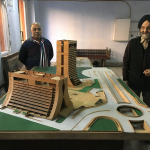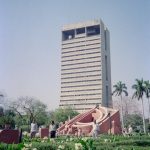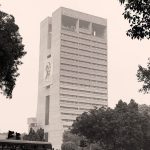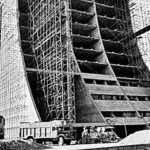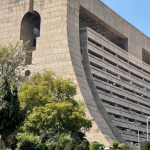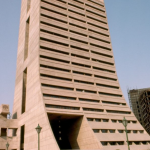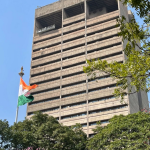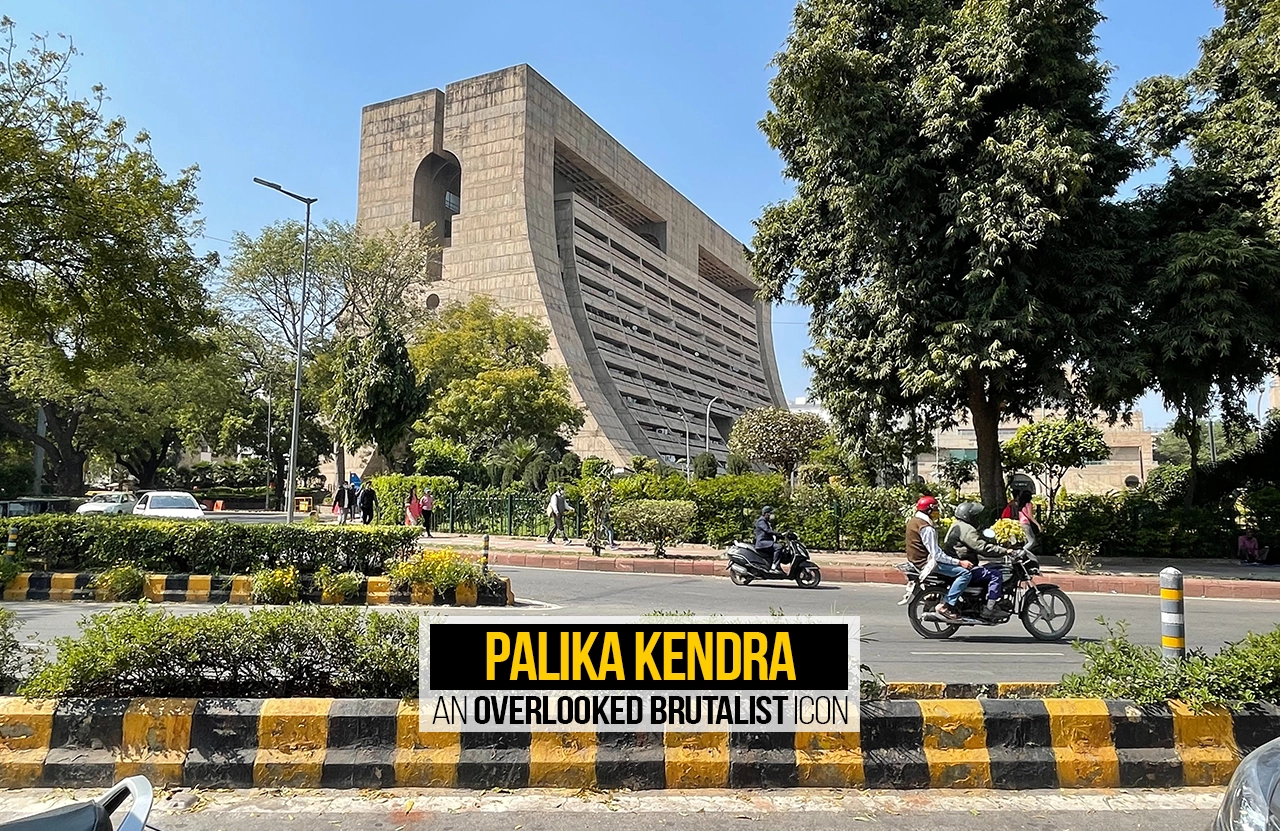
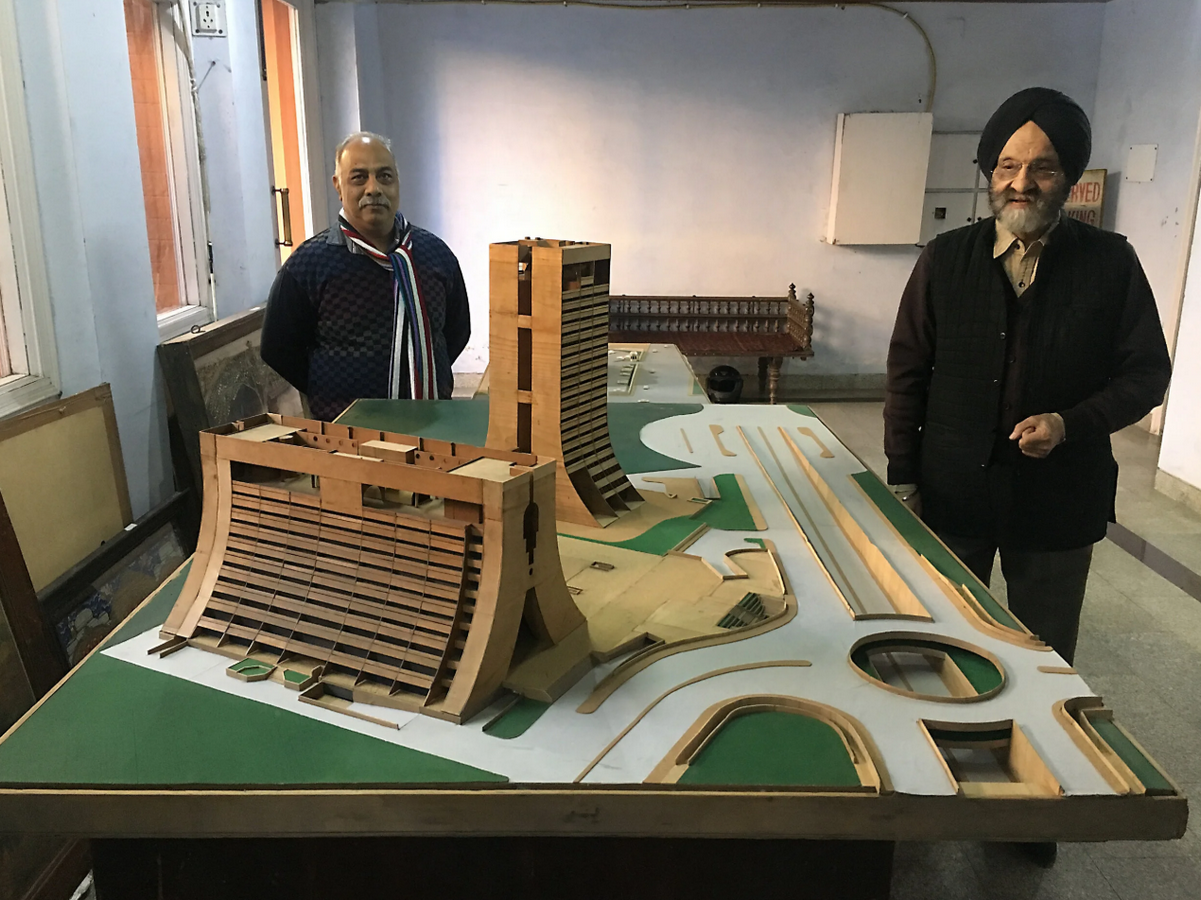
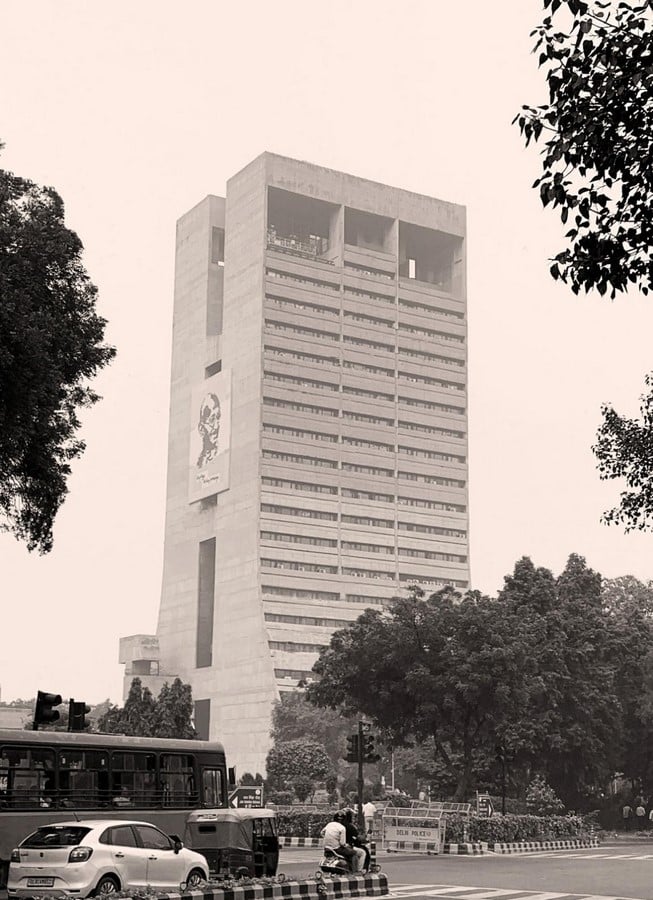
The 21-story, 91-meter-high Brutalist edifice, the Palika Kendra, is an unmissable feature of New Delhi’s skyline. The building, home to the headquarters of NDMC, or New Delhi Municipal Council, was designed by prominent modernist architect Kuldeep Singh, with structural work undertaken by illustrious engineer Mahendra Raj. Despite being somehow overlooked by casual passersby, this exposed concrete building was, and still is, a symbol of modernist architecture in India following its independence. The béton brut structure was the tallest building in Delhi in its initial years, and currently, the building is the tallest owned by NDMC even in present times.
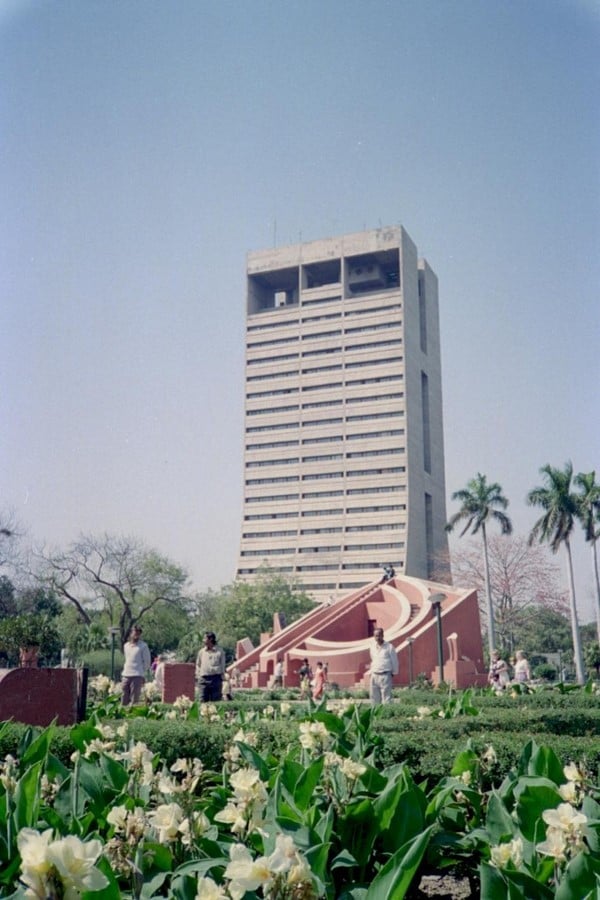
Strategically located at Sansad Marg (Parliament Street), opposite Jantar Mantar in Lutyens’ Delhi, this iconic building signifies an era of contemporary heritage in post-independent India. Situated in a location characterised by administrative density and commercial importance, the NDMC headquarters works efficiently to facilitate more than a million permanent residents and many more in its jurisdiction as a commercial and administrative centre in the capital city, establishing a connection between Parliament House, the central administrative hub of all national governance, and Connaught Place, the central public hub in Delhi. The building’s location integrates and enhances the urban fabric through multiple NDMC-managed parking facilities, along with multi-level parking at Palika Bazaar and the Palika Kendra Bust Stop, adjacent to the Palika Kendra Building – connecting Delhi through various bus networks. Sansad Marg, being a major civic spine of the city, houses this building without disturbing the functional continuum of governance and administrative institutions. The strategic central location of the Palika Kendra blends perfectly with the political, civic and administrative importance of this zone. Palika Kendra has stood the test of time, asserting a measured civic presence within New Delhi’s skyline.
The making of a Municipal Monolith
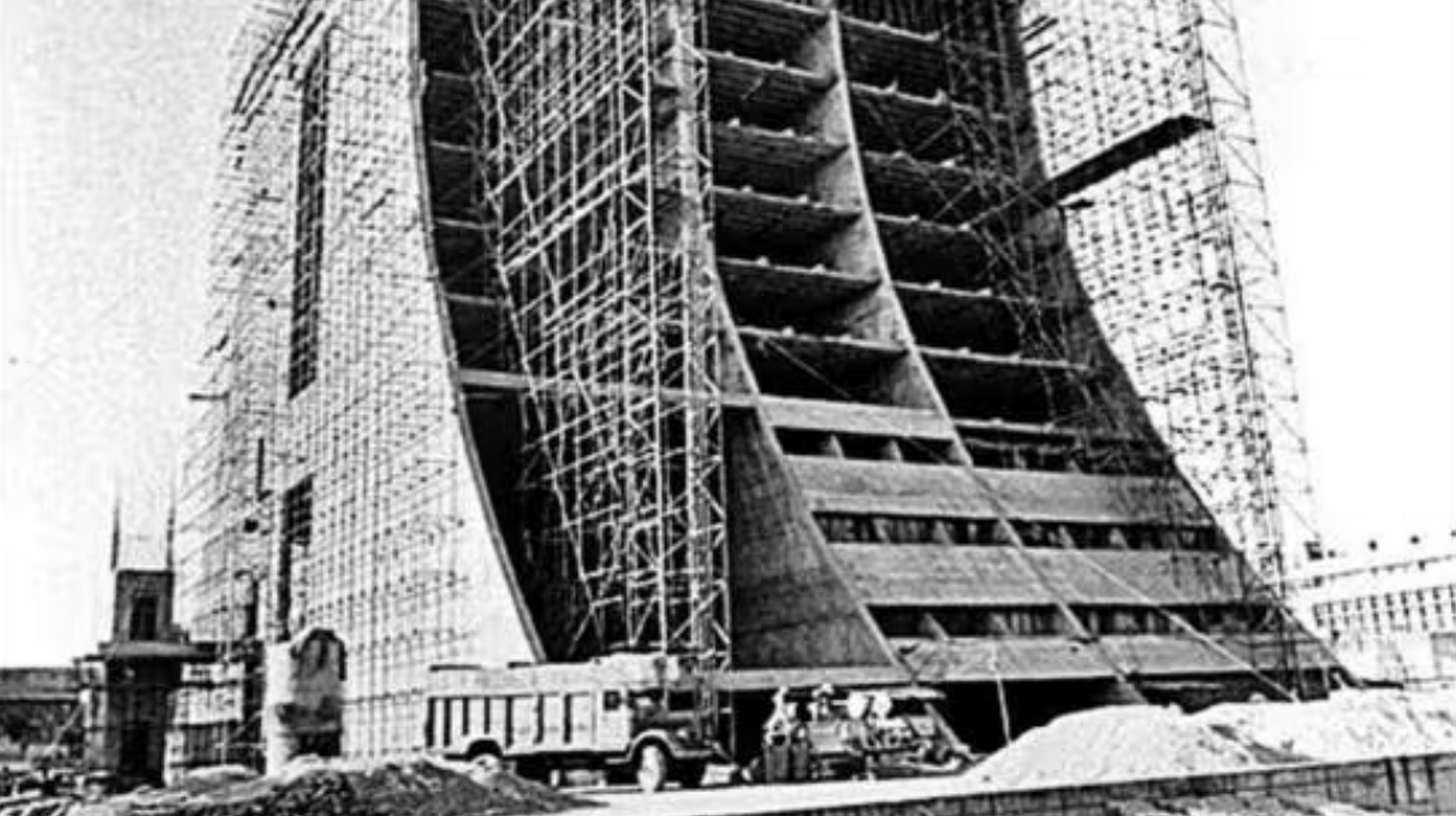
The planning of this monolithic brutalist structure started as early as the 1960s, with completion in 1983 and operation handover and inauguration in 1984. The construction spanned from 1965 to 1983, enduring challenges in an early Independent India. The plot housing this innovative concrete structure was used to house a tin-shed, containing a makeshift cinema hall for the entertainment of the construction workforce involved in the construction of Lutyen’s Delhi in the new capital of the British Raj. In the 1930s, a building was constructed at this very site to host the new Town Hall for NDMC. This town hall was demolished to make room for the Palika Kendra. Developed mainly during the early 70s, this structure became a symbol of India’s post-independence urban growth – consolidating NDMC’s operations into a centralised high-rise, modern headquarters that was a pioneer in the era’s shift towards verticality, especially in the low-lying iconic Lutyen’s Delhi. The innovative concrete structure focuses on functionalism and urban integration, which was the need of the hour when a newly independent India needed its own buildings that housed new independent governing bodies. Palika Kendra stands as an example of the country’s post 1947 emphasis on self-reliant construction and budget constraints, using locally sourced cement and labour. The verticality, the shear exposed concrete walls and the recessed balconies all cater to Delhi’s climate, dust-related challenges and seismic activity. Influenced by international brutalism and Le Corb’s design of Chandigarh, this NDMC headquarters is a masterpiece of functionality, showcasing bureaucratic efficiency and durability in spite of cost constraints. The operational handover in 1984, just before India’s 1990s economic revolution, was required for the cohesive working of NDMC. Instead of fragmented office spaces throughout the city, the NDMC got a centrally placed and massed building, ensuring fast coordination and centralised urban management for Delhi’s most sensitive zone. Today, this HQ integrates 20 municipal departments, including engineering, sanitation, electricity, roads, licensing, etc., in one, functionally efficient marvel – improving governance speed, accountability, surveillance and coordination.
Concrete, Climate and Constraints
Taking into consideration India’s material and budget constraints, along with Delhi’s seismic conditions, the monolithic austerity of the Palika Kendra made perfect sense.
Delhi’s soft, compressible alluvial soil with deeper layers of hard rock strata stood as a threat for differential settlement of the gigantic structure under heavy loading, which is the uneven sinking of a building’s foundation, where different parts settle at different rates and or magnitudes. But the deep pile foundations, over which this massive structure rests, were designed to ensure even load distribution and long-term stability. Such was the basic building design, which, coupled with the inherent properties of concrete that it possesses a high compressive strength and is ductile to accommodate the distribution of the vertically acting loads and the overall resistance offered by the shear walls to the lateral loads, ensured the stability of the structure. High temperature and humid climate also plagued the concrete construction process as it was a major problem for the structure, as the chances of cracks developing on account of thermal stresses would compromise the efficiency of the structure. This could be tackled by the staggered laying of the concrete and the brilliance of the Indian engineer in detailing the structure. Resourceful usage of materials was another major factor that helped the newly Independent India overcome the budgetary issues that it possessed as it relied on the usage of concrete as opposed to the luxury finishes that would be specified on other buildings.
Architecture as Administrative Apparatus
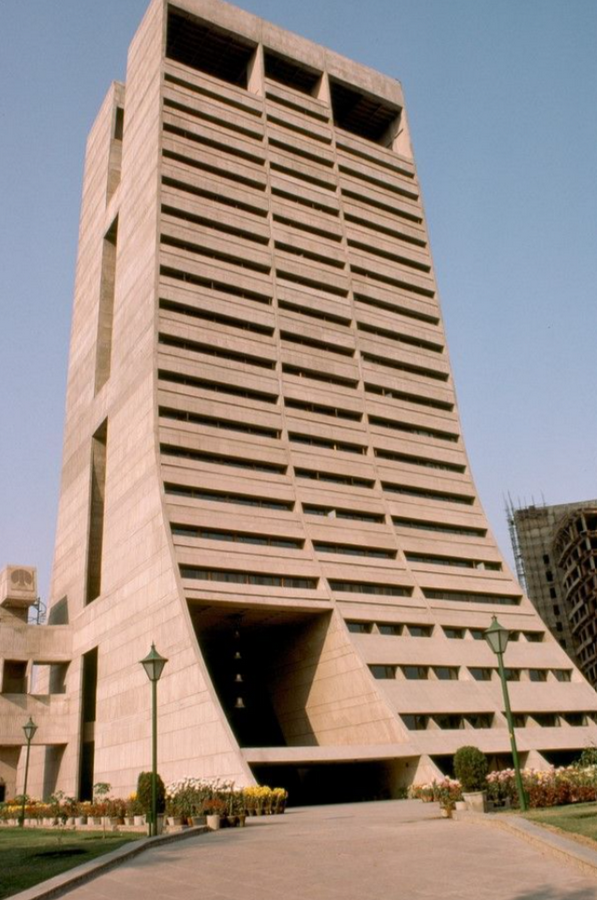
The NDMC headquarters has administrative offices and departments that coordinate the provisions for its citizens. It is located in Central Delhi and has a jurisdiction of 42.7 sqm under its provisions, which cover services that include everything from urban planning, approval of building plans, road maintenance, and sanitation through the enforcement of public health policies, evaluation and collection of property tax, to the management of water facilities and distribution of electricity. The logical design for vertical movement, with the use of vertical cores, provides free open office space. The sloping façade of Palika Kendra represents a symbol of an entity that emerged from the ground to the sky as a free India, a pioneer in multipurpose, vertical structures, a product of its era.
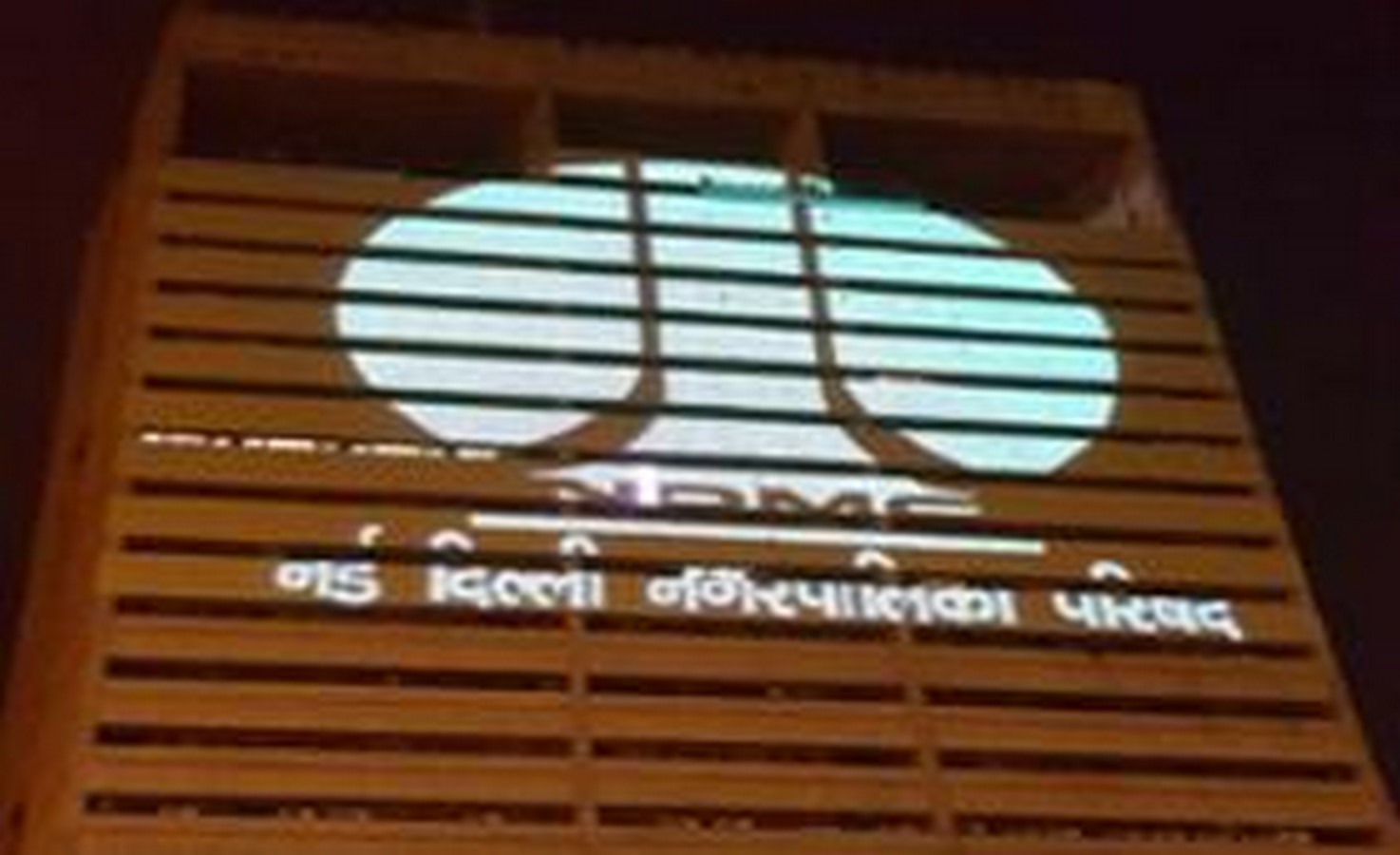
Newer additions to this structure include LED façade lighting, which, although contested by purists, improves visibility and public engagement, especially on national observances like Constitution Day. Placed from the 11th floor onwards, the illuminations are synchronised with civic holidays, without challenging the original character of the building or any major alterations. A 150 sqmt. Portrait of Mahatma Gandhi, made with 3870 terracotta cups – kulhads, was also installed on the walls of Palika Kendra in 2019, remembering him on his 150th birth anniversary. This complemented the building’s character – both standing for self-reliance, Indian independence, and national identity in their own ways.
Béton Brut vs Colonial Ornamentation
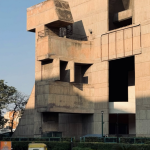
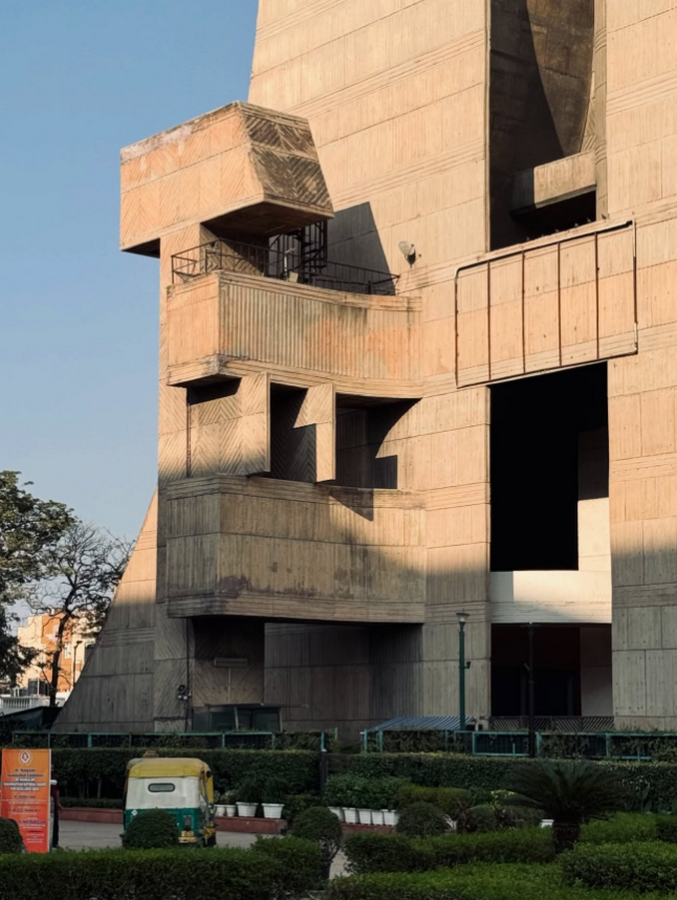
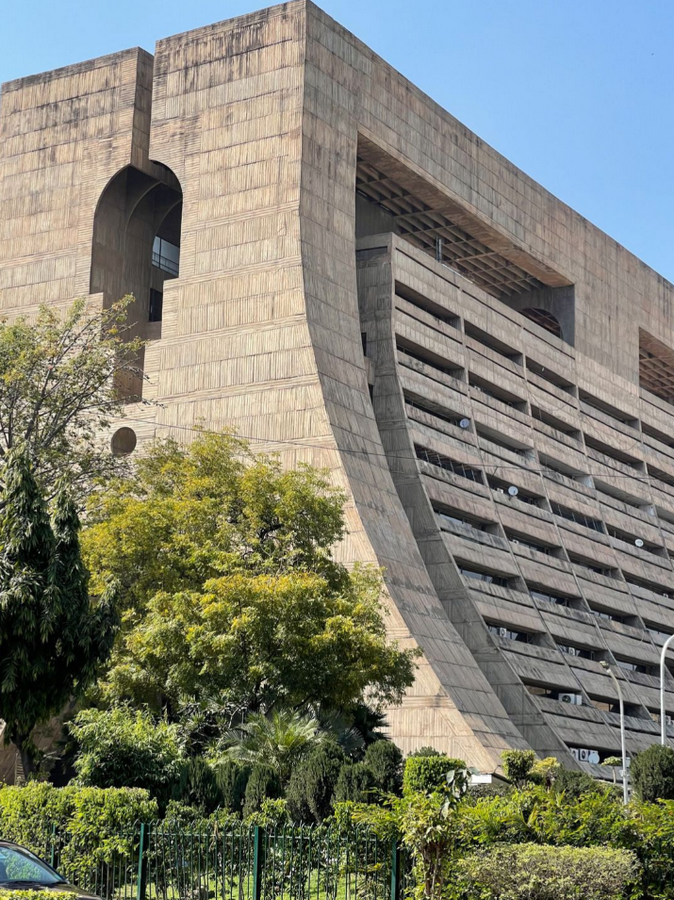
This structure of negative curvature blossoms with pride over the unfinished, raw undertones of its material – concrete, with its aesthetic honesty and a challenge to colonialism in ornamentation. With INTACH (Indian National Trust for Art and Cultural Heritage) working diligently to position Palika Kendra as a center for modern heritage, with its engineering and aesthetic appeal of the mid-20th century preserved, this unfinished concrete marvel checks all the boxes for the characteristics of a brutalist structure. Unfinished and raw textures, minimalist, unusual bulky forms, heavy and industrial material usage, straight lines, small windows – all hallmarks of the brutalism of the 1950s are seen in this architectural marvel. The various linear spaces used to keep the elevation clean and simple provide harmony, while negative spaces and recessed balconies and positive spaces and bulky massing create adequate balance and symmetry. The true-to-material finishes and marking of shuttering and joints provide an interesting and honest texture. This building, although functionally well integrated within its surroundings, also provides a stark contrast to the usual 20th century style in India. The exposed béton brut finishes, visible in board markings, are imprints of the formwork on concrete-the honesty in materials. The raw structural expression, instead of frills and ornamentations, makes it one of India’s most iconic brutalist structures. The material – concrete- is justified not only for its architectural and visual character, but also for its resilience. Concrete, with no extra finishes, means less maintenance, low porosity and hence limited water and weather-related damages without sealants.
A Silent Challenger in Lutyens’ Skyline
While respecting surrounding colonial landmarks, the Palika Kendra also silently challenges the ornamented, hybrid, European Neoclassical and Indo-Saracenic architectural style. The competition continues in the skyline as well, where this building challenges its low-rise, symmetrical and borrowed British counterparts from Lutyen’s Delhi. Not only is there a visual challenge, but also a functional challenge. The repetitive civic frontage of other closed-up surrounding structures is challenged by the use of a ground-level plaza and setbacks of the Palika Building, which softens its edges.
Loved, Loathed, and Unavoidable
The Palika Kendra building, although a revered piece of architecture, still gains massive criticism.
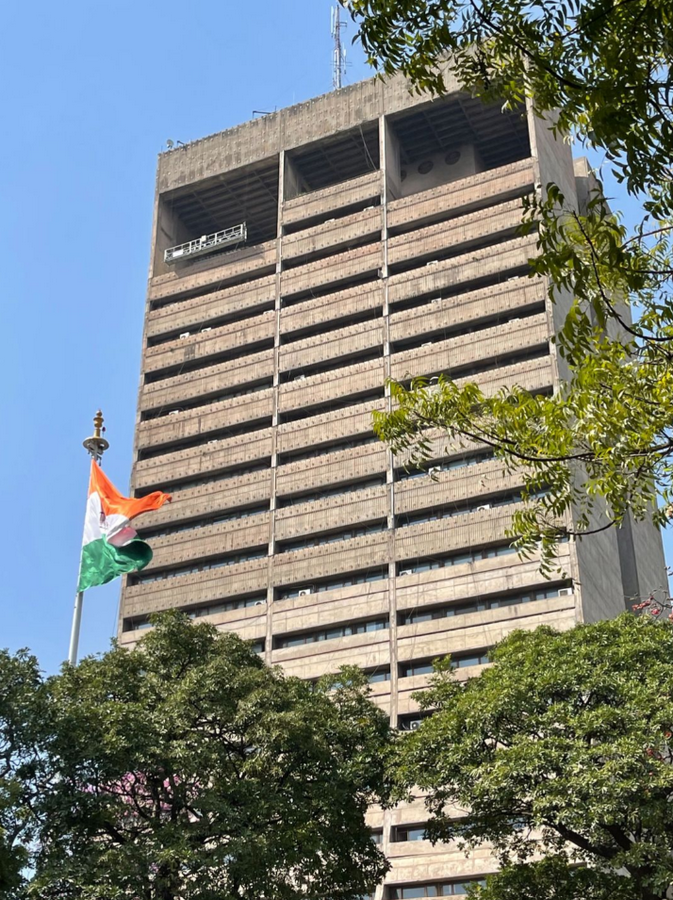
Often perceived as cold, alienating, visually heavy, dominating, harsh, boring, authoritarian, dated, bureaucratic, disconnected from Indian architecture, clashing with aesthetic sensibilities of Delhi (Lutyen’s, Mughal, colonial and vernacular Indian styles), this structure remains a symbol of Indian self-reliance, of newly independent India that was starting to make a global mark for resilience. The low-maintenance yet celebrated structure (not susceptible to Delhi’s harsh weather and pollution) is India’s indigenous answer to Western brutalism. The functional realism, durable modernism and causal durability trump nostalgic ornamental preservation.
References:
- Balasubramaniam, Chitra: “A structural engineer who redefined design”
- https://www.platformspace.net/home/the-architectural-legacy-of-kuldip-singh-1934-2020
- The Hindu, Mr Nehru’s message, https://www.thehindu.com/news/national/jawaharlal-nehrus-message-to-india-in-independence-day-issue-of-the-hindu/article7540128.ece
- https://ravtejsingh.wordpress.com/tag/palika-kendra/
- Varghese, Shiny: The Pyjama Building: Delhi’s National Cooperative Development Corporation
- Lazarus, Susanna Myrtle “The beauty of Brutalism”
- Sharma, Nidhi “3 years after launch, New Delhi Municipal Council smart city work in progress”
- Sen, Jahnavi “NDMC Building, an INTACH ‘Modern Heritage’ Site, Covered With LED Billboard”
- https://www.ndmc.gov.in/ndmc/introduction.aspx