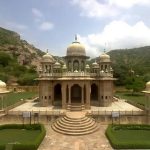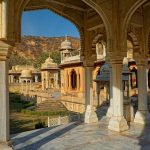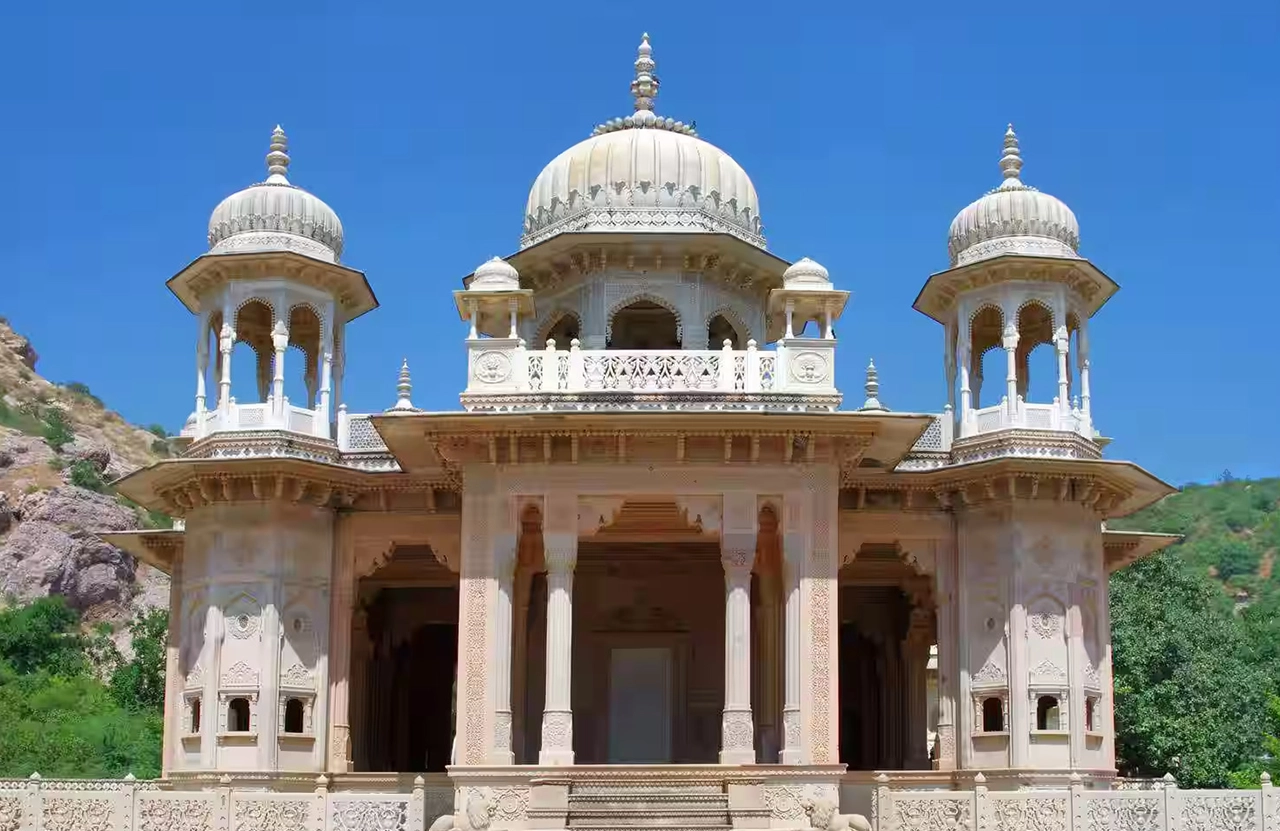
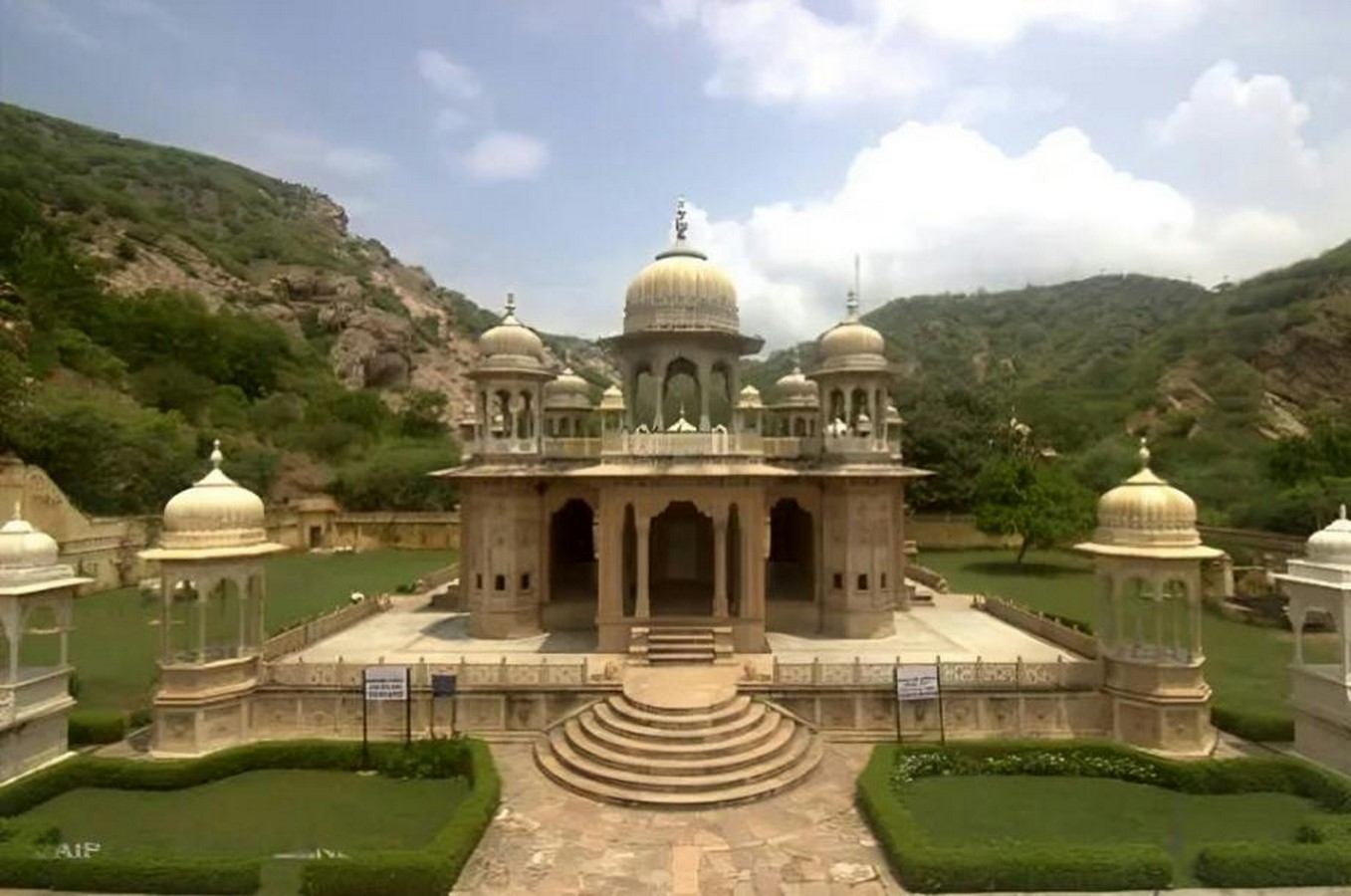
Gaitore Ki chhatriyan is nestled amidst the ethereal Aravali hills, a few miles away from the pulse of Jaipur city. The natural setting of rocky terrains carpeted in lush greenery entices the visitors and allows them to explore the cenotaphs(chhatri) of deceased royals. The site imparts scenic views which complement the solitude and grandeur the place holds.
Historical Background
Where history goes beyond mysteries. The word “Gaitore” has been extracted from ‘gaye ka thor’, which means the resting place of the departed souls. In the late 18th century, Maharaja Sawai Jai Singh allocated this place as the official crematorium for the royal family of Jaipur. Each chhatri clutches a grave in the memory of the different rulers of Kachwaha Rajput dynasty who once ruled Jaipur. The central and tremendous cenotaph belongs to Maharaja Sawai Jai Singh II, reacting as a dominant entity which radically marginalises other cenotaphs, adding to the evolution of Rajputi aesthetics. The other impressive beauty and glorification of these cenotaphs rests in the materials.
Form and Style
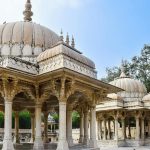
A coffin of lineage, leading to the style of paying homage. The cenotaphs represent a smooth blend of Rajput and Mughal architectural styles. It features dome shaped pavilion, jharokha (overhang balconies), stone carvings which come under Rajput influence, and the integration of arches, inlay work and symmetrical garden layout is influenced by Mughal architecture.
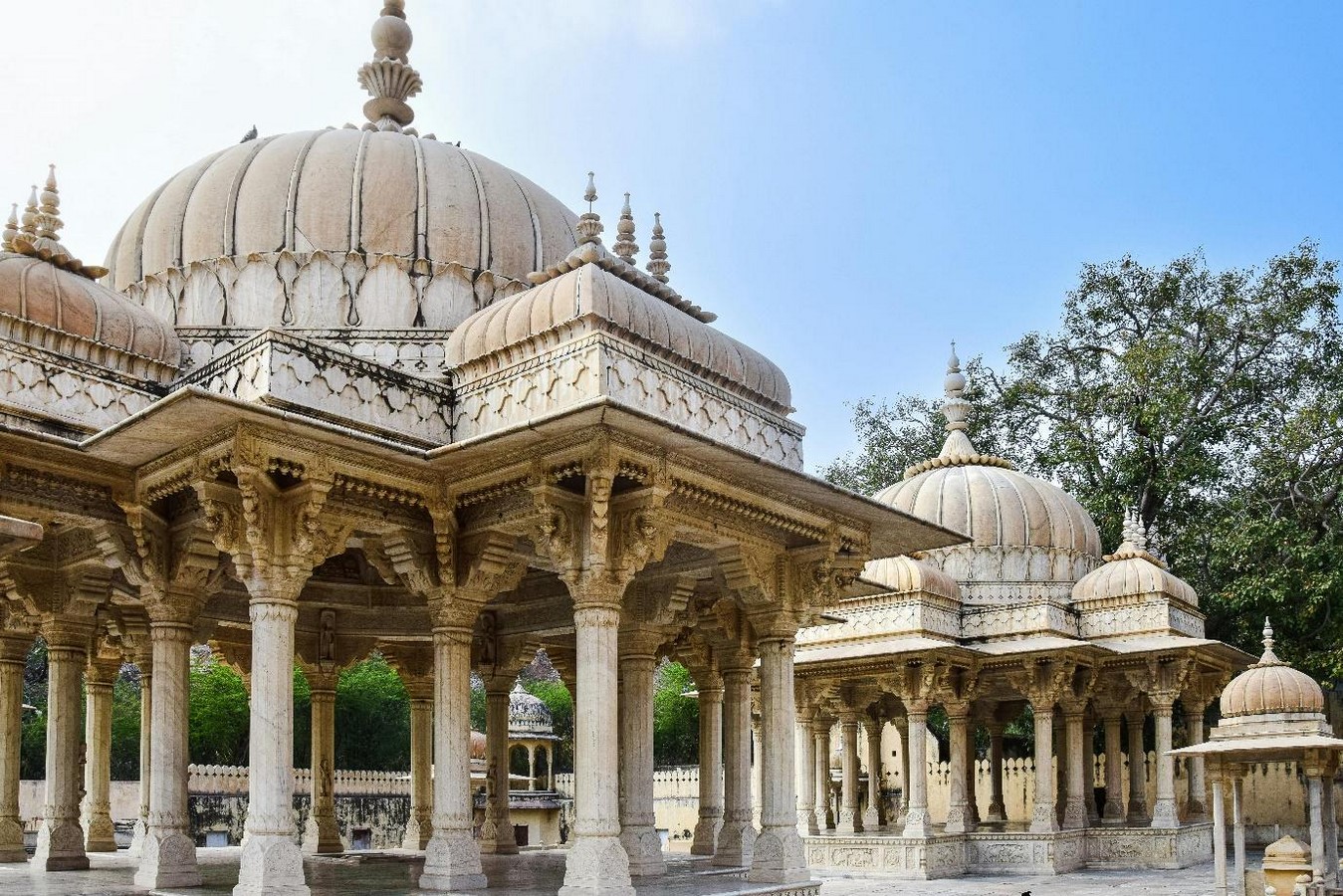
On scrutinising a closer view of the dome shaped pavilions, nearly every pavilion is an open-sided pavilion revealing one after the other sequentially, followed by an elevated dome. These domes are further supported and strengthened by intricately embellished stone columns. Commemorating the personality and achievements of the kings, is what makes these pavilions an eye-catching insight.
Construction and Materials
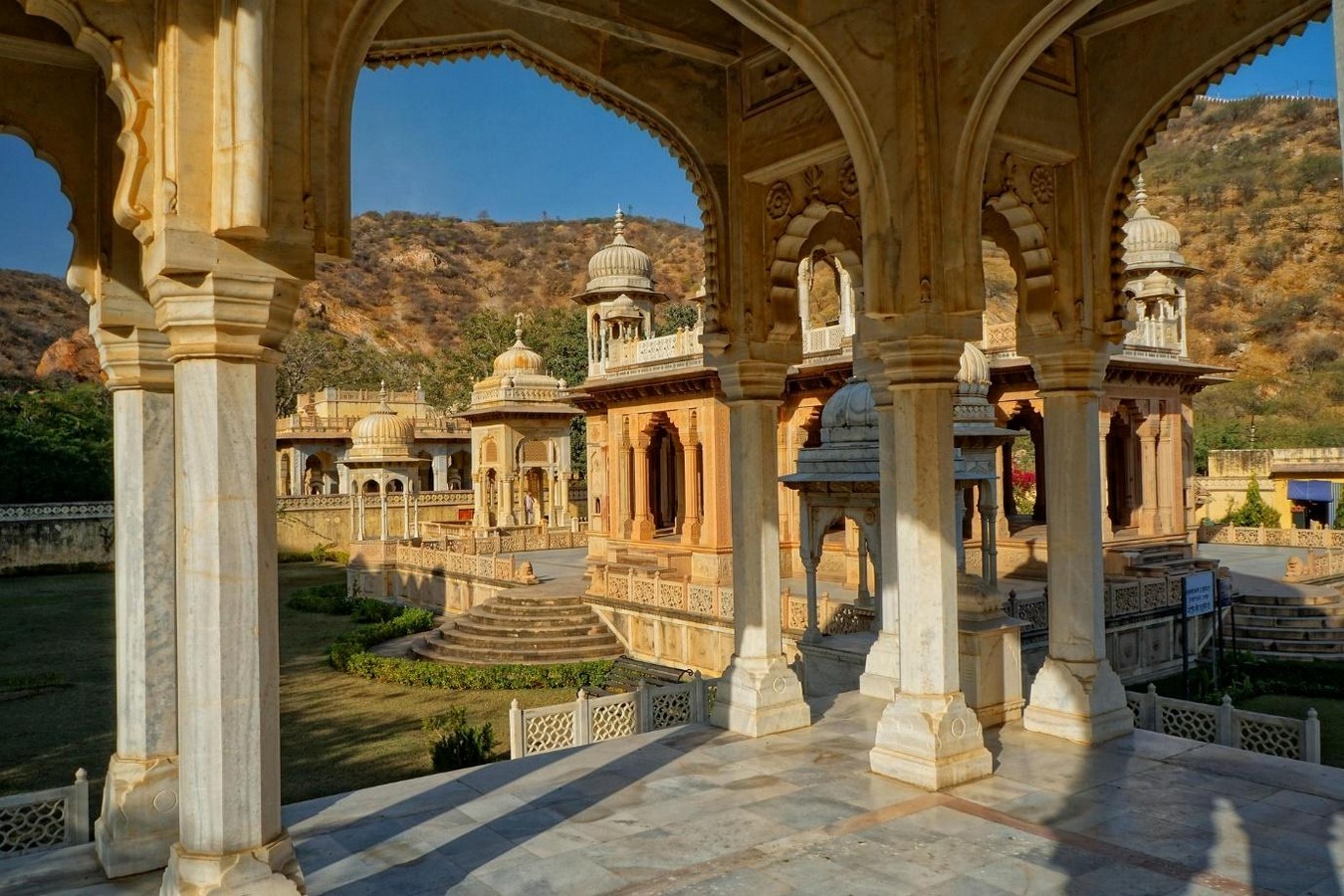
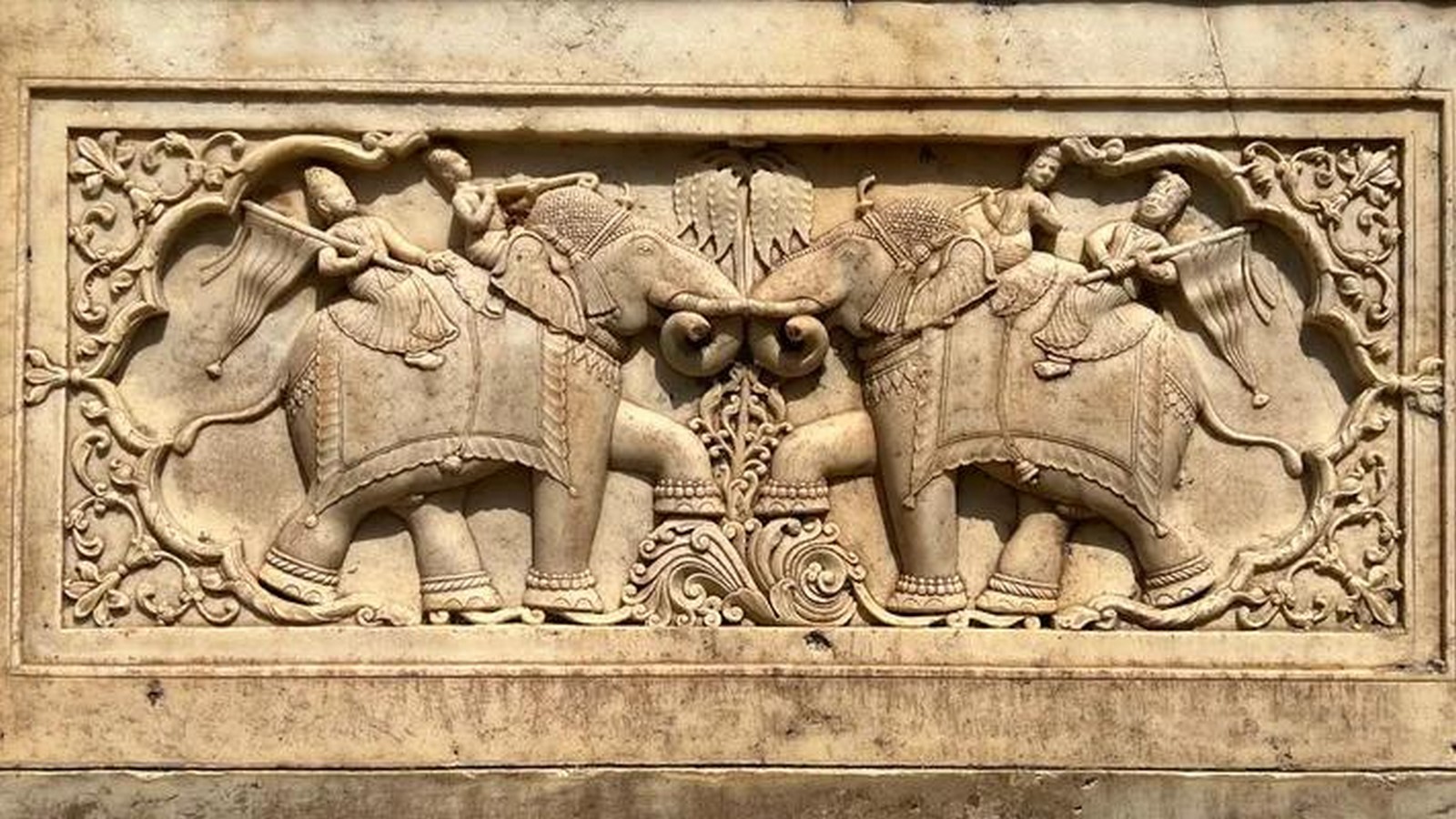
The higher the royalty, the precious the material. Makrana marble has been used in the construction of principal cenotaphs, which is known for its luminosity and durability, and for smaller chhatris, columns, plinths and boundary walls, local yellow sandstone has been taken into consideration. A striking insight that appeals to the aesthetic, is the stucco- ornamented frescos with intricate floral and geometric detailings and conspicuous mythological Images portraying narratives of the unforgettable.
From stone detailing to carving of brackets, the local artisans crafted something worth scanning over again. Keeping in mind the Rajput style of architecture, the design adapts construction of traditional chhatris which are reinforced by the method of corbelling, showcasing appreciable structural integrity.
Spatial Experience
Hierarchical semblance of cenotaphs, to be perceived as grids in graphs.
A series of cenotaphs marginalised in a radial organisation with a principal cenotaph in the centre, and the rest are arranged at the periphery. A user experiences spiritual and heritage charm commencing from the entrance to the central memorial. Gaitore holds a sense of transition in itself, and altering it in the indulgence of internal zoning would be a sin. Pathways leading from earthly encounter to a monarchical section with less rigidity and more openness, which enhances connectivity in terms of materiality as well as landscape.
Social and Urban Impact
From cityscape to monumental history, human scale urbanism to enormous fortresses, and sanctorium to crematorium, Gaitore performs as a cultural corridor, bridging the gap between the urban center and the historical arena by fostering a transitional and recreational margin. Coming into operation of ritual geography, progression from a royal residence to a royal memorial. It fits enticingly with the zoning of Jaipur to create the cremation ground in the outskirts of the city, managing cosmic order and following ancient customs.
Culturally, these chhatriyan define historical honour and legacy. The chhatris symbolically represents the significant architectural vocabulary of Gaitore, and it has been recognised as the universal architecture motif all around the heritage city of Jaipur.
Architectural Interpretation
Therefore, Gaitore Ki chhatriyan plays a vital role in signifying death and dominance, memory and mausoleum, history and hills. Unlike any other crematorium, which possesses features of a close peripheral space and permanence, Gaitore asserts openness and a superior cultural collision. It is exclusively designed to obey the architectural command of the Hindu philosophy by harmonising the built form with the natural environment.
The site demonstrates a static architecture while fostering a dynamic spatial experience of rhythm and sciography from the amalgamation of the natural terrain and built environment.
Gaitore ki Chhatriyan might serve as an offbeat destination, but it rejuvenates Jaipur’s built heritage while being recognised as a memorial of the royals.