Design – Planning, Spatial Logic, and Earthquake Vulnerability
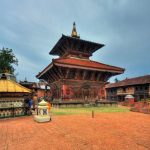
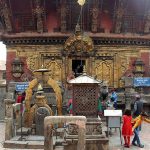
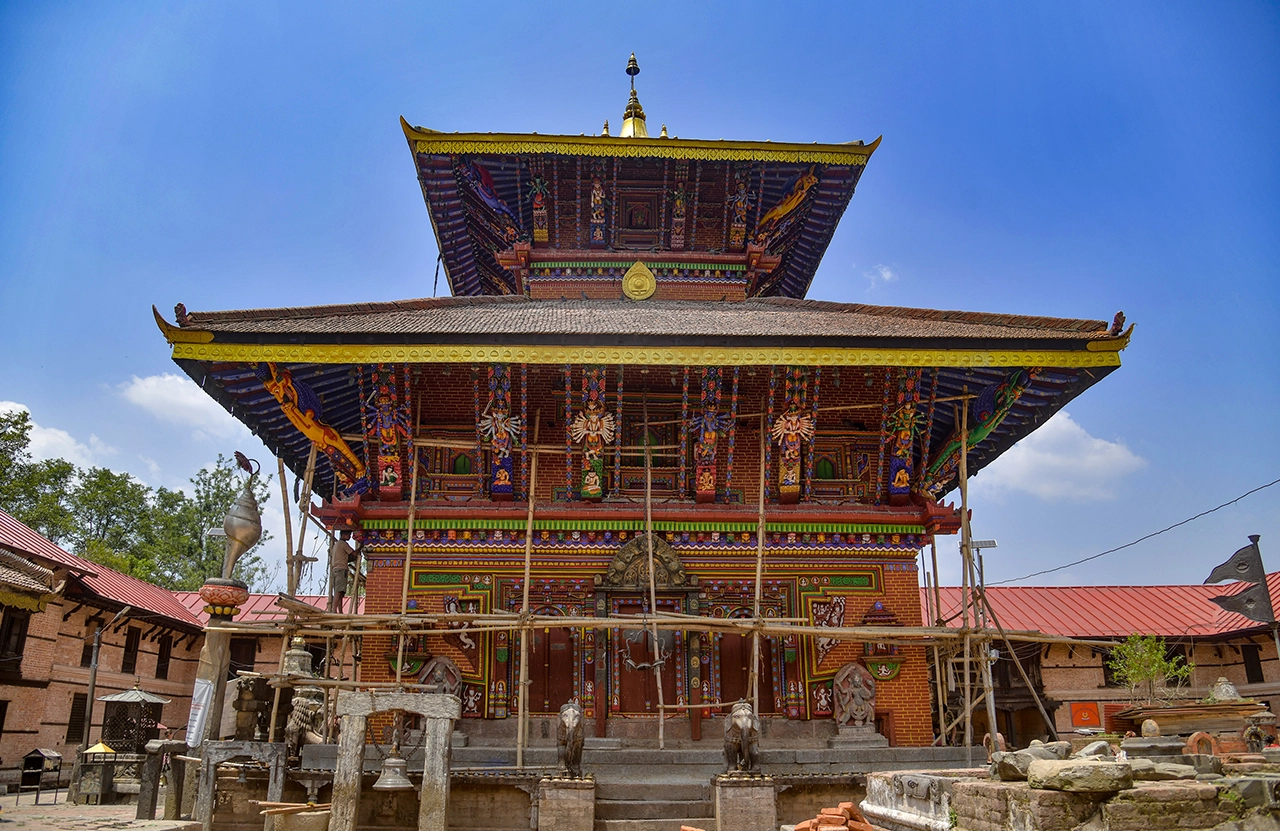
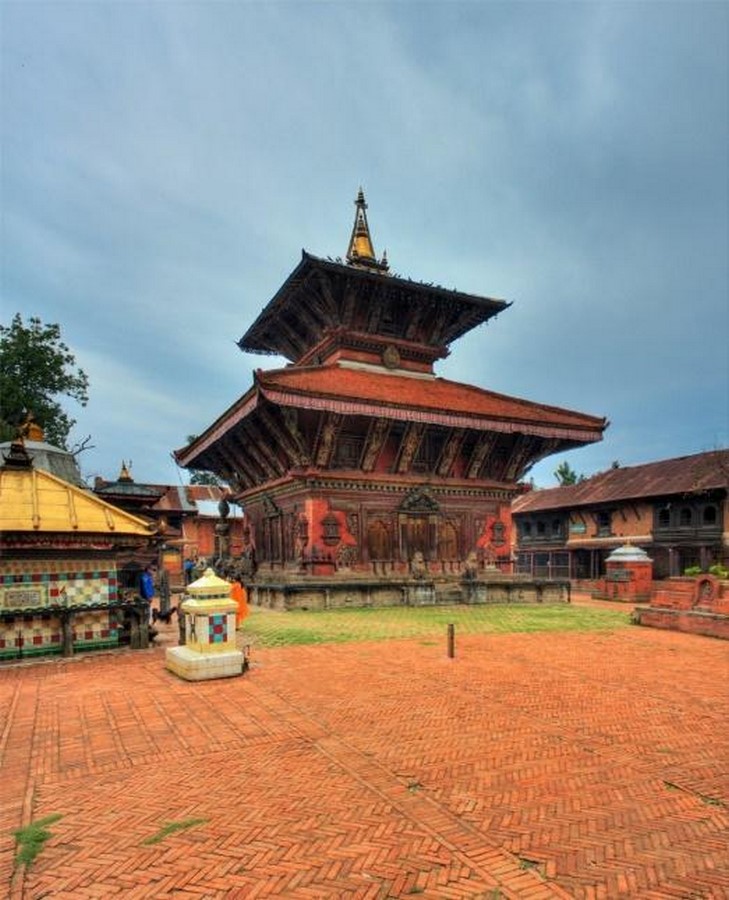
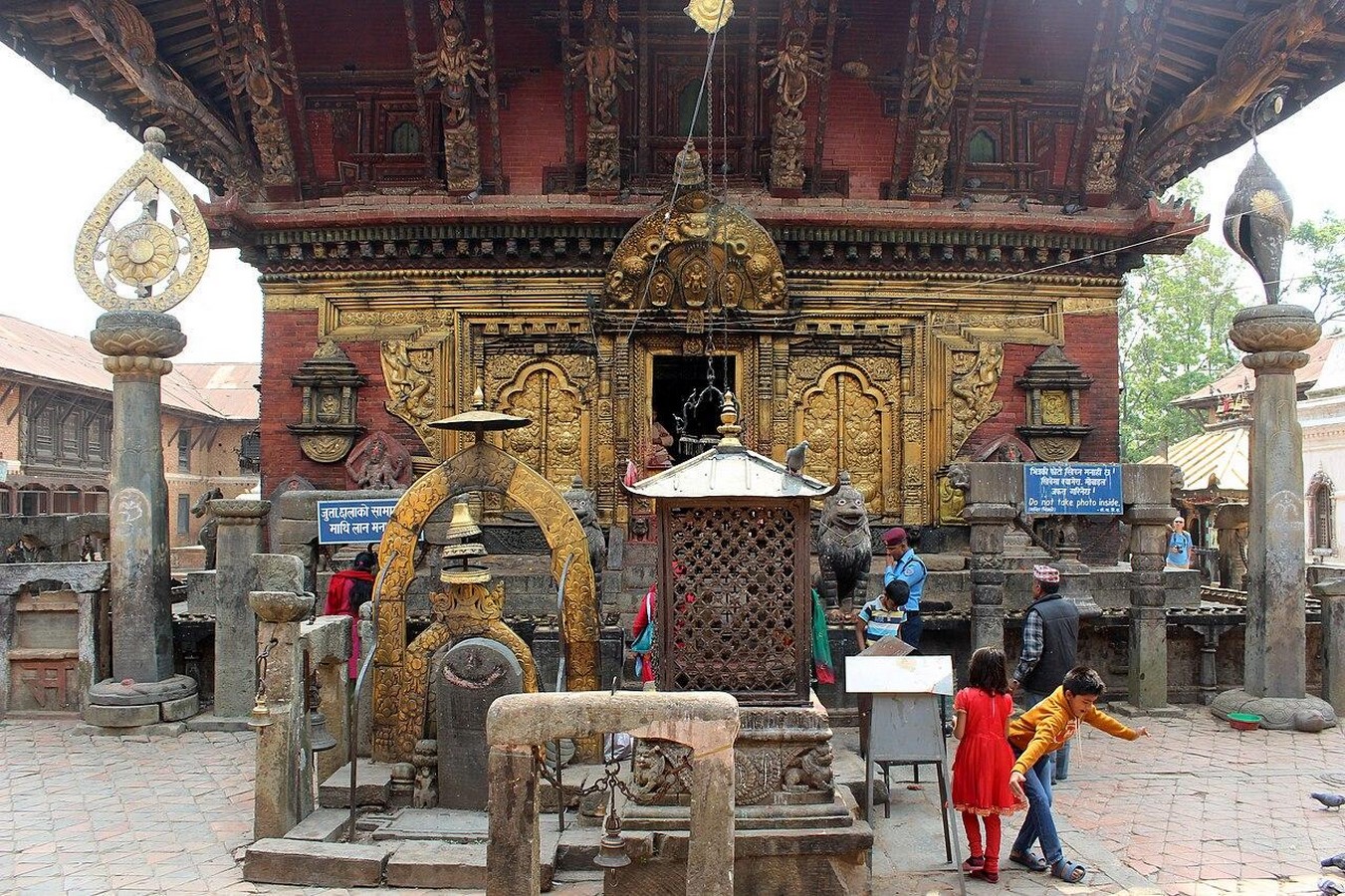
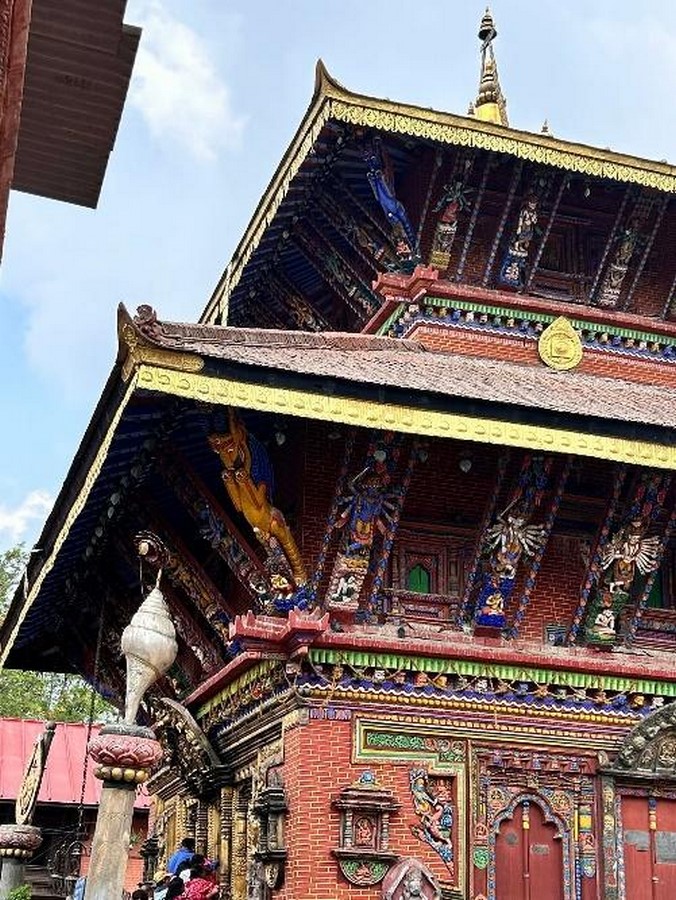
One of the oldest Hindu temples in Nepal, Changu Narayan Temple is an important landmark in the Kathmandu Valley UNESCO World Heritage Site (UNESCO, 2019). The temple, which was first built in the fourth century and rebuilt in 1702 CE, is situated in the Bhaktapur District on a hilltop, which both influences its seismic behavior and strengthens its symbolic link to the sacred landscape (Suwal and Joshi, 2021). With its elevated plinth, symmetrical layout, and tiered roof structure, Changu Narayan Temple’s architecture adheres to the traditional Nepalese pagoda typology. These design features support appropriate gravity load distribution, ceremonial procession, and visual significance.However, the temple was not conceived with modern seismic principles in mind, as primarily religious, climatic, and cultural considerations rather than earthquake resistance shaped its form.
The 2015 Gorkha earthquake uncovered flaws in the construction of Changu Narayan Temple (Suwal and Joshi, 2021). Damage was localized at wall corners and masonry connections, which accumulate the most tension during earthquake activity. The high hilltop site exacerbated ground motion and increased structural demand. Despite these flaws, the pagoda shape provides modest seismic benefits through vertical mass reduction and roof flexibility. Understanding how spatial organization, massing, and site circumstances influence seismic response is critical for creating conservation measures that improve safety while maintaining the architectural integrity of Changu Narayan Temple.
Changu Narayan Temple main pagoda.
Materials and Construction- Traditional Techniques and Structural Fragility
Changu Narayan Temple has a hybrid building style that blends load-bearing masonry with an articulated wood superstructure, a technology common in traditional Nepalese temples (Suwal and Joshi, 2021). The building is built on a wide stepped plinth that operates similarly to a mat foundation, dispersing loads over a large footprint and enhancing overall stability. Masonry walls are made out of sun-dried brick cores that are coated with burnt clay bricks and cemented together with traditional mortars like mud, yellow clay, and lime-surkhi. These low-strength mortars allow for slight deformation during seismic events, which reduces the risk of brittle failure as compared to hard cement-based materials. The materials employed in Changu Narayan Temple represent long-held indigenous knowledge of resource availability and structural behavior in an earthquake-prone area.
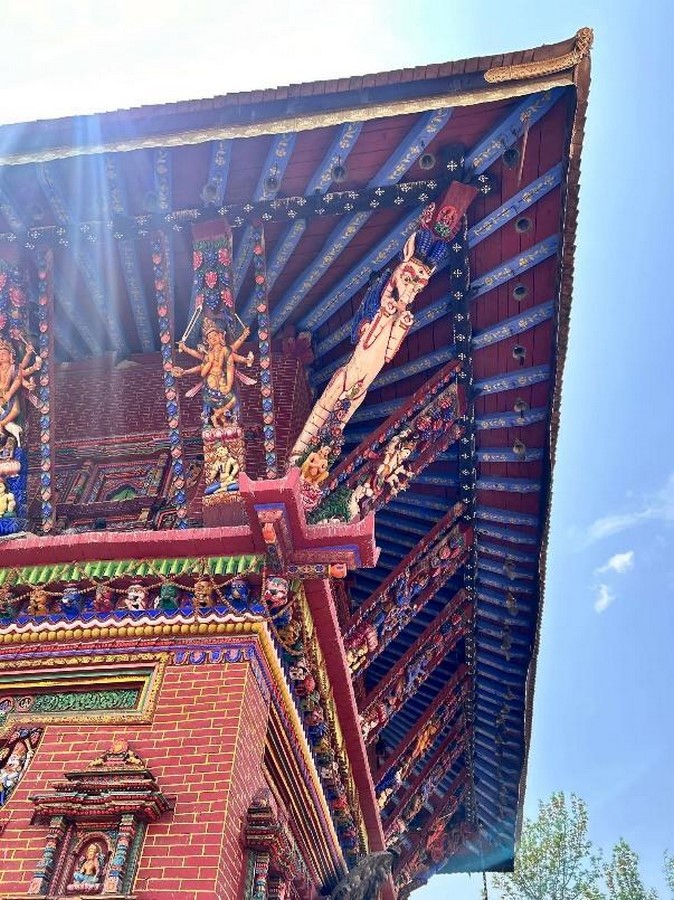
Timber is critical to the structural integrity of Changu Narayan Temple. Roof systems are supported by timber rafters, purlins, and carved struts that are joined using conventional joinery techniques including mortise-and-tenon joints, lap joints, and wooden dowels. These connections permit controlled movement between components, allowing the structure to disperse seismic energy rather of sending it straight to brick walls. Timber parts contribute less to overall stiffness, but they greatly improve ductility and durability. Following the 2015 earthquake, structural assessments identified base-story masonry, particularly at corners, as the most critical component influencing seismic performance, emphasizing the importance of preserving traditional material assemblies while selectively reinforcing vulnerable zones (Suwal and Joshi, 2021).
Sustainability- Conservation, Seismic Resilience and Heritage Continuity
Sustainability at Changu Narayan Temple includes environmental stewardship, long-term structural resilience, and the protection of cultural and intangible assets. Traditional building methods use locally obtained materials with minimal embodied energy and a long service life, making the temple environmentally friendly. Following the 2015 Gorkha earthquake, conservation efforts focused on minimal intervention, reversibility, and material compatibility in accordance with UNESCO World Heritage standards (UNESCO, 2019). Structural studies showed that focused reinforcement of base masonry might greatly increase earthquake performance while preserving the temple’s historic look and spatial character.
Minor seismic enhancements suggested and implemented at Changu Narayan Temple include concealed ring beams on the roof and floor, corner stitching to increase masonry integrity, and localized steel plate reinforcing at important connections. These methods improve load redistribution and lessen the likelihood of out-of-plane wall collapse while being visually inconspicuous. Local craft guilds play an equally vital part in earthquake recovery efforts. Their participation facilitates the transmission of traditional construction knowledge through practice, hence promoting cultural continuity. Changu Narayan Temple, a live religious monument that still hosts rites and festivals, exemplifies a comprehensive approach to sustainability that includes structural safety, environmental accountability, and community-based cultural protection (UNESCO, 2019).
References:
Suwal, R. and Joshi, P. (2021). Structural Vulnerability of Changu Narayan Temple. Proceedings of the 17th World Conference on Earthquake Engineering, Sendai, Japan. Available at: https://www.researchgate.net/publication/355666865_Structural_Vulnerability_of_Changu_Narayan_Temple [Accessed 13 January 2026].
UNESCO (2019). Kathmandu Valley World Heritage Site Management Plan. Paris: UNESCO World Heritage Centre. Available at: https://whc.unesco.org [Accessed 13 January 2026].
Wikipedia (2025). Changu Narayan Temple. Available at: https://en.wikipedia.org/wiki/Changu_Narayan_Temple [Accessed 13 January 2026].
Figure 1
https://upload.wikimedia.org/wikipedia/commons/c/c6/Nepal_-_Changu_Narayan_%283566057331%29.jpg
Figure 2
Author
Figure 3
https://en.wikipedia.org/wiki/Changu_Narayan_Temple#/media/File:ChaNaTe03.jpg
Figure 4
Author