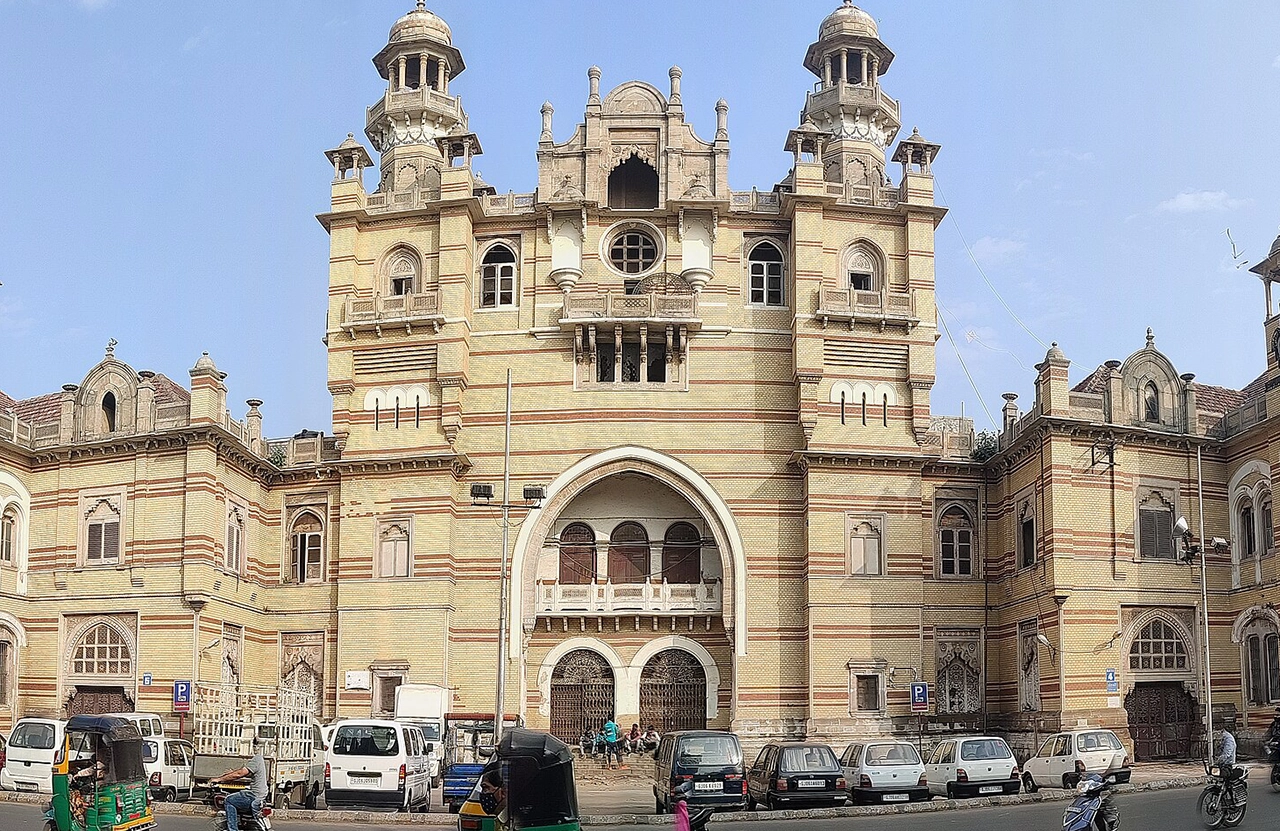
Nyay Mandir, situated in the historic city of Vadodara, is a notable example of judicial design from the princely era of the Baroda State. In contrast to the city’s famous palaces and museums, this courthouse is fairly unremarkable in common architectural discussions. However, its importance is found not only in serving as a seat of justice but also in its architectural representation, which embodies the social, political, and cultural ambitions of its era. Nyay Mandir represents the concept of law as a respected public institution and still impacts Vadodara’s urban identity today.
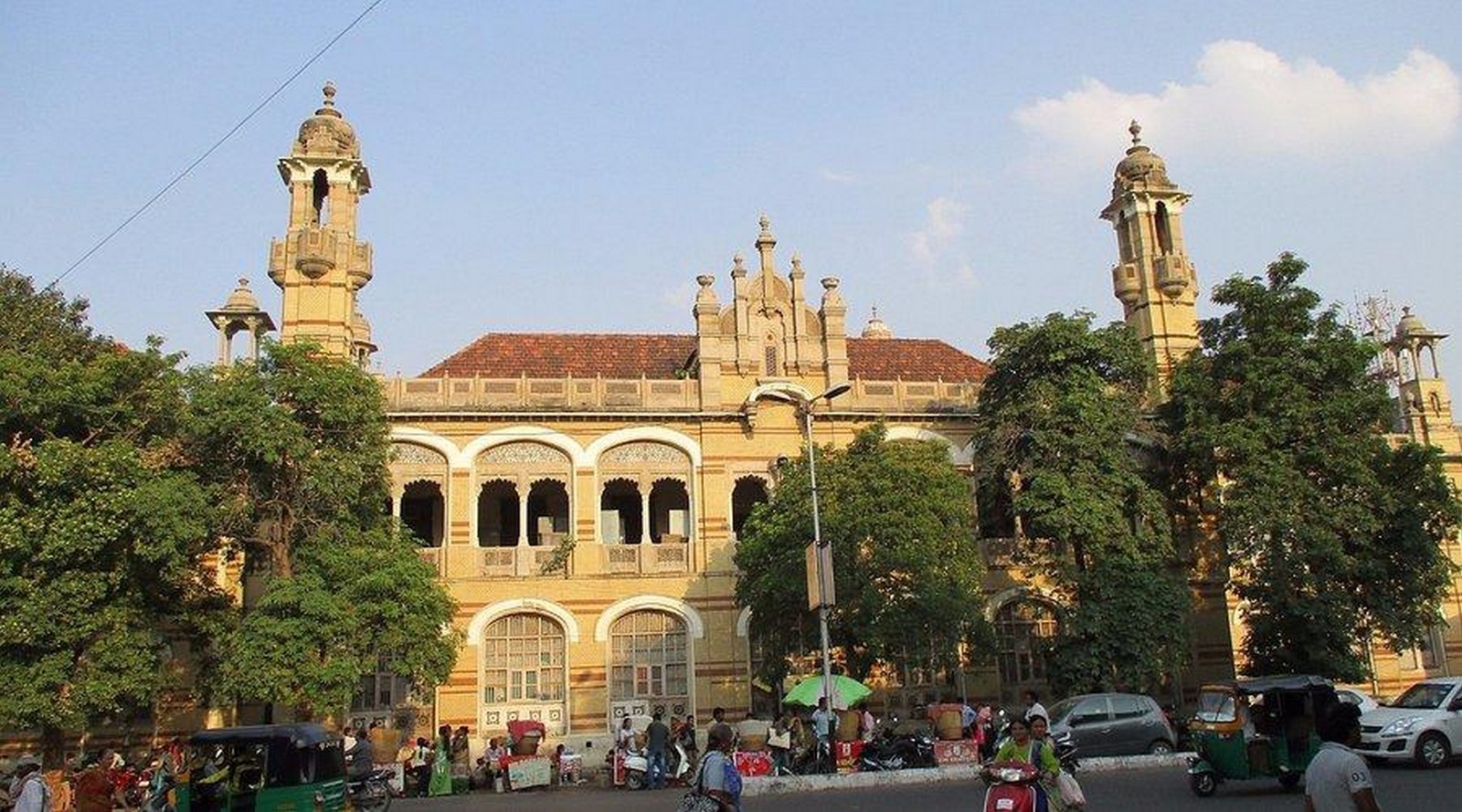
The design of the Nyay Mandir is based on ideals of symmetry, clarity, and hierarchy qualities strongly linked to judicial power. The structure is arranged along a central axis with the notable dome serving as the centerpiece of the design. This centrality symbolically strengthens ideas of equilibrium and neutrality, which are vital to the justice system.
Courts, administrative areas, and pathways are thoughtfully designed to facilitate seamlessness and regulate the movement of various user groups, judges, staff, and the public. This type of spatial segregation illustrates a sophisticated grasp of functional planning in the colonial era. Spacious internal rooms and wide passageways improve accessibility while strengthening the building’s public nature.
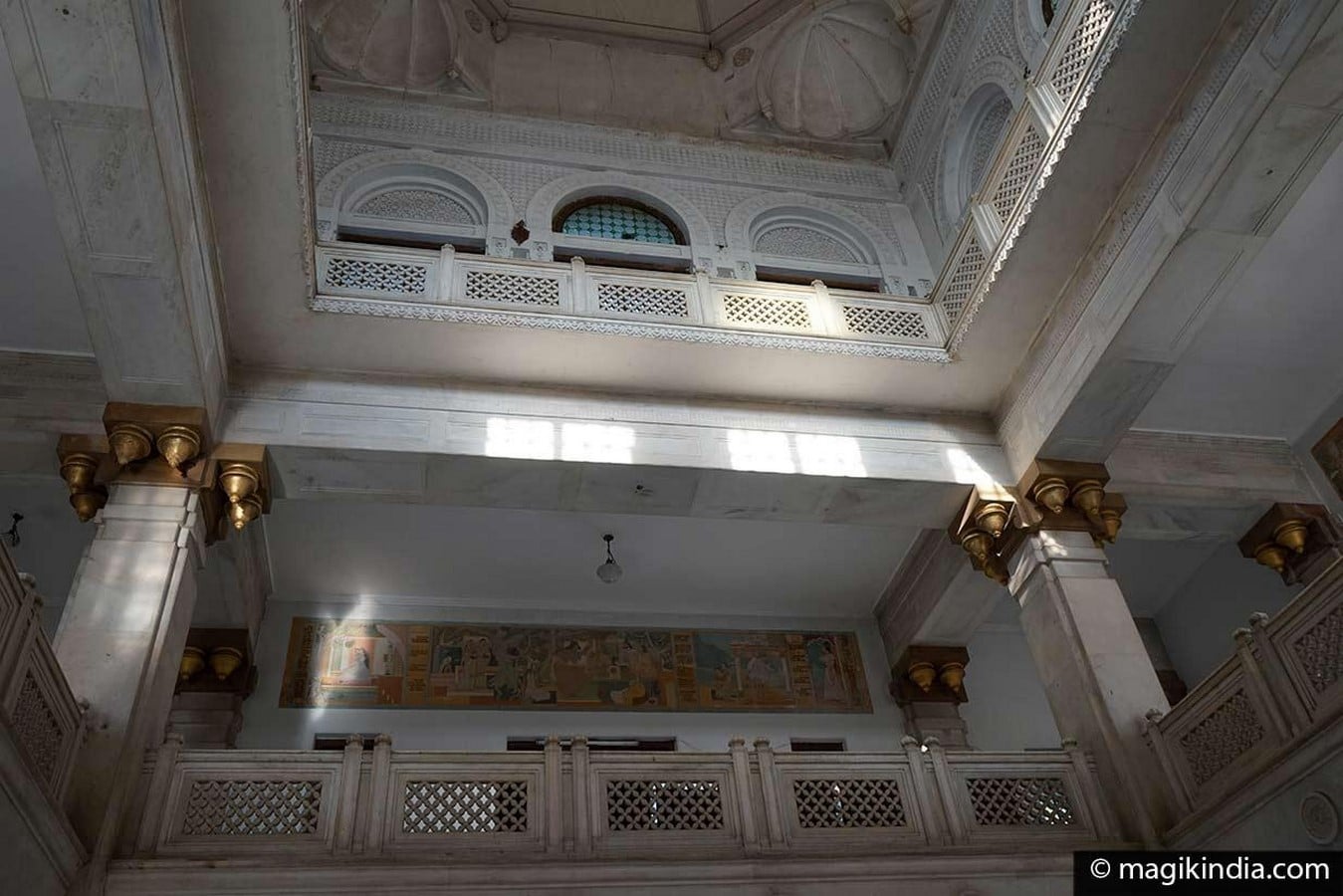
Climatic factors are intricately woven into the designs. Tall ceilings, broad arched entrance, and partly open transitional areas enable abundant natural light and airflow. These characteristics minimize heat and buildup and foster pleasant indoor conditions, demonstrating a thoughtful method to climate-sensitive design well ahead of the widespread use of contemporary mechanical systems.
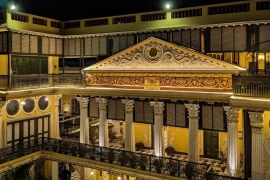
Nyay Mandir serves as a remarkable example of the Indo Saracenic architectural style, which rose to prominence with the support of princes in India during the late 19th and 20th centuries. The structure exhibits a blend of Gothic, Islamic, and Byzantine elements, creating an architectural style that is both grand and contextually grounded.
The façade is defined by pointed arches, rhythmic openings, and carefully proportioned masses. The central dome rising above the high drum dominates the skyline and lends the structure a commanding presence within the urban fabric. Decorative stone detailing, pilasters, and cornices add to the visual richness without overwhelming the overall composition.
This stylistic hybridity reflects the progressive outlook of Baroda State, which embraces the global architectural influence while adapting it to local climate, material, and culture.
Material and construction techniques
The structural system of Nyay Mandir relies primarily on load-bearing masonry, constructed using locally available brick and stone. Lime mortar was employed as the binding material, a traditional technique that enhanced the building’s durability and flexibility. Unlike modern cement-based construction, it allows the wall to breathe, thus facilitating thermal expansion and moisture flow.
Thick walls of the building fulfill structural and environmental roles, ensuring stability while functioning as thermal barriers against the area’s warm climate. The domical roofing system effectively transfers load to the supporting piers, showcasing an advanced comprehension of structural dynamics.
Sustainability and climate responsiveness
Viewed through a modern lens, Nyay Mandir showcases the principle of passive sustainability found in Traditional architecture. The design of the building’s orientation, massing, and envelope work together to minimize heat gain and improve thermal comfort. Tall ceilings promote stack effect, whereas the shaded hallways and verandahs shield indoor areas from direct sunlight.Daylighting is realized by means of expansive windows and clerestory openings below the dome, reducing dependence on artificial lighting throughout the day. These approaches not only enhanced the comfort but also lowered the energy requirement.
Social, Political, and Urban Significance
Historically, it served as the main judicial body of the Baroda State, emphasizing the ruler’s dedication to organized governance and the rule of law. Its location in the historic city center guaranteed accessibility and represented justice as a communal and civic duty.In the current context, the structure still influences Vadodara’s cityscape. Serving as a heritage landmark, it stabilizes the nearby areas and enhances the city’s cultural continuity.
Nyay Mandir in Vadodara serves as a significant symbol of a time when architecture was envisioned not just as practical space but as a public declaration representing justice, power, and cultural integration. Its careful design, architectural style, climate-sensitive approach, and lasting construction demonstrate an architectural acumen that still holds significance in modern conversation. While the swift modernization of cities and the growing dependence on technology, Nyay mandir highlights the lasting importance of passive design, material knowledge, and sensitivity to the context.
As we examine these structures, the lingering question is not just how to preserve them but whether contemporary public architecture can attain the same equilibrium between symbolism, sustainability, and social responsibility that edifices like Nyay Mandir achieved more than a hundred years ago.