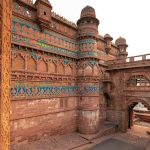
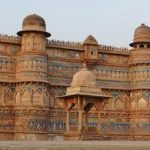
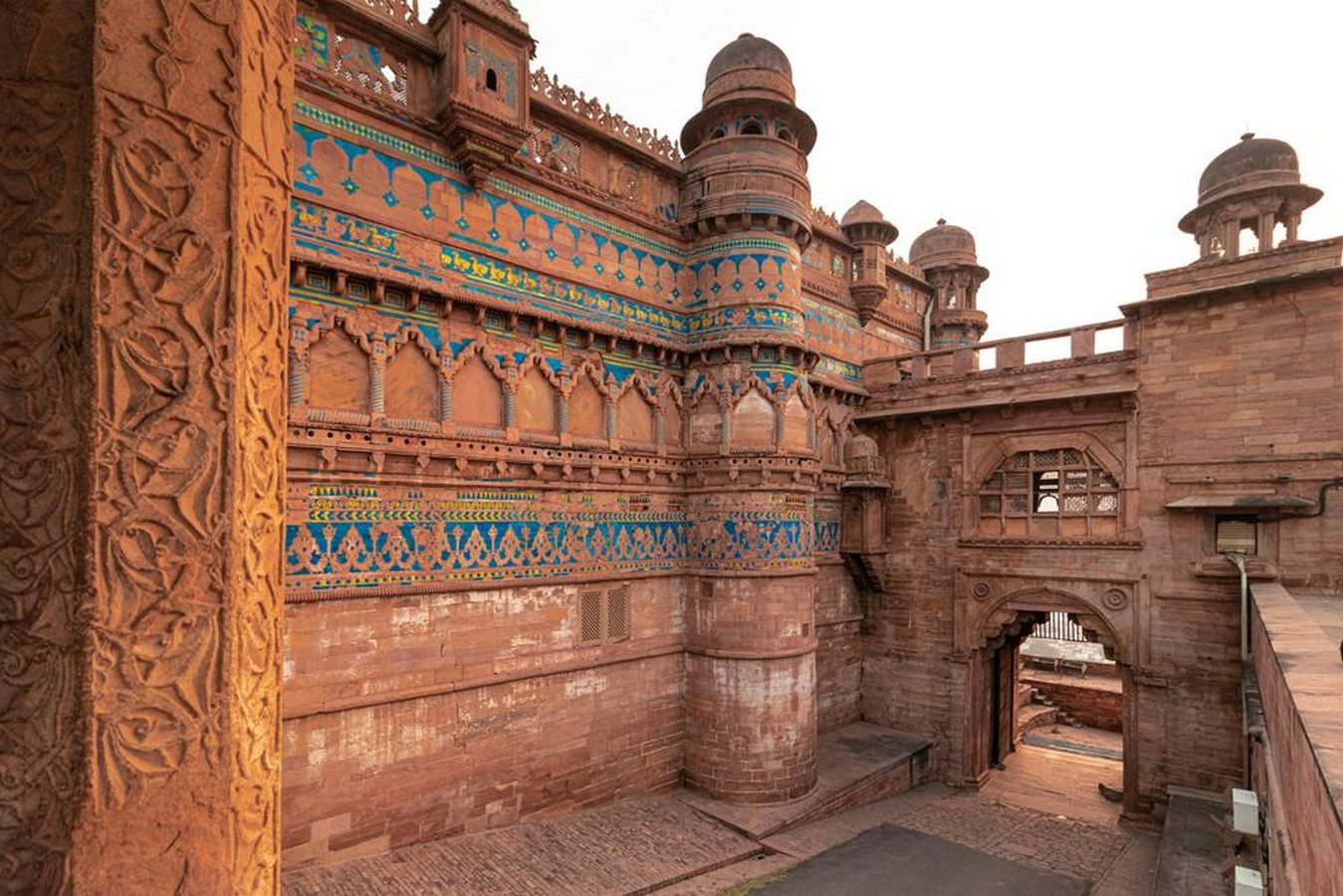
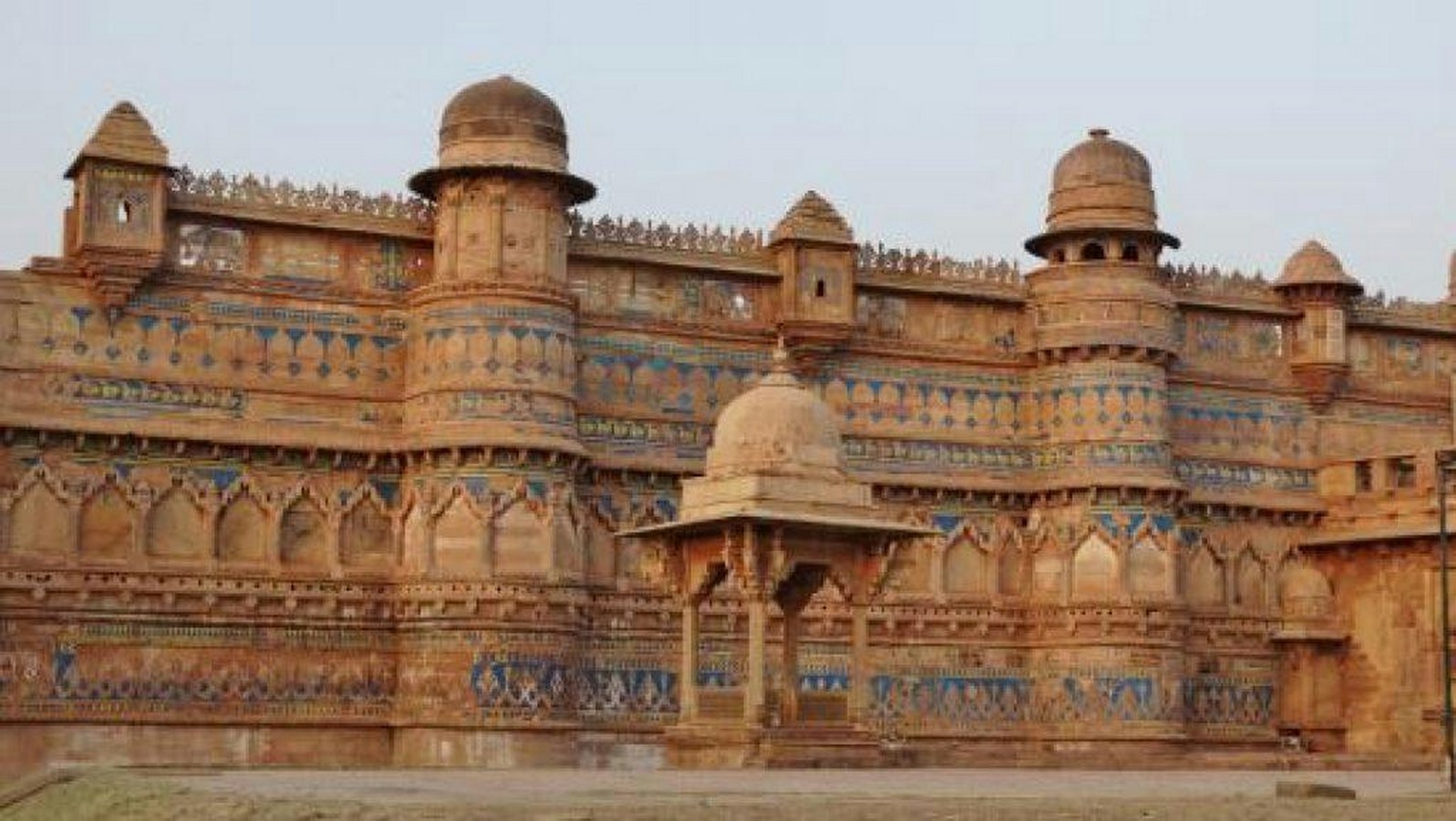
The Gwalior Fort is not just a fort. It is a storyteller in sandstone, perched high above the city like a watchful guardian. At dawn, the blue tiles of Man Mandir catch the first light, glowing like hidden gems. In its courtyards, one can almost hear the echo of music, war drums, and whispers of diplomacy. Tanks and cisterns wait silently, still capable of holding rain. Gates once shuddered with the weight of elephants. Here, history feels close enough to touch — not frozen, but alive.
Origins & Early Dynasties – From Stone Age to Surya Sena
Long before the palaces rose, this rocky plateau held the marks of Stone Age tools. Imagine hunters watching from its cliffs — the same view we admire today. Raja Surya Sena built the first fortifications, carving out a citadel where nature already offered defence. High cliffs, tricky approaches, endless sky — the perfect throne for a rising power. Each dynasty that followed added something new: a wall here, a shrine there. The fort grew like a palimpsest, a place where rulers kept writing their own chapters.
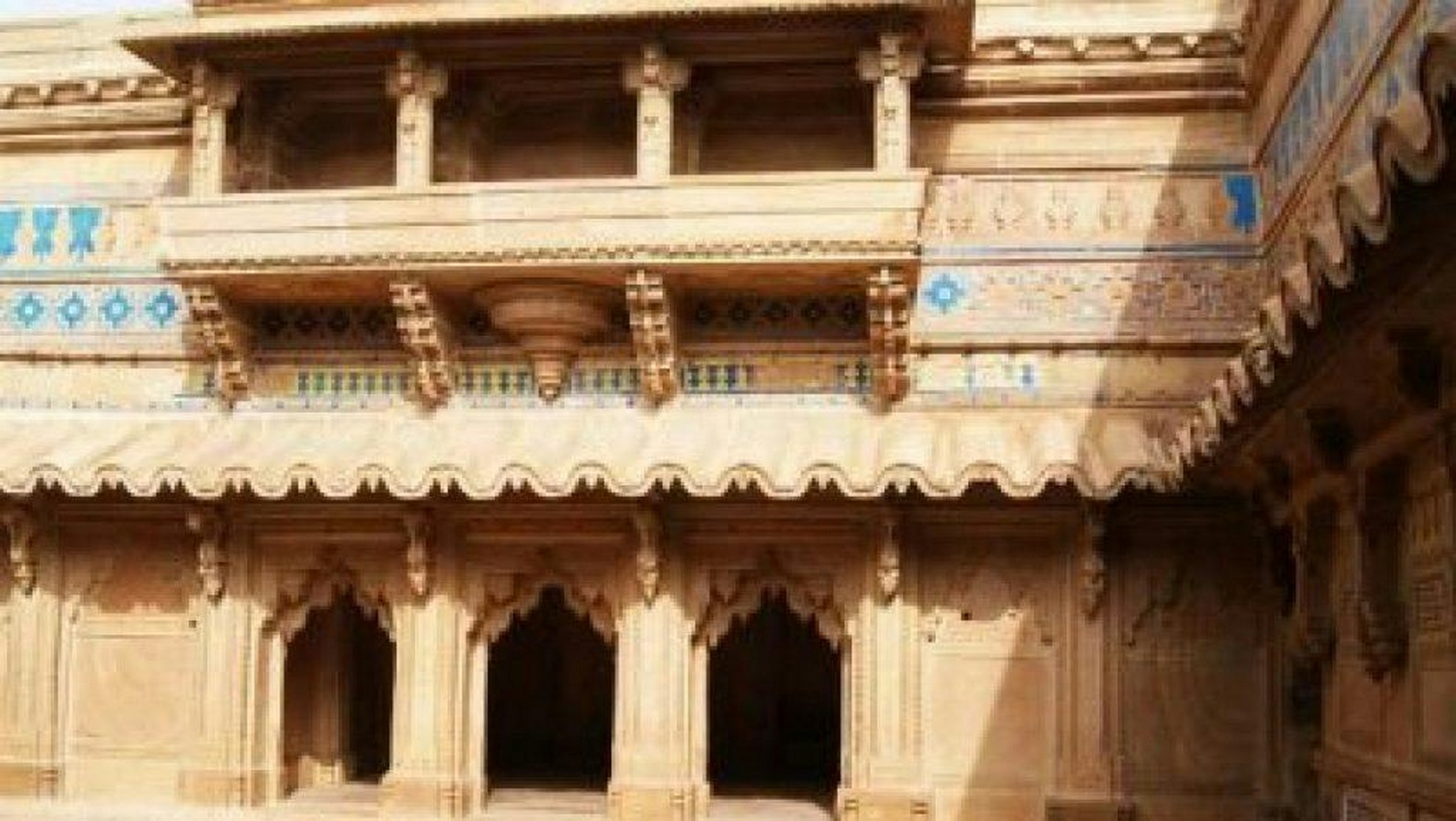
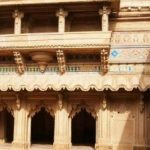
The Tomars gave the fort its most romantic face. Man Mandir Palace is no fortress keep — it is a gallery of colour and music, its ceilings still carrying traces of painted skies. Gujari Mahal, a lover’s gift to a queen, feels almost personal, like a whispered secret in stone. Vikram Mahal stands quieter, a place for private reflection. These palaces turn the fort into a living diary of courtly life: jharokhas to watch the city, courtyards to hear music, stairways meant for quiet midnight walks.
When the Mughals arrived, they did not just seize the fort — they staged an imperial makeover. Jahangir Mahal announces its presence with chhatris like sentinels against the sky. Shah Jahan, ever the aesthete, softened the space with elegant pavilions and marble screens where light plays in lattices. Suddenly, the fortress was not only for defence but for display. Ceremonies, processions, royal visits — the fort turned into an open-air stage for power.
Sacred Temple and Cliffs That Pray
Inside the fort’s vast walls, faith was as strong as stone. Teli ka Mandir rises with an unusual shikhara, a rare experiment that mixes styles and surprises the viewer. The Chaturbhuj Temple quietly guards the world’s first recorded zero — mathematics sharing space with mythology. Sas Bahu temples, delicately carved, turn narrative epics into walls of stone. Together, they make the fort a place of worship and wonder, where rulers sought blessings before battles and poets before inspiration.
Step outside, and the cliffs themselves begin to speak. Towering Jain statues emerge from the rock, calm and immovable, as if the mountain itself had chosen to meditate. Some are so tall you have to tilt your head back just to meet their gaze. Pilgrims still stop to bow, and the wind whistles through the carvings as if carrying their prayers. The fort’s stone is no longer just a wall — it becomes a temple in its own right.
Fort Gates: Strategic Defence
The Gwalior Fort does drama well. You approach it in zigzags, each turn revealing just a little more — until suddenly the full wall looms over you. Hathi Pol once roared with the sound of elephants. Ganesha Gate welcomed kings under the watch of the god himself. Alamgiri Gate carries the signature of later empires. The bastions are clever, built to trap invaders in a game of angles. This was defence, yes, but also theatre — designed to awe as much as to protect.
A fort on a hill is only as strong as its water. Gwalior’s engineers knew this well. They caught monsoon rain in deep tanks, filtered it through silt traps, hid reservoirs under stone slabs. Some of these kunds still glisten after rain, their steps cool to the touch even in summer. The system is practical yet poetic, proof that survival can also be beautiful.
Living Layers of History
History did not end with the Mughals. The Marathas lived here, adding their own palaces. The Scindias built residences and, later, a school that still rings with children’s voices. The British turned sections into prisons and garrisons, leaving behind stories of rebels and freedom fighters. Today, a Sikh Gurdwara welcomes pilgrims at sunrise. The fort has changed its roles over time — soldier, prisoner, teacher, priest — but never lost its dignity.
Gwalior Fort is one of India’s most layered classrooms. Rajputs, Tomars, Mughals, Marathas, British — all left marks here, arguing with one another in stone. Architecture, faith, and strategy sit side by side. You can stand on the ramparts and see centuries arranged like pages in a book, all at once. Few monuments make history feel this close.
Preserving the Stone Chronicle
The Gwalior Fort is not a ruin to be ticked off a list. It is a living teacher, a keeper of memories, a place that still holds music and prayers in its stones. Preserving it is less about patching walls and more about protecting a conversation between past and future. If we care for it well, it will keep telling its story — of kings, saints, battles and beauty — for a thousand years more.