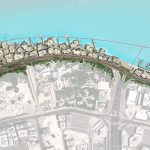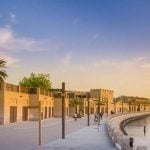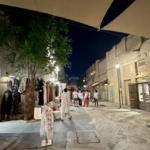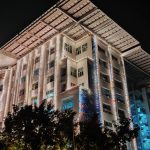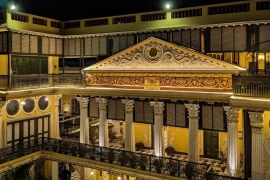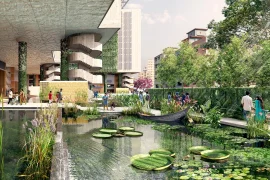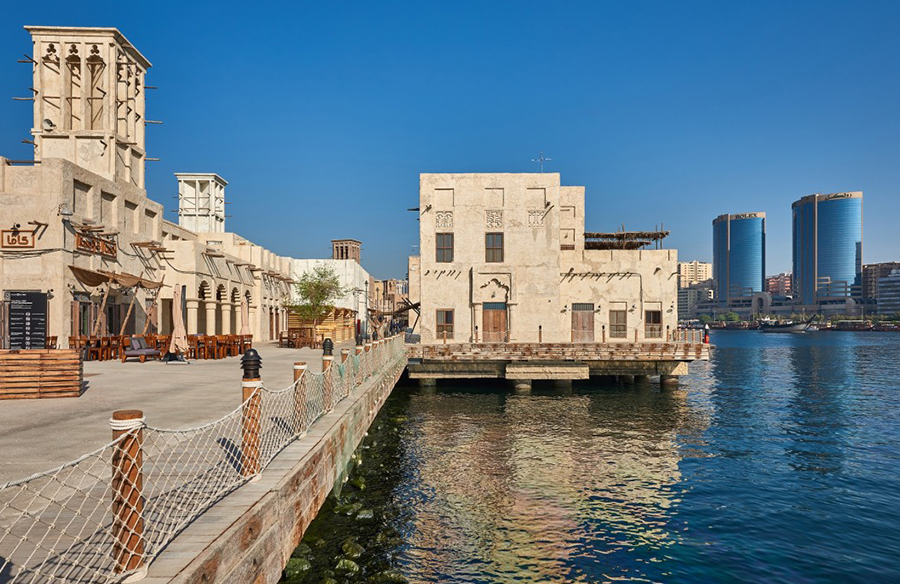
Al Seef, translating as shore in Arabic, is a highly buzzing community situated in the Bastakiya district of Dubai Creek. It can be endeavoured as a homage to Arabian culture. Designed by Godwin Austen Johnson, it can be stated that the project ideation perpetuated from seamlessly blending ‘the city’s past with its present.’ (Godwinaustenjohnson.com, 2025). This can be claimed because of various fragment exhibits of Emirati culture, such as pearl trading retail, experience of authentic Emirati cuisine flavours, and quintessential vernacular architecture, all integrated within the contemporary district of Al Bastakiya. Nevertheless, the visual exertion of a cultural phenomenon may raise the question of whether the ever-growing socio-economic trends of Dubai truly allow the preservation of UAE heritage?
Al Seef – The Dynamic Development
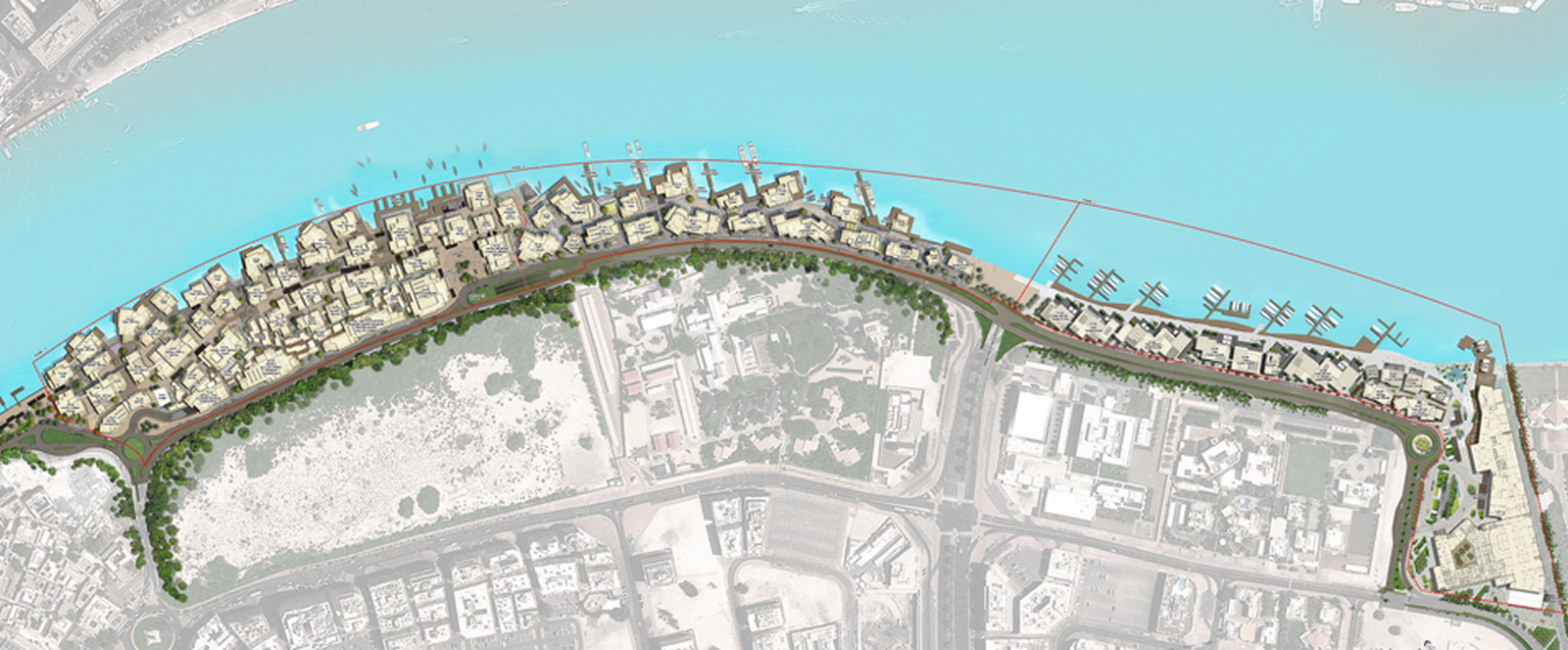
In the late 1800s, owing to Dubai’s rich past, Al Seef accommodated local settlers such as fishermen, pearl divers, and merchants. Initially, ‘the village consisted of 60 houses in a labyrinth of winding narrow streets.’ (Anon, n.d.). However, the paradigm shifts in the socio-political prospect post the independence in the 1970s drastically changed the construction situation across Dubai, such as newer building typologies and perpetual development of master plans, thus the city leaning towards a modern approach in design. Through the alarming situation of losing urban memory, a campaign prompted by the government was initiated to retain some of the traditional facets of the UAE’s urban landscape features (Alsuwaidi, F., Sabri, R., and Belpoliti, V., 2021), such as Sikkas (narrow alleyways), Barjeel (windtower), Areesh (architecture created using palm fronds), and Souk (traditional market). Ironically, in 2018, the developer Meraas saw Al Seef as a potential to reinstate ‘Old Dubai by redeveloping an adjacent 1.6km Creekside stretch.’ (Anon, n.d.). The depiction of fluctuations of socio-economic notions over the years can be described as communicating the vivid history and revisiting UAE’s culture through architecture.
Al Seef- A Testament to UAE Heritage?
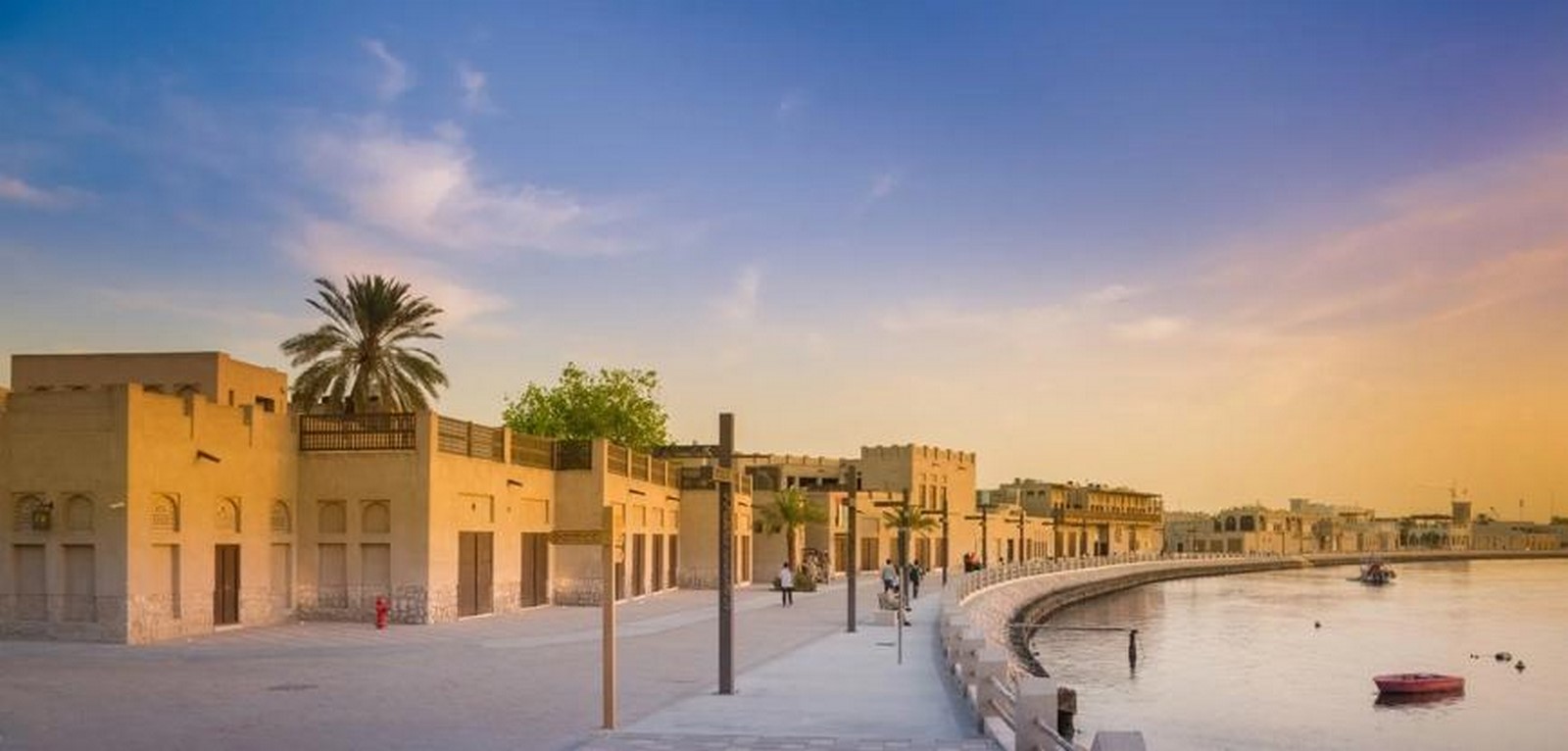
At Al Seef, materiality such as coral stone is being used for structural facades, stucco is being used for walls, patinated copper to produce a vintage look, rope and rattan are being used for textural elements in various built structures, and timber is used for openings (The Studio by DH, 2025). These meticulously chosen materials possibly highlight Dubai’s trading roots and deploy the major source of income back in the day. Secondly, it can be endeavoured that Al Seef utilizes the existing landscape and strikes the perfect balance between built forms and open spaces. Especially, through open courtyards with wooden pergola placements allows for a social place to gather and maximise natural windflow, and desert landscaping, such as palm trees and shrubs, allows for a rustic feeling to be reminisced.
With respect to the environmental ambience around, it can be claimed that Al Seef successfully incorporates vintage facets of design, such as cobbled walkways accompanied by old-style lanterns and sconces for subtle lighting, shaded pathways created through Sikkas, and traditional Majlis seating spaces, providing a hospitable yet authentic experience for visitors.
Therefore, these elements can be interpreted as a glorification of the vernacular architectural elements of the UAE. The design philosophy adhering to Al Seef seamlessly resonates with the narrative of the community, not ‘re-creating the past, it’s about letting it live on.’ (The Studio by DH, 2025). Hence, these accented elements harmoniously weave the overall urban fabric and stitch modernity with the once-neglected historic community of Dubai.
Al Seef- A Walkable Community
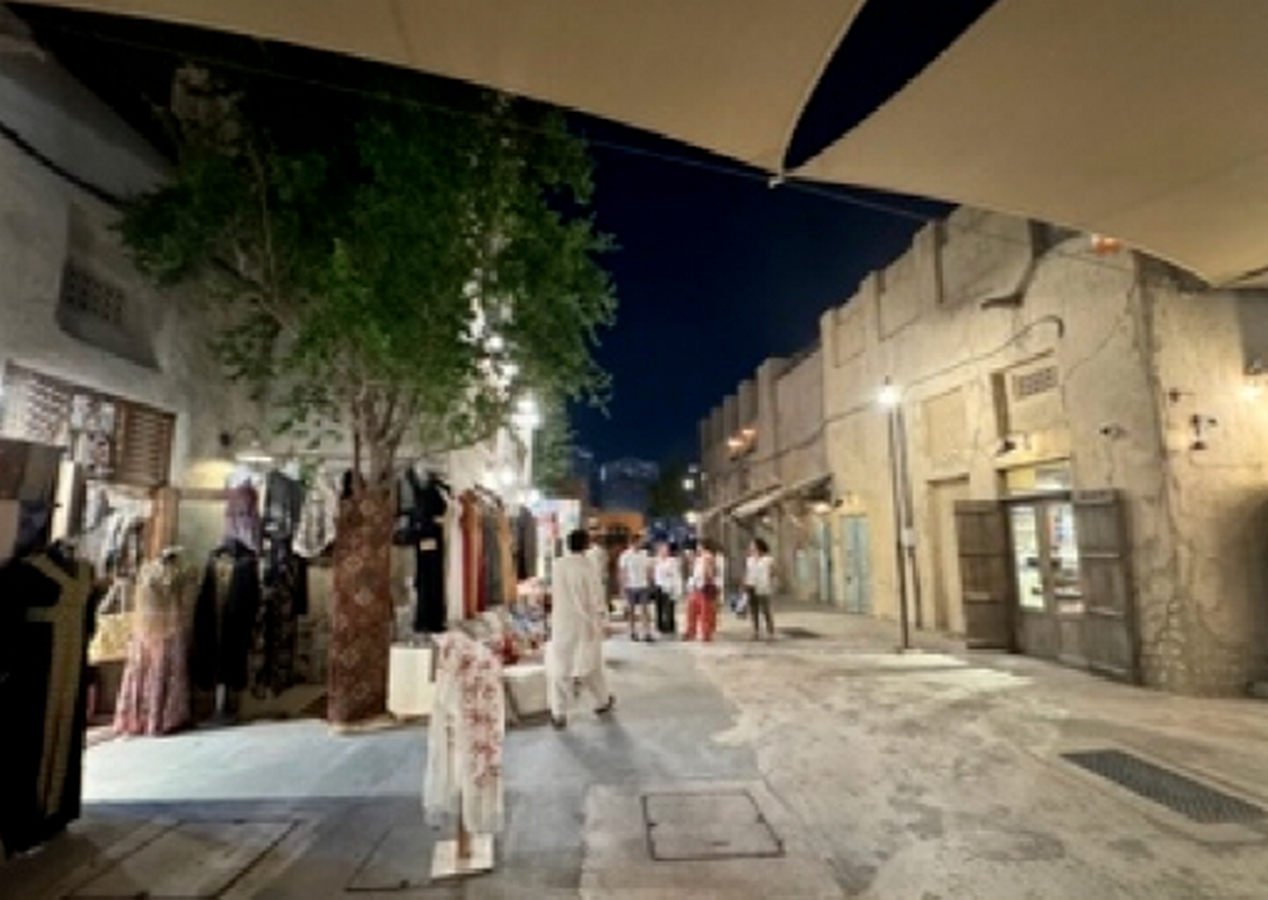
As it can be substantiated through various research, Al Seef can provide a unique walking experience for its visitors due to various public realm stimulators curated alongside passive environmental strategies. Specifically, one of the evaluation assessments conducted by Arar and Kazaz (2025), reinforces the correlation between the urban design and walkability using objective site analysis. This could potentially provide an insight for urban planners and designers to instigate walkable communities and cities to attract pedestrians.
Through the evaluation, Al Seef rates as the highest under the Imageability category. Imageability, in relation to Ewing and Handy’s prototype for urban design, can be defined as how easily a space can strike a remembrance due to its unique features that build a strong character and identity for the built form. In that sense, the fulcrum of this success possibly stems from the rich Emirati heritage utilisation through activating street-level spaces, cultural features, and a balance between natural and built environment (Arar and Kazaz, 2025). It can be claimed that vertical elements, such as landscape, are considered one of the key factors for walkability enhancement policy. Therefore, this enhances the likelihood of more pedestrian movement, potentially making Al Seef a high prospect for a walkable community. Additionally, these findings can also imply the future development of urban communities and planning policy for spatial typologies whilst instilling the rootedness of Emirati culture.
References:
- Alsuwaidi, F., Sabri, R. and Belpoliti, V. (2021). Investigating the Values of Modern Architectural Heritage in Dubai, UAE. IOP Conference Series: Materials Science and Engineering, 1203(2), p.022056. doi:https://doi.org/10.1088/1757-899x/1203/2/022056.
- Anon, (n.d.). Al Seef Heritage Waterfront «Landezine International Landscape Award LILA_© https://landezine-award.com/al-seef-heritage-waterfront/.
- Arar, M. and Kazaz, K. (2025). Assessing urban design factors for walkable areas: evidence from Dubai. Frontiers in Built Environment, 11. doi:https://doi.org/10.3389/fbuil.2025.1631826.
- Godwinaustenjohnson.com. (2025). Al Seef | Masterplanning and heritage project | GAJ Architects_© https://www.godwinaustenjohnson.com/alseef.
- The Studio by DH (2025). Dubai Opera House: Where Architecture Meets Performing Arts. [online] The Studio By DH. Available at: https://thestudiobydh.com/guides/al-seef-dubai-interior-architecture/ [Accessed 23 Aug. 2025].