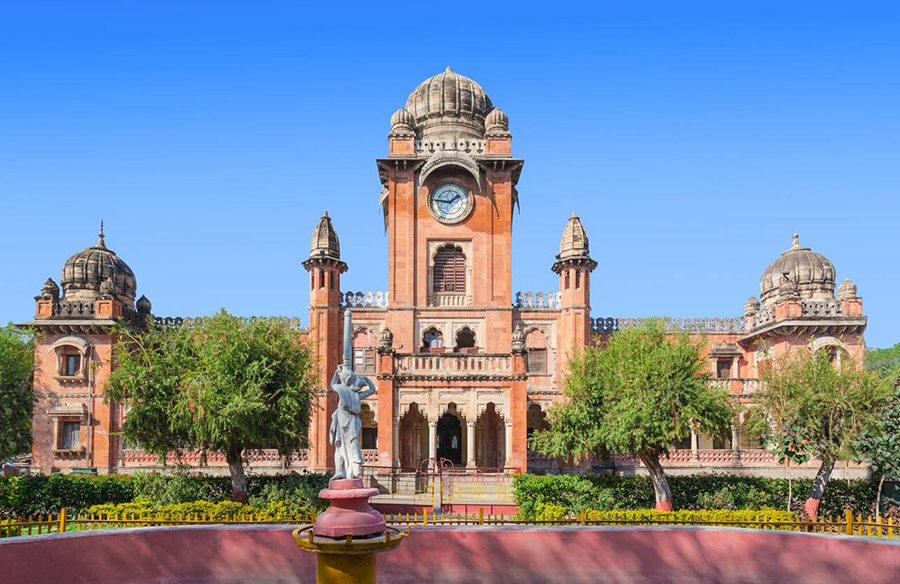
Mahatma Gandhi Hall, earlier known as Town Hall, is a historical structure in Indore, India, which stands as a testimony to the architectural and cultural heritage of the colonial period. This Indo-Gothic building was constructed in 1904. It stands for the pride of the period in which it was built, yet it symbolizes the sociopolitical transformations that India underwent during the 20th century. The case study would involve discussing the architectural design, materials used, and construction techniques, besides analyzing the role of the hall in Indore’s urban fabric, its effects on the community, and its role in heritage tourism. This analysis focuses on highlighting such heritage structures and shows significance and relevance in the current era to be preserved.
Background of the Venue
One of the significant places is the Mahatma Gandhi Hall in the city of Indore. This institution showcases the colonial past along with the cultural change it faced over time. First built as King Edward Hall in the British Raj days, it was initially open as a public platform where individuals would gather together and hear speakers.
This report attempts to show its worth in the present society. Since its establishment in 1866, this hall was utilized by India’s British ruling authorities and therefore was renamed Mahatma Gandhi Hall post-independence in 1947 in appreciation of efforts toward achieving independence for the people of India. Architecture: It is an excellent example of Indo-Gothic architectural style, meaning Gothic features in Indian designs and therefore it becomes an iconic form of colonial architecture adapted by local context. (Sharma, 2022).

Besides the architectural significance, Mahatma Gandhi Hall plays an integral role in Indore’s urban identity as well as its cultural heritage. Case studies have been taken from here to determine the philosophical aspect of designing, raw materials, and innovative technology, besides examining its present sustainability, considering the facts related to cultural influences of this monument among the communities.
Design
Architectural Style and Design Philosophy
Mahatma Gandhi Hall is a good example of the Indo-Gothic style of architecture that took place when the European Gothic architectural style blended during the time of colonialism in India with native Indian traditions. The hall is distinguished by Gothic characteristics such as the pointed arches, lancet windows, and carvings in stone that prevailed in construction trends when this hall was built (Desai & Patel, 2020). Design philosophy The design of this hall has grandeur and is very functional. It provided an environment that could meet public gathering needs in such huge numbers, as cultural and administrative needs.
Mahatma Gandhi Hall has an exterior made of red sandstone with ornamented designs that testify to the craftsmanship of domestic artisans. Its tower domed at the top of the building is the landmark of Indore. The symmetry and proportion reveal features of Gothic-style architecture, making it look impressive yet harmonious (Mishra, 2019).
The designers of the hall planned it not only as a civic centre but also as an icon of British power and rule. The inside structure of the hall contains an extensive main auditorium along with smaller meeting rooms; the idea was the flexibility of use while keeping up with the historical integrity of the building. This flexibility has allowed the hall to remain relevant to contemporary needs since it hosts a wide range of public events, exhibitions, and cultural programs.

Interior Layout and Functional Spaces
Mahatma Gandhi Hall inside resembles a public meeting space. The large hall has a high ceiling with intricately carved wooden beams supporting it. This creates an impression of openness and grandness. Also, large windows flooded with sunlight brighten up the interior; thereby, significantly upgrading the ambience within the building space (Chandavarkar, 2014).
The hall comprises all types of functional spaces and also smaller rooms, where meetings, exhibitions, or community events can be arranged. This flexibility has contributed much to the Mahatma Gandhi Hall becoming a necessity in Indore society for cultural programs, education, and civic meetings. Such planning of these functional spaces shows careful thinking for a multifunctional public building.
Materials and Construction
Construction Materials
Mahatma Gandhi Hall is constructed with materials obtained locally, including red sandstone and limestone. It is also said that they are quite powerful and aesthetic. This can be reflected in terms of architectural styles and the climate conditions in that place. Red sandstone would thus be aesthetically good to look at from outside the building but could well maintain a temperature by making the inside cool even if it’s hot out here in Indore.
The hall included the work of skilled artisans in its intricate detailing and ornamentation. Detailing and ornamentation like these lend evidence to the craftsmanship in the region and the resultant cultural heritage. The reason local materials were used would be the savings of transporting costs, and the connecting of the building to that geography and culture further reinforces the concept of place-based architecture (Desai & Patel, 2020).
Construction techniques and craftsmanship
Made from traditional masonry techniques, Mahatma Gandhi Hall is a demonstration of the workmanship of its time. The stonework is precise and particular, as every element is carved to represent the Indo-Gothic style (Mishra, 2019). The walls have intricate carvings and motifs, showing how European design principles were merged with local craftsmanship.
Architects from Britain, in collaboration with local artisans, constructed a building that typifies the coming together of two cultures. Arched windows and doorways add to the aesthetic value of the hall and reflect the innovation in structure at the time. These innovations enable larger openings of natural light.

Construction Innovations
Despite heavy draws from historical precedents in Mahatma Gandhi Hall, some advanced construction techniques of their times have been included. The concept of reinforced masonry along with the structural techniques built it in a manner ensuring the longevity of the entire building, allowing it to be long-lasting and long-lived. A fusion of historical craftsmanship and modern engineering practice depicts architectural innovations in the era of colonization (Chandavarkar, 2014).
Ornate stone carvings and decorative features are not only aesthetically designed but also provide some function, such as adding to the structural integrity of the building. Such an approach to design and construction shows a thoughtful integration of aesthetics and utility, which is characteristic of Indo-Gothic architecture.
Sustainability and Conservation
Conservation Efforts
Being a historical and cultural place, Mahatma Gandhi Hall has been undertaking several activities for conservation with the motive of maintaining the original architectural aspect of the building. The restoration projects of the building are mainly to maintain its original features, while other issues of wear and tear have been dealt with in due course of time (Government of Madhya Pradesh, 2018).
It would save the structural strength, restorative touch on the decorative pieces, and careful cleaning of the façade. This would help it become an integral, vital part of Indore’s cultural map while simultaneously preserving the history that it represents in times to come.
Mahatma Gandhi Hall has adapted to the changes in the community’s needs while retaining its heritage by making changes that make it more functional. For example, energy-efficient lighting and climate control systems represent efforts towards sustainability and environmental stewardship (Mishra, 2019).
These modern retrofits have been designed to go well with the historical character of the hall, providing a protected integrity to the building. Through these sustainability measures, Mahatma Gandhi Hall has emerged as a model among heritage structures regarding better conservation and how well the modern blend into it.
Cultural and Environmental Sustainability
Mahatma Gandhi Hall is one of the most significant entities that preserve Indore’s culture and heritage. The public hall has acted as an interaction platform among community people and cultural expressions. This is because a public hall brings people together and gives them an intrinsic part of social life in the city. With its historical importance, it attracts local people and tourists as well; hence, this adds up to the role of heritage tourism, which brings on developmental activity in the region (Desai & Patel, 2020).
Preserving Mahatma Gandhi Hall is in line with further sustainability objectives because saving older structures prevents the need to construct new ones and results in lower negative impacts on the environment. The savings from historic building preservation go even further, helping Indore pay tribute to its history but also instill a feeling of identity and belongingness among the masses.
Impact on Indore City
Effect on the Culture of Indore
The deep Mahatma Gandhi Hall will have a great impact on the urban identity of Indore, being a civic landmark from which citizens and visitors look for references. A great location in the city centre makes the hall highly noticeable and accessible, hence putting it at the centre of social and cultural activities as pointed out by Sharma, (2022).
The hall has become a notable architectural landmark and has added to the aesthetic beauty of the locality. Modern designs based on heritage can be seen. Further development of the urbanization process of the city enhances the overall character, wherein old elements and new developments coexist.

Cultural and Social Significance
Mahatma Gandhi Hall remained the centre of culture and social activities in Indore. The hall hosts diverse events, from art exhibitions to cultural performances and civic gatherings, to promote a sense of community and pride in one’s culture. Its function as a space for public debate and participation establishes the necessity of maintaining spaces like these within urban settings (Mishra, 2019).
The hall also acts as a form of education since many students, architects, and historians visit to learn more about colonial architecture and heritage conservation. In this respect, Mahatma Gandhi Hall offers a great insight into the architectural history of Indore and educates people to appreciate their heritage better.
Heritage Tourism
Mahatma Gandhi Hall is one of the significant heritage places; therefore, many locals and international tourists have increased heritage tourism in Indore. People visit this place for its architectural beauty and historical importance because it has become a very significant landmark for the city to understand the colonial past.
The conservation of the hall gives a more attractive dimension to this tourist destination as it offers guided tours, exhibitions, and cultural programs. It not only contributes to the local economy but also brings about a better appreciation for the history and architectural richness of Indore.
Mahatma Gandhi Hall is a rich architectural and cultural heritage of Indore. The Indo-Gothic design, developed from local material and craftsmanship, gives it a glimpse of the historical narrative and identity of the city. The importance of this hall is secured through proper conservation efforts, sustainability, and its role as a civic and cultural centre.
Mahatma Gandhi Hall has made it very important, reminding us to preserve these monuments of yesteryears at all costs. Careful conservation with sustainable usage of resources is the need of the hour to hand these landmarks down to generations that will carry on these valuable urban spaces and take home a much deeper meaning and understanding of our rich heritage.
References:
Chandavarkar, R. (2014). Indo-Gothic architecture: A study of Indian colonial buildings. Architectural Heritage, 20(2), 55-74. https://doi.org/10.1017/S175169181400005X
Desai, A., & Patel, S. (2020). Civic architecture and urban identity in India: Case studies from Indore. Journal of Urban Design, 25(1), 67-85. https://doi.org/10.1080/13574809.2019.1605159
Government of Madhya Pradesh. (2018). Heritage conservation policy: Madhya Pradesh. Bhopal: Department of Culture.
Mishra, R. (2019). Sustainable practices in heritage conservation: Lessons from Mahatma Gandhi Hall, Indore. International Journal of Architectural Research, 13(2), 102-116. https://doi.org/10.1016/j.ijar.2019.06.005
Sharma, P. (2022). Urban spaces and cultural identity: The role of Mahatma Gandhi Hall in Indore. Urban Studies, 59(4), 1232-1250. https://doi.org/10.1177/00420980211000789
Anon 2023, Mahatha Gandhi Hall – Picture of Mahatma Gandhi Town Hall, Indore – Tripadvisor. (2023). Tripadvisor. In. https://www.tripadvisor.in/LocationPhotoDirectLink-g494941-d2615322-i248039329-Mahatma_Gandhi_Town_Hall-Indore_Indore_District_Madhya_Pradesh.html
Premium Photo | Arches and Pillars of Mahatma Gandhi Hall Ghanta Ghar Indore Madhya Pradesh King Edward Hall. (2022, December 9). Freepik. https://www.freepik.com/premium-photo/arches-pillars-mahatma-gandhi-hall-ghanta-ghar-indore-madhya-pradesh-king-edward-hall_35401641.htm
(2024). Googleusercontent.com. https://blogger.googleusercontent.com/img/b/R29vZ2xl/AVvXsEggZI5JZD9arekrtcrUjmcU_HHhZA2yITLA9JEwqNHbHZaYiRgek7_5OSYlCp3dEF2PkZ5KhMwBFK2e84vntibRGrneo2o6QtBDau4tZ_UpxsJ_HqAD6OfETLQD_mvP5ZKFo-UFTjLQvmIb/s1500/7fd365e73d7d973e9b0e714a17eee1fc.jpg