“Some stories are not spoken, some are unspoken stories heard through walls, explained by the Architectural styles, and its design speaks to the character of the building.” Kalaburagi City experiences Hot and dry climates, the region experiences very high temperatures in the summer season and minimum rainfall in the Rainy season. It becomes essential to design the area as well as the residences with proper climate-responsive design aspects to provide thermal comfort for the people residing in the region.
Architectural characters of hot dry Climate zone-
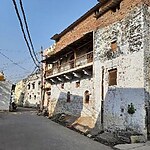
The high, thick stoned walls were constructed with the locally available material i.e., Basalt stone, and plastered with the locally available Lime, which kept the building residents (cool) a very comfortable zone by not allowing harsh sun radiations to pass through the building in day-time. The window sizes were kept small so that the minimum amount of sun radiations that pass into the building must be less as shown in Fig. 1. the windows were provided with proper shading elements i.e., Chajja made out of traditionally decorated iron as shown in Fig. 10


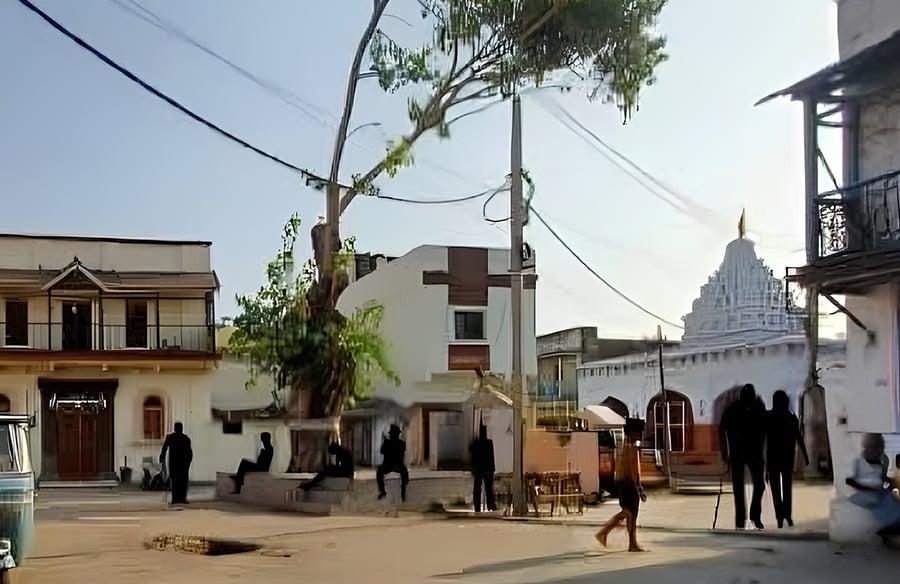
As the walls were thick and the harsh radiations passing the building were slow, the building occupants felt cool during the day but in the evening, they experienced humid conditions within the building, hence there were open places provided in the area. A high-sitting pedestal with a planted tree provides shade and also a cool breeze for the people as shown in Fig.2. The buildings were provided with small balconies to counteract the harsh sun radiations by letting the cool air into the room, supported by intermediate stone or wooden brackets as shown in Fig.3
Case study on a Vernacular House at Brahmpur
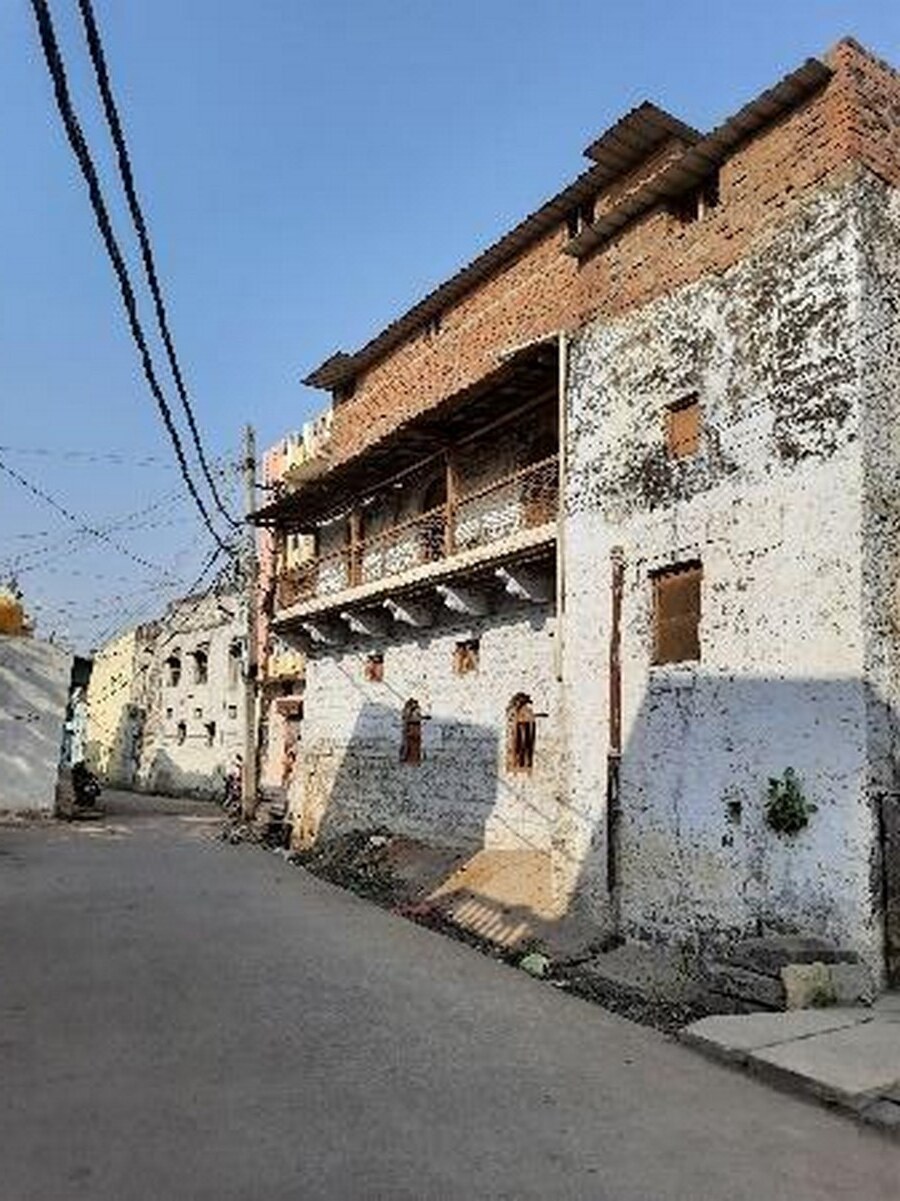
The ancient vernacular houses are like those Ancient trees which not only have deeper and firm roots but also give shade and shadow as time passes, along with that they bear fruits and provide shelter for many creatures with many traditional stories attached to them. A case study has been carried out at one of the Ancient vernacular residences in the Brahmpur area. Residence of Sri. Basvannaya Shivanna Puranik. The residence dates back to 300 years (18th century) of history where four generations have lived under this roof. The complete house was built out of Basalt stone (black stone) which is the locally available material of Kalaburagi, and was plastered with Lime (locally known as “Chunna”) which is a cooling agent.


The main door of the residence is known as “Tala – bakilu” (In the Kannada Language) which consists of a carved wooden horse which is fixed on either side of the door and the seating’s (in the form of benches) provided outside and inside the residence (Padsalgi), as shown in Fig. 5. The residence has a courtyard after the main door, the courtyard is octagonal on the top as shown in Fig.15 and the courtyard is supported by wooden columns and wooden frame below it as shown in Fig.6.


The columns are Handcrafted by carving and are carved out of teak wood, the columns and arches are still intact and are in very good condition as shown in Fig.7. The roof is supported by intermediate wooden beams, which provide support to the slab (Shahabad stone). The arches are supported by placing them on the wooden columns and further, the cantilevered slab is supported by wooden brackets connected to the wooden columns.


The material used for the flooring was Shahabad stone which is a locally available vernacular material in Kalaburagi as shown in Fig.9. The access to the next floor was given through a narrow staircase made out of Basalt stone and topped with Shahabad stone with a very high riser height and the stairs were very compact and narrow which can be accessed by only one person at a time as shown in Fig.10. The residence is on two floors. The ground floor consists of two rooms (Kitchen and Bedroom) and an open hall on a raised platform accessed through stairs from the courtyard.


The windows were very small with thick stone walls to reduce the time-lag of the sun rays passing within the residence as shown in Fig.11. The rooms were provided with sunroofs within the slab known as “Belakina Kindi” (In Kannada) for the purpose of roof ventilation as shown in Fig.11.


The height of the parapet wall is too short. As the room gets heated in the night time due to the concept that sun radiation passes through the thick wall (as the walls were thick the time lag taken by sun radiations to travel through the building was too slow), people used to sleep on Terrace in the summer season, hence for this reason that there must be an easy flow of the air, the parapet wall height was shortened as shown in Fig.13. The drains were provided to drain out the Rainwater out of the terrace and the drains were made out of Basalt stone as shown in Fig.15.

Amidst harsh sun radiation, rain and many other natural climatic conditions, the residence stood strong and did no harm any of the building residents, instead, the residence was way too sustainable as it was completely vernacular (constructed from locally available materials, keeping in mind the local climatic factors) and well planned according to the need of the people living in the residence.