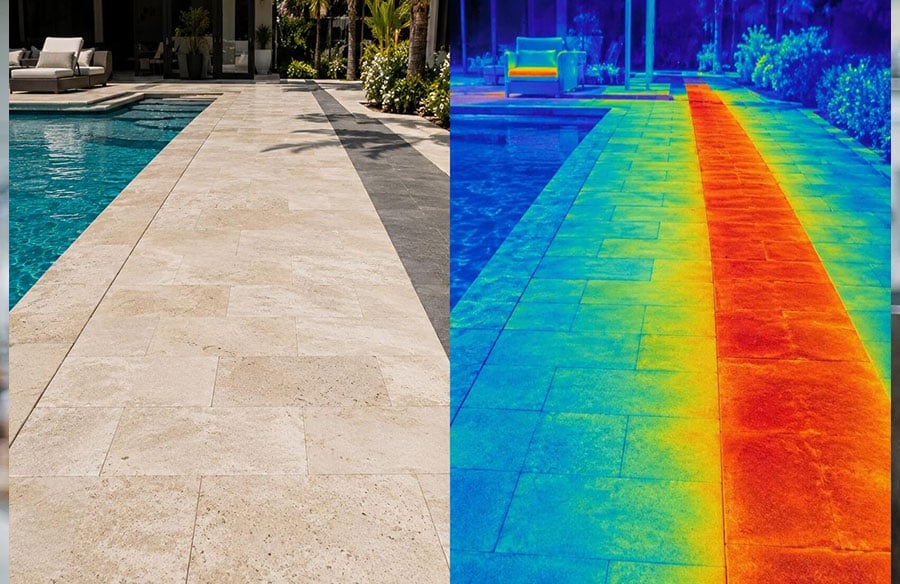
On a 95°F summer afternoon, the pavement under your feet is not 95°F. Peer-reviewed research on urban heat islands reports conventional paving materials peaking at surface temperatures of 120–150°F (48–67°C) in summer sun. That is well past the point where a barefoot walk to the pool ladder stops being casual. Air temperature and surface temperature are two different numbers, and the gap between them is exactly what separates the coolest pavers from the ones that quietly turn a deck into a griddle.
For a pool deck or patio, that gap decides how the space actually gets used. A surface that holds at 110°F is warm but walkable; one that reaches 140°F clears the deck of bare feet, small children, and dogs until sunset. And because hot materials store heat as well as absorb it, the penalty extends into the evening: a deck that baked all afternoon keeps radiating warmth long after the sun drops.
Most buying advice stops at “pick a light color.” That is true as far as it goes, but it skips the part you can verify. Paver surface temperature is governed by measurable properties: albedo, the fraction of solar radiation a surface reflects; thermal emittance, how readily it releases stored heat; and thermal mass, how much heat the material can hold in the first place. The first two combine into the Solar Reflectance Index (SRI), the same 0–100 scale used in LEED credits and cool-pavement engineering, where new asphalt scores 0 and white portland cement concrete can score 86–100.
This guide applies those metrics to the materials homeowners actually cross-shop: travertine, marble, limestone, concrete, brick, granite, bluestone, and porcelain. You will see how surface temperature is measured and why the standard tests matter, a material-by-material comparison built on published reflectance data, which options rank as the coolest pool deck pavers for barefoot comfort, and what lowers the temperature of a surface you already own.
The numbers only carry weight if the measurement behind them is clear, so that is where we start: how albedo, SRI, and thermal mass determine what your feet feel at 2 p.m. in July.
How Paver Temperature Is Measured: Albedo, SRI and Thermal Mass
Claims about “cool” pavers become useful only when they map to properties you can measure. Three of them do most of the work: albedo, the Solar Reflectance Index, and thermal mass. Each answers a different question about how a material behaves in direct sun, and together they predict what your feet will feel before a single paver is installed.
What albedo tells you about heat absorption
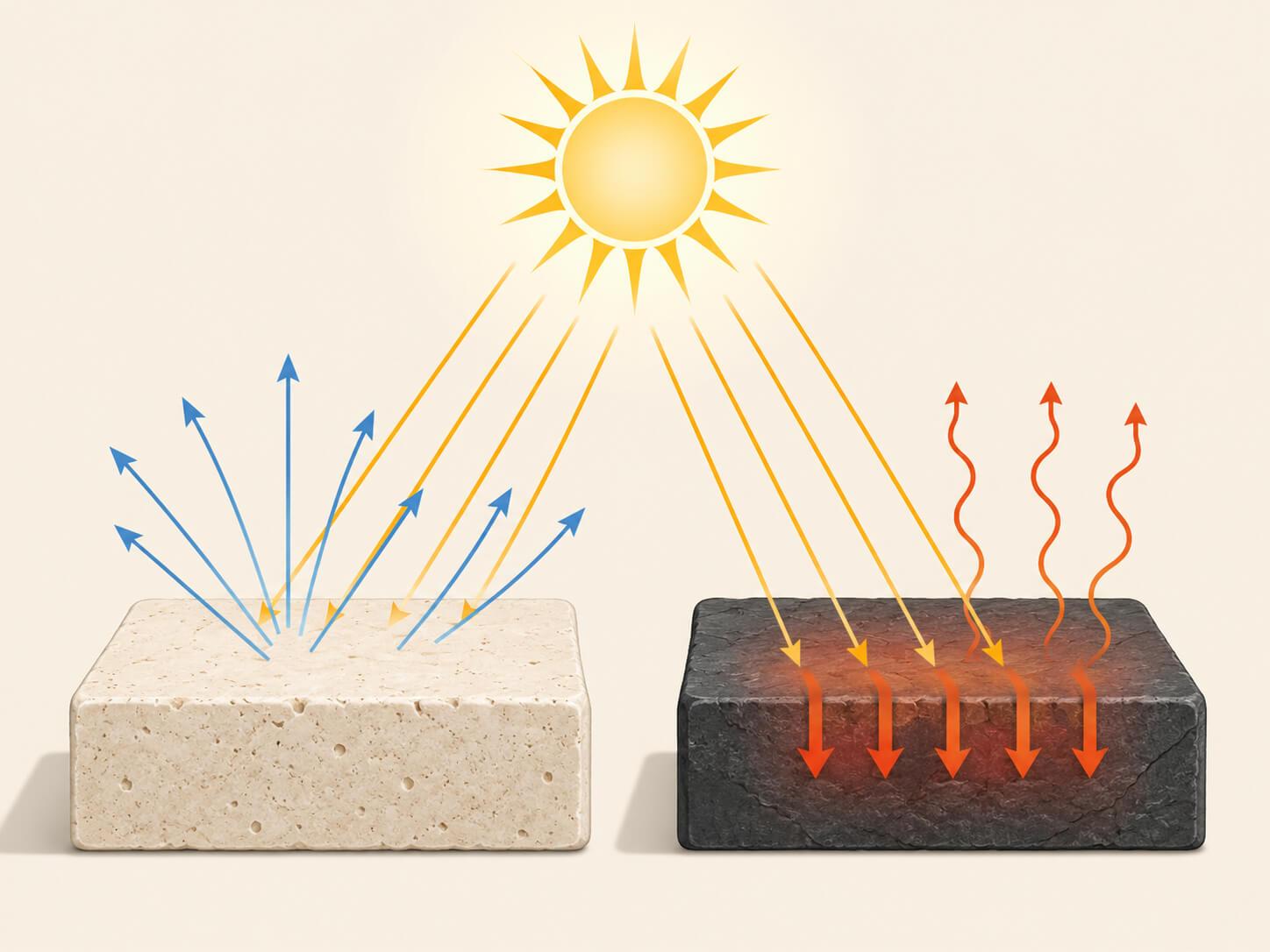
Albedo is the fraction of incoming solar radiation a surface reflects, expressed on a scale from 0 to 1. A surface that absorbs everything scores 0; a perfectly reflective one scores 1. Pavement data compiled by the American Concrete Pavement Association places new asphalt at 0.05–0.10, gray portland cement concrete at 0.35–0.40 when new, and white portland cement concrete at 0.70–0.80.
The link between albedo and heat is direct and quantified. Cool-pavement studies estimate that raising a surface’s albedo by 0.1 lowers its peak daytime temperature by roughly 3–4°C (5–7°F). Multiply that across the spread between dark concrete and light natural stone, and the 20–30°F differences reported on real pool decks stop looking like marketing and start looking like arithmetic.
 Why SRI is the standard cool-surface metric
Reflectance alone tells half the story, because a surface must also release the heat it does absorb. The Solar Reflectance Index (SRI) combines solar reflectance with thermal emittance into a single 0–100 score, which is why it anchors LEED heat-island credits and municipal cool-pavement specifications. Testing follows two standardized ASTM protocols: ASTM E903 for laboratory measurement with a spectrophotometer, and ASTM E1918 for field readings taken with an albedometer or pyranometer. Standardized methods are what make SRI numbers from different manufacturers comparable rather than promotional.
Thermal mass and why dense stone holds heat longer
The third variable is what happens to absorbed heat. Density and porosity control how much energy a paver stores and how quickly it releases it. Dense, dark materials charge up through the afternoon and keep radiating warmth well after sunset, while porous stones such as travertine store less heat per unit of volume and shed it faster. This is the physical reason two pavers at the same 2 p.m. temperature can feel very different at 7 p.m.
With the yardsticks defined, the materials can be placed side by side.
Paver Surface Temperatures Compared by Material
The table below combines published pavement albedo data with field temperature reports from pool-deck installations in hot-climate states. Values are indicative ranges for a clear midsummer afternoon with air temperature near 95°F. Finish, weathering, shade, and wind all move the result, which is why ranges are more honest than single numbers.
| Material | Typical tone | Indicative albedo | Typical peak surface temp (95°F day) | Barefoot comfort |
|---|---|---|---|---|
| Travertine | Ivory, beige, silver | 0.45–0.60 | 105–120°F | Best in class |
| Marble (light) | White, pearl | 0.45–0.60 | 108–122°F | Comfortable |
| Limestone | Cream, taupe | 0.40–0.55 | 110–125°F | Comfortable |
| Porcelain (light) | Varies by glaze | 0.30–0.55 | 115–130°F | Moderate |
| Brick (clay) | Red, brown | 0.20–0.35 | 125–140°F | Hot |
| Concrete pavers (gray) | Gray | 0.35–0.40 new; 0.20–0.30 weathered | 125–140°F | Hot |
| Granite / bluestone (dark) | Charcoal, blue-gray | 0.10–0.25 | 130–145°F | Very hot |
| Asphalt (reference) | Black | 0.05–0.10 | 140–150°F+ | Unsafe barefoot |
Light natural stone: travertine, limestone and marble
Light natural stone occupies the cool end of the table for two stacked reasons: high reflectance from pale mineral color, and lower heat storage from porous structure. Field comparisons from Florida installers illustrate the spread. On a 95°F afternoon, gray concrete pavers were reported at 130–140°F while travertine held 110–120°F, a 20–30°F gap measured on the same day and site conditions. Cream limestone and pearl marble behave similarly because the driver is tone and porosity, not the stone’s name.
Concrete, brick and manufactured pavers
Standard gray concrete starts in the middle of the albedo scale and slides down with age. Published pavement data shows new gray concrete at 0.35–0.40 dropping to 0.20–0.30 as the surface weathers and collects grime, which means a concrete deck measurably gains heat performance problems over its lifespan. Clay brick sits in a similar band, with red and brown tones absorbing more of the visible spectrum than cream stone. Both remain workable for patios that see shoes more than bare feet.
Dark stone and porcelain: where heat builds up
Dark granite, charcoal basalt, and blue-gray bluestone combine the two unfavorable properties: low albedo from deep color and high thermal mass from dense structure. They absorb aggressively through the afternoon and keep releasing heat into the evening, which is why a dark stone deck can still feel warm at dusk. Porcelain is the wild card, since its temperature behavior tracks the glaze color almost entirely; a pale porcelain paver can compete with limestone, while a slate-look dark porcelain performs closer to bluestone.
The Coolest Pool Deck Pavers for Barefoot Comfort
A pool deck is the one application where surface temperature stops being a comfort preference and becomes a usability limit. Above roughly 120°F, most adults shorten their stride and children head for a towel; past 140°F, prolonged skin contact is a genuine hazard. The materials data points to a clear specification for wet, sun-exposed decks: light tone for reflectance, porous structure for low heat storage, and a textured finish for wet grip.
Travertine in ivory, beige, and silver meets all three at once, which explains its dominance around pools in Florida, Texas, and Arizona. Tumbled and unfilled finishes add micro-texture that improves traction without trapping heat, and the stone’s pore structure sheds warmth quickly once shade arrives. Light marble and cream limestone deliver comparable thermal behavior with a more formal look, provided the finish is textured rather than polished.
This combination of measured temperature advantage and slip-resistant finishes is why light-toned travertine and marble stone pavers remain the default recommendation for barefoot pool surrounds in hot climates. Whichever supplier you use, apply the same filter: tone first, texture second, and coping that matches the field pavers so the deck edge behaves like the deck itself.
One caution keeps the picture honest. No paver is immune to physics, and even the coolest stone will feel hot after hours of direct desert sun. The data buys you 20–30°F of margin, not air conditioning.
What Makes a Paver Run Hot: Color, Density and Finish
Surface color and lightness
Color is the strongest single lever because it sets albedo. Light tones such as white, cream, tan, and pale gray can hold surface temperatures 20–30°F below dark finishes of the same material under identical sun. The rule survives across categories: a white concrete paver outperforms a charcoal travertine, because the physics responds to reflectance, not to material prestige.
Density, porosity and heat retention
Two pavers with the same color can still diverge after sunset. Dense stone stores more energy per unit of volume and conducts it to the surface for hours, while porous stone holds less and releases it faster. This is why bluestone radiates warmth into the evening while travertine cools within minutes of shade, and why thermal mass belongs in the buying decision alongside color.
Finish texture: tumbled vs honed surfaces
Finish modifies how heat reaches your skin. A tumbled or sandblasted surface contacts the foot on high points only, reducing the effective contact area compared with a smooth honed plane at the same temperature. Texture also scatters incoming light rather than absorbing it in a uniform plane. The practical effect is modest next to color, but on a pool deck it compounds with the traction benefit, so textured finishes win twice.
How to Keep Any Paver Surface Cooler
Material choice sets the ceiling, but installed decks still have room to move. The measures below follow the same physics as the material data: reflect more, store less, shade what you can.
- Choose light joint material. Sand and grout occupy up to 10% of the surface; pale joints raise the deck’s effective albedo, dark polymeric sand lowers it.
- Add shade where feet actually travel. A pergola, shade sail, or well-placed tree interrupts solar gain on the walking path between door, seating, and water.
- Skip color-enhancing sealers on hot decks. Enhancers deepen tone, and deeper tone means lower albedo; a natural-look penetrating sealer protects without the heat penalty.
- Rinse before peak use. Evaporative cooling drops surface temperature quickly, a short-term fix that works precisely because porous stone releases heat fast.
- Frame dark surfaces with light borders. Where a dark field is already installed, light stone walking bands restore a comfortable route without full replacement.
FAQ: Paver Heat Questions Answered
Does travertine get hot in the sun?
Travertine warms in direct sun like any outdoor surface, but field measurements consistently place it 20–30°F below gray concrete under the same conditions, typically 105–120°F on a 95°F day. Its light tone reflects more solar radiation and its porous structure stores less heat, so it also cools faster once shaded. Lighter colors such as ivory and silver stay at the comfortable end of that range.
What color pavers stay coolest?
White, cream, ivory, tan, and pale silver-gray stay coolest because color lightness is the main driver of albedo. Light tones can run 20–30°F cooler than dark finishes of the same material. If a design calls for dark accents, keep them in borders and features rather than the main barefoot walking area.
Are marble pavers hot in summer?
Light marble performs close to travertine, holding roughly 108–122°F on a 95°F afternoon thanks to high reflectance from its pale mineral color. The finish matters more than the stone name: a tumbled or sandblasted marble paver is comfortable and grippy, while dark or polished marble loses both advantages.
How hot do concrete pavers get?
Gray concrete pavers typically reach 125–140°F on a 95°F summer day, and their albedo declines from 0.35–0.40 to 0.20–0.30 as the surface weathers, so older decks trend hotter. White or very light concrete performs significantly better because the cement and aggregate color, not the word “concrete,” determines heat gain.
 Conclusion: Read the Physics, Not the Brochure
Every claim in the paver aisle reduces to three measurable numbers: how much solar energy the surface reflects, how much it stores, and how fast it lets go. Light, porous natural stone wins on all three, dark dense stone loses on all three, and everything else lands in between exactly where its color and structure predict.
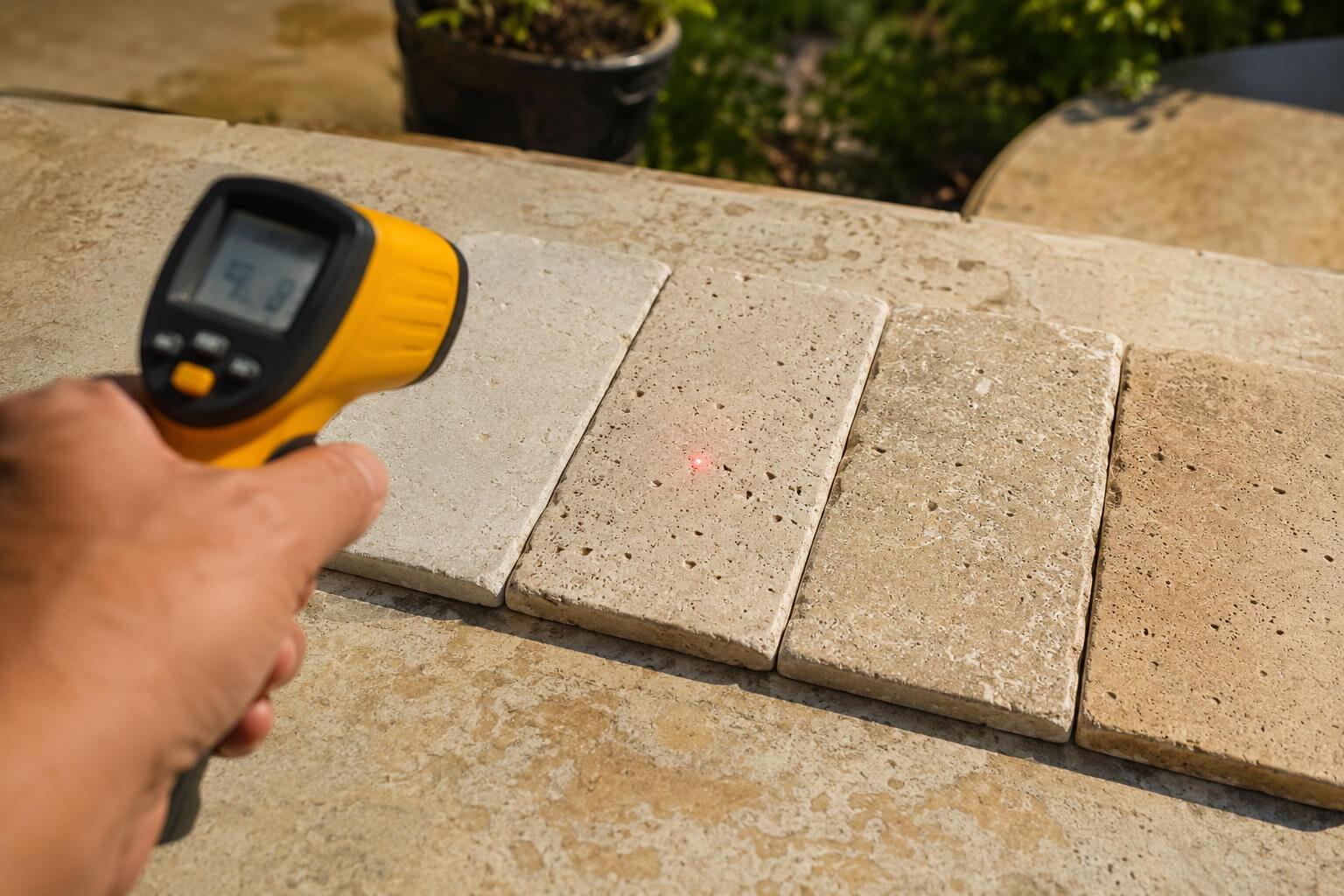
The practical move costs almost nothing. Order samples of your shortlisted pavers, set them side by side in the actual project area, and check them with an infrared thermometer at 2 p.m. on a hot day. Thirty seconds of measurement replaces every marketing adjective, and it tells you precisely how your deck will feel on the afternoons you built it for. Materials that pass that test will keep passing it for decades.