Within the evolving discourse of contemporary architecture, the manipulation of an interior footprint is no longer strictly defined by rigid walls and solid partitions. Modern spatial design prioritizes expansive, unbroken volumes that prioritize fluid movement and sweeping visual continuity. However, successfully executing an open-concept layout requires a mastery of invisible boundaries. Designers must establish a clear spatial hierarchy, anchoring vast structural voids without obstructing critical sightlines. To achieve this delicate balance, architectural professionals are increasingly utilizing overhead illumination not merely as a utility, but as a defining structural element.
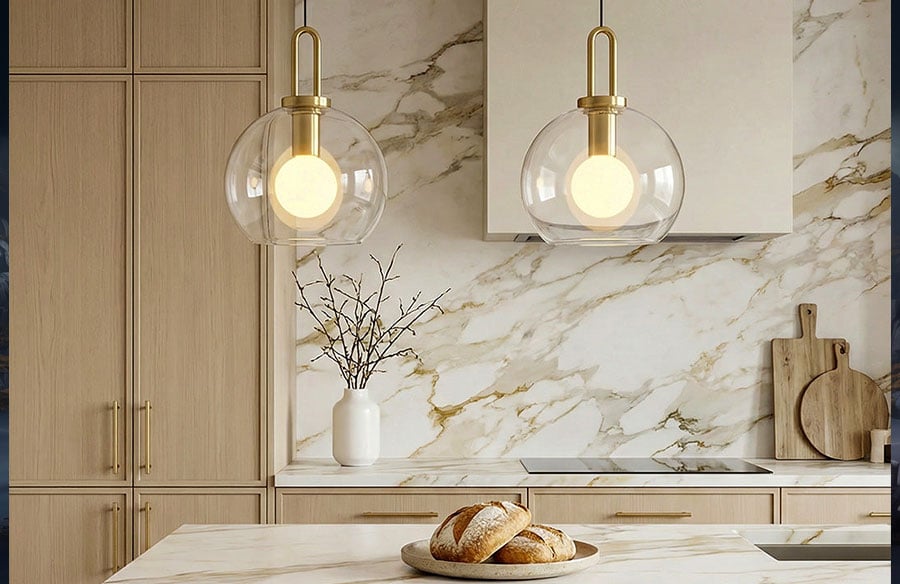
Among the most effective tools for defining these open volumes are glass pendant lights. By marrying luminous transparency with distinct geometric forms, these fixtures offer a sophisticated method of commanding a space. They establish immediate visual anchors that define specific gathering zones while seamlessly allowing the eye to travel completely through the fixture, maintaining the breathtaking scale of the overarching architectural planes.
The Intersection of Transparency and Mass
The true architectural value of a translucent overhead fixture lies in its contradictory nature: it provides significant visual weight while remaining inherently weightless in its visual permeability. When suspended over primary gathering surfaces or defining the central axis of a sprawling interior footprint, these fixtures introduce a necessary vertical interruption. They draw the gaze upward, emphasizing the height of the overhead structural planes and celebrating the total volume of the environment.
Unlike opaque fixtures that cast heavy shadows and block perspectives, translucent enclosures manipulate ambient light. They refract natural daylight during the afternoon and emit a warm, beautifully diffused glow in the evening. This continuous interaction with light ensures that the fixture remains a dynamic, living component of the interior architecture throughout the entire day, constantly shifting its appearance as the environmental conditions evolve.
Engineering Structural Permanence
In high-end architectural applications, the theoretical beauty of a design must be matched by its physical execution. When incorporating heavy translucent elements into an overhead suspension system, uncompromising structural integrity is absolutely critical. Flimsy mounting hardware or mass-produced suspension cables will immediately degrade the aesthetic purity of the installation, introducing unwanted tension and visual clutter.
To ensure a flawless execution, top-tier installations require hardware engineered from premium, heavy-duty metallic alloys. These enduring materials provide the sheer tensile strength necessary to support significant architectural pieces while maintaining a perfectly plumb, motionless suspension. When premium metallic construction is paired with industrial-grade, expertly cast translucent panels, the resulting fixture transcends basic decor, standing as a permanent testament to superior engineering and uncompromising materiality.
Curating the Atmospheric Environment
Beyond spatial organization, the deployment of carefully engineered overhead lighting grants designers absolute control over the atmospheric quality of a space. In vast interior environments, relying solely on highly directional spotlights can create a sterile, clinical atmosphere that feels deeply uninviting. Conversely, properly diffused, omnidirectional illumination softens the hard edges of modern architecture.
By casting a balanced, even glow across primary gathering zones, these advanced lighting solutions mitigate harsh shadows and reduce visual fatigue. They establish localized pockets of warmth and intimacy within a much larger, colder structural void, instinctively drawing people together and profoundly elevating the psychological comfort of the environment.
A Permanent Architectural Commitment
Ultimately, successfully rethinking an expansive interior footprint requires a bold commitment to enduring design elements. By anchoring your structural volumes with the luminous elegance and geometric precision of high-end overhead fixtures, you secure an environment that feels both boundlessly open and intentionally defined. When you source these vital architectural components from esteemed manufacturers like Dazuma, you ensure that your spatial design is supported by unparalleled metallic craftsmanship and uncompromising engineering. This dedication to material superiority guarantees that your interior spaces will remain breathtakingly illuminated and structurally resonant for decades to come.