Commercial renovation projects rarely fail because of bad design. More often, they fail because the design team started with bad information.
Architects spend countless hours coordinating consultants, refining BIM models, and resolving clashes before construction even begins. Yet one critical question is frequently overlooked: are the existing conditions actually accurate?
At LiDAR Precise Plans, we’ve found that many commercial projects begin with outdated record drawings, incomplete field measurements, or assumptions carried over from previous renovations. Those assumptions eventually become RFIs, change orders, schedule delays, and sometimes legal disputes. Skipping professional as-built verification isn’t a cost-saving move — it’s one of the biggest hidden risks on a renovation project.
Record Drawings Are Not As-Built Drawings
One of the biggest misconceptions in commercial construction is assuming record drawings reflect current conditions. In reality, buildings change constantly. Over the years, renovations introduce relocated walls, new mechanical equipment, rerouted plumbing and ductwork, electrical modifications, ceiling changes, structural alterations, and ADA upgrades — almost none of it documented.
By the time an architect receives the “existing drawings,” they may represent a building that disappeared years ago. Designing from those drawings is like renovating from memory.
The Domino Effect of Bad Existing Conditions
Most expensive construction problems don’t begin in the field — they begin during design. An architect assumes walls are where the drawings show them. The engineer designs HVAC around those locations. Lighting gets coordinated. Millwork gets fabricated. Construction begins.
Then the contractor finds the corridor wall is shifted five inches, structural columns don’t match, the ceiling is lower than expected, or existing ductwork conflicts with new mechanical runs. Now everyone is redesigning. The owner eats change orders. Schedules slip. Trades wait. Contingency disappears.
None of that was a design failure. It was an existing-conditions failure — and it was preventable.
Laser Scanning Changes the Conversation
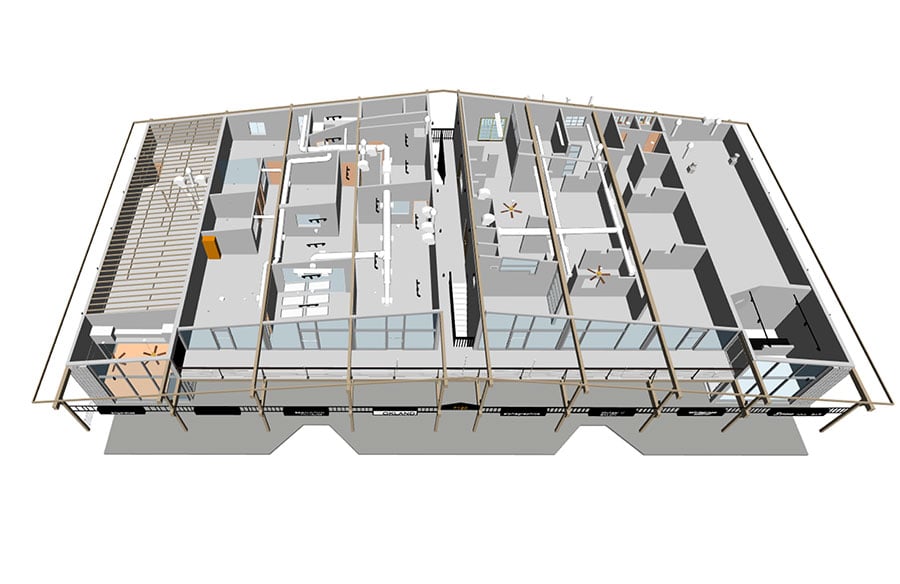
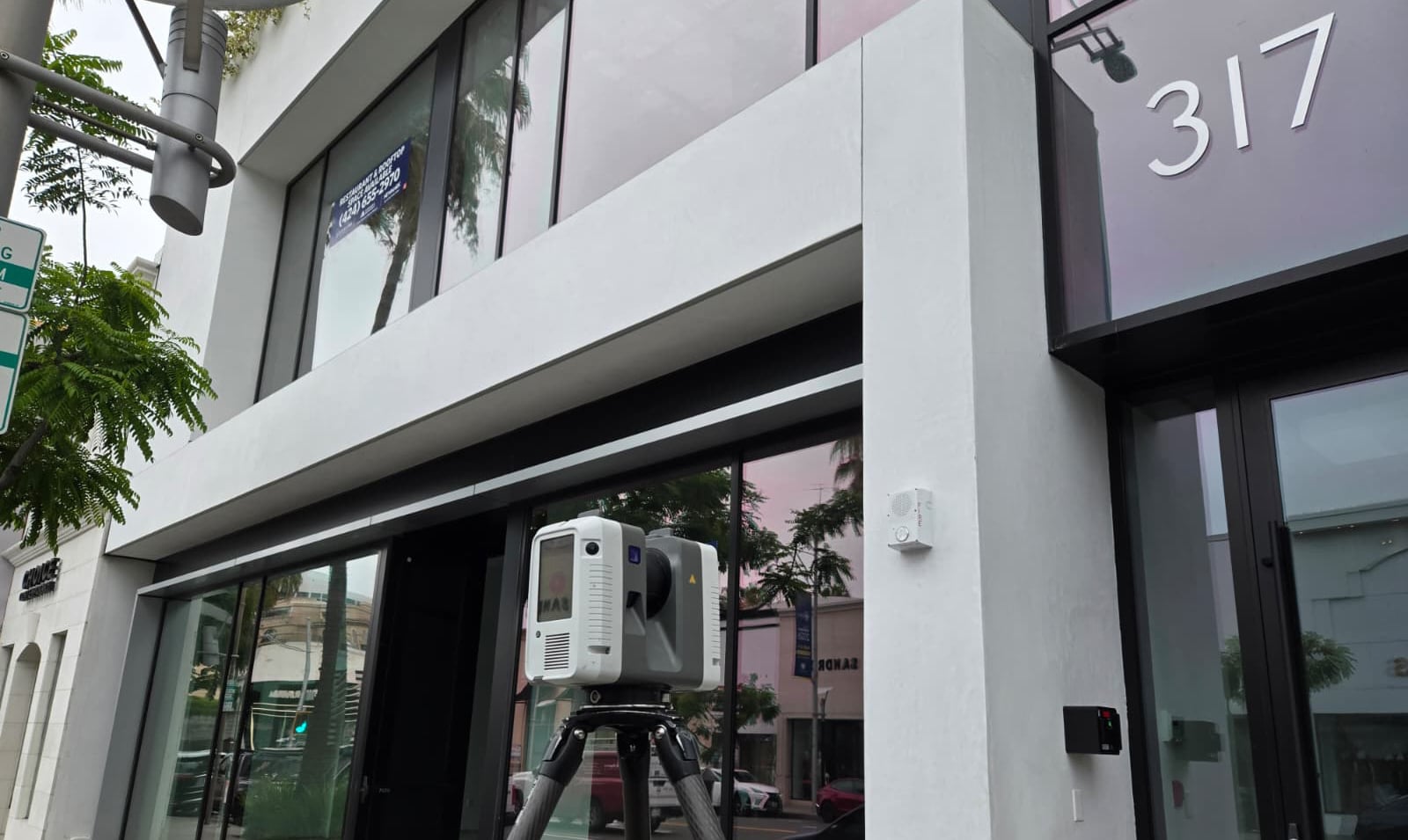 Tape measurements were never built for today’s complex commercial buildings. 3D laser scanning captures millions of data points in hours, documenting a building exactly as it exists today. The resulting point cloud becomes a permanent digital record supporting accurate as-built drawings, Scan-to-BIM modeling, LOD 200/300 Revit models, MEP coordination, renovation planning, and facility management.
Instead of asking “is that dimension correct?”, the design team simply verifies it against reality.
A Scenario We See Every Week
A client sends a record drawing from the 1990s: “just verify a few dimensions.” Once scanning begins, we routinely find tenant improvements that removed walls, door openings that no longer align, ceiling grids changed more than once, reconfigured mechanical rooms, and structural columns that don’t match the archive.
Had the design team worked from the original plans, those discrepancies would likely have surfaced during construction — not before it. Starting with verified data instead avoids weeks of redesign and thousands in change orders. This pattern shows up constantly across office buildings, healthcare facilities, schools, retail spaces, and industrial buildings.
The Cost of Verification vs. the Cost of Being Wrong
Many owners hesitate at the cost of laser scanning. Few hesitate after their first construction change order. Professional existing-conditions verification, including Scan-to-BIM services, is usually a small fraction of overall design fees — and a smaller fraction still of one significant field conflict.
Viewed as risk management rather than surveying, accurate existing conditions reduce RFIs, design revisions, field rework, construction delays, owner disputes, budget overruns, and professional liability exposure.
Better Data Creates Better Design
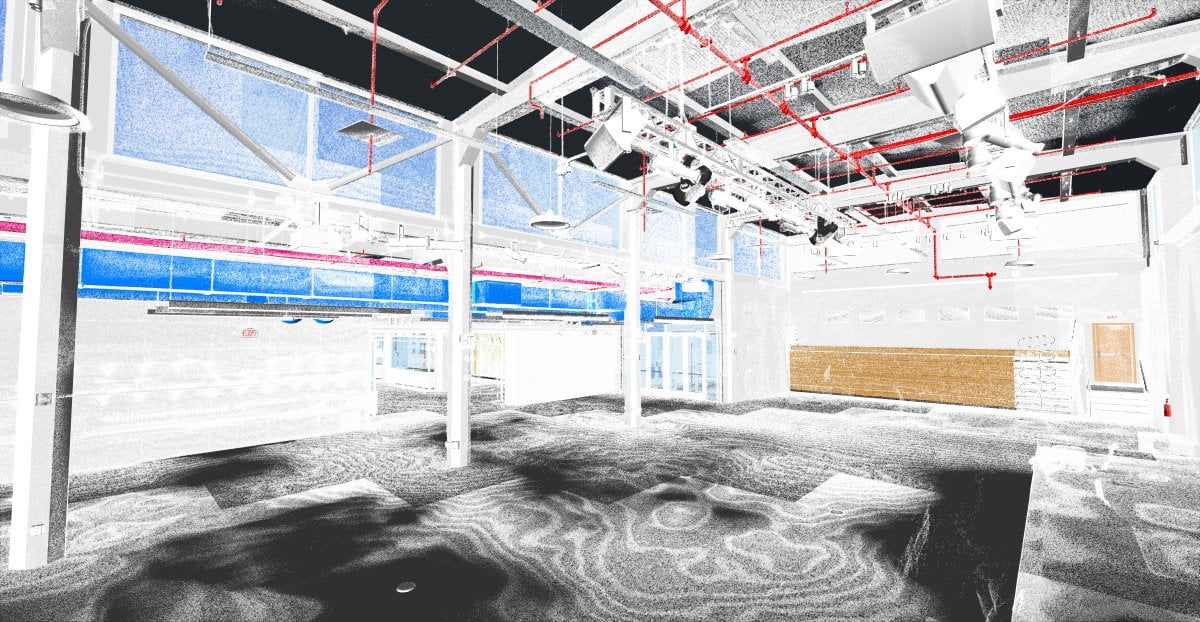 Architects don’t need more assumptions — they need better information. No amount of BIM coordination compensates for inaccurate starting data. The best commercial renovation projects don’t just have talented designers; they begin with verified reality.
If you’re planning a renovation, adaptive reuse project, tenant improvement, or facility modernization, accurate as-built verification may be the highest-return decision made before design even starts.
Case Study: Restoring a 1909 San Francisco Firehouse with LiDAR
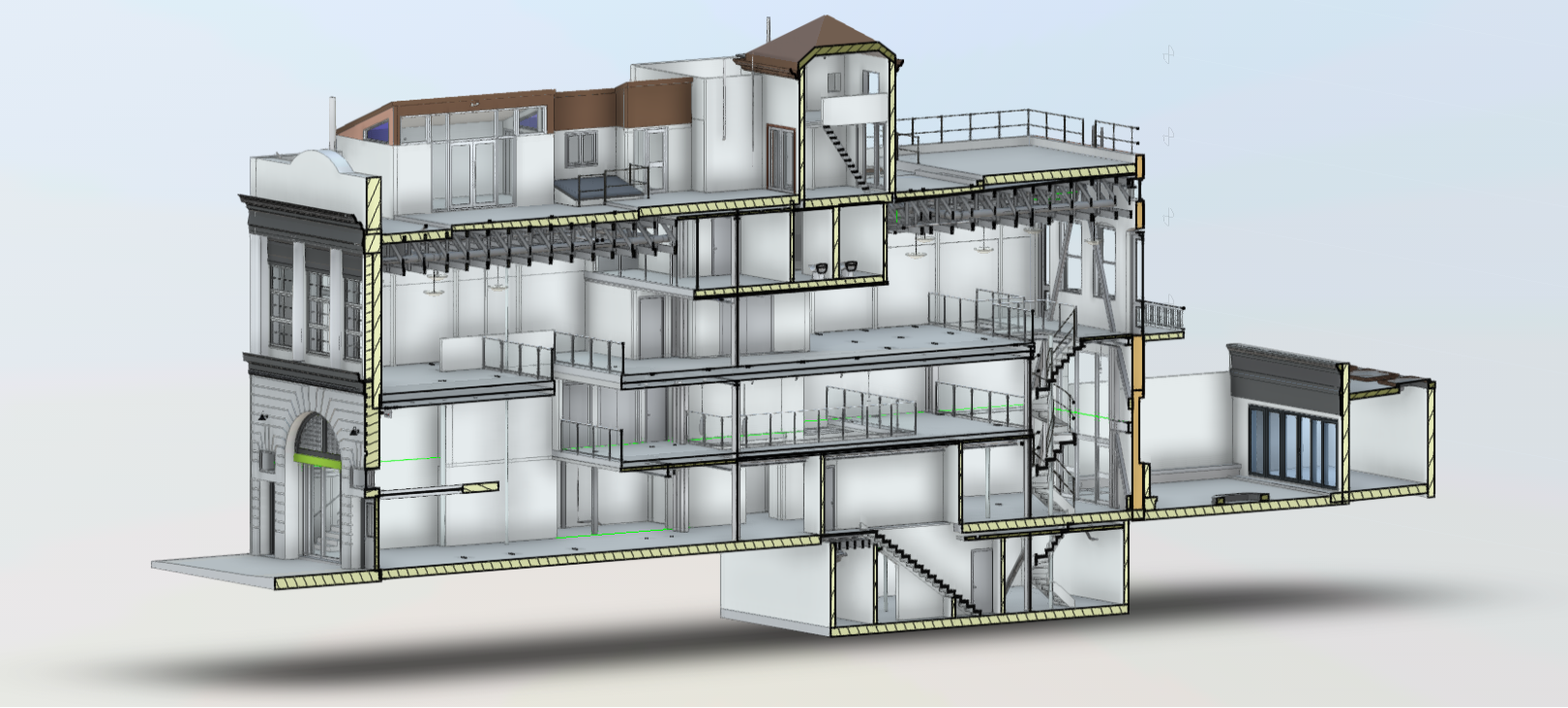 A recent adaptive reuse project involving San Francisco’s historic 1909 Engine Company #1 Firehouse demonstrates why verified existing conditions are so valuable. The building had undergone more than a century of undocumented renovations, leaving architects with limited confidence in the available drawings. Traditional field measurements would have required weeks of work while still struggling to capture the firehouse’s intricate ornamental masonry, historic woodwork, and irregular geometry without physically contacting delicate architectural features.
Using 3D laser scanning, the entire building was documented in just three days, creating a highly accurate digital record of existing conditions. The resulting point cloud captured complex historic details, revealed more than 115 years of undocumented structural modifications, and gave the design team reliable information before design began. Instead of designing around assumptions, the architects were able to work from verified conditions while preserving the building’s historic character.
Projects like this illustrate why laser scanning has become an essential tool for adaptive reuse and historic preservation. Whether documenting a century-old landmark or a modern office building with decades of tenant improvements, accurate as-built verification helps architects reduce uncertainty, improve coordination, and make informed design decisions long before construction begins.
Frequently Asked Questions
What is the difference between record drawings and as-built drawings? Record drawings are revised construction documents that may not reflect everything actually built. As-built drawings are created by field-verifying a building’s current physical conditions, typically through 3D laser scanning.
Why is as-built verification important before commercial renovation? It reduces design errors caused by inaccurate existing conditions, minimizing change orders, RFIs, and costly mid-construction redesigns.
How accurate is 3D laser scanning? Professional terrestrial laser scanners typically capture measurements within a few millimeters, producing point clouds accurate enough for CAD drawings and BIM models.
What types of buildings benefit from laser scanning? Offices, hospitals, schools, hotels, industrial facilities, airports, retail centers, multifamily buildings, and historic structures all benefit from accurate existing-conditions documentation.
What is Scan-to-BIM? Scan-to-BIM converts a laser-scanned point cloud into an intelligent Revit model — typically LOD 200 or 300 — for renovation, design coordination, or facility management.
Is laser scanning worth the cost? In most commercial renovations, scanning costs far less than a single major change order, often saving money by reducing redesign and rework.
LiDAR Precise Plans provides 3D laser scanning, as-built drawings, and Scan-to-BIM services for commercial architecture and renovation projects.