Pittsburgh grew up on and around its hills, and its houses show it. Just under half of the city’s housing units were built before 1940, while the national share is a little over one in ten. Add steep streets, three rivers and hundreds of public stairways, and the city’s architecture shapes everyday life in ways newcomers notice quickly: how you reach your front door, where you park, what fits up the stairs and how a room can be furnished.
Moving day is where those details show up all at once. Here is how Pittsburgh’s houses and streets affect a move, and how to settle into an older home once you arrive.
Read the House Before You Pack
A Pittsburgh house says a lot about how moving day will go. Many older homes were built for the furniture of their era, on streets laid out long before anyone pictured a full-size moving truck at the curb.
Row Houses and Narrow Lots
In the older neighborhoods near the rivers, many homes are row houses or narrow detached houses set close to the sidewalk. The front door often opens straight into the living room, and the stairs to the upper floor are often narrow and walled in on both sides. A sectional or a king box spring that slid easily into a newer suburban house may not make the turn at the top.
Decide which large pieces suit the new rooms before anything gets wrapped. Selling or donating a bulky piece costs less than paying a crew to carry it up a hill and back down again.
Hillside Houses
On the slopes, the front door may sit a full flight of steps above the street, or the garage may be at street level with the living space stacked above it. Every box, chair and dresser has to climb those exterior steps, which can be steep, uneven or slick after rain. That changes the pace of the day. A load that moves quickly across a flat driveway takes longer when every trip includes a staircase outside the house.
Plaster, Woodwork and Old Floors
Original plaster walls, carved banisters and old hardwood floors are part of why people buy these houses, and they are hard to repair to a match once they are gouged. Ask for door frames, newel posts and stair treads to be padded, and for floor runners along the carrying path.
The Street Is Part of the Move
In Pittsburgh, the stretch between the truck and the front door can decide how the whole day runs.
City Steps and Stairway Streets
The City of Pittsburgh says it has more public staircases than any city in the United States, and about 460 sets are built on structures across hillsides. Hundreds of those stairways are also legal city streets. If a home’s front door opens onto a stairway street, there is no curb for a truck at all, and the crew will carry everything from the nearest street a vehicle can reach. Walk that route before moving day so the distance and the number of steps are no surprise.
Steep Grades and Winter Weather
Canton Avenue in Beechview reaches a 37 percent grade over a 21-foot stretch, and it is close to impassable when covered in snow and ice. Most residential streets are gentler, but many are steep enough that parking a loaded truck takes care. For a winter move, ask the moving company about its weather-related rescheduling policy before booking.
Reserve the Curb
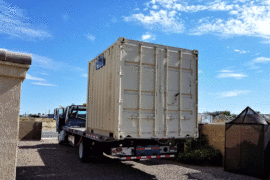
Where the truck can park on the street, the City’s Department of Mobility and Infrastructure (DOMI) issues a moving permit that reserves part of the parking lane. According to the DOMI moving permit information sheet, a truck permit costs $50 and covers up to two days, while a container permit costs $80 and covers up to two weeks. Any “No Parking” signs issued with the permit must go up at least 48 hours before the permit period starts, and DOMI asks applicants to allow one week for review. If a move requires reserved on-street parking at both the origin and destination within Pittsburgh, a separate moving permit is needed for each address.
Matching the Crew to the House
Pittsburgh’s housing mix means the same mover can face a flat-front row house in the morning and a hillside home up 40 steps in the afternoon. Before booking, ask:
- Have you moved homes with long exterior staircases or on steep streets in this neighborhood?
- What happens if the full-size truck cannot park close to the door?
- Who applies for the DOMI permit and posts the signs?
- How will you protect banisters, floors and door frames?
The kind of help can be matched to the house as well. Local companies such as we move pittsburgh list local and long-distance moves, packing, storage moves and labor-only crews among their services. Labor-only help suits a household that has already rented a container and needs strong hands for the steps. A full-service move suits a family that would rather hand off the packing and the carrying together.
Settling In With the House, Not Against It
Once the boxes are inside, an older Pittsburgh home asks for a slightly different approach to furnishing.
Leave room around radiators. If the house has radiators under the windows, keep furniture clear of them according to the heating system’s recommended clearances, and arrange layouts so heat can circulate.
Hang art with the walls in mind. Plaster can crack around a hammered nail. If the house has a picture rail near the ceiling, hooks and wire let you hang and rearrange art without new holes. Otherwise, use hardware made for plaster.
Level and anchor tall pieces. Floors in a century-old house often aren’t perfectly level. Shim bookcases and wardrobes so they sit flat, then anchor them to the wall, especially in homes with children.
Plan for small closets. Older bedrooms often have shallow closets or none at all. A wardrobe or armoire can fill the gap, as long as it fits up the stairs, which brings the plan back to where it started.
Pittsburgh’s hills, stairways and older houses give the city much of its character. They also reward a move planned around them: the right furniture, the right crew, a reserved curb and a realistic sense of how many steps lie between the truck and the front door.