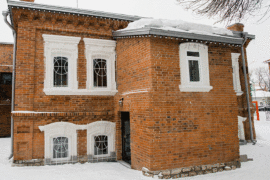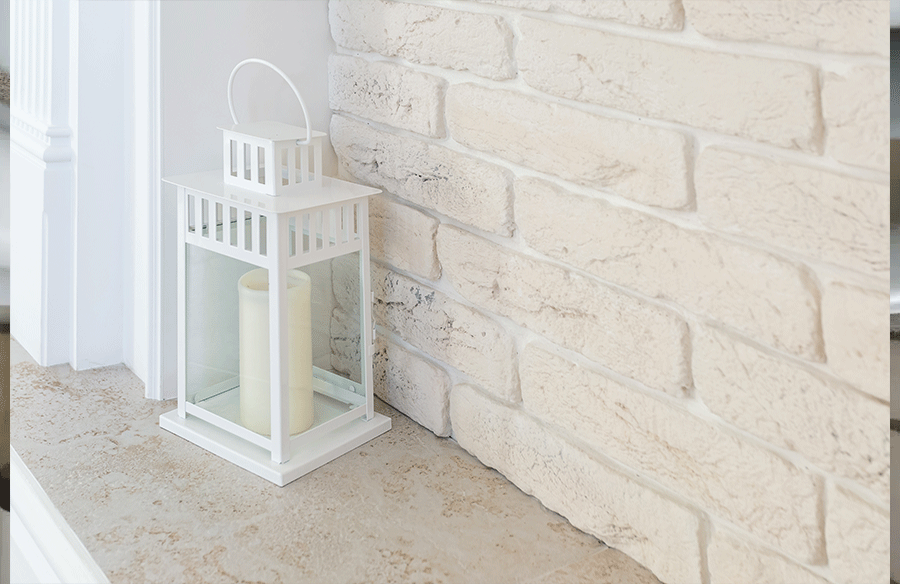
Limewash has moved from heritage restoration into everyday design. On brick facades, stone fireplaces and plastered interiors, it gives a soft, matte surface that lets the character of the wall show through. Choosing a product is harder than it looks, though. Limewash brands differ in the surfaces they support, how many coats they need, how they age outdoors and how they can be cleaned.
This guide compares five limewash paints for interior and exterior use, with the same criteria applied to each, so you can narrow your shortlist before you test samples on your own wall.
How We Compared These Limewash Paints
Each product was assessed using its manufacturer’s published information, checked in November 2026. We looked at:
- Surface fit: which substrates the manufacturer lists, and any it excludes.
- Application: dilution, coat count, tools and preparation.
- Finish: how much of the masonry shows through and how the look can be adjusted.
- Exterior behavior: how the finish weathers and what maintenance the maker describes.
- Cleaning and protection: whether the finish can be wiped or washed, and which topcoats are offered.
We didn’t apply the products ourselves, so treat the comparison as a starting point and confirm results with a sample on your actual wall.
Limewash Paints at a Glance
| Product | Best for | Listed surfaces | Application basis |
| Romabio Classico Limewash | Distressed finishes on raw brick and stone | Unpainted, absorbent interior and exterior brick, stone and masonry | One coat, diluted, no primer on suitable masonry |
| Portola Lime Wash | Layered interior and exterior color | Interior and exterior masonry and other prepared surfaces | Coverage quoted for two coats |
| KEIM Limewash | Historic lime plaster and stucco | Porous mineral surfaces, interior and exterior | Two to three thinned coats |
| Bauwerk Limewash | Raw render, brick and block | Unsealed interior and exterior masonry | No undercoat on raw, absorbent block |
| Color Atelier Limewash Paint | Mixed interior and exterior projects | Brick, concrete, stone, stucco and masonry | Follow brand’s coat guidance |
1. Romabio Classico Limewash
Best for: Owners who want to control how much brick or stone shows through.
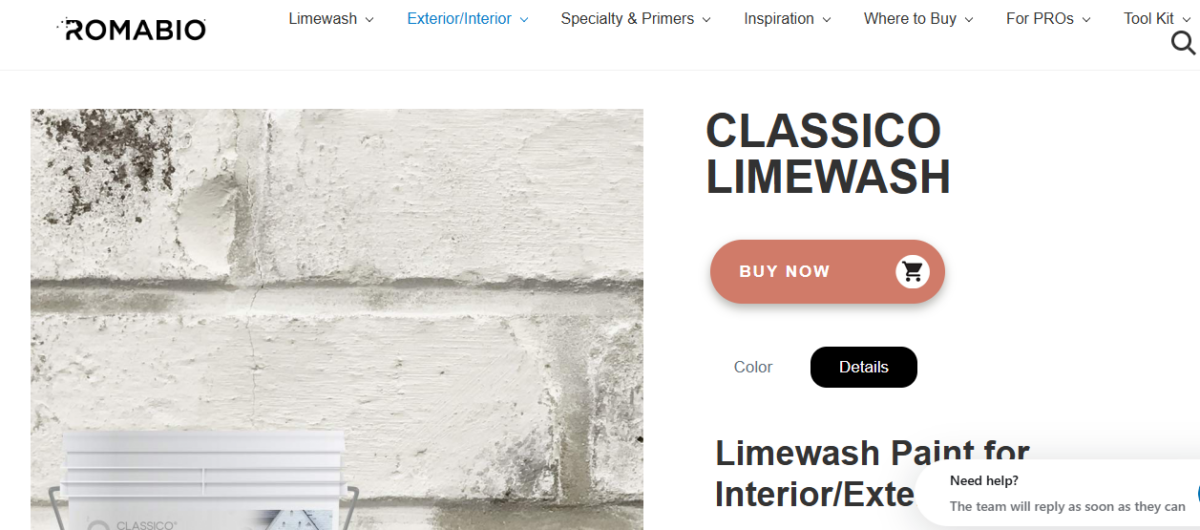
Classico is an authentic slaked-lime limewash paint from Romabio, made in Italy with Dolomite lime. It is designed for unpainted, absorbent interior and exterior brick, stone and masonry, and it calcifies into the surface rather than sitting on top as a film. The product is diluted with water, at 50% to 100% depending on how transparent you want the result, then applied as a single coat with a masonry brush or a suitable sprayer.
Strengths
- One-coat process with no primer needed on suitable raw masonry.
- Can be distressed with a damp cloth or brush, and removed from most brick within two days, which makes sampling low-risk.
- Seven pre-tinted whites and neutrals, plus custom light tints through retailers.
Considerations
- Not suitable for drywall, painted surfaces or horizontal areas where water pools.
- Formulated to patina with weather, so exposed walls change over time unless a protective topcoat such as Mineral Shield is added.
 2. Portola Lime Wash
Best for: Projects where you want to build color in layers.
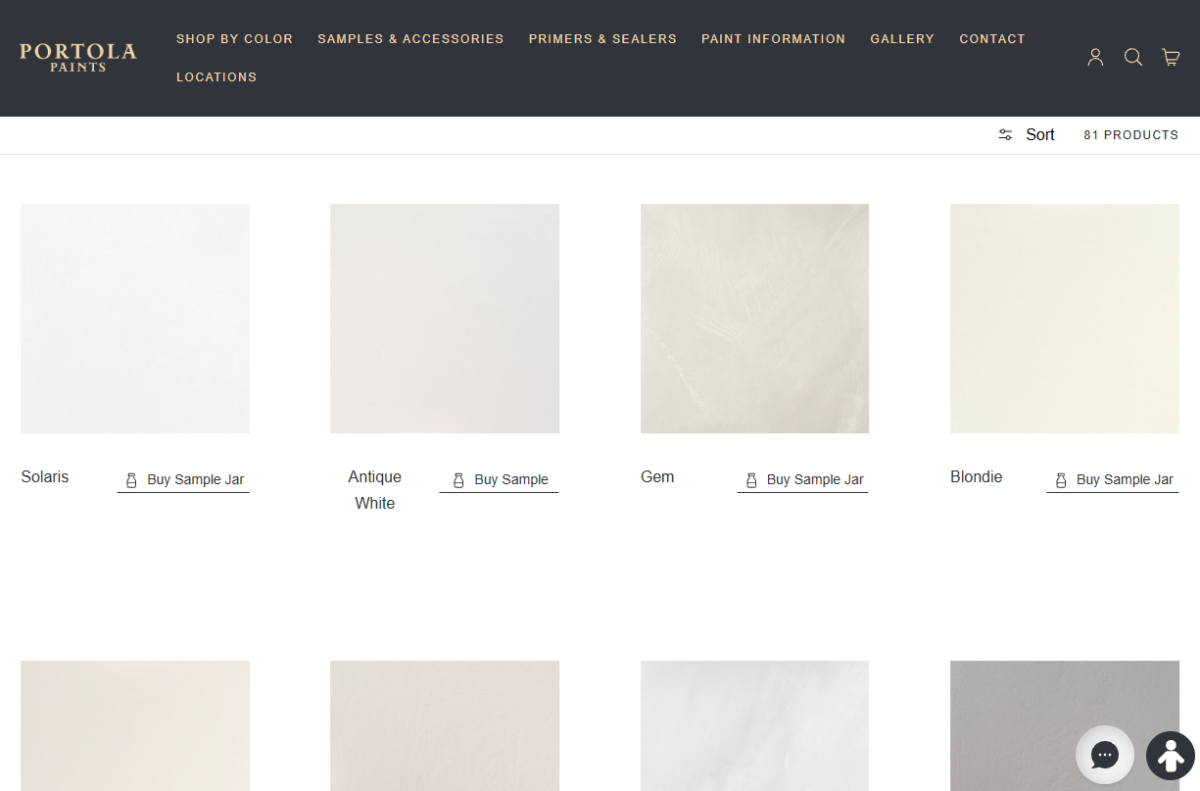
Portola markets its Lime Wash for interior and exterior masonry as well as other suitably prepared surfaces. Its published coverage of 150 to 200 square feet per gallon is based on two coats, so plan quantities on that basis rather than comparing it directly with one-coat figures from other brands.
Strengths
- Wide surface range when the substrate is prepared as directed.
- Two-coat system gives room to adjust depth of color between coats.
- Suits both interior feature walls and exterior masonry.
Considerations
- The unsealed finish is non-wipeable, so plan protection for areas that get touched.
- Confirm preparation requirements for anything other than raw masonry.
 3. KEIM Limewash
Best for: Historic lime plaster, stucco and conservation-led projects.
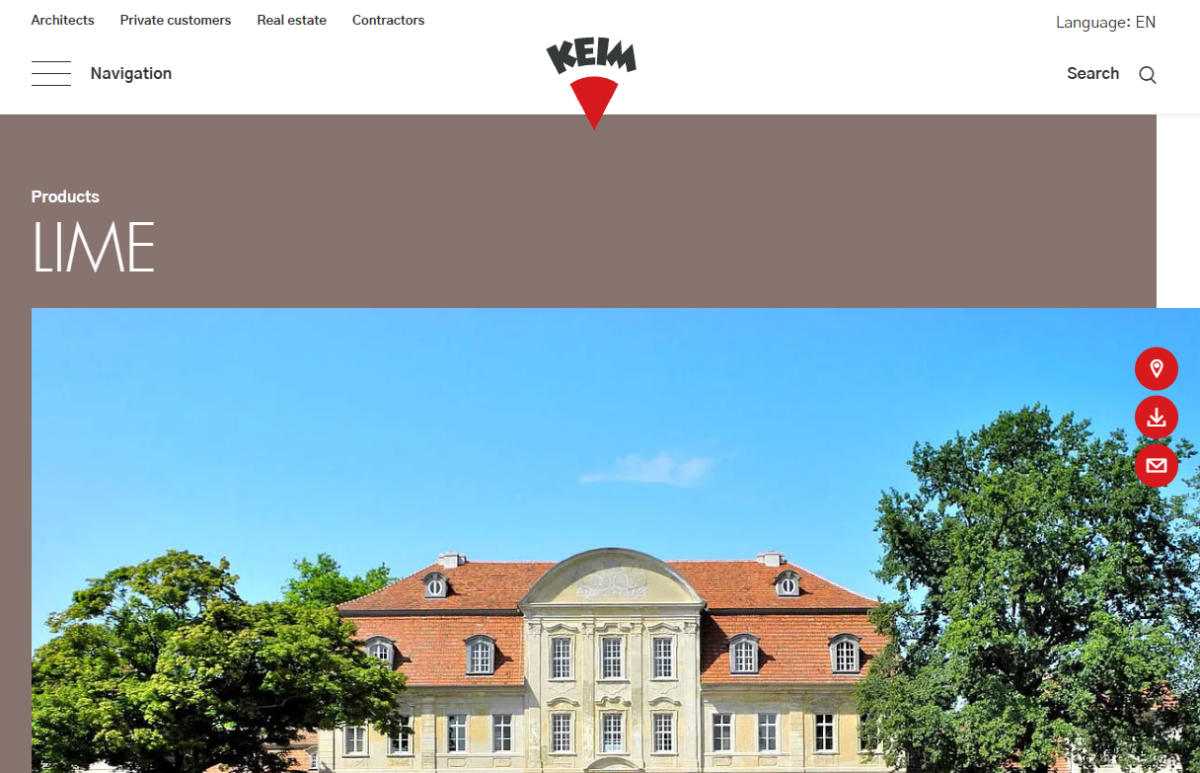
KEIM describes its Limewash as a classic, old-world paint formulated for porous mineral surfaces, inside and out, where a breathable, authentic lime finish is wanted. Its technical data sheet calls for exterior masonry to be dampened before painting and sets out multi-coat systems, typically two to three thinned coats depending on the substrate.
Strengths
- Positioned specifically for historic restoration of lime plaster and stucco.
- Detailed technical guidance for different substrates, including primed systems.
- Breathable mineral finish suited to older walls.
Considerations
- More coats mean more labor than a one-coat product.
- KEIM notes that exterior limewash must be routinely reapplied as the lime binder weathers.
 4. Bauwerk Limewash
Best for: Raw render, brick and concrete block with a soft, cloudy finish.
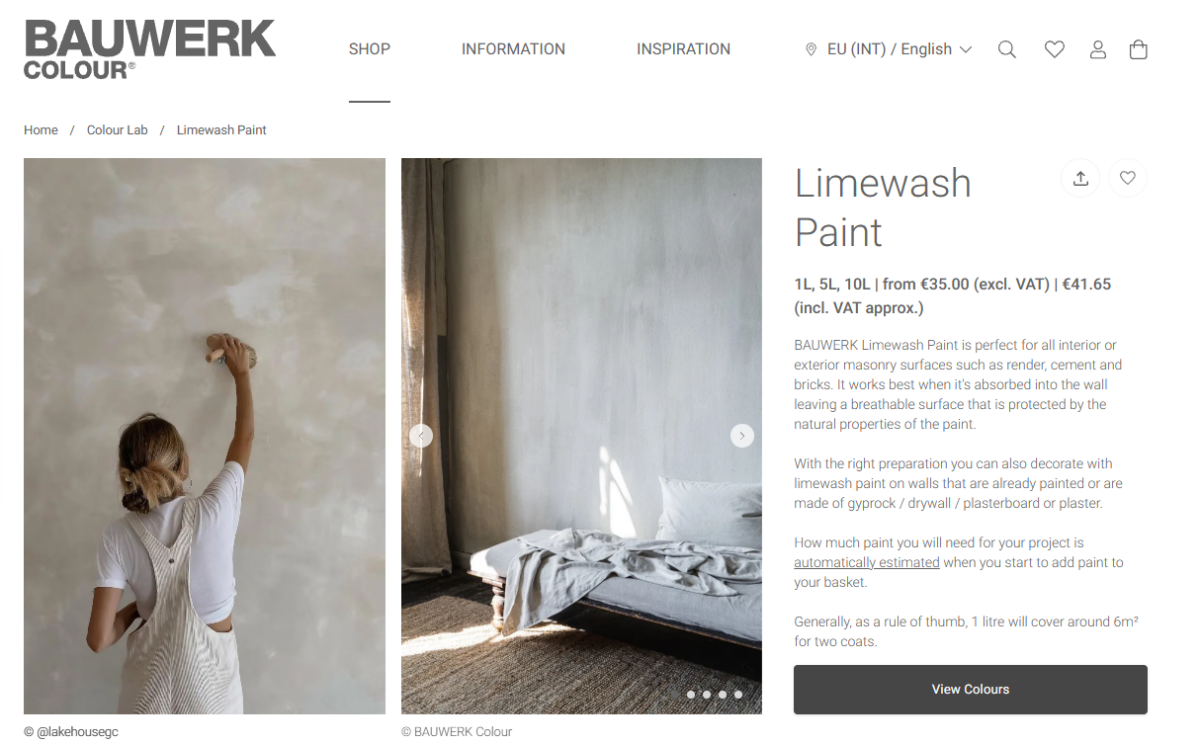
Bauwerk describes its Limewash as a natural mineral paint made from limestone, clay and natural pigments, suitable for unsealed interior and exterior masonry such as render, brick and stone. Its guide states that raw, absorbent concrete block needs no undercoat or sealer.
Strengths
- Natural ingredient list, with color from natural pigments.
- No undercoat needed on raw, absorbent block.
- Works across interior and exterior masonry.
Considerations
- The no-undercoat guidance doesn’t extend to painted or sealed walls.
- Bauwerk generally advises against sealing exterior walls, so factor in natural weathering.
 5. Color Atelier Limewash Paint
Best for: Mixed projects spanning interior rooms and exterior masonry.
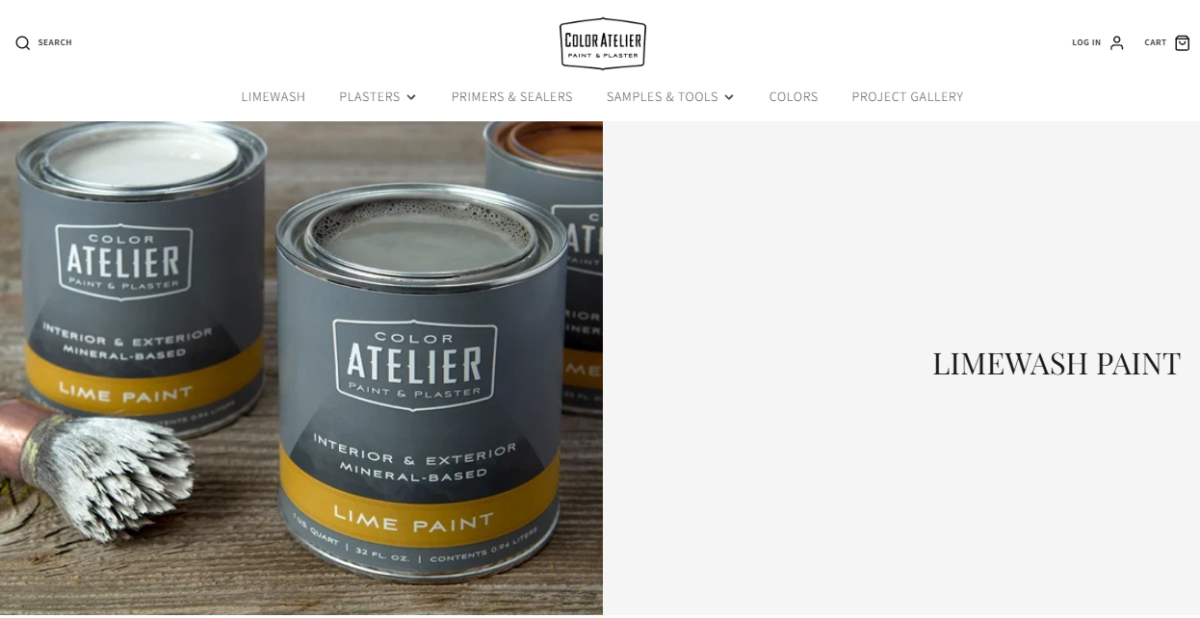
Color Atelier states that its Limewash Paint can be used on interior and exterior surfaces, including exterior brick, concrete, stone, stucco and masonry. The brand describes a mineral matte finish with soft tonal variations and says the paint is free of odor and VOCs.
Strengths
- Broad listed surface range, inside and out.
- Matte finish with natural-looking movement.
- The brand says it can be used in bathrooms and kitchens.
Considerations
- Check coat count and preparation for each substrate in the brand’s instructions.
- As with any limewash, sample first, since absorbency changes the final look.
 How to Choose the Right Limewash for Your Wall
Test the Surface First
Spray clean water on an inconspicuous area. If the masonry darkens and absorbs it, the surface may accept limewash. If the water beads and runs off, there may be a sealer or old coating, and most limewashes won’t bond to it. This quick check doesn’t confirm compatibility with a specific product, so always follow the manufacturer’s surface guidance.
Compare Coverage on the Same Basis
Coverage figures aren’t directly comparable. Some brands quote one coat, others two. Work out how many coats you need to match your approved sample, then calculate quantities for the same wall area for each product.
Plan for Weathering and Cleaning
Limewash is expected to change outdoors. Decide whether you’re happy with a finish that softens over time, or whether you’ll add a brand-approved topcoat. Indoors, check whether the finish can be wiped or washed, especially on fireplace surrounds and busy hallways. If you’re drawn to lime for its natural, breathable qualities, this project on building with lime plaster and natural materials shows how the material works across a whole home.
Sample on the Real Wall
Apply samples to both masonry units and mortar joints, and view them in daylight and artificial light. Photos and color cards can’t show how your wall will absorb the product.
Protect Yourself
Wet lime can harm skin and eyes. Wear gloves, protective clothing and eye protection, and read the current safety sheet for whichever product you choose.
Conclusion
The right limewash depends on your wall as much as the look you want. For distressed finishes on raw brick and stone, a one-coat slaked-lime product offers the most control. For historic plaster and stucco, a conservation-focused multi-coat system may suit better, while broader-range products work well for mixed interior and exterior projects. Whichever you lean towards, test the surface, compare coverage on the same basis and approve a sample before committing to the full wall.
FAQs
Can limewash be used on interior and exterior walls?
Yes. All five products here are listed for both, but each has its own surface requirements, so check the manufacturer’s guidance for your substrate.
Can I limewash over painted brick?
Generally not. Most limewashes need unpainted, absorbent masonry to bond. Check the product’s instructions before applying it to any coated or sealed surface.
How long does limewash last outdoors?
It varies by product, climate and exposure. Limewash is designed to weather gradually, and some brands recommend periodic reapplication or a protective topcoat.
How many coats of limewash do I need?
It depends on the product and the look you want. Some are designed as one-coat systems, while others need two or three coats.