Planning your ideal home used to mean collecting magazine cuttings, visiting showrooms, and trying to explain your vision to architects. Even then, it was difficult to visualize the finished article.
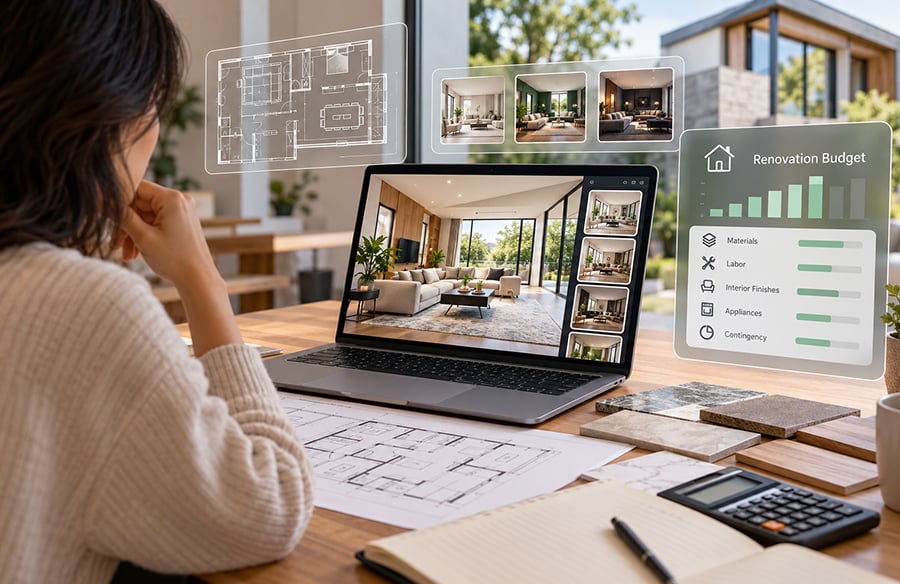
Technology is starting to play a bigger role, and homeowners can now use simple tools to generate a realistic home interior, adjust the room and floor plan, and get an approximate cost for the suggested renovations. Although technology can’t yet replicate the experience and creativity of a qualified, practicing architect or designer, it can make the initial stages of planning much easier and more efficient.
Visualizing a Home Before Making Changes
This is one of the biggest challenges of home design; it’s difficult to bring a 2D floor plan to life so homeowners can better understand what the finished room will look like.
AI-powered design platforms provide virtual tours of rooms under consideration and let users see how furniture and furnishings would look, as well as experiment with different colors and lighting. If a user has a particular style in mind, such as modern or minimalist, the design platform can recommend furniture and other interior design elements that fit that style.
For example, someone who wants to create an open-plan kitchen can explore different options before speaking with an architect about structural changes to the property. Someone unsure whether dark cabinets will work in a small kitchen can explore different cabinet finishes without buying them.
Like many AI-generated features, these visualizations aren’t 100% accurate,, but they can give homeowners a clearer idea of what they like and how to communicate those ideas to designers and architects.
Making Smarter Financial Decisions Before Renovating
Home design only goes so far in a home improvement project. More important is how much a desired design will cost, in terms of materials and the work involved in the renovation.
Many people underestimate renovation costs, for example, for older houses that need rewiring, a new plumbing system, or even new wall supports.
AI is beginning to play a role in financial preparation, too. Digital budgeting platforms can help people examine spending habits, organize savings goals and evaluate their financial priorities. For example, AI financial planning tools can provide a starting point for exploring household budgets and understanding how a major home improvement project might affect other financial commitments.
Of course, you still need a detailed estimate from contractors and should allow for surprises along the way. AI just helps organize your financial information.
Exploring Materials and Design Alternatives
Much of the design process revolves around choosing materials for the renovation. Often, a photo’s aesthetic captures a homeowner’s “WOW” factor, and they fail to consider the homeowner’s practical needs.
However, many people are tempted by finishes shown in other people’s homes and don’t consider how they will be used by the homeowner and their family. For example natural stone countertops look amazing in a design picture but can be very high maintenance.
When viewing and comparing alternative materials and finished visualizations for designs and combinations you may never have considered, AI-based design tools can recommend alternatives, offer side-by-side comparisons, and show scenarios the homeowner may not have thought of.
For example, someone who really loves the look of expensive hardwood flooring can see what engineered wood flooring looks like before they ever have to visit a supplier to buy it.
Appeal is not all, though. You also have to consider the material’s durability, cleaning effort, and installation cost. With that in mind, speak to specialists at a home-renovation company.
Avoiding Costly Design Mistakes
Renovation mistakes can become expensive.
For example, you may discover that a kitchen island won’t leave enough clearance to open the refrigerator doors, or that a large sofa will block a living room recess and impede circulation.
For instance, many online planning platforms now let users create and test ‘digital rooms’ to experiment with different furniture pieces and their possible spatial configurations before contacting suppliers or ordering installation.
This lets homeowners test potential problems before they become expensive to fix.
These room plans are not, however, ready for construction. An experienced architect or designer would need to make necessary modifications and thoroughly measure all walls, doors, windows, and other important room features.
Creating Homes That Reflect Everyday Life
A good home design is more than a visual experience. It must also suit the users and their daily routines.
Home designs can also be built around the owner’s needs, such as a quiet home office, more storage, casual shared spaces, or relaxing areas.
A family with young children might want a kitchen with durable surfaces and plenty of storage, while someone who works from home might want more natural light and a separate workspace.
AI can also suggest alternative ways to meet your requirements and help you decide among various options.
The Future of AI in Home Design
Home design AI won’t replace home architects, interior designers, and contractors. Designing a home is complex and requires experience, creativity, and knowledge of human behavior.
Home design AI software helps design and soon facilitates home planning. Once ideas are developed, homeowners meet with architects, designers, and builders with a clear idea of the home they want and can achieve.
The greatest benefit will come to those who combine the greatest technology with the greatest human expertise. While AI can imagine the possibilities for your home, the architect, designer, and contractor can bring them to life in safe, practical, and beautiful ways, ensuring it stays just right for years to come.