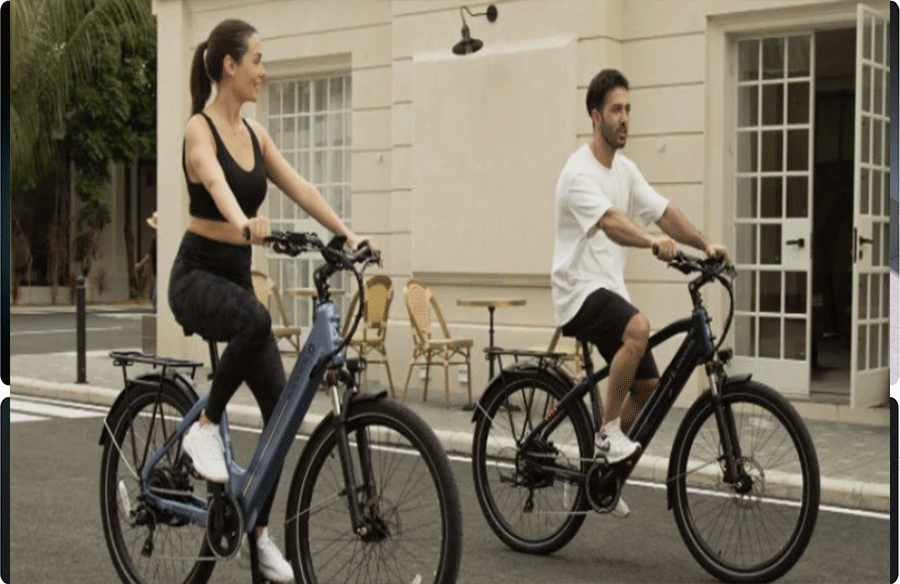
The best e-bike for urban commuting is one that fits your daily route, offers enough battery range, and remains comfortable in changing traffic and road conditions. Motor power matters, but practical details such as frame design, braking performance, parking space, and charging access often make a bigger difference.
As cities expand their cycling infrastructure, electric bikes are becoming a practical transportation option for short commutes, neighborhood errands, and connections to public transit. Choosing the right model starts with understanding how it will fit into everyday life.
What Makes an E-Bike Practical for City Commuting?
Urban commuting involves more than traveling between home and work. A typical route may include busy intersections, uneven pavement, traffic lights, and occasional hills.
An effective commuter e-bike should be easy to control at low speeds, comfortable over repeated journeys, and manageable when parking or storing it.
For shorter trips on smooth streets, a lightweight model may be sufficient. Riders covering longer distances or encountering rougher roads may appreciate additional motor assistance, wider tires, and suspension.
Before comparing models, consider the complete journey, including where the bike will be parked and whether it needs to be carried upstairs.
How Much Battery Range Do You Really Need?
An urban e-bike should provide enough battery range for the regular round trip, with additional capacity for unexpected detours or changing conditions.
For example, someone with a 10-mile round-trip commute may not need a bike advertised with an 80-mile range. However, longer routes, frequent hills, or limited charging access can make a larger battery worthwhile.
Manufacturer range estimates are useful for comparison, but actual performance depends on rider weight, assistance level, temperature, and terrain.
A good approach is to calculate weekly riding needs and determine how often charging will be convenient.
Removable batteries can also be useful for apartment residents or commuters without access to outdoor electrical outlets.
Should You Choose a Fat Tire or Regular Commuter E-Bike?
Both designs can work for urban travel, but they serve different priorities.
| Feature | Regular commuter e-bike | Fat tire e-bike |
| Smooth pavement | Usually efficient and easy to handle | Comfortable but often heavier |
| Uneven roads | Depends on tire width and suspension | Additional cushioning and traction |
| Storage | Often easier in limited spaces | Requires more room |
| Mixed-terrain riding | Best with suitable tires | Better suited to varied surfaces |
For riders traveling mainly on maintained bike lanes, a conventional commuter model may be the more convenient option.
However, some urban routes include cracked pavement, gravel shortcuts, and poorly maintained neighborhood roads. Wider tires can improve comfort in these conditions, particularly when paired with suspension.
The important distinction is how frequently those features will be used.
Which E-Bike Features Matter for Everyday Transportation?
Comfort and handling deserve as much attention as motor specifications.
Braking performance: Reliable brakes are essential when navigating intersections, pedestrians, and frequent stops. Hydraulic disc brakes can provide controlled braking when properly maintained.
Frame fit: Handlebar reach, saddle adjustment, and mounting height affect comfort. A suitable riding position can reduce fatigue during repeated commutes.
Cargo compatibility: Riders using an e-bike for groceries or daily errands should check rack compatibility and maximum load limits before purchasing accessories.
Weight and storage: Heavier models may feel stable over rough surfaces but can be difficult to carry upstairs or maneuver through narrow storage spaces.
Safety equipment also matters. Proper lighting, reflective clothing, and a secure lock are important parts of daily urban cycling.
Can a Full-Suspension E-Bike Work for Urban Commuting?
Full-suspension e-bikes can work for urban commuting, particularly when routes include uneven pavement, gravel connectors, or recreational paths. However, they are generally heavier and more complex than conventional commuter bicycles.
For riders who want one bike for weekday transportation and weekend outdoor exploration, a mixed-terrain model may offer useful versatility.
The Mokwheel Obsidian illustrates this category.
Designed primarily as a full-suspension fat tire electric mountain bike, it features a 750W motor, four-inch-wide tires, and a manufacturer-stated range of up to 80 miles.
Its suspension and wider tires are particularly relevant to riders who encounter rough roads or regularly travel beyond smooth pavement.
However, its off-road-oriented design is more than many city commuters need. Riders with limited storage space or routes consisting almost entirely of paved bike lanes may find a lighter commuter e-bike more practical.
This makes the Obsidian worth considering for mixed-use transportation rather than as a universal urban commuting solution.
How Can You Compare E-Bikes Before Buying?
When browsing ebikes for sale, compare the total ownership experience rather than the advertised price alone.
Battery replacement costs, warranty coverage, accessory compatibility, and local service availability can influence long-term value.
A lower-priced bike may become less economical if essential accessories must be purchased separately.
It is also important to check local electric bicycle regulations. Motor output, assisted speed, and e-bike classification can affect where a particular model may legally operate.
Whenever possible, test ride the bike before purchasing. Handling, riding position, and braking feel can be difficult to judge from specifications alone.
Choosing an E-Bike That Fits Urban Life
An electric bike can make everyday transportation more flexible, but the right choice depends on the rider’s actual needs.
For short trips on smooth streets, lightweight handling and easy storage may be the biggest priorities. For longer commutes involving hills or uneven roads, battery capacity, suspension, and wider tires may be more useful.
The most practical approach is to evaluate the complete journey, including road conditions, charging access, parking, and occasional weekend travel.
Choose an e-bike that fits those requirements, and it can become a dependable part of everyday urban transportation.