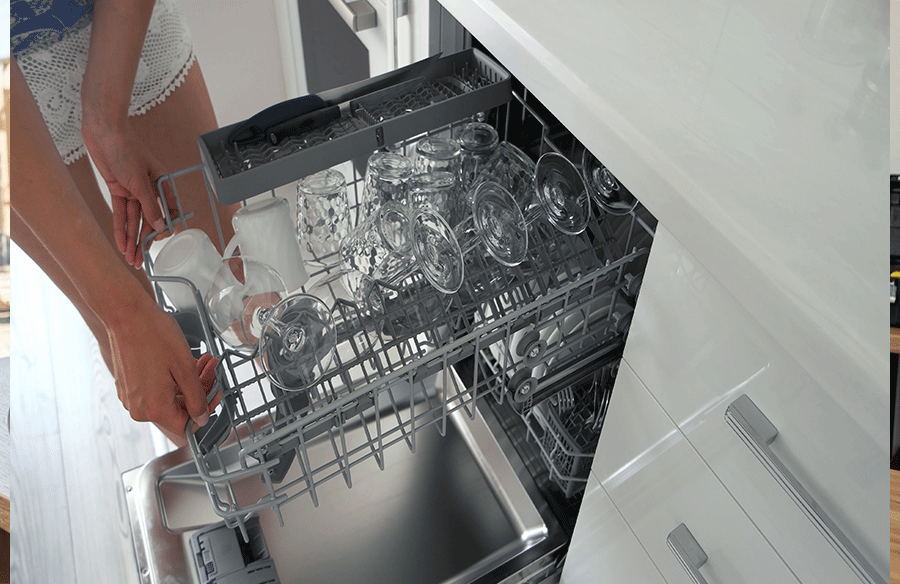
The dishwasher has finished its cycle, the dishes are clean, and everything seems normal until you walk over to the sink. Water is collecting in the basin, even though nobody has turned on the faucet. Sometimes it carries food particles or has an unpleasant smell. Other times, it disappears slowly, leaving you wondering whether the dishwasher is broken.
The dishwasher may be working exactly as intended. The problem could be in the drainage system it shares with the kitchen sink. Modern kitchens often conceal plumbing connections behind cabinetry, making wastewater paths and service points easy to overlook.
Thoughtful kitchen design extends beyond aesthetics to ensure that essential utilities remain accessible. While integrated appliances and seamless cabinetry create a clean look, designers must also consider the practicalities of maintenance and repair for plumbing systems hidden from view.
This balance between visual integration and functional access is a hallmark of well-executed architectural and interior design, ensuring that the beauty of a space doesn’t compromise its long-term usability.
Understanding these connections can help homeowners identify whether they are dealing with a blocked drain, an installation issue, or a problem inside the dishwasher itself.
The Dishwasher and Kitchen Sink May Share More Than Cabinet Space
How Dishwasher Discharge Connects to the Sink’s Drainage System
Most residential dishwashers do not have a completely independent drain running to the sewer. Instead, a discharge hose carries wastewater from the appliance to a connection beneath the kitchen sink.
Depending on the installation, that hose may connect to a designated inlet on the garbage disposal or a dishwasher branch fitting on the sink’s drain tailpiece. From there, the water enters the household drainage system.
The arrangement is practical because the appliances are usually positioned close together, but it also links their drainage performance. When the dishwasher pumps out water, that discharge must pass through the receiving drain connection and the piping downstream. If a blockage restricts the flow, water can accumulate and rise through the basin opening even though the faucet has not been used.
Why Water Can Return Through the Fixture Instead of Flowing Away
A dishwasher uses a pump to discharge wastewater. The kitchen sink, however, relies on gravity to carry water through its trap and connecting pipes. If the receiving drain cannot carry the pumped discharge away quickly enough, some water may back up into the basin.
The location of the obstruction matters. A blockage downstream of the point where the dishwasher discharge joins the drain can affect both fixtures. A restriction confined to the dishwasher hose may instead prevent the appliance from emptying properly without causing water to rise in the basin.
What Causes Water to Back Up When the Dishwasher Runs
Food Residue and Grease in a Shared Drain Line
Kitchen drains carry more than water. Small food particles, cooking oils, detergent residue, and grease can enter the system during everyday use.
Over time, grease can accumulate along the inner surfaces of pipes and trap other debris. The remaining opening becomes smaller, restricting the movement of wastewater.
The problem might not be obvious when someone briefly runs the faucet. A dishwasher discharge, however, can introduce enough water within a short period to reveal the restriction.
The U.S. Environmental Protection Agency advises against disposing of cooking grease and oil through household drains in its guidance on septic system care. EPA also identifies fats, oils, and grease as materials that can clog municipal sanitary sewers and contribute to overflows
Restrictions in the Garbage Disposal or Trap
A garbage disposal provides another possible location for drainage problems. Food debris can accumulate inside the disposal’s discharge passage or in the plumbing connected to it. Even when the disposal motor operates normally, that does not guarantee that the downstream drain is clear.
The trap is another common location for restrictions. Its curved configuration holds water to prevent sewer gases from entering the home, but accumulated debris can interfere with drainage.
If both the fixture and dishwasher show drainage symptoms, shared piping deserves closer attention. If it drains normally and only the dishwasher fails to empty, the appliance hose or connection becomes a stronger possibility.
Problems With the Dishwasher Drain Hose or Connection
Not every drainage problem involves buildup inside the pipes. A dishwasher hose may become kinked, crushed, or obstructed. A newly installed garbage disposal may also retain the factory knockout plug at its dishwasher inlet.
If that plug was not removed during installation, the dishwasher cannot discharge properly through the intended connection.
Bosch’s dishwasher troubleshooting guidance identifies blocked hoses, clogged filters, and an unopened garbage-disposal inlet as possible causes of dishwasher drainage failures.
These faults are more likely to leave wastewater inside the appliance than to cause a basin backup. Nevertheless, they are important to distinguish before assuming that professional drain cleaning is necessary.
What the Timing of the Backup Can Tell You
Water Appears Only During the Dishwasher’s Drain Cycle
If the basin fills only when the dishwasher pumps out wastewater, the shared drainage connection deserves attention. A partial obstruction may allow ordinary fixture use without obvious problems while struggling with the dishwasher’s discharge rate.
The timing is a useful clue, not a definitive diagnosis. An incorrectly configured connection or another restriction can create similar symptoms.
Homeowners can observe whether the fixture drains normally at other times, whether the problem occurs during every dishwasher cycle, and whether water emerges from one or both basins of a double fixture. These observations can help a plumbing professional narrow down the possible causes.
The Fixture Also Drains Slowly During Normal Use
A fixture that drains slowly even when the dishwasher is off suggests the problem may extend beyond the appliance. The restriction could be inside the trap, a short branch pipe, or farther along the kitchen drain.
Gurgling sounds, persistent odors, and repeated backups provide additional information, although none identifies the exact location of a blockage on its own.
If other household fixtures begin experiencing drainage problems at the same time, an obstruction farther downstream becomes a concern.
Water Collects Beneath the Cabinet Instead of Rising Into the Basin
Water beneath the cabinet points toward a different issue. A loose hose clamp, damaged drain fitting, leaking trap connection, or deteriorated seal may allow wastewater to escape before it reaches the drain.
This is not the same as water backing up through the basin opening. Stop using the affected fixtures until the source is identified. Continuing to operate the dishwasher can saturate cabinet materials, damage flooring, and introduce moisture into concealed spaces.
Where electrical outlets or appliances may be exposed to leaking water, avoid touching wet electrical components and arrange appropriate professional assistance.
A Safe First-Check Sequence Before You Call for Help
If the fixture is backed up, overflowing, or leaking beneath the cabinet, stop adding water and do not run another dishwasher cycle simply to reproduce the problem. Once there is no active overflow or electrical exposure, these observations can help narrow the cause without dismantling plumbing.
- Check the fixture when the dishwasher is not draining. Slow drainage or gurgling during ordinary use points more strongly toward the trap or shared drain. Normal drainage makes a dishwasher-side problem more likely.
- Look inside the dishwasher after the cycle. Standing water can point toward a filter, pump, hose, disposal inlet, or connection problem. Clean only user-serviceable parts according to the manufacturer’s instructions.
- Look under the cabinet without disconnecting fittings. Note hose kinks, crushed tubing, dripping connections, or whether the trouble began after a dishwasher, disposal, or cabinet installation.
- If there is a countertop air gap, note whether water spills from it during dishwasher discharge. Overflow there can indicate a downstream restriction, but cleaning should follow appliance instructions and local plumbing requirements.
- Match the symptom to the likely service. A slow or backing-up fixture, especially with other affected fixtures, generally points toward a plumber or drain professional. A normally draining fixture with a dishwasher that retains water may point toward appliance service. Trouble that starts immediately after installation also warrants checking the new connection.
This sequence is not a diagnosis, but it gives a homeowner useful information to report without repeatedly testing a backed-up system.
Why Kitchen Design Should Account for Appliance Drainage
The Relationship Between Fixture Placement and Dishwasher Connections
If drainage trouble begins after a remodel, appliance relocation, or disposal replacement, the kitchen layout and connection route deserve attention. The distance between the dishwasher and the fixture, the location of the disposal, and the route of the discharge hose can all affect installation. A dishwasher placed away from the main fixture may require additional coordination to maintain the manufacturer’s permitted hose length and routing.
The connection must also satisfy the plumbing code adopted by the applicable state or local jurisdiction. The International Plumbing Code is a model code that jurisdictions may adopt and amend. As one example, the 2024 International Plumbing Code, Section 409.4, allows specified residential dishwasher waste connections and requires the waste line to rise and be securely fastened beneath the fixture rim or countertop.
Local rules can differ. The City of Elk Grove, California, for example, identifies California Plumbing Code Section 807.3 as requiring a dishwasher air gap above the fixture flood rim. Designers and installers should verify the code adopted for the actual project.
What Cabinet Layouts Can Conceal About Plumbing Problems
Full-height cabinet panels, integrated appliances, and compact under-sink storage can make kitchen plumbing less visible. These features are not inherently problematic. Difficulties arise when the finished layout limits access to connections that may require inspection or maintenance.
Integrating plumbing into the overall design scheme is a key consideration for architects and interior designers. The challenge lies in creating aesthetically pleasing enclosures that also allow for practical access when issues arise, balancing form with essential function.
This careful planning ensures that the visual integrity of a space is maintained without sacrificing the ability to perform necessary maintenance or repairs, reflecting a holistic approach to design.
A cabinet filled with pull-out organizers can make it harder to examine a dishwasher hose. A disposal crowded by storage accessories may leave little working space around the trap.
During kitchen planning, service access should be considered alongside visual organization. The objective is not to expose every pipe but to avoid making routine maintenance unnecessarily disruptive.
When Cleaning the Drain Is Appropriate and When Repairs Are Needed
Identifying a Restriction Before Choosing a Cleaning Method
When wastewater repeatedly rises into the kitchen sink, the immediate temptation may be to pour a chemical drain cleaner into the basin.
That approach does not establish where the obstruction exists. Chemical products can also create exposure hazards, particularly if someone later opens the trap or uses mechanical cleaning equipment.
A safer starting point is to stop operating the dishwasher and avoid adding more water when the fixture is already backed up.
Once the system has cooled and the appliance is switched off, homeowners may be able to inspect visible hose routing or remove accessible food debris according to the appliance manufacturer’s instructions.
If the blockage is inaccessible or the symptoms persist, further investigation is appropriate.
When Professional Drain Cleaning May Restore Proper Flow
When the restriction lies inside the kitchen’s shared waste piping, mechanical drain cleaning may restore drainage without changing the appliance or replacing the pipes.
For example, a professional may use a drain snake to clear a localized obstruction. Other cleaning methods may be considered for heavier buildup, depending on the pipe material, condition, and location of the blockage.
Resources explaining professional drain cleaning can help homeowners understand why the obstruction should be identified before a cleaning method is selected.
If the drain flows freely after cleaning, removable debris may have caused the restriction. If the problem repeatedly returns, additional inspection may be needed to determine whether pipe defects, installation issues, or recurring material accumulation are involved.
Why Incorrect Connections Cannot Be Fixed by Cleaning Alone
Cleaning cannot correct a badly kinked dishwasher hose, an unopened disposal inlet, or an improperly configured drain connection.
Likewise, a drainage pipe with insufficient slope or significant physical damage may require repair.
A camera inspection can sometimes reveal obstructions or defects in accessible drain lines, but it does not replace checking appliance connections or inspecting the visible under-cabinet plumbing.
This is particularly important after kitchen renovations. A newly installed dishwasher that fails to drain properly may have a connection problem rather than an old, clogged pipe.
Keeping a Well-Designed Kitchen Functional After Installation
Practical Habits That Reduce Kitchen Drain Buildup
Everyday maintenance can reduce the amount of material entering the drainage system. Scrape substantial food waste from plates before loading them into the dishwasher. Clean the appliance’s removable filter according to the manufacturer’s instructions, and avoid pouring cooking grease into the sink.
Where a garbage disposal is installed, operate it according to its manufacturer’s guidance rather than treating it as a substitute for food-waste collection.
These habits reduce unnecessary debris entering the system, although they cannot prevent every blockage or correct existing pipe defects.
Maintaining an accessible under-sink cabinet also makes it easier to notice leaks, displaced hoses, or moisture before a small problem becomes more disruptive.
Warning Signs That Should Not Be Ignored
A single unusual drainage event does not automatically indicate a serious plumbing failure. However, repeated wastewater backups, persistent slow drainage, or water leaking beneath cabinetry deserve attention.
Homeowners should also distinguish between wastewater returning through the sink and water remaining inside the dishwasher. Although the symptoms may occur together, they do not always share the same cause.
If wastewater is overflowing, stop using affected fixtures and arrange prompt assistance. If several fixtures are backing up simultaneously, a larger drainage problem may require urgent assessment.
The goal is to identify the source of the malfunction before it causes damage to surrounding materials or encourages unnecessary repairs.
A Functional Kitchen Depends on More Than Its Appliances
A modern kitchen can combine attractive cabinetry, integrated appliances, durable surfaces, and carefully planned lighting. Yet its performance also depends on plumbing systems that remain almost entirely out of sight.
When dishwasher wastewater rises into the kitchen sink, the cause may be removable debris in a shared drain, a restricted appliance connection, an installation problem, or damaged piping.
Identifying what is happening beneath the countertop helps homeowners choose the appropriate response and gives designers another reason to preserve practical access to plumbing connections that may require inspection or maintenance.