Hardwood flooring is more than a surface you walk on every day. It helps define the character of a home, influence how each room feels, and create a foundation for the rest of the interior design. Whether a space leans modern, traditional, rustic, or transitional, the right floor can make the entire home feel more intentional. For homeowners planning a remodel or interior upgrade, working with an experienced hardwood flooring contractor can make it easier to choose the right wood species, finish, layout, and installation approach for the space.
A thoughtfully selected hardwood floor should look beautiful, support daily use, and complement the architecture of the home. From wide plank oak to darker walnut tones, there are many ways to create a floor that feels custom without making the design overly complicated.
In this post, we’ll explore hardwood flooring design ideas that can help create a more personal, polished, and lasting interior.
1. Start With the Right Wood Species
One of the first decisions in any hardwood flooring project is the type of wood. Each species has its own color, grain pattern, hardness, and overall feel. Some woods create a clean and subtle look, while others bring more movement and natural variation into the room.
Popular Hardwood Options
Oak: Oak is one of the most common hardwood flooring choices because of its durability, visible grain, and ability to take stain well. It works in both traditional and modern homes.
Maple: Maple has a smoother, lighter appearance with a more subtle grain. It can be a good choice for clean, contemporary interiors.
Hickory: Hickory has more dramatic grain variation and a stronger rustic character. It works well in homes where the floor is meant to be a major design feature.
Walnut: Walnut offers a darker, richer appearance and can add warmth and sophistication to living rooms, offices, and primary spaces.
When choosing a wood species, think about how much visual movement you want in the room. A stronger grain can add character, while a smoother grain can make the space feel calmer and more minimal.
2. Use Stain Color to Shape the Mood
Stain color has a major impact on the final look of hardwood floors. A light natural finish can make a room feel open and casual, while a darker stain can create a more formal or dramatic interior. Mid-tone stains often provide a balanced look that works well across many home styles.
Common Stain Directions
Natural Finish: A natural finish highlights the original tone of the wood. This is a good option for homeowners who want a timeless look without making the floor feel too heavy.
Light or Whitewashed Finish: Lighter stains can help brighten a space and pair well with modern, Scandinavian, or coastal-inspired interiors.
Medium Brown Finish: Medium brown tones are versatile and classic. They work with many cabinet colors, wall colors, and furniture styles.
Dark Stain: Darker floors can look elegant and high-end, especially in formal spaces, though they may show dust, scratches, and pet hair more easily.
Before committing to a stain color, it is smart to test samples directly on the floor. Lighting, wall color, and the wood species can all change how the stain appears in the actual home.
3. Consider the Width and Layout of the Planks
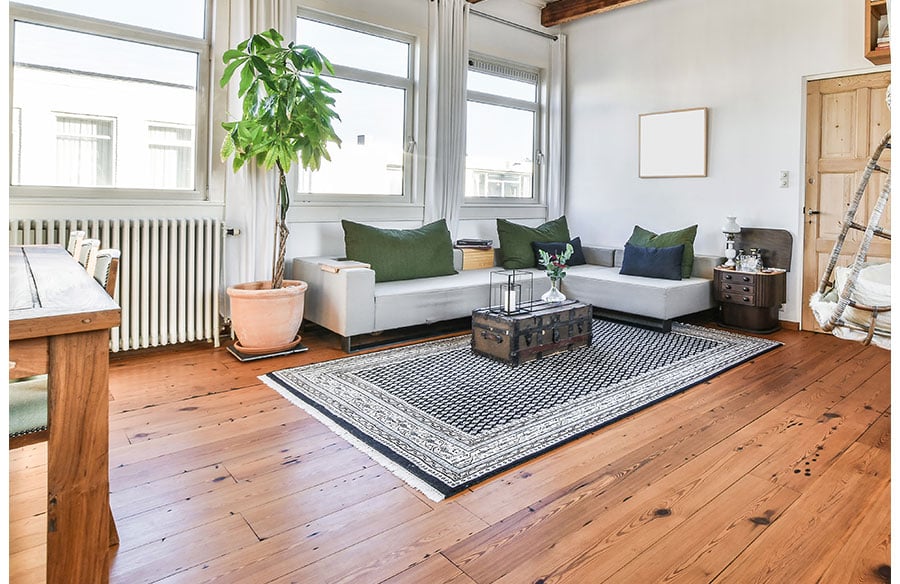
Plank width and layout can change the entire feel of a room. Narrow boards often create a more traditional appearance, while wider planks can make the floor feel more custom and modern. Layout also matters, especially in open-concept homes where the flooring connects multiple rooms.
Homeowners planning a larger remodel may want to compare different options for hardwood floor installation, including plank width, installation method, board direction, and transitions between rooms.
Flooring Layout Ideas
Standard Straight Layout: This is the most common layout and works well in nearly any home. Running boards with the longest wall can help make the room feel larger.
Wide Plank Flooring: Wide planks create a cleaner, more expansive look. They can work especially well in larger rooms and open floor plans.
Herringbone or Chevron: Patterned hardwood layouts create a more decorative, architectural feel. These are often used in entryways, dining rooms, or formal living areas.
Mixed Width Boards: Using boards of different widths can create a more custom, old-world, or rustic appearance.
For open layouts, keeping the direction of the floor consistent whenever possible can help the home feel more connected and avoid awkward transitions.
4. Match the Finish to Your Lifestyle
The finish protects the hardwood and affects how the floor looks over time. A glossy finish can feel polished and formal, while a matte or satin finish usually creates a softer, more natural appearance. Lifestyle should play a big role in this decision.
Finish Options to Consider
Matte Finish: Matte finishes are popular for modern interiors and tend to hide small scratches and dust better than high-gloss finishes.
Satin Finish: Satin is a balanced choice that gives the floor a slight sheen without looking overly shiny.
Semi-Gloss Finish: Semi-gloss creates a more reflective surface and can work well in traditional spaces, but it may show imperfections more easily.
Water-Based Finish: Water-based finishes dry clearer and often maintain the natural color of the wood better.
Oil-Based Finish: Oil-based finishes can add warmth and depth, though they may amber over time.
Homes with pets, kids, or heavy daily traffic often benefit from a more forgiving finish, such as matte or satin.
5. Refinish Existing Floors Instead of Replacing Them
Not every flooring project requires a full replacement. In many homes, existing hardwood floors can be sanded, stained, and refinished to look completely refreshed. This can be a strong option if the wood is still structurally sound but has surface scratches, dullness, worn finish, or an outdated stain color.
Hardwood refinishing can help preserve the original material while giving the home an updated look. It also allows homeowners to change the color and sheen without removing the entire floor system.
Signs Hardwood Floors May Be Refinishable
Surface scratches: Light to moderate scratching can often be sanded out.
Faded finish: Floors that look dull or tired may simply need a new finish.
Color updates: Refinishing allows homeowners to move from orange, yellow, or dark tones to a more current stain color.
Worn traffic areas: High-use areas near kitchens, hallways, and entryways can often be restored with sanding and sealing.
Deep stains, water damage, loose boards, or repeated sanding history may require a professional inspection before deciding between refinishing and replacement.
6. Coordinate Flooring With the Rest of the Home
Hardwood floors should support the overall design of the home. Cabinet color, trim, wall paint, furniture, natural light, and architectural style all influence which flooring choices will work best.
A dark walnut floor may look beautiful in one home but too heavy in another. A light oak floor may brighten a modern kitchen but feel too casual for a formal interior. The goal is to choose flooring that feels connected to the entire space, not just one room.
Design Elements to Compare
Cabinet color
Wall paint
Baseboards and trim
Natural light
Furniture tones
Existing wood accents
Room size and ceiling height
Avoid trying to match every wood tone perfectly. A layered design often looks better when the floor complements other wood elements instead of matching them exactly.
7. Think About Long-Term Durability
Hardwood floors should be selected with long-term use in mind. The best option is not always the trendiest color or most dramatic pattern. It should also hold up to daily movement, furniture, pets, moisture exposure, and future design changes.
Professional installation is also important. Subfloor preparation, moisture checks, proper acclimation, clean transitions, and careful finishing all affect how the floor performs over time. A well-installed hardwood floor can last for decades with the right care, and many solid hardwood floors can be refinished multiple times over their lifespan.
Conclusion: Create a Floor That Fits the Home
Hardwood flooring has the power to change the way a home feels. The right wood species, stain color, plank width, layout, and finish can make a space feel warmer, cleaner, more refined, or more personal. Whether the goal is a modern update, a classic restoration, or a complete interior transformation, hardwood floors offer flexibility and long-term value.
By thinking through style, durability, and daily use, homeowners can choose flooring that does more than look good on installation day. They can create a floor that supports the way the home is lived in for years to come.