A home is more than a place where children sleep, eat, and play. For a child, it can also become the first environment where creativity feels possible. Long before children enter formal art classes or visit galleries, they begin to understand color, form, space, and expression through the rooms they live in every day.
This does not mean every family home needs a separate studio or a perfectly designed playroom. In many cases, a small table near a window, a quiet corner with art supplies, or a simple shelf of creative materials can be enough. What matters most is that children have a space where making, drawing, coloring, and imagining feel welcome.
Designing for children’s creativity is not only about decoration. It is about creating an environment that supports independence, curiosity, and visual exploration. When children know where their materials are, feel comfortable using them, and see their ideas respected, they are more likely to return to creative activities on their own.
The Home as a Child’s First Creative Environment
Children experience spaces differently from adults. A corner that seems ordinary to a parent can become a workshop, a stage, a drawing studio, or a place for storytelling. The scale of furniture, the availability of materials, the amount of natural light, and even the colors in a room can influence how children use a space.
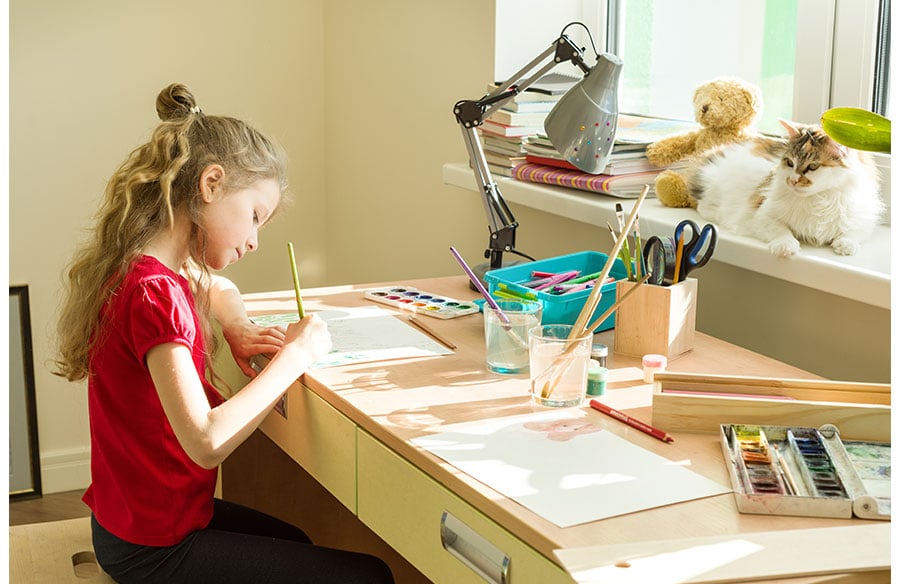
A creative area at home does not need to be large. It needs to be clear, reachable, and easy to use. A child sized table, a small storage basket, a few coloring tools, and a surface that can handle regular use can create a practical starting point.
The goal is not to design a picture perfect room. The goal is to make creativity feel like part of daily life. When art materials are hidden away or only brought out for special occasions, children may see creativity as something controlled by adults. When materials are visible and accessible, children begin to understand that creative work belongs to them too.
Why Small Creative Spaces Matter
Small creative spaces can give children a sense of ownership. A dedicated corner tells a child that their ideas have a place. This can be especially meaningful in busy homes where shared rooms serve many purposes.
Even a simple art corner can support important habits. Children learn to choose materials, begin a task, focus for a period of time, and clean up afterward. These routines build independence and responsibility while still leaving room for imagination.
A small space can also reduce creative pressure. A large blank room or an overly structured activity may feel overwhelming, but a familiar corner with simple tools feels approachable. Children can sit down, start with a coloring page, add details to a drawing, or experiment with colors without needing a full lesson or adult direction.
For families living in apartments or smaller homes, this approach is especially useful. Creativity does not require extra square footage. It requires thoughtful access.
The Role of Light, Color, and Materials
Natural light can make a creative area feel more inviting. A table near a window or a bright corner can help children see colors clearly and feel more connected to the environment around them. If natural light is limited, a soft desk lamp can still make the area feel intentional.
Color also matters, but it does not always need to be loud or intense. Some children respond well to bright, playful surroundings, while others focus better in calmer spaces. A balanced background with colorful tools, artwork, or display areas can give children visual interest without overwhelming them.
Materials should be simple and usable. Crayons, colored pencils, washable markers, paper, scissors, glue, and printable activities are often enough for everyday creativity. When materials are too precious or difficult to use, children may hesitate. When they are familiar and easy to handle, children feel more confident experimenting.
Storage is another design detail that affects use. Open baskets, low shelves, labeled containers, and trays can help children understand where things belong. A well organized space does not need to look formal. It simply needs to make starting and finishing easier.
Printable Activities as Part of the Space
Printable art activities can be a useful part of a child’s creative area because they offer structure without removing choice. A blank page is exciting for some children, but others may feel unsure about where to begin. A coloring page or simple printable activity gives them a starting point while still allowing decisions about color, pattern, and detail.
Parents and educators can keep a small folder of printable coloring pages for children’s art spaces, making it easy to offer a calm visual activity during quiet time, after school, or on weekends.
This kind of resource works well because it is flexible. A page can be colored as a short activity, added to a larger craft, used as a conversation starter, or displayed on a wall afterward. Children can return to the same type of activity in different ways depending on their mood, age, and level of interest.
In a home design context, printable activities also help keep the creative area active. A space is only meaningful when it is used. Rotating pages by season, theme, or character can refresh the area without changing the furniture or layout.
Personal Interests Make Creative Spaces More Inviting
Children are often more engaged when a creative space reflects something they already enjoy. This might be animals, vehicles, fantasy worlds, nature, favorite colors, or familiar characters. Personal connection can turn a simple activity into something a child wants to begin without being asked.
Character based activities can be especially inviting because they connect visual play with recognition and storytelling. For example, Stitch coloring pages for character inspired art time can help children bring a familiar figure into their own creative routine through color choices, backgrounds, and added details.
This does not mean a room has to be themed around one character or interest. A more flexible approach is usually better. Families can keep the main space simple and allow the activities, artwork, and materials to change over time. As children grow, their interests change, and the creative corner can grow with them.
This balance between consistency and change is important. The space should feel familiar, but not fixed. It should support the child’s current imagination while leaving room for the next idea.
Displaying Children’s Art With Care
One of the easiest ways to make children feel that their creative work matters is to display it. A small wall area, cork board, magnetic strip, or string with clips can turn finished pages into part of the room’s design.
Displaying children’s art does not need to be messy or random. A simple rotating display can keep the space fresh and give children pride in their work. It also shows that the home values process, not just polished results.
Adults can make this even more meaningful by asking children which pieces they want to display. This gives them another opportunity to make choices and reflect on their work. Some children may choose the most colorful page. Others may choose the one they spent the most time on. Both choices are valid.
In this way, the child becomes part of the design process. Their room or creative corner is not only designed for them. It begins to include their own visual voice.
Encouraging Creativity Without Overdesigning
There is a difference between supporting creativity and controlling it. A creative space should be organized enough to help children begin, but open enough to allow unexpected use.
If every activity is planned, every color is corrected, and every result is judged, the space may stop feeling creative. Children need room to make unusual choices. They may color a tree purple, add patterns to an animal, or invent a background that makes no realistic sense. These decisions are part of imaginative development.
Adults can guide without taking over. Instead of asking whether a picture is correct, they can ask what the child was thinking about. Instead of praising only the final result, they can notice effort, patience, color choices, or small details.
A well designed creative space supports this kind of freedom. It gives children tools and boundaries, but not rigid outcomes.
Making Creativity Part of Everyday Life
The best creative spaces are not saved only for special projects. They become part of ordinary routines. A child might color while dinner is being prepared, draw after school, work on a printable page during a quiet afternoon, or add a new picture to the wall after finishing it.
When creativity becomes easy to access, it becomes less dependent on adult planning. Children begin to choose art as something they can do naturally, not only as an assigned activity.
This is where design and daily life meet. A thoughtful space can shape behavior gently. It can invite children to slow down, notice details, use their hands, and express ideas visually.
The home does not need to become an art classroom. It only needs to make room for imagination in practical and repeatable ways.
Final Thoughts
Creating space for children’s art and imagination at home is not about building a perfect playroom or buying expensive materials. It is about designing small moments of access. A clear surface, simple tools, reachable storage, natural light, and a rotating set of visual activities can all help children feel that creativity belongs in everyday life.
When children have a place to color, draw, imagine, and display their work, they begin to see themselves as active makers. The space supports more than an activity. It supports confidence, independence, and the habit of looking at the world with curiosity.