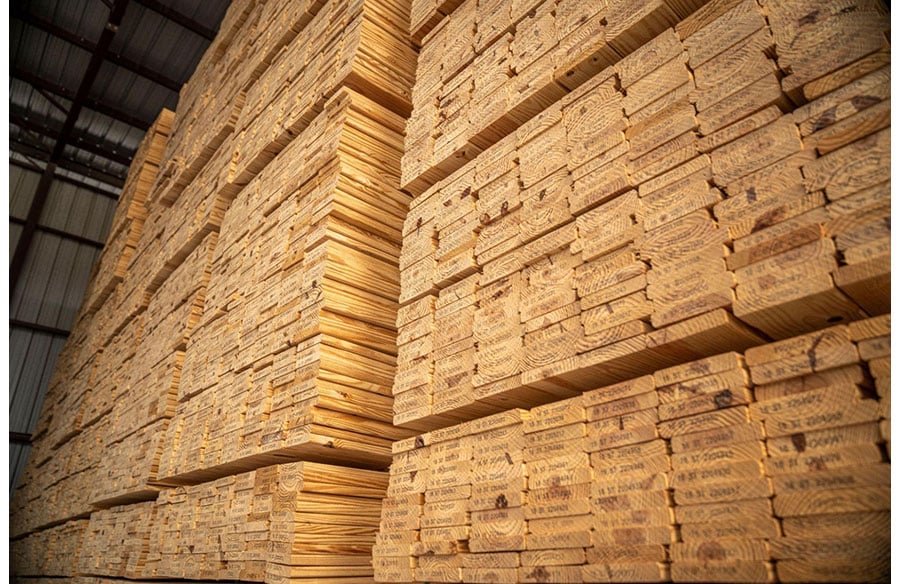
Britain has set itself an ambitious challenge: build 1.5 million new homes while dramatically reducing the carbon footprint of construction.
Increasingly, ministers believe timber can help deliver both.
The Government’s Timber in Construction Roadmap 2025 argues that greater use of structural timber could reduce the embodied carbon of buildings by between 20% and 60%, while creating demand for greener construction methods and stimulating domestic forestry and manufacturing. The document also highlights a striking imbalance: only around 9% of new homes in England are timber framed, compared with 92% in Scotland, suggesting significant room for growth.
Yet specifying more timber is the easy part.
Building the industrial capacity to support it is considerably harder.
Behind every wall panel, roof truss and engineered joist lies a complex supply chain of foresters, sawmills, timber importers, merchants, machining facilities, structural engineers and manufacturers. That industrial network receives far less attention than planning reform or housing targets, yet it may ultimately determine whether Britain’s ambitions become reality.
Recent economic forecasts suggest that challenge is becoming more acute.
The Builders Merchants Federation (BMF) recently revised its outlook for the construction sector, warning that weaker workloads, delayed project starts and subdued confidence are continuing to weigh on the building materials market. At the same time, Professor Noble Francis, Economics Director at the Construction Products Association (CPA), has warned that forecasts published by the Office for Budget Responsibility (OBR), indicate England is still likely to fall hundreds of thousands of homes short of the Government’s target during the current Parliament.
Taken together, those assessments expose an uncomfortable contradiction.
Britain wants to accelerate housebuilding and increase the use of timber, yet many of the businesses expected to deliver that growth are operating within one of the most cautious construction markets in recent years.
Capacity Cannot Be Created Overnight
Unlike political targets, manufacturing capacity cannot simply be announced.
Investment in sawmills, machining centres and engineered timber production takes years. Skilled designers, timber buyers and production engineers require experience that cannot be created overnight. Supply relationships with international timber producers are built over decades rather than procurement cycles.
That is why the modern timber merchant has become far more than a place to buy structural timber.
Companies such as Timber Merchant Harlow Timber Group illustrate how Britain’s timber industry has evolved. Established more than 90 years ago and now operating from 13 locations with more than 550 employees, the employee-owned business combines traditional merchanting with international timber sourcing, bespoke machining and engineered timber manufacturing, supporting projects from initial specification through to on-site delivery.
The transformation reflects a wider change taking place across the sector.
Today’s merchant is increasingly expected to advise on availability, coordinate specialist machining, manufacture structural components and help manage programme risk long before materials arrive on site.
The Supply Chain Begins Long Before Construction
Timber’s sustainability credentials often dominate the conversation, but sourcing remains equally important.
Britain continues to depend heavily on imported structural timber, particularly where projects require specialist grades, larger dimensions or particular species unavailable domestically in sufficient volumes.
For suppliers, procurement is no longer simply about purchasing stock.
It involves managing international supply chains, monitoring shipping schedules, responding to currency fluctuations and maintaining long-term relationships with sawmills across Europe and beyond.
Businesses such as Harlow Timber Group have developed global sourcing networks capable of supporting merchanting, manufacturing and engineered timber systems from the same supply chain, providing customers with greater certainty over availability at a time when material procurement has become increasingly complex.
That expertise is becoming more valuable as project teams seek to reduce procurement risk before work reaches site.
Manufacturing Is Becoming a Competitive Advantage
The biggest shift, however, has occurred beyond the merchant’s yard.
Modern construction increasingly depends upon precision manufacturing rather than simply material supply.
Engineered floor systems, roof trusses, bespoke mouldings and machined timber components all require specialist equipment, skilled technicians and coordinated production planning.
Architectural drawings may appear straightforward, but translating those details into repeatable manufactured components requires investment in technology, quality control and experienced production teams.
The earlier those conversations happen, the greater the opportunity to identify more efficient timber grades, practical section sizes or manufacturing methods before designs become fixed.
It is one reason why manufacturers are becoming increasingly involved during design rather than procurement.
Better Specification Strengthens the Entire Market
The Government’s roadmap also identifies specification as an area where the industry can make immediate improvements.
It notes that structural engineers and designers frequently default to imported C24 structural timber where C16 would comfortably satisfy engineering requirements. While C24 remains essential for higher structural loads and longer spans, unnecessary over-specification can place additional pressure on imported supply chains without improving building performance.
Better collaboration between architects, engineers and suppliers can help avoid those inefficiencies.
Choosing the right material is not simply about selecting the strongest product available.
It is about selecting the most appropriate product for the application.
That philosophy benefits projects, clients and the wider supply chain alike.
Organisations such as Timber Development UK continue to play an important role in promoting best practice, competency and innovation across the sector, recognising that increased adoption of timber will require investment not only in products, but also in skills, education and technical guidance.
Confidence Will Determine Britain’s Timber Future
There is little doubt that timber will play a far greater role in Britain’s built environment over the coming decade.
The environmental argument is compelling.
Factory-manufactured timber systems can shorten construction programmes, improve quality and reduce waste. Government policy increasingly supports greater adoption, while clients continue to place greater emphasis on embodied carbon and sustainable procurement.
The question is no longer whether Britain should build more with timber.
It is whether the businesses responsible for sourcing, processing and manufacturing it will have the confidence to invest ahead of demand.
Factories, machinery and skilled people all require long-term certainty.
Without that confidence, the industry risks reaching the point where demand accelerates faster than supply can respond—bringing with it longer lead times, higher costs and constrained capacity.
For businesses already investing in the future of Britain’s timber industry, including Harlow Timber Group, the opportunity is significant.
If ministers are serious about making timber central to Britain’s housing strategy, supporting the supply chain behind the material may ultimately prove just as important as encouraging developers to specify it.