For energy and construction professionals managing critical infrastructure, power system failures represent a direct threat to operational continuity. While budget constraints make cost a priority when selecting maintenance services, the lowest bid often carries hidden risks. Finding the right critical power system maintenance provider means identifying companies that offer transparent pricing, proven reliability and comprehensive service coverage without sacrificing quality for short-term savings.
Evaluation Criteria for Critical Power Maintenance Providers
Selecting a maintenance partner requires a systematic approach that weighs multiple performance factors against budget realities. Organizations managing critical power infrastructure face a complex decision matrix where service quality, technical capabilities and cost considerations intersect. The following criteria were used to compare providers and identify the best value for critical power infrastructure needs.
- Affordability: Transparent pricing structures eliminate surprise fees and allow accurate budget forecasting. Cost-effective service delivery balances competitive rates with comprehensive coverage.
- Scope of services: Comprehensive coverage should include emergency response, routine inspections, battery management and system upgrades. Full-service providers eliminate the complexity of coordinating multiple vendors for different maintenance needs.
- Response time: There should be guaranteed response windows for emergencies and clear service-level agreements. Providers should specify both acknowledgment times and on-site arrival commitments for critical failures.
- Technician expertise: Certified professionals offer brand-independent training and experience across multiple equipment types. Technical teams should demonstrate current knowledge of evolving battery technologies and power management systems.
- Nationwide coverage: Multilocation service capabilities support distributed operations without geographic limitations. Consistent service quality across regions simplifies vendor management for organizations with multiple facilities.
4 Top-Ranked Critical Power Maintenance Providers
The following companies represent leading options for organizations seeking cost-effective critical power maintenance with proven track records. Each provider has been evaluated against the criteria above to help facility managers make informed decisions.
1. Concentric
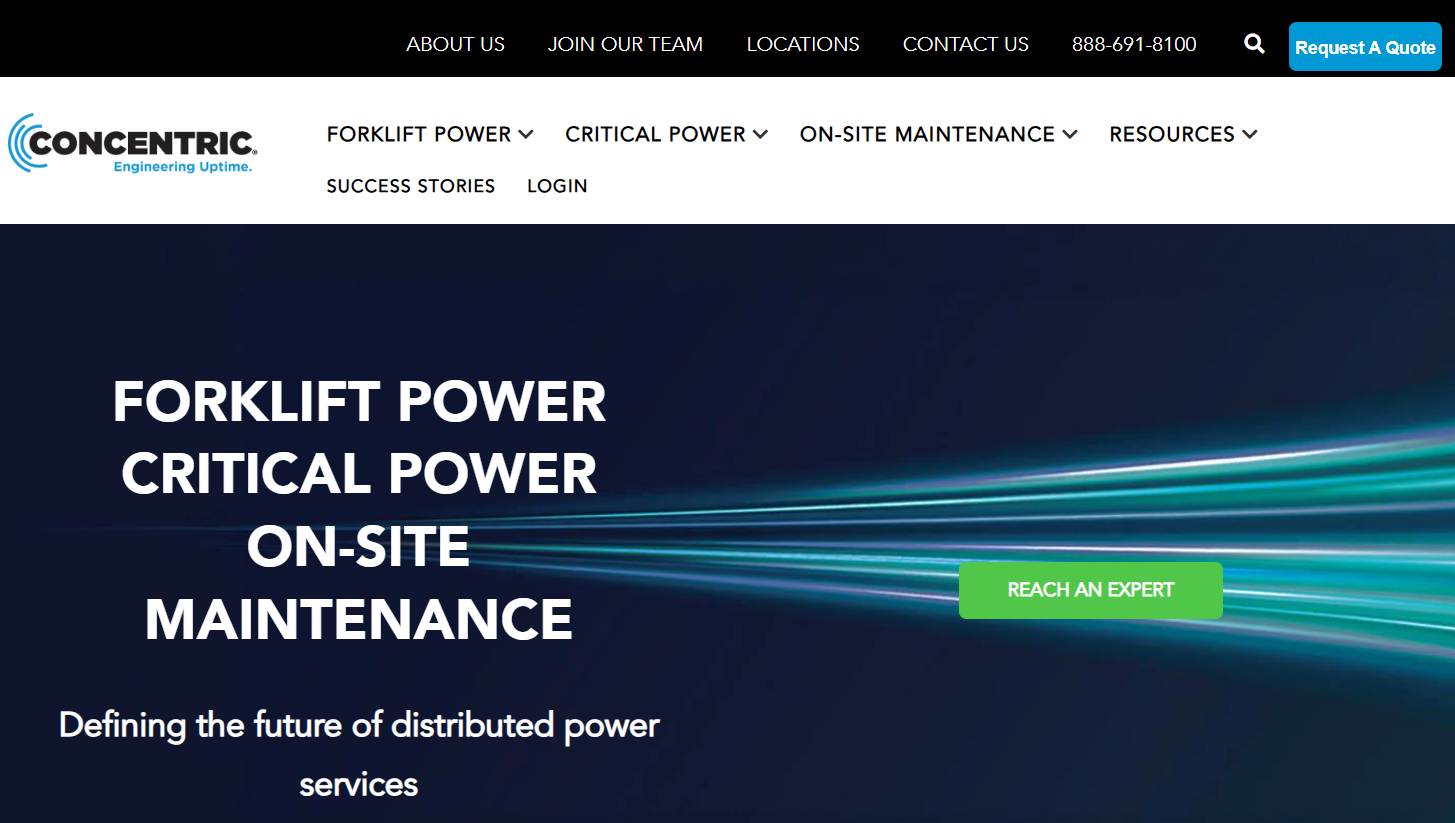 Concentric operates as a brand-independent national provider of critical power maintenance. It covers UPS systems, generators, batteries and energy storage for utility, industrial, data center and telecom facilities. With over 25 years of operational experience, the company has developed expertise spanning multiple equipment manufacturers and power system configurations.
Key Features
- PerpetualPOWER program: The company packages ongoing maintenance into a fixed monthly fee structure, giving facility managers predictable costs rather than variable service billing. This approach eliminates budget uncertainty and allows accurate long-term planning.
- Advanced technician tiers: Concentric employs Level 3 and Level 4 specialists trained specifically for critical power systems, offering technical depth beyond that of standard maintenance crews. These advanced tiers handle complex troubleshooting and system optimization challenges.
- Brand independence: Service teams work across all major equipment brands rather than limiting solutions to a single manufacturer’s catalog. This approach allows facilities to select maintenance strategies based on actual needs rather than vendor product lines.
- Lithium-ion battery expertise: Specialized maintenance programs address the unique handling and safety requirements of lithium-ion battery systems, including training support for facilities transitioning to newer battery technologies.
2. Nationwide Power Solutions
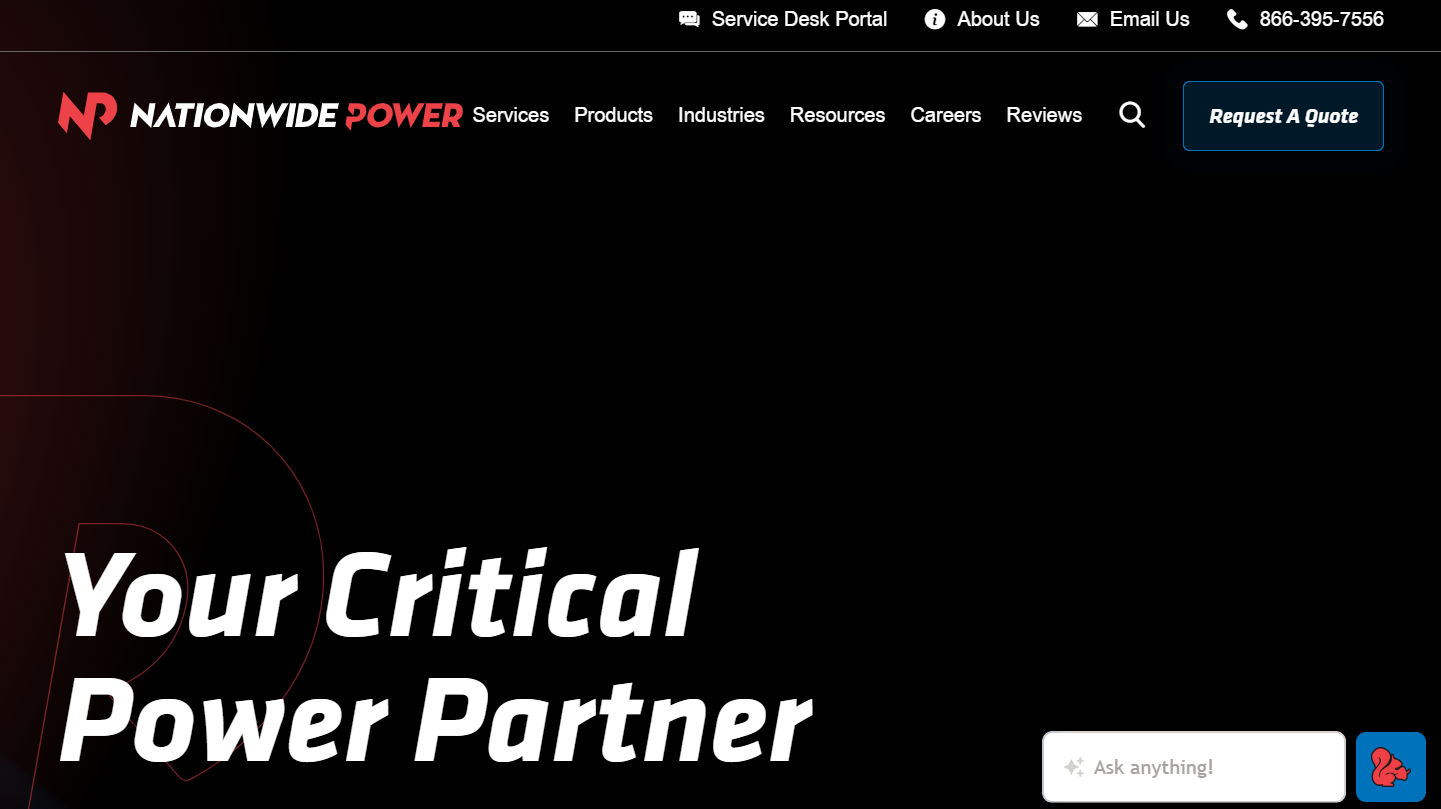
Nationwide Power Solutions has built its business model around independent uninterruptible power supply (UPS) and critical power service delivery. The company brings substantial technical depth to complex energy protection challenges through its specialized focus and experienced personnel.
Key Features
- Experienced field engineering: The in-house team averages more than 22 years of industry experience, providing deep knowledge of legacy systems and modern power protection technologies.
- Board-level testing capabilities: The company maintains its own electronic testing and repair laboratory equipped with component-level diagnostic capabilities. This infrastructure supports both emergency response and preventive maintenance beyond what standard service teams offer.
- Independent service model: Operations focus strongly on UPS and critical power. This specialization ensures technicians maintain current expertise in power protection equipment.
- Technical intervention capacity: Infrastructure supports facilities requiring specialized diagnostic work beyond routine maintenance protocols, including complex system failures and performance optimization projects.
3. National Power
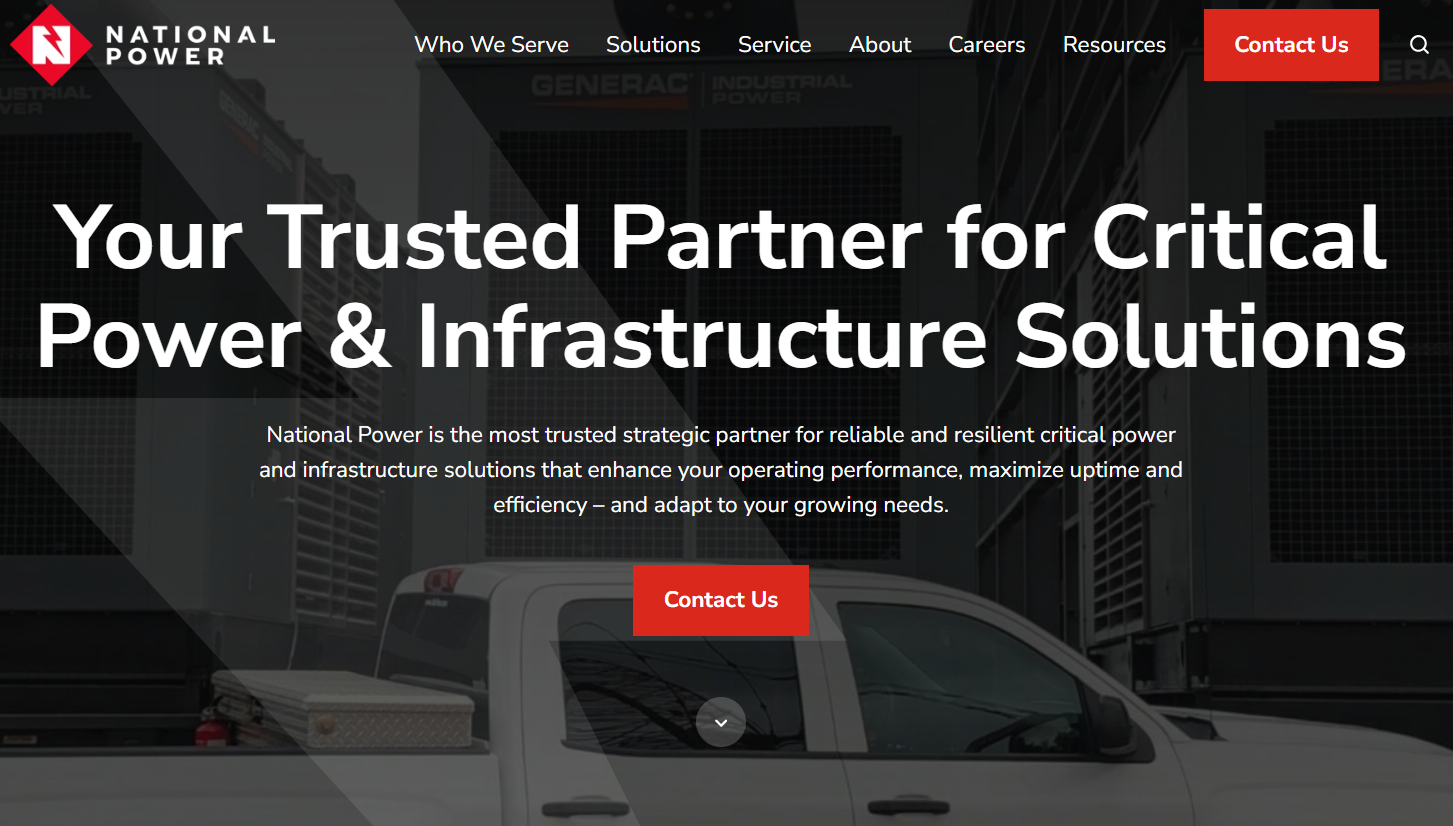 National Power provides nationwide maintenance and emergency support for generators, UPS systems, switchgear and direct current power infrastructure. The company focuses its service delivery on data centers, broadband facilities and telecommunications operations. Continuous power availability directly impacts these industries’ business operations, potentially minimizing the need for costly repairs.
Key Features
- Proactive maintenance philosophy: The company emphasizes preventive intervention backed by continuous monitoring and scheduled inspections. This approach identifies potential failures before they cause operational disruptions.
- Local team positioning: Emergency response operates through locally positioned service teams rather than centralized dispatch operations. This model reduces response times by positioning technicians within regional service territories.
- 24/7/365 availability: Continuous emergency response capability ensures facilities can reach qualified technicians at any time, day or night. Round-the-clock coverage addresses the reality that power failures do not respect business hours.
- Industry vertical focus: The company has specialized experience serving data centers, broadband and telecommunications facilities, where power reliability requirements exceed standard commercial applications.
4. Critical Power Solutions
 Critical Power Solutions provides nationwide commercial generator services, including preventive maintenance, emergency repairs, installations and portable power deployments. The company serves healthcare, data center, manufacturing and commercial clients with an emphasis on keeping facilities both compliant and operational.
Key Features
- Generator specialization: Nationwide coverage focuses specifically on commercial generator maintenance and repair rather than broader power system categories. This focused approach develops deep expertise in generator-specific challenges.
- Cross-industry service: The company serves a range of critical industries, including healthcare and data centers, rather than specializing in a single vertical. Experience across sectors provides exposure to diverse operational requirements and compliance standards.
- Portable power deployment: Service offerings include temporary power solutions, along with standard preventive maintenance plans. This capability addresses situations where primary systems require extended downtime for repairs or upgrades.
- Woman-owned certification: The company holds certified woman-owned business status, which may support organizations with supplier diversity requirements or preferences for certified vendors.
Comparative Summary Table
This table provides a side-by-side comparison of each provider across key evaluation criteria to help facility managers quickly assess which companies align with specific operational requirements.
| Provider | Nationwide Coverage | Technician Expertise | Specialized Programs | Emergency Response |
| Concentric | Yes | Level 3/4 specialists | Lithium-ion battery programs | Yes |
| Nationwide Power Solutions | Yes | Over 22 years average | Board-level testing lab | Yes |
| National Power | Yes | Industry certified | Data center focus | Yes |
| Critical Power Solutions | Yes | Generator specialists | Portable power deployment | Yes |
Core Risks in Critical Power Systems
Power infrastructure failures create cascading operational and financial consequences that extend far beyond the immediate costs of equipment repair. Understanding these risks helps facility managers prioritize maintenance investments and evaluate provider capabilities based on real exposure rather than abstract service descriptions. Organizations face growing pressure to defend critical infrastructure from both technical failures and external threats while maintaining operational efficiency.
Balancing Maintenance Budgets and Reliability Risks
Cost control represents a legitimate concern for any facility management operation, but maintenance budget decisions carry weight that extends beyond the current fiscal year. Lower-cost service contracts may deliver adequate results under normal operating conditions while leaving systems vulnerable during peak demand or emergencies.
The calculation becomes more complex when considering that maintenance provider selection directly impacts equipment longevity, warranty compliance and insurance requirements. Facilities that prioritize short-term cost savings over comprehensive service coverage often face higher total ownership costs as deferred maintenance compounds into expensive emergency repairs and premature equipment replacement.
Calculating the True Cost of Unexpected Downtime
Power outages have financial consequences that cost businesses billions annually across direct and indirect impacts. Direct costs include lost production, spoiled inventory and emergency repair expenses. Indirect expenses encompass reputational damage, customer attrition and regulatory penalties for service interruptions.
A manufacturing facility losing power for four hours may experience production losses measured in tens of thousands of dollars, while data centers face even steeper penalties when uptime guarantees to clients are breached. These figures make preventive maintenance programs economically compelling compared with reactive repair strategies.
Navigating Pricing Models and Service Comparisons
Service provider pricing structures vary significantly across the critical power maintenance industry, making direct comparisons challenging without careful analysis. Some companies quote low baseline rates but add surcharges for after-hours service, emergency response or specialized equipment support. Others offer flat-rate contracts that include comprehensive coverage but may price services higher than necessary for facilities with minimal emergency risk profiles.
Facility managers evaluating proposals should request itemized breakdowns showing labor rates, parts pricing, response time guarantees and any conditions that trigger additional fees. Transparent providers welcome detailed pricing discussions and provide clear explanations of how their fee structures align with service delivery models.
Frequently Asked Questions
The following questions address common concerns facility managers encounter when evaluating critical power maintenance providers and highlight key considerations for making informed decisions.
What are the most important factors when choosing a critical power maintenance provider?
Response time guarantees, technician expertise and transparent pricing represent the most critical evaluation factors. Nationwide coverage matters for multisite operations, while specialized programs, such as fixed-fee maintenance packages or advanced technician tiers, demonstrate the provider’s commitment to comprehensive service delivery. Facilities should prioritize providers that offer clear service level agreements and itemized cost breakdowns.
Why is preventive maintenance for critical power systems important?
Preventive maintenance reduces downtime risk, extends equipment life and maintains warranty compliance. Regular inspections identify potential failures before they cause operational disruptions, allowing repairs during scheduled maintenance windows rather than emergencies. The cost of scheduled maintenance programs remains significantly lower than the costs of emergency repairs and the productivity losses associated with unplanned outages.
Selecting a Strategic Maintenance Partner
Critical power system maintenance decisions extend beyond simple cost comparisons to encompass long-term operational strategy. The right provider delivers value through reduced downtime, extended equipment life and predictable maintenance costs that support accurate budget planning. Facility managers who evaluate providers based on comprehensive criteria rather than initial price quotes position their organizations for sustained operational reliability and lower total cost of ownership.