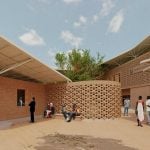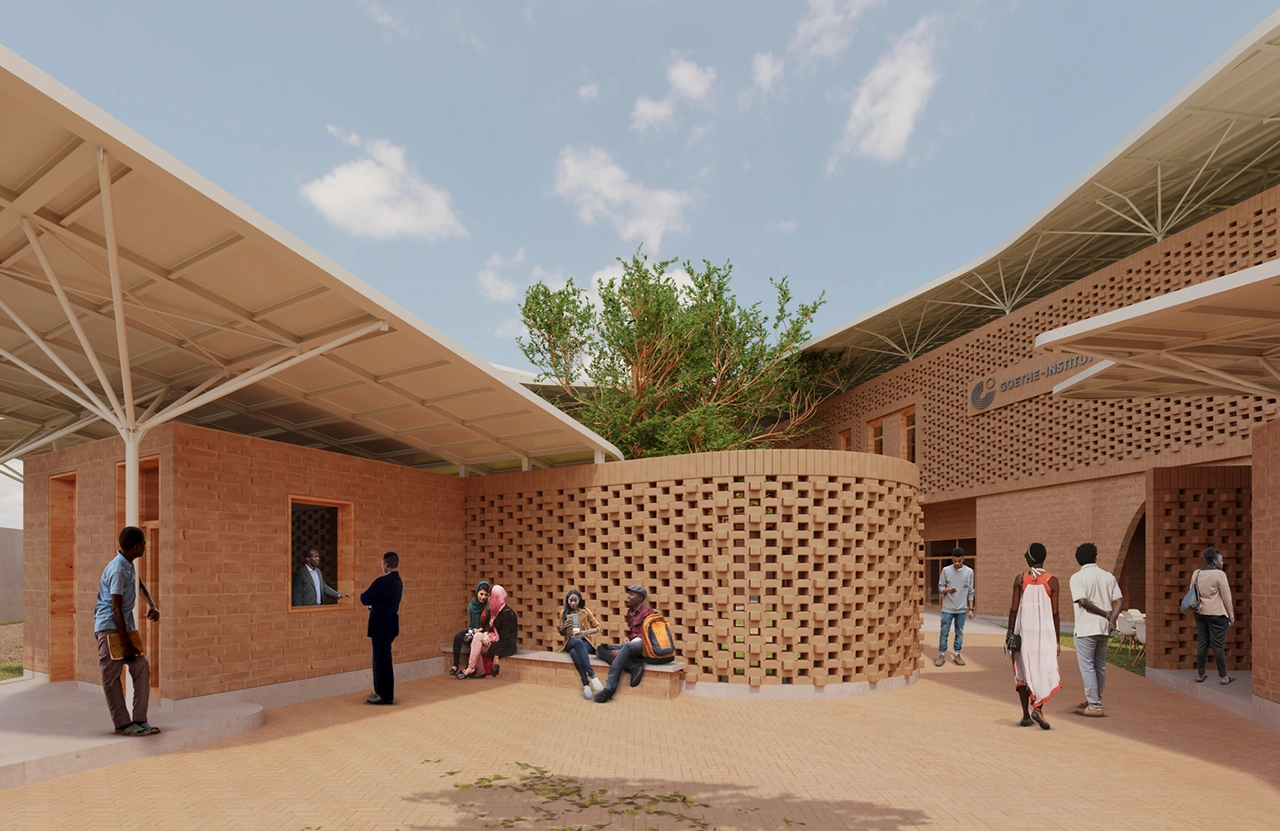
The completion of the Goethe-Institut (fig.1) in Dakar, Senegal, designed by Diébédo Francis Kéré and his practice Kéré Architecture, marks a significant shift in how cultural institutions are conceived, constructed, and experienced. More than a building, it represents a new architectural language rooted in climate responsiveness, local craftsmanship, and cultural dialogue. As the first purpose-built Goethe-Institut in over 60 years of the organization’s global presence, the project signals a departure from adaptive reuse toward a deeply site-specific and socially embedded architecture. (Kéré Architecture, 2022).
A Cultural Institution Reimagined
Starting fresh in Dakar, the Goethe-Institut broke from its usual practice of using adapted spaces elsewhere. Instead, it built an entirely new center dedicated to culture, a move unseen before in its global network. This shift signals something larger: a deliberate effort to reshape how cultural dialogue works today. (ArchDaily, 2026).
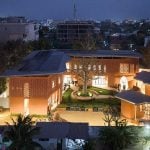
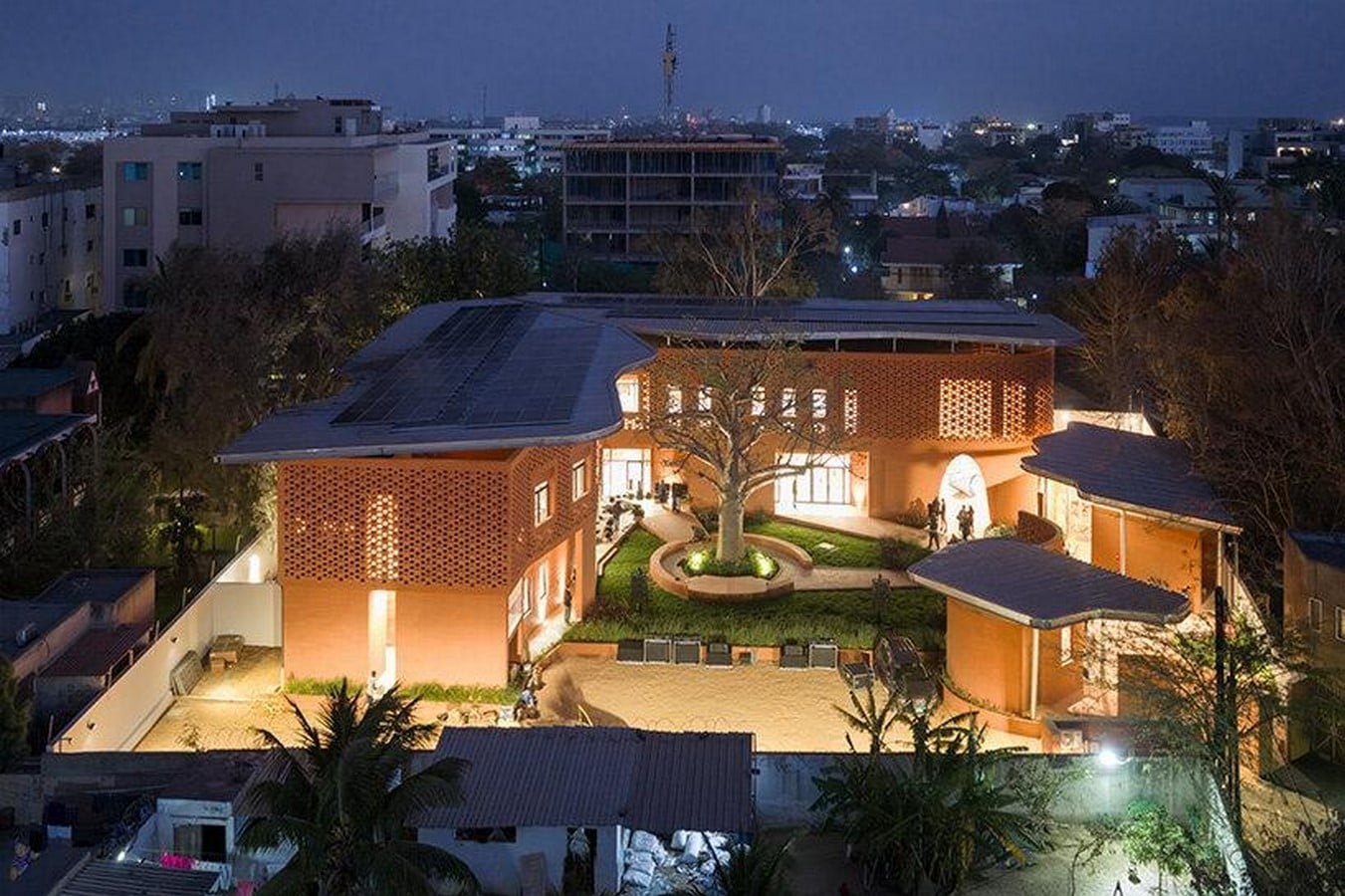
As shown in fig 2, the Goethe Institut is surrounded by greenery in a quiet part of Dakar, the structure balances openness to visitors with respect for nearby homes. Though set within a dense urban fabric, it hosts art displays, lectures, cultural events, and casual meetings, blending learning functions with community life. Its layout invites movement through open spaces while maintaining privacy where needed. (World-Architects, 2026).
Function follows flow, shaping rooms that adapt easily from one use to another. Light filters through high windows, softening the walls during the day. Each zone connects without forcing interaction, allowing activities to unfold naturally. Space feels contained yet never closed off. Materials stay simple: concrete, glass, and timber define surfaces without distraction. From morning until evening, different groups pass through, using areas in their own way. What emerges is neither fully institutional nor purely domestic, but something shifting gently between both. Interaction shapes the architecture, drawing people into dialogue, bridging traditions, and folding structures into their surroundings. What matters here is not containment but expression: the walls do not store culture, they enact it.
Spatial Organization Architecture as Gathering
Open space shapes the heart of this design, a layout drawn from African architectural roots and climate-responsive practice. Two main sections form the structure, curving around a courtyard filled with air and light, centered on a baobab. This tree carries cultural weight, long tied to community life and shared meetings.
At its core, the courtyard shapes movement through subtle guidance rather than rigid paths. Views emerge gradually, caught within carefully placed openings. Cooling happens quietly, driven by airflow that needs no machinery. Social life gathers here, not by design alone but by invitation embedded in space. Architecture does not act as an object, but as a catalyst, drawing people into shared moments without announcement.
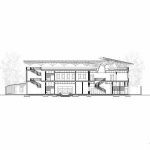
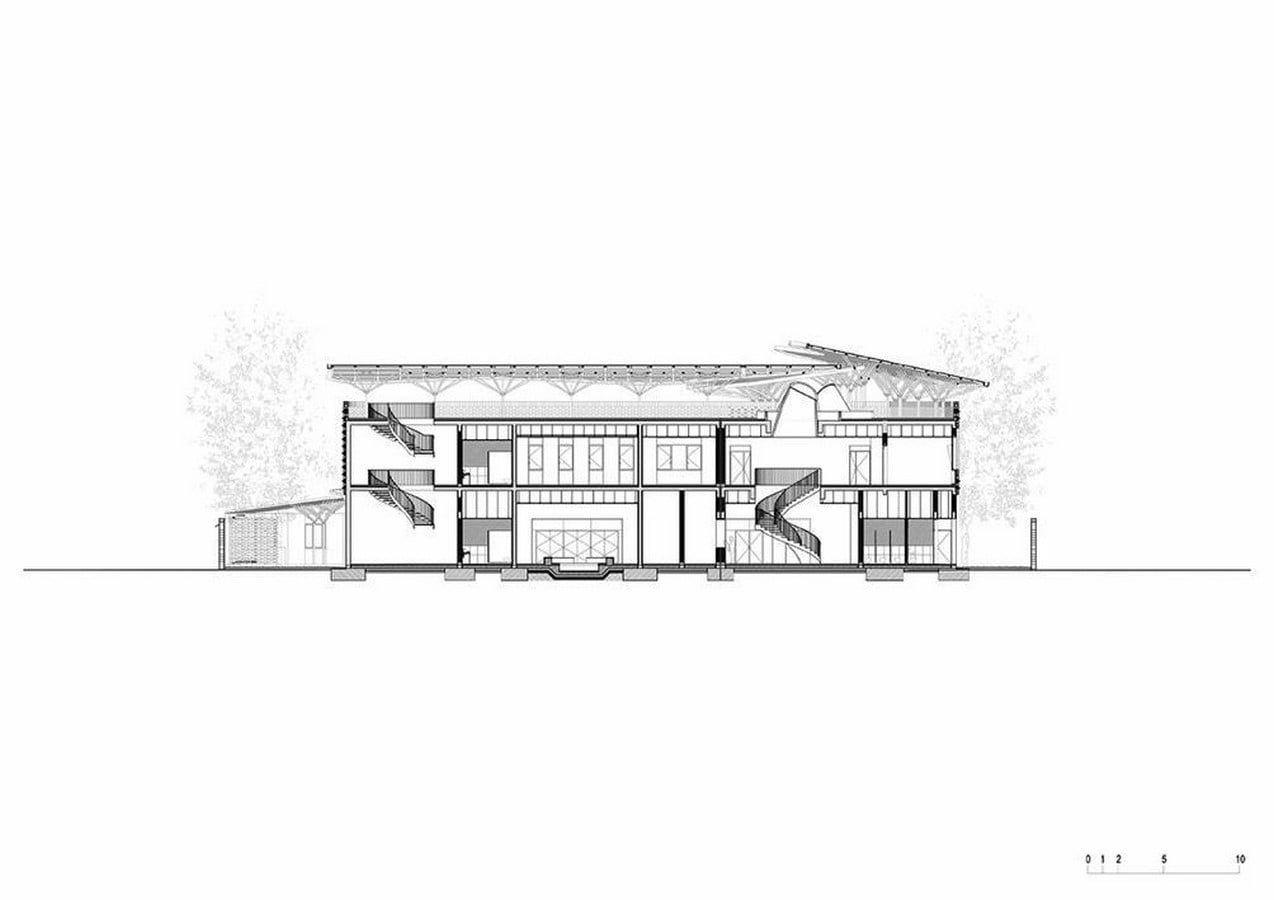
Across two tiers runs the distribution of the program.
On the ground level, public areas include an auditorium alongside a library. A café sits connected to exhibition zones. These shared facilities open directly to entry points. Spaces encourage movement between activities. Gathering spots mix with quiet corners below.
First floor: Administrative offices and classrooms.
Roof level:Accessible communal space supported by tree-like columns (Kéré Architecture, 2022).
This layout shows careful organization of open areas, partly shared zones, and closed-off sections, all while keeping spaces connected. People move easily through them because divisions are soft. Flow stays uninterrupted even where access changes.
Building With Earth Materials
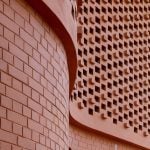
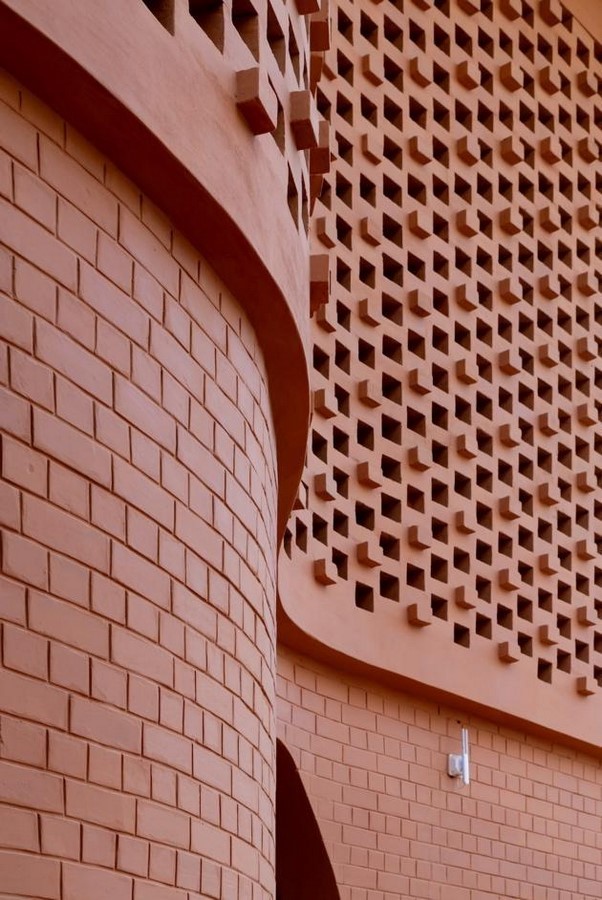
One of the most defining aspects of the Goethe-Institut Dakar is its use of locally sourced materials. Built with laterite and compressed earth bricks found nearby, the structure grounds itself in place ecologically and culturally. Earth does more than look good; it works with a strong ability to store heat, which helps stabilize interior conditions where temperatures often rise throughout the year. (ArchDaily, 2026).
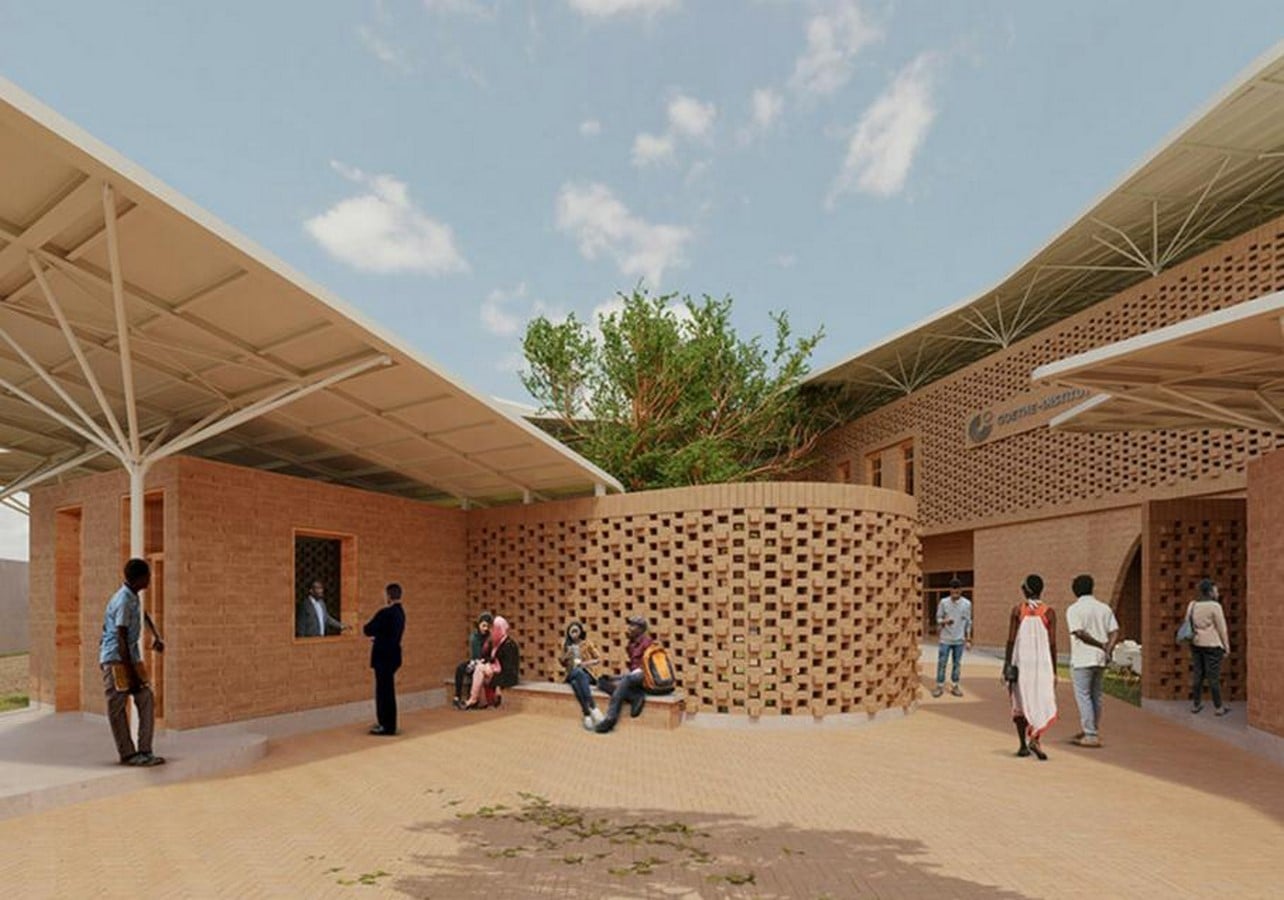
The façade acts like a porous covering, built from pierced clay units that allow daylight and breeze to pass through. As a result, the building can breathe, cutting down on artificial climate control. Instead of flat surfaces, shifting patterns, shade, and material depth. (Designboom, 2026).
What shapes Kéré’s work is a belief that buildings must grow out of what a place already holds: its materials, its ways of knowing, not foreign blueprints. From this comes a practice rooted in immediacy, shaped by context instead of distant ideals. (Designboom, 2026).
Climate Responsive Passive Design
The project demonstrates a strong commitment to climate-responsive design through low-tech yet effective strategies.
Key strategies include:
- Perforated façadesfor cross-ventilation
- Deep overhanging roofs for solar shading
- Courtyard cooling through airflow and vegetation
- Thermal massfrom earth materials
The roof structure, supported by tree-like columns, floats above the main building, allowing hot air to escape while shading interior spaces (Arquitectura Viva, 2023).
This layered roof system reinterprets vernacular strategies in a contemporary form, achieving both environmental performance and architectural expression. It is particularly relevant for regions with similar climatic conditions, where passive design can significantly reduce energy consumption.
Craft Collaboration Local Knowledge
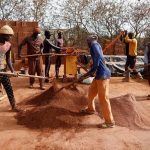
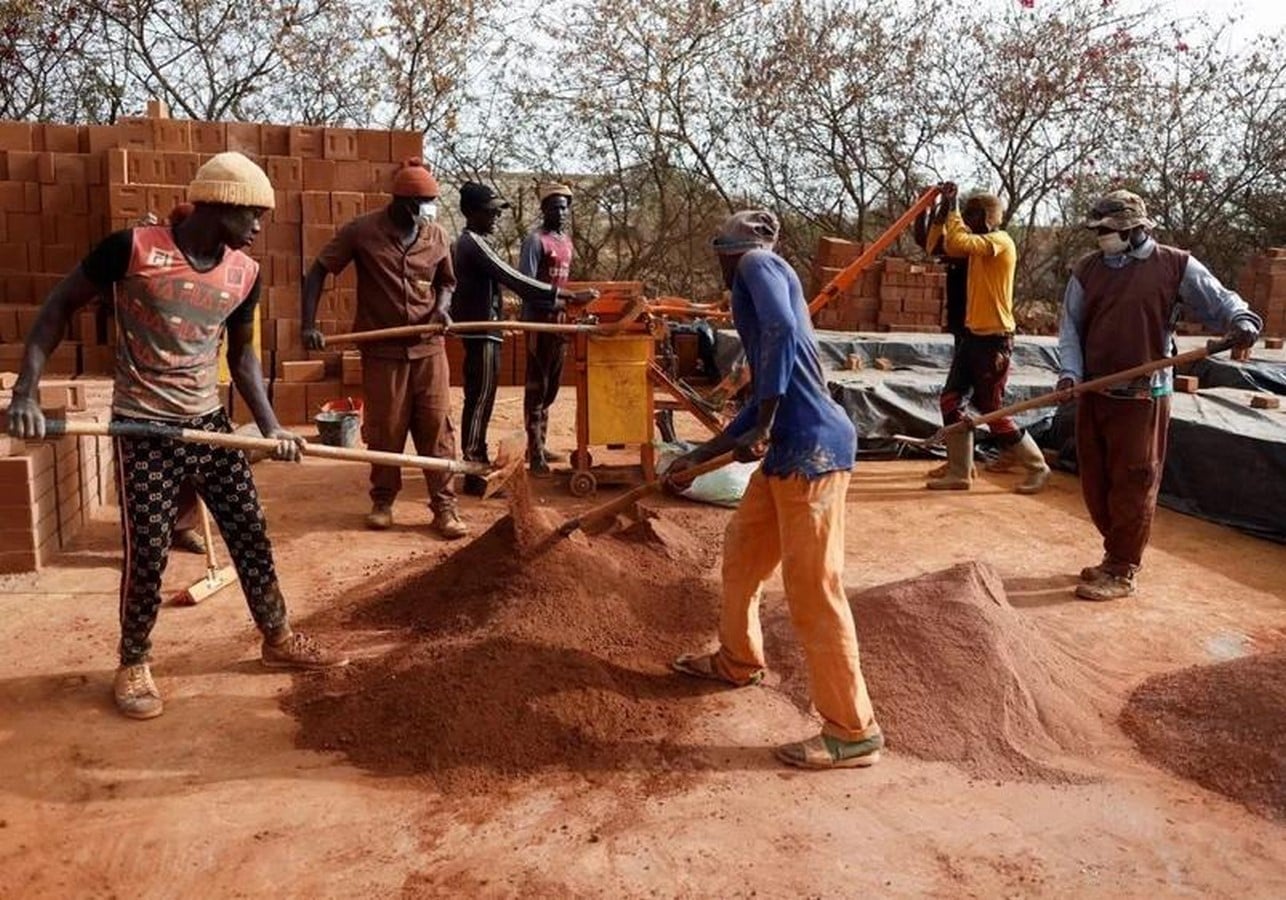
What stands out most is how the project took shape. Built through a partnership between the Goethe-Institut Dakar, local craftspeople, engineers, and community members, the structure became a space where learning moved hand-in-hand with construction. Instead of top-down planning, insights flowed both ways as walls rose.
Each phase included shared decisions. (Designboom, 2022). Knowledge wasn’t transferred; rather, it grew within daily work. The result? A building shaped by cooperation, step by step. Central to Kéré’s work is a method shaped by involvement. Rather than follow standard hierarchies, his projects unfold through shared effort. Construction becomes less about authority, more about community shaping space together. Earth-based methods, long overlooked for factory-made alternatives, gain new worth through this approach and reduced embodied energy while supporting local economies and preserving craftsmanship.
Architecture as Cultural Translation
The Goethe-Institut Dakar functions as a space of cultural translation between Germany and Senegal, and between global and local architectural practices.
Kéré’s design embodies what can be described as a hybrid architecture:
- Rooted in vernacular African traditions
- Adapted to contemporary programmatic needs
- Engaged with global sustainability discourse
This synthesis enables the building to serve as a cultural emblem while also operating as a functional space. Rather than falling into the trap of design-driven architecture, it focuses on flexibility, access for diverse users, and one where lived reality shapes outcomes. Freed by design, the structure draws in many kinds of people: creators, learners, office staff, and passersby. Its layout, clear and flexible, supports different ways of moving through and using space. (World-Architects, 2023).
Critical Reflection
Though praised across regions, the Goethe-Institut Dakar invites closer scrutiny of its underlying effects.
Surprisingly, calling a building “purpose-built” makes us wonder: will it last, or just get stuck in one role? Though this design fits well within its surroundings now, fixed-function spaces may struggle later – unlike reused buildings, which shift more easily with changing needs.
Yet another issue emerges when reliance on regional resources and workers is considered; despite its appeal, success here frequently rests on access to trained artisans. Where expertise fades or goes unrecognized, expansion becomes difficult to sustain.
Operating at last within a wider geopolitical context, the initiative embodies Germany’s cultural footprint across West Africa. Though fostering dialogue, it simultaneously reveals imbalances rooted in global cultural structures. Power shapes these exchanges more than neutrality ever could. Still, Kéré’s approach lessens such issues through shared effort, broad participation, and a mindful relationship with nature.
Not just walls and roofs, the Goethe-Institut in Dakar breathes conversation through its design. Though rooted in regional traditions, it speaks to wider architectural questions. Because earth bricks were chosen instead of concrete, thermal comfort improves while honoring craft knowledge. Where passive cooling shapes airflow, ceilings rise like open hands beneath shading roofs. Even before completion, community workshops influenced spatial layouts, which emerged slowly, shaped by exchange. So rather than impose form, the structure listens first, then responds.
What stands out is how it questions dominant ideas in architecture. Rather than pushing one-size-fits-all answers, it shows why shaping design through connection to location matters more than imposing forms onto it.
What if simplicity speaks louder than grand designs? In fast-growing areas, buildings gain value not through intricate forms, but through attention to place and weather patterns, because people shape spaces more than plans ever could. Sometimes clarity comes from restraint rather than excess.
Reference List:
ArchDaily (2026) . Goethe-Institut Dakar by Kéré Architecture. Available at: https://www.archdaily.com/1040794/goethe-institut-senegal-kere-architecture
Arquitectura Viva (2023) Goethe-Institut in Dakar. Available at: https://arquitecturaviva.com/works/goethe-institut-en-dakar
Designboom (2026) Kéré Architecture designs the Goethe-Institut in Senegal. Available at: https://www.designboom.com/architecture/kere-architecture-goethe-institut-senegal-dakar-organization-purpose-built-home/
Fig 1: Designboom (2026) Entrance of the Goethe-Institut Available at: https://www.designboom.com/architecture/kere-architecture-goethe-institut-senegal-dakar-organization-purpose-built-home/
Fig 2: Arch Daily, (2026) The Goethe-Institut. Available at: https://www.archdaily.com/1040794/goethe-institut-senegal-kere-architecture
Fig 3: Baan I (2026) Earth block facade
Available at: https://www.designboom.com/architecture/kere-architecture-goethe-institut-senegal-dakar-organization-purpose-built-home/
Fig 4: Arch daily (2026) Section of the Goethe Institut. Available at: https://www.archdaily.com/1040794/goethe-institut-senegal-kere-architecture
Fig.5 Bensemra Z (N.d.) Local craftspeople. Available at: https://immobilier.lefigaro.fr/article/ces-architectes-senegalais-qui-preferent-la-terre-au-beton_4122a8f8-b710-11eb-9a6f-8b2fa08cdb3c
Kéré Architecture (2022) Goethe-Institute Dakar Project Description. Available at: https://www.kerearchitecture.com/work/building/goethe-institut-dakar
World-Architects (2026) Goethe-Institute Dakar by Kéré Architecture. Available at https://www.world-architects.com/en/architecture-news/building-of-the-week/kere-goethe-institut-dakar