Modern living has quietly transformed into something far more fluid than it used to be. People are no longer tied to one city, one job, or even one lifestyle for long periods of time. Instead, movement has become part of everyday life. Whether it is shifting for work, education, or personal growth, relocation is now a recurring experience rather than a rare event. This shift is forcing architecture to evolve in ways that were not necessary before.
In this evolving landscape, relocation is not just about moving belongings from one place to another. It involves coordination, timing, and often a fair amount of stress. That is why many individuals rely on professional services like Buzz Me Removals to handle logistics efficiently while they focus on adjusting to a new environment. When relocation support aligns with thoughtful architectural design, the entire process becomes significantly smoother and less overwhelming.
Traditionally, buildings were designed for permanence. Homes were meant to last generations, with layouts that assumed stability and long term occupancy. That assumption no longer reflects how people live today. The challenge now is creating spaces that feel stable while also being ready for change. It is not just about how a space looks, but how easily it adapts when life shifts direction.
Role of Architecture in Supporting Relocation
One of the biggest drivers behind this transformation is the rise of remote work. When people are no longer tied to a physical office, they gain the flexibility to relocate more often. While this freedom is empowering, it also introduces practical challenges. Packing, storing, and reorganizing belongings becomes a repeated cycle that can quickly become exhausting without the right support systems in place.
Architecture has the potential to reduce this friction in meaningful ways. By focusing on adaptability, designers can create environments that support mobility rather than resist it. Modular layouts are a strong example of this approach. A living room can function as a workspace during the day and a relaxation zone at night, while bedrooms can incorporate flexible storage solutions that evolve with changing needs.
This kind of design thinking reduces the effort required during each move. When spaces are already built to adapt, there is less need for constant rearrangement or additional furniture. The result is a smoother transition process that saves both time and energy.
Smart Storage as a Core Design Element
Storage has become one of the most important aspects of modern architectural design. Today’s lifestyles involve a wide range of possessions, from work equipment and digital devices to personal collections and everyday essentials. The challenge is not just about creating more space, but about designing storage that works intelligently within the environment.
Integrated storage solutions are becoming increasingly popular. Instead of relying on separate cabinets or bulky furniture, storage is built directly into the structure of the space. Walls can include recessed shelving, beds can feature hidden compartments, and staircases can double as storage units. These solutions maximize space without compromising on design.
This approach is particularly useful for people who move frequently. When storage is built into the architecture, it reduces the number of separate items that need to be transported. This not only simplifies the moving process but also creates a more organized and visually appealing living environment.
Urban Living and Compact Design Strategies
As cities become more crowded, living spaces are getting smaller. This has led to the rise of compact design strategies that prioritize efficiency without sacrificing comfort. Micro apartments and modular housing units are becoming increasingly common, especially in urban areas where space is limited.
These spaces rely heavily on smart design principles. Foldable furniture, sliding partitions, and multi purpose layouts allow residents to make the most of every square foot. A single room can serve multiple functions throughout the day, adapting to different needs as they arise.
For individuals who relocate often, compact design offers a clear advantage. With fewer items and more efficient layouts, the process of packing and moving becomes much simpler. It also encourages a more intentional approach to living, where every item has a purpose and a place.
Emotional and Psychological Side of Moving
Relocation is not just a physical process, it also has a strong emotional component. People form attachments to their homes and belongings, and moving can disrupt that sense of stability. This is where thoughtful architectural design can make a meaningful difference.
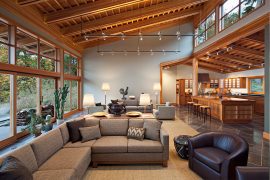
Spaces that are well organized, filled with natural light, and easy to navigate can help reduce the stress associated with moving. When a new environment feels intuitive and welcoming, it becomes easier to settle in and feel at home. This is especially important for individuals and families who move frequently.
Design elements such as open layouts and accessible storage contribute to a sense of calm and order. When everything has a place, the mental burden of organizing and unpacking is significantly reduced. This creates a smoother transition and helps maintain a sense of continuity despite changing locations.
Sustainable Design for a Transient Lifestyle
Sustainability is becoming an essential consideration in modern architecture, especially in the context of frequent relocation. Moving often can lead to increased waste, particularly when furniture and materials are not designed for reuse. This has prompted architects to explore more sustainable solutions.
Durable materials, modular construction, and adaptable designs are all part of this shift. Furniture that can be easily disassembled and reassembled is particularly valuable for people who move regularly. It reduces waste and makes transportation more efficient. Insights from the World Economic Forum also highlight how rapid urbanization is pushing cities toward more flexible and sustainable housing models that can support increasingly mobile populations.
In addition, designing spaces that encourage minimalism can also have a positive environmental impact. When people own fewer but more meaningful items, the overall footprint of each move is reduced. This aligns with a broader trend toward conscious living and responsible consumption.
Future of Relocation Friendly Architecture
The future of architecture lies in its ability to adapt to changing lifestyles. As mobility continues to increase, the demand for flexible and relocation friendly design will only grow. Technology is expected to play a major role in this evolution, with smart home systems and digital tools making it easier to manage belongings and plan moves.
Architects are beginning to think beyond static structures and toward dynamic systems that support movement and change. This includes everything from modular buildings to integrated storage solutions that evolve with the user’s needs.
Designing for transition is ultimately about creating balance. It is about building spaces that feel stable without being restrictive, and flexible without being chaotic. When architecture embraces this balance, it transforms relocation from a stressful experience into a seamless part of modern life.