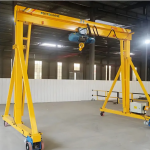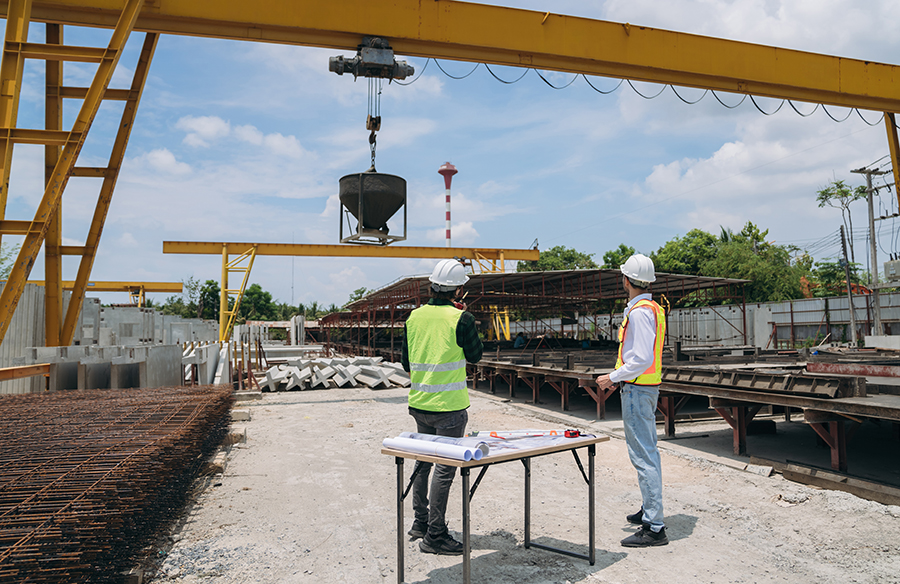
Lightweight design, electric hoist integration, and tool-free assembly are making portable gantry cranes the go-to choice for contractors, fabricators, and industrial operators worldwide
[INDUSTRY UPDATE] — Demand for portable gantry cranes has surged across the construction, manufacturing, and warehousing sectors as project teams seek flexible lifting solutions that eliminate the cost and downtime associated with fixed overhead cranes. Unlike permanent installations, today’s portable gantry cranes can be assembled, repositioned, and broken down within minutes — a capability that is fundamentally changing how job sites manage heavy material handling.
Why Construction Sites Are Turning to Portable Gantry Cranes
Fixed gantry systems require extensive civil preparation, long lead times, and dedicated floor space — constraints that simply do not fit the pace of modern construction schedules. Portable gantry cranes address each of these pain points through modular, bolt-together frames mounted on locking caster wheels that allow a small crew to deploy a full lifting system without mechanical assistance.
In practice, the benefits extend well beyond convenience. Teams working across multiple project phases — steel erection, MEP rough-in, precast panel setting — can relocate the same unit from bay to bay rather than scheduling separate crane mobilizations. This flexibility translates directly into measurable reductions in project overhead and idle time between lifts.
For contractors operating in confined environments such as mechanical rooms, prefabrication workshops, or covered staging areas, a small portable gantry crane provides access where boom trucks and mobile cranes simply cannot reach. The compact footprint fills a genuine gap in mid-sized construction operations that previously had no cost-effective lifting option for loads in the one-to-three-ton range.
 Electric Hoist Integration: The Productivity Multiplier
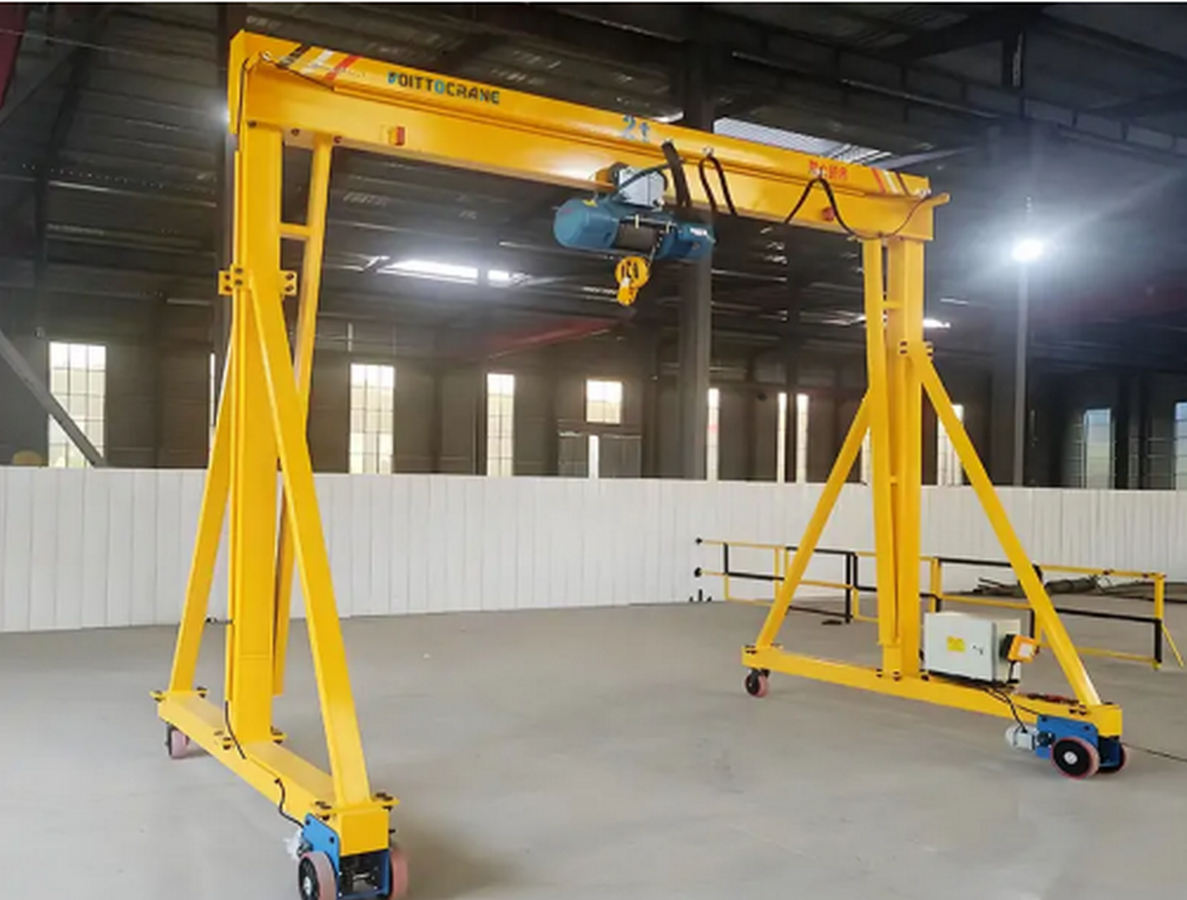
The most significant performance upgrade available on current-generation equipment is the pairing of a portable gantry crane with Electric Chain Hoist. Manual chain hoists remain common on entry-level units, but electric-powered lifting mechanisms reduce cycle times by up to 60 percent while simultaneously improving operator safety through built-in overload limiters, emergency braking, and smooth variable-speed control.
Wireless pendant and remote-control options — now standard on many mid-range models — allow a single operator to manage both trolley travel and hoist functions from a safe stand-off distance. On active construction sites where load swing and pinch-point hazards are constant concerns, this capability represents a meaningful reduction in incident risk rather than simply a convenience feature.
The 2 ton portable gantry crane with electric hoist has emerged as the most broadly specified configuration in the North American construction market. At that capacity, it handles the majority of precast concrete components, structural steel members, generator sets, and mechanical equipment encountered on commercial and industrial job sites without requiring a full crane mobilization.
Aluminum Construction: Engineering the Weight-to-Strength Ratio
The growing adoption of the portable aluminum gantry crane reflects a straightforward field reality: equipment that two workers can load onto a flatbed trailer without assistance gets used far more often than equipment that requires its own rigging crew.
Aerospace-grade aluminum alloy extrusions reduce overall crane weight by approximately 40 percent compared to equivalent steel-framed models, while precision-welded joints and engineered beam profiles maintain rated load capacities that satisfy applicable ASME and OSHA standards. The result is a unit that travels easily between job sites, stores compactly in a trailer or equipment yard, and deploys without a dedicated setup crew.
This material advantage is particularly valuable for specialty contractors — mechanical and electrical trades, rigging companies, and equipment rental operators — who need a crane that moves with their work rather than waiting for the work to come to the crane.
Buyer’s Guide: Selecting the Right Portable Gantry Crane for Your Project
Specifying the correct unit requires matching several variables to actual site conditions:
Rated capacity: Select a model whose rated capacity exceeds the heaviest anticipated single lift by a minimum of 20 percent. Never size a unit to its absolute maximum — rated loads assume ideal conditions that construction environments rarely provide.
Clearance height: Indoor applications require confirmation that the beam’s underside clears the tallest load configuration at full hoist travel, with additional margin for rigging hardware. Measure actual structural clearance rather than relying on architectural drawings.
Ground conditions: Wheeled gantry crane portable units perform reliably on smooth concrete and compacted asphalt. Earthen, gravel, or uneven surfaces require temporary hardstanding — crane-grade timber mats or steel plate — to ensure stable travel and prevent leg settlement under load.
Material selection: Aluminum frames are the correct choice for applications requiring frequent transport between sites. Steel-framed units offer higher capacities at a given price point and are better suited to semi-permanent installations within a single facility.
Hoist type: Projects with high lift cycle counts — production environments, precast yards, heavy MEP installations — justify electric hoist selection on labor savings alone. Manual chain hoists remain cost-effective for occasional-use applications with lighter loads.
Market Outlook: Where the Industry Is Heading
Several structural trends are converging to sustain strong demand for portable gantry cranes through the near term. The accelerating adoption of prefabricated and modular construction methods increases the volume of precision component placements that require controlled lifting rather than rough-handling with forklifts or chain falls. Tightening labor availability is pushing contractors toward higher-productivity tooling, and portable cranes directly address that pressure.
On the product development side, leading manufacturers are investing in IoT-enabled load monitoring, predictive maintenance alerts, and tool-free quick-connect beam systems that further reduce setup time. These features are migrating from heavy industrial applications into the portable crane segment, raising the performance floor for the entire product category.