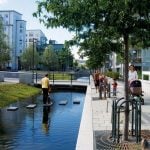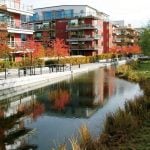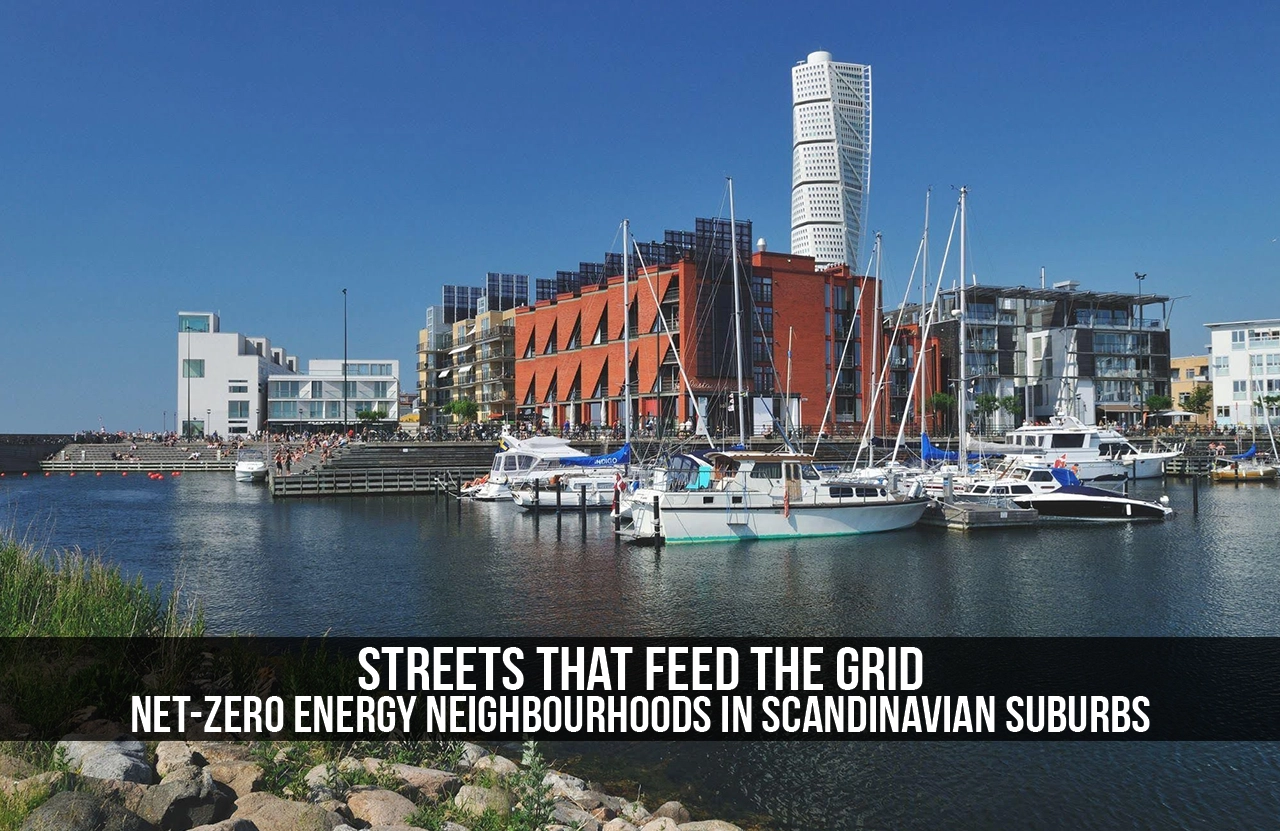
On an ordinary morning in the residential district of Hammarby Sjöstad in Stockholm, Sweden, its residents are up and about their morning activities: cooking breakfast, tidying up, and getting ready for the day. Though everything looks the same as it would in any other country, a whole other system runs these processes here, which is invisible to the common eye.
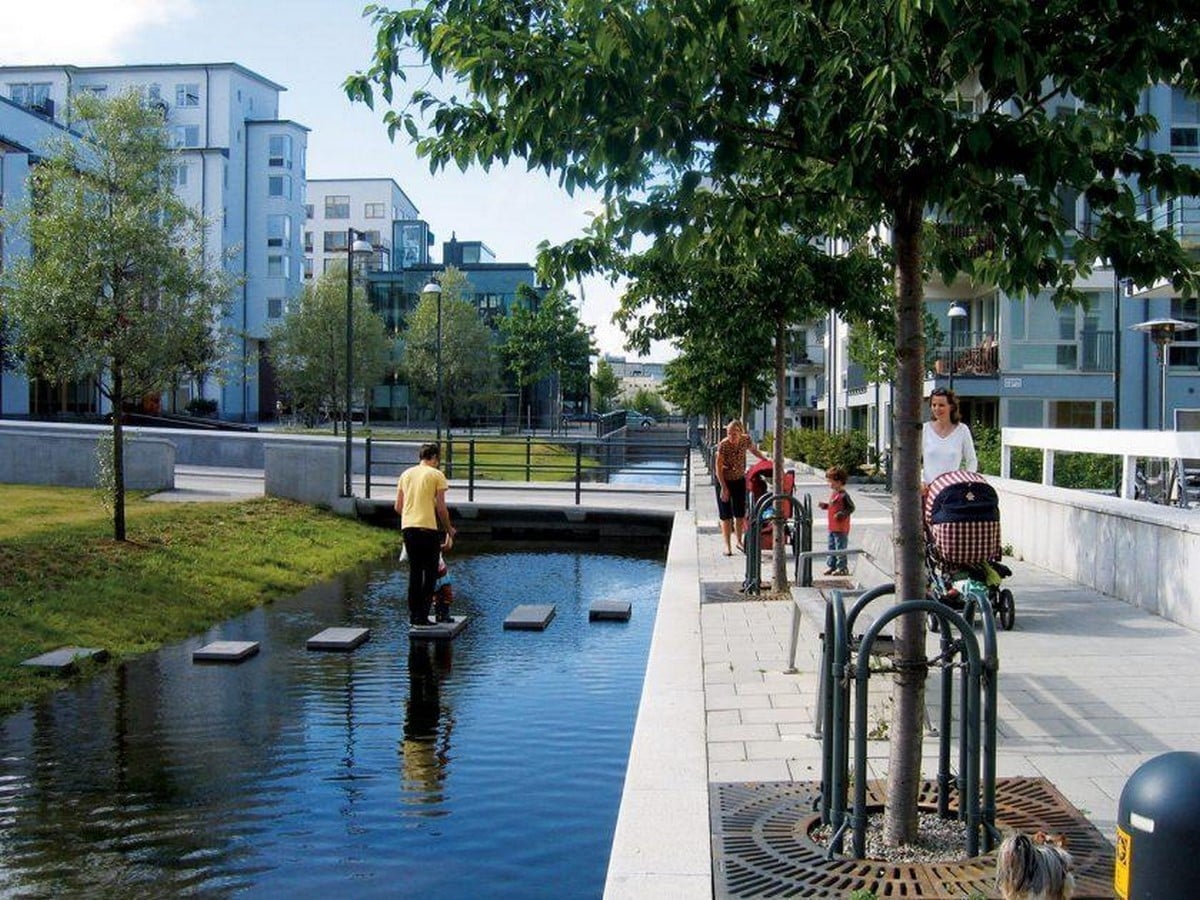
Take the gas flowing through the burner that’s heating breakfast: extracted from the sewage generated by their own apartment buildings, processed at a nearby plant, and piped back up. And by the time the residents are out and about for the day, the solar panels on their roofs have already sent surplus electricity back into the district’s grid. Commuter transportation also runs on this same biogas loop. They don’t think much of it; they’re just doing the same thing as everyone else in the world, but through this loop of net-zero energy, their impact is cut back by a large percentage.
While several projects in cities across the world compete to craft the perfect visible model of sustainability through landmark structures and bold approaches, this neighbourhood’s motto doesn’t ask to be noticed. There’s no propaganda, no conscious effort from the citizens, just like any other ordinary city. Its simplicity rivals, and may even surpass, the most celebrated green projects in the world. The city and its dwellers live well, not because they are reminded to, but because the locality makes this lifestyle the path of least resistance. Perhaps this is what we can learn from truly achieving sustainability– to reach a point where it’s not just a spectacle to attract investors, but a normalised, default state of life.
What “net-zero” means at the neighbourhood scale
It can be tough to make an individual building into a net-zero-energy entity, which is any entity that produces at least as much energy as it consumes per year. However, working on this concept at the community scale can offer opportunities for energy efficiency and cost-effective renewable energy generation. A neighbourhood opens up routes to share, trade, and recycle energy across dozens of buildings at once. It can also imbibe a collective sense of responsibility among even the common people, which can subsequently influence region-wide regulatory bodies to establish laws that focus on urban renewal and environmental rehabilitation. A real-life example would be the carbon tax implemented by Sweden since 1991, one of the world’s highest. This policy has successfully brought down emissions in transport and heating by over 29% since 1990, while the economy grew, aiding the transition to renewable energy.
This concept is characteristically followed in Scandinavia, a subregion of northern Europe that most commonly comprises Denmark, Norway, and Sweden, which share strong historical, cultural, and linguistic ties. These Nordic regions collectively host more such green districts than any other region in Europe. But how did this come to be, while the rest of the world leans into fossil fuels to run their livelihoods?
Net-Zero Energy District Example 1: Hammarby Sjöstad
In the early 1990s, the small 200-hectare area of Hammarby Sjöstad looked like it came out of a dystopian suburb. It used to be a polluted industrial area on Stockholm’s southern waterfront. City planners would look at the place and call it a lost cause. The site was selected to be renewed in time for the 2004 Olympics. While the bid to house failed, it set in motion one of the most studied urban renewal projects in the world.
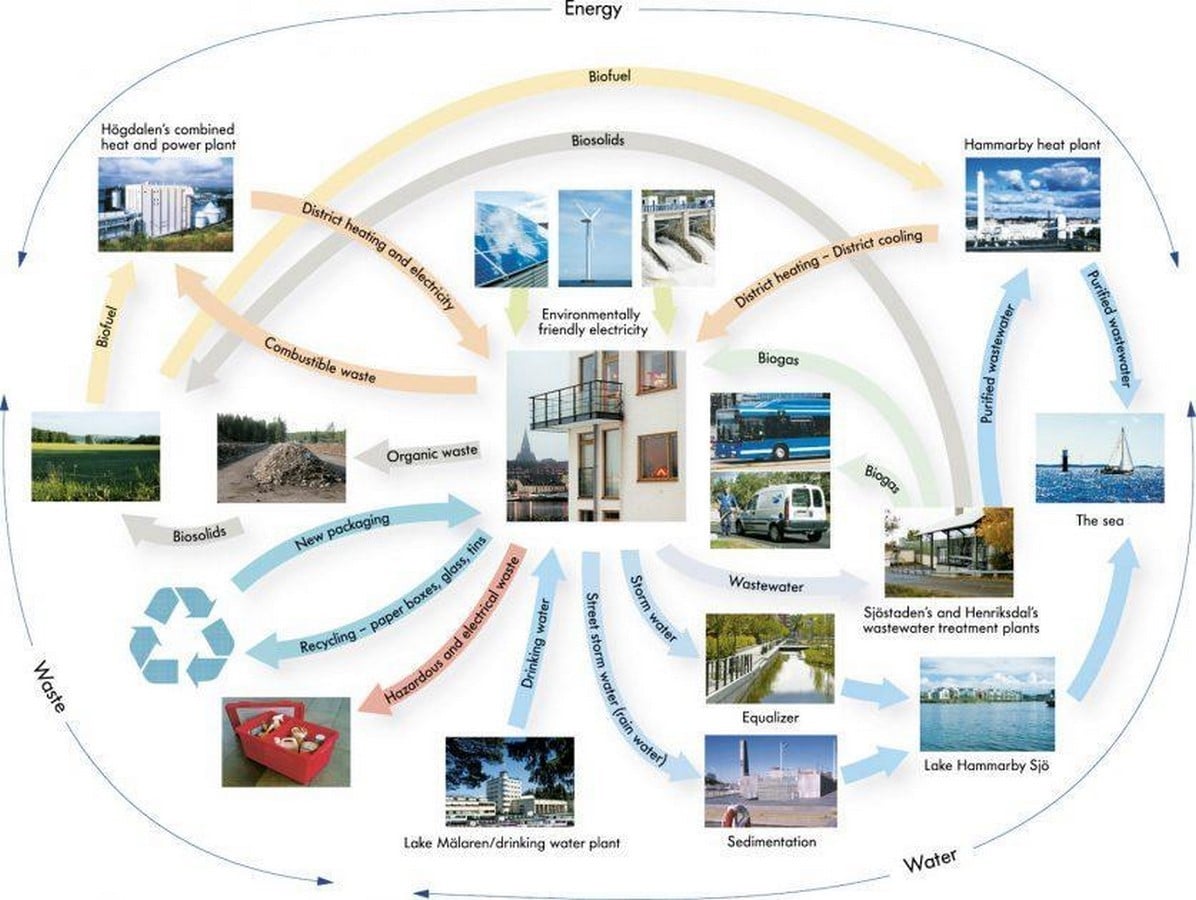
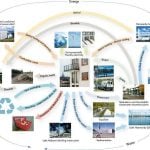
The concept for the masterplan was drafted based on one simple, but radical idea of a closed loop that defines that waste from one system becomes fuel for another. Energy is captured from three waste flows: The first burns combustible garbage to power a local district heating and electric plant. The second recovers heat from the sewage treatment system. The third converts sludge to biogas for cooking (1000 units) and to power local buses. The residue becomes fertilizer for urban gardens. Solar cells are also well utilised by fitting two buildings with all the solar cells that provide the electricity needed for the buildings’ communal areas.
This level of collaboration between multiple sites within the same district wouldn’t have been possible if the city of Stockholm hadn’t joined forces with 25 construction companies to construct the neighbourhood. Developers had to pay for each site on the basis of a per-unit development. This narrowed down the range of bidding because the restrictions enforced by the master plan enabled a greater focus on the design to meet end-user needs.
Hammarby, compared to other similar districts, has 60% lower water consumption per person. Though not at target GHG emission levels, the emissions in the district are 40-46% lower as of 2025, with only 21% of transportation by car, while 52% is public transport and 27% is by foot or cycle. What makes this even more credible is that it is a functioning, dense urban neighbourhood with schools and cafes.
However, any radical attempt comes with its issues. For example, when the system of pneumatic underground waste collection was introduced to separate food waste for biogas, residents, unsurprisingly, threw in whatever was convenient. This led to food waste levels dropping too low for generating biofuel. The administration responded with clever solutions like adding locks to food bins, creating a sense of friction requiring deliberate and thoughtful action to deposit only organic waste. This also proved to solve the issue and taught the planners a core lesson: large-scale systems that rely on humans for their success must also be designed with natural human behaviour in mind, not trying to ‘fix’ it.
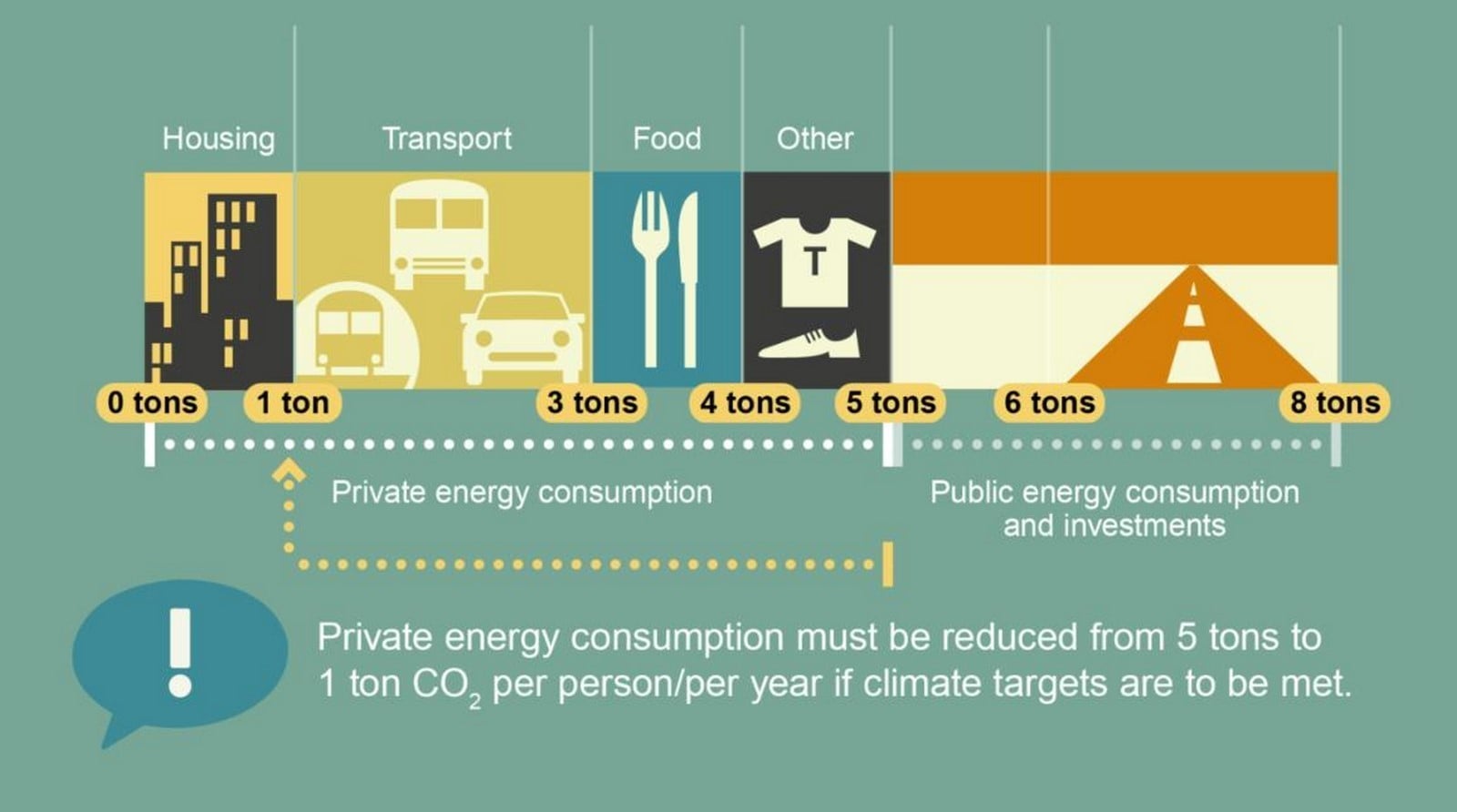
Further, while the project had kick-started in 1994, by 2011, residents themselves grew impatient as environmental goals hadn’t been fully met by that time. This drove the citizens themselves to be activists and form community organisations like the ElectriCITY Innovation Association to launch Hammarby Sjöstad 2.0 to make the district fully climate neutral by 2030. This project may have started as an ambitious bid for the benefit of a few investors, but as of today, it has become a part of the pride and lives of its citizens, fostering an in-built value in them that would not let them sit by and watch the city be harmful to the environment anymore.
Net-Zero Energy District Example 2: Malmö
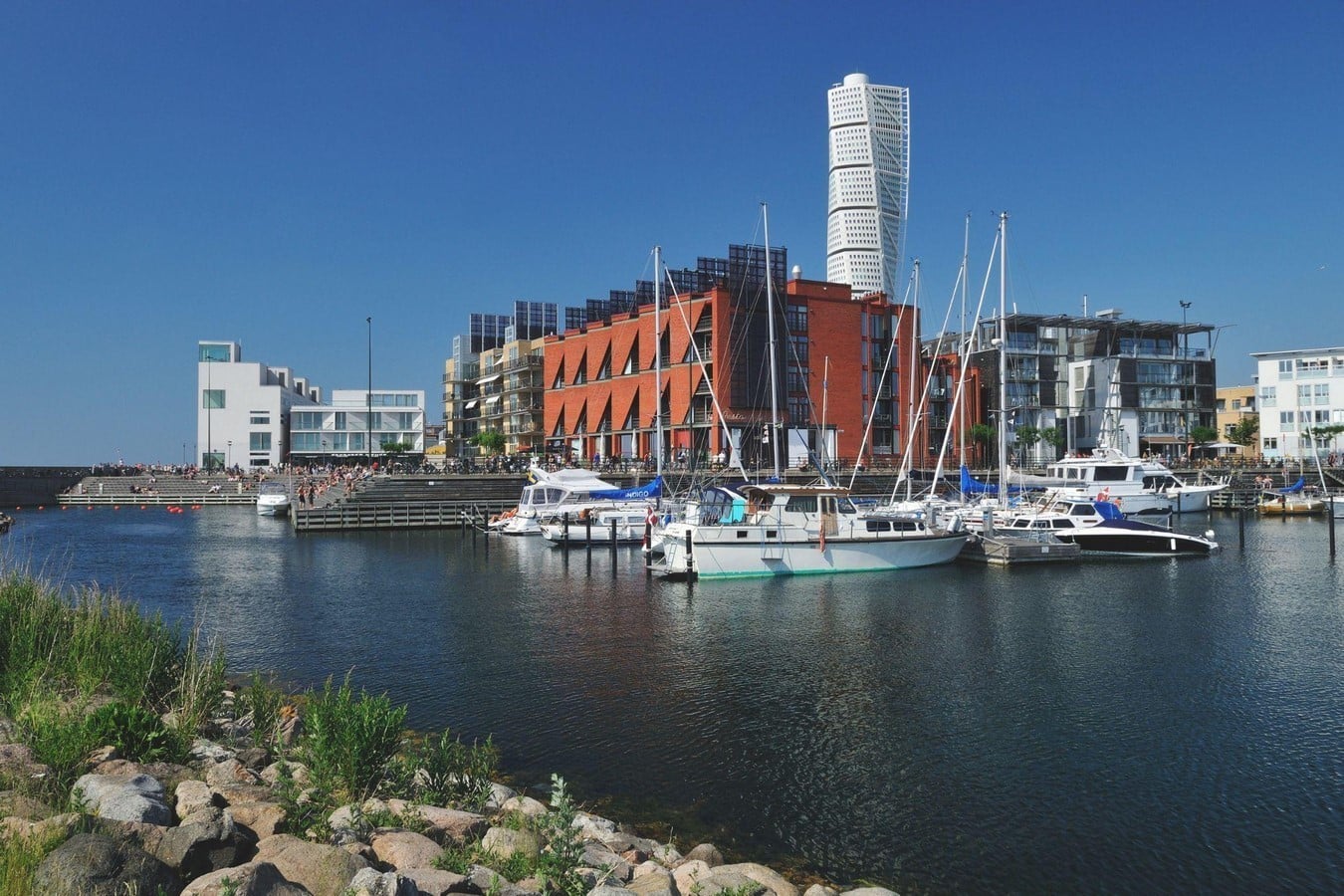
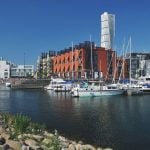
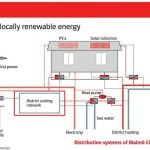
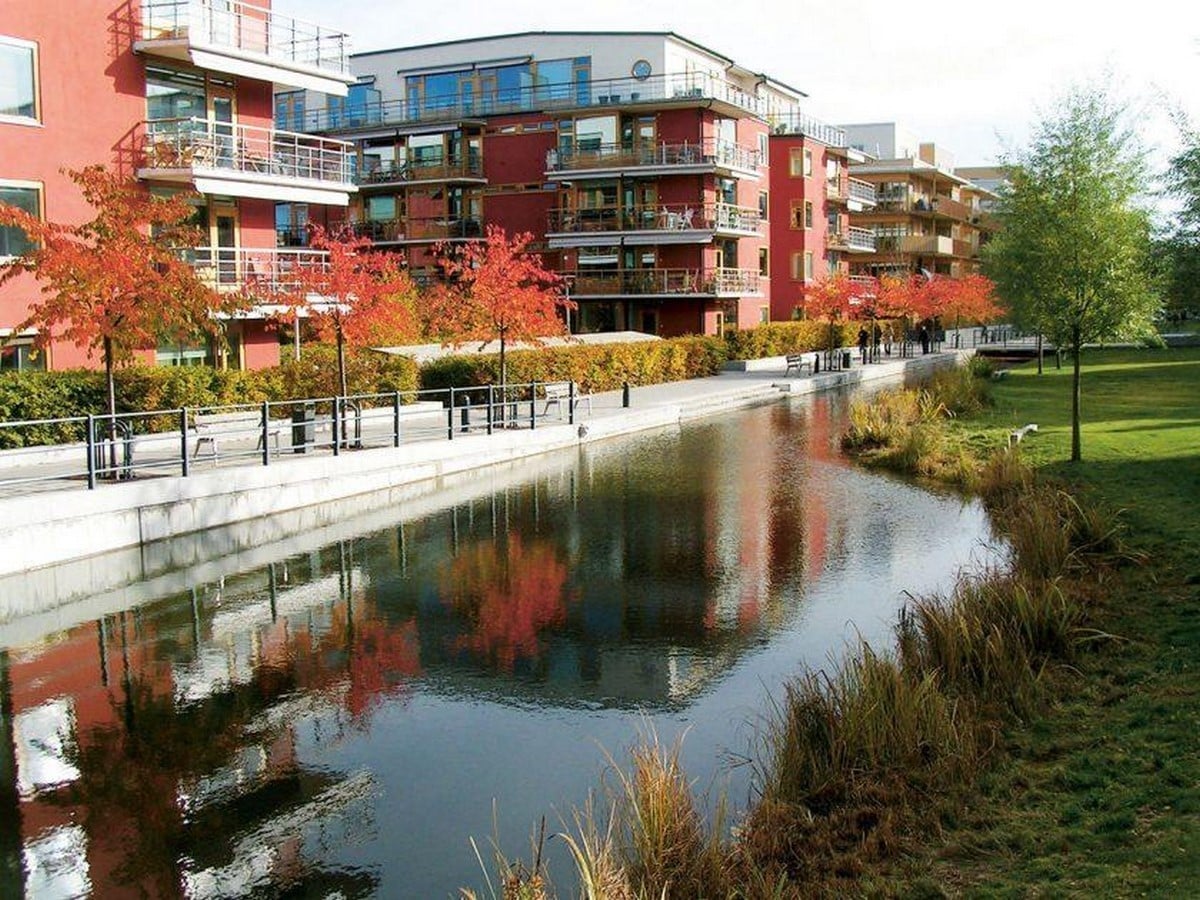
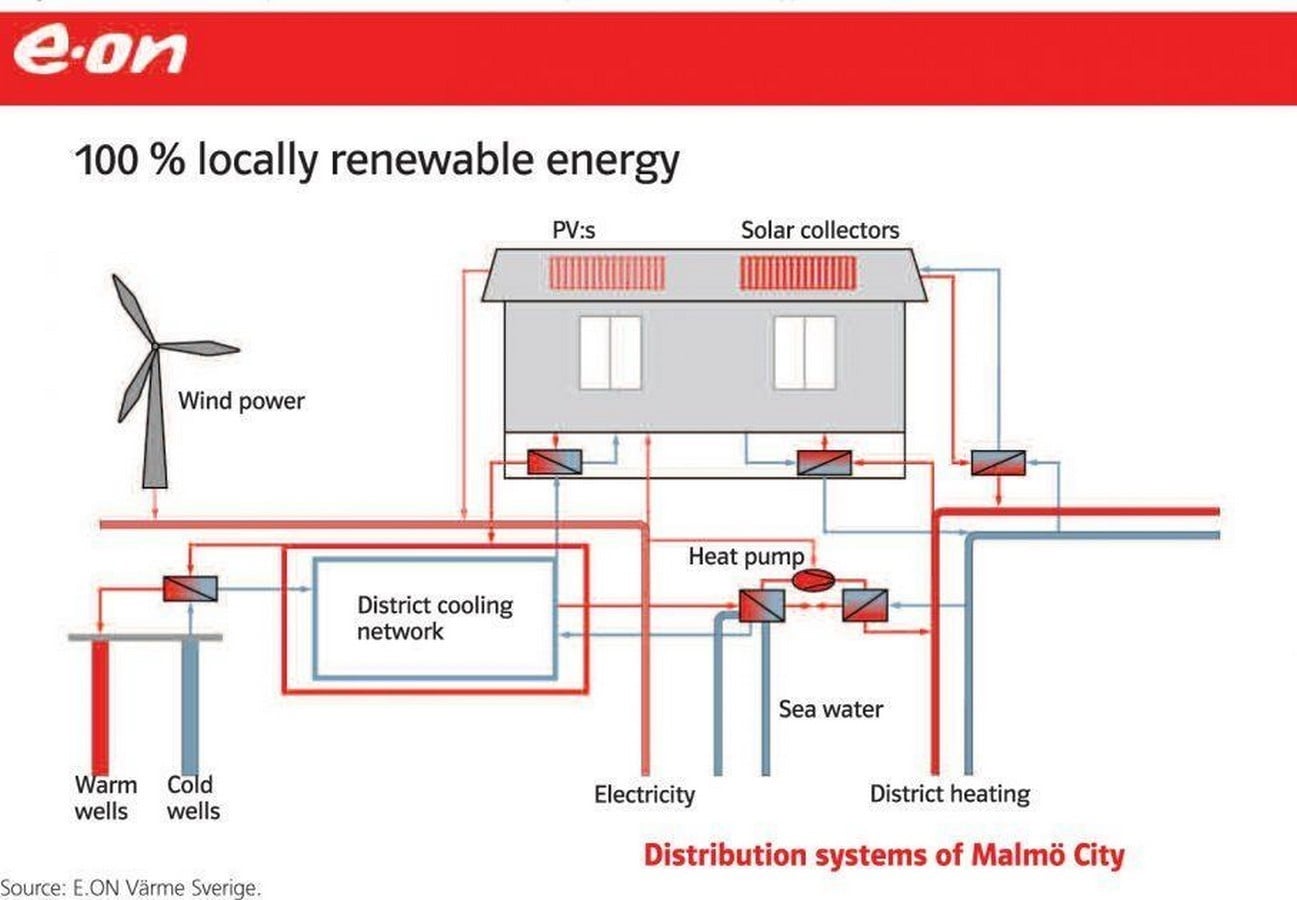
Another example would be Sweden’s third-largest city, Malmö. This, too, was a project that began when the area started becoming commercially defunct in the late 80s. Shipping facilities have since been replaced by homes, shops and office buildings whose energy needs are met solely by renewable sources. The answer came in a mix of architectural design, aesthetics and recycling in an underused land area wedged between the city and the sea. Across the old shipyard, a wind turbine now provides most of the electricity needed for the town, footpaths and cycle tracks have priority, water is drained through a series of ponds, channels and moss-covered rooftops, and geothermal reservoirs underground provide heat in winter and cool air in summer.
Food waste is converted to biogas and then used to run the local buses. Sweden has been using biomethane for transport for nearly a decade, and other countries – mostly in Europe – are embracing the idea. With this, Sweden is rightly one of the European leaders in renewables. With a 52.6% share of energy from renewable sources (including renewable electricity, renewable heating and cooling, and renewable energy consumed in transport) in 2014, the country has already surpassed its own goal of supplying 50% of its energy from renewables by 2020 (European Environment Agency, 2016). Urban-level ambition, as seen in Malmö, is critical for reaching nationwide goals.
The Scope of the Net-Zero Concept Outside Scandinavia
Scandinavian net-zero energy districts like the above examples, Copenhagen in Denmark, and more, are often praised by global planners while also being quietly kept back on the shelves, as they argue that these solutions would only work due to their Nordic cultural and economic context. A context that cannot be mimicked elsewhere. However, what we should intend to take away is perhaps not how to exactly architecturally design and plan these cities, but also how to administrate these places in order to create a space for sustainable architecture to exist within them. Just like how Hammarby Sjöstad did not emerge just because a few individuals wanted a more eco-friendly space, but because that concept emerged from wanting to renew a wasteland that was city-owned, had strong institutions, and was backed by a planning culture built over decades.
The basic principles like closing energy loops, designing for human behaviour, involving residents as agents rather than recipients, and measuring actual outcomes are simply good practices that happen to have found their most complete expression in Scandinavia. In an attempt to apply this further, the EU’s target of 100 Positive Energy Districts across Europe by 2025 is an attempt to imbibe this practice into regions outside Scandinavia and make an example of the entire continent.
Below are a couple of suggested readily available online sources for further valuable and unmissable insights into the specific sustainable techniques of other Scandinavian districts:
China Development Bank Capital’s Green and Smart Urban Development Guidelines: HAMMARBY SJÖSTAD: chrome-extension://efaidnbmnnnibpcajpcglclefindmkaj/https://static1.squarespace.com/static/5e81ba08f524e90512e30541/t/63fce5be05371e2ead5044d6/1677518286077/LIGHT+Chapter+4.+Integrated+Neighbourhood+Systems.pdf
Integrated Guidelines for Sustainable Neighbourhood Design by Serge Salat at UMCSII: chrome-extension://efaidnbmnnnibpcajpcglclefindmkaj/https://energyinnovation.org/wp-content/uploads/2015/12/Hammarby-Sjostad.pdf
REFERENCES LIST
DW Planet A (2024) Why Sweden is light-years ahead on climate, YouTube. Available at: https://www.youtube.com/watch?v=vWDMI8PDIuY (Accessed: 13 March 2026).
Malin, N. (2020) The Problem with Net-Zero Buildings (and the Case for Net-Zero Neighborhoods). , BuildingGreen. Available at: https://www.buildinggreen.com/feature/problem-net-zero-buildings-and-case-net-zero-neighborhoods (Accessed: 12 March 2026).
Hammarby SJÖSTAD, Stockholm, Sweden (2026) Hammarby Sjöstad, Stockholm, Sweden | Urban Green-blue Grids. Available at: https://urbangreenbluegrids.com/projects/hammarby-sjostad-stockholm-sweden/ (Accessed: 10 March 2026).
Serge, S. (2021) CASE STUDY: THE WASTE-TO-ENERGY PROGRAMME IN HAMMARBY SJÖSTAD, Integrated Guidelines for Sustainable Neighbourhood Design. Available at: https://www.neighbourhoodguidelines.org/hammarby-sjstad-case-study#:~:text=Integration%20of%20neighbourhoods’%20systems,and%20to%20power%20local%20buses. (Accessed: 15 March 2026).
Augustenborg -turning a troubled district into an attractive, resilient Eco-City | News – Smart City Sweden (no date) Smart City Sweden. Available at: https://smartcitysweden.com/best-practice/329/eco-city-augustenborg-creating-an-attractive-and-resilient-district/ (Accessed: 15 March 2026).
Steps to achieving 100% renewable energy use Malmö, Sweden (no date) Local Governments for Sustainability. Available at: https://www.irena.org/-/media/Files/IRENA/Agency/Publication/2018/Dec/IRENA_Cities_2018e_Malm.pdf?la=en&hash=15AAEB18677CA4C7575A1D86F75E9BA6C941661A (Accessed: 22 March 2026).
Senthilingam, M. (2014) How One eco-project in Malmo changed the future of Industrial Wastelands, CNN. Available at: https://edition.cnn.com/2014/09/25/living/ecofriendly-shipwards-in-malmo#:~:text=Story%20highlights,World’s%20first%20carbon%20neutral%20neighborhood (Accessed: 22 March 2026).