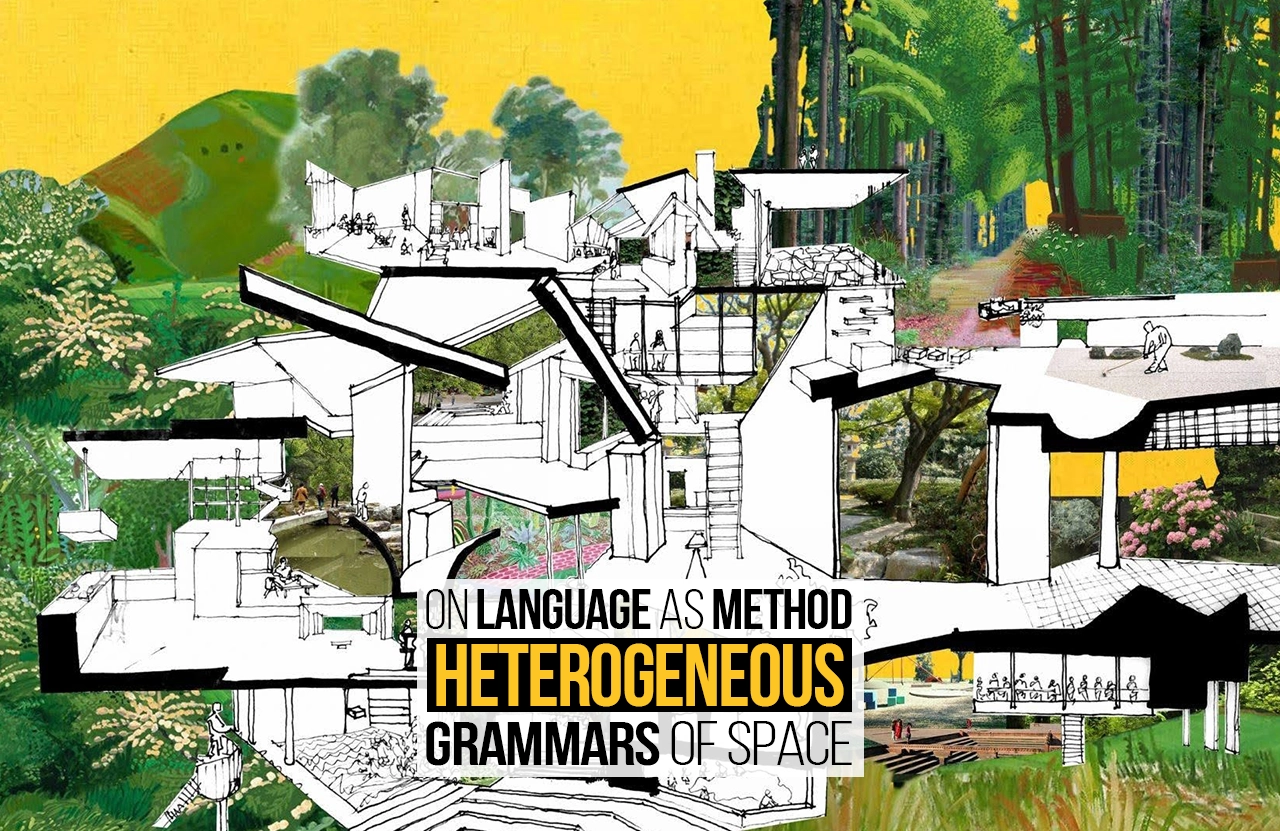
Architecture’s most profound mystery resides within the tension of the threshold where abstract thought becomes physical reality. This transition is governed by Heterogeneous Grammars of Space—the diverse, multi-layered ways that human languages conceptualize and express spatial relationships, revealing that spatial cognition is not uniform across cultures.
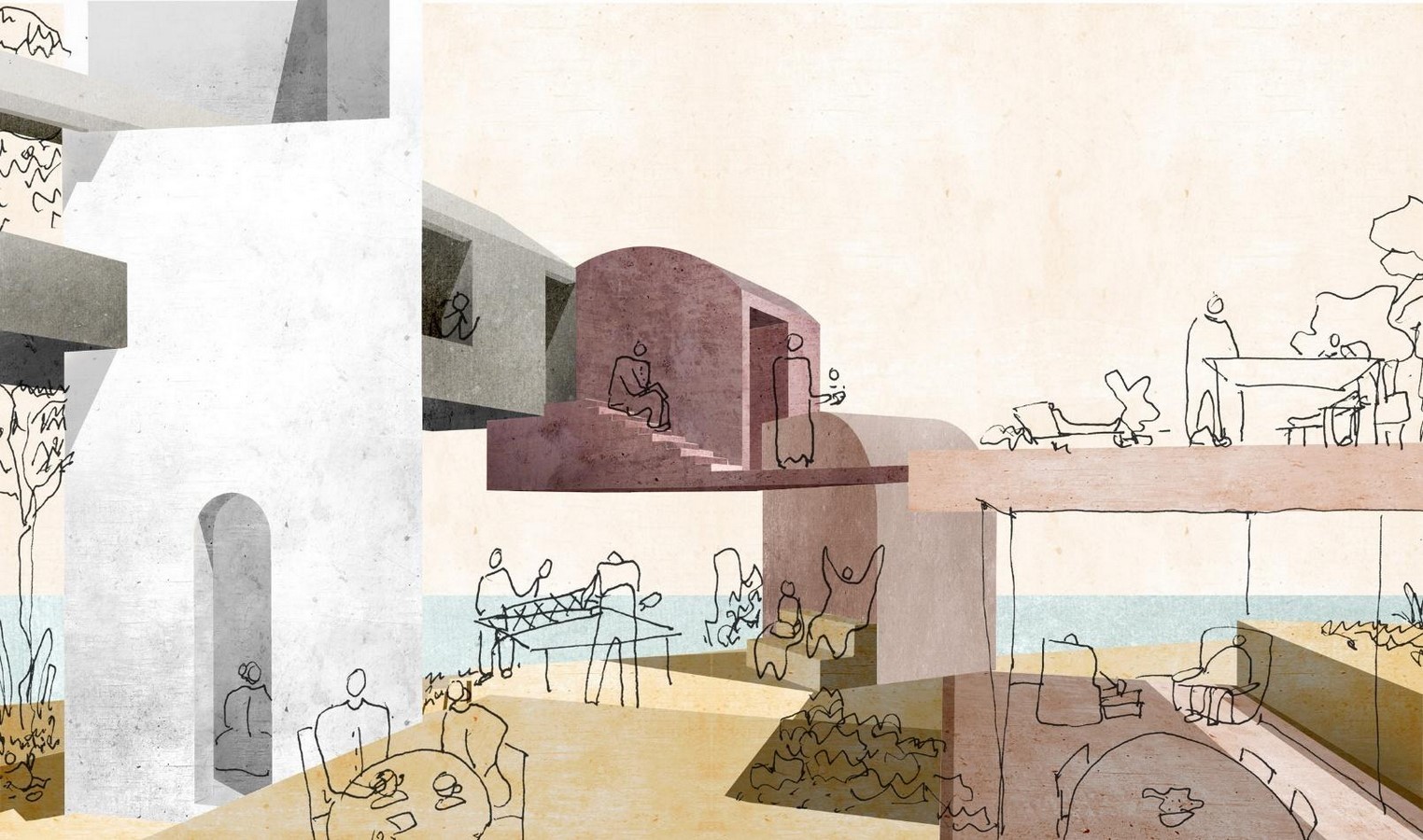
Traditionally, the discipline has been viewed through the lens of the finished object, a static monument defined by material presence and geometric resolution, born of a linear, hylomorphic process. However, a significant theoretical shift in the late twentieth and early twenty-first centuries has reframed design as a non-linear generative medium. Here, the inquiry transcends the final form; the generative mechanism itself (the ‘language’ of the process) holds as much weight as the resultant space.
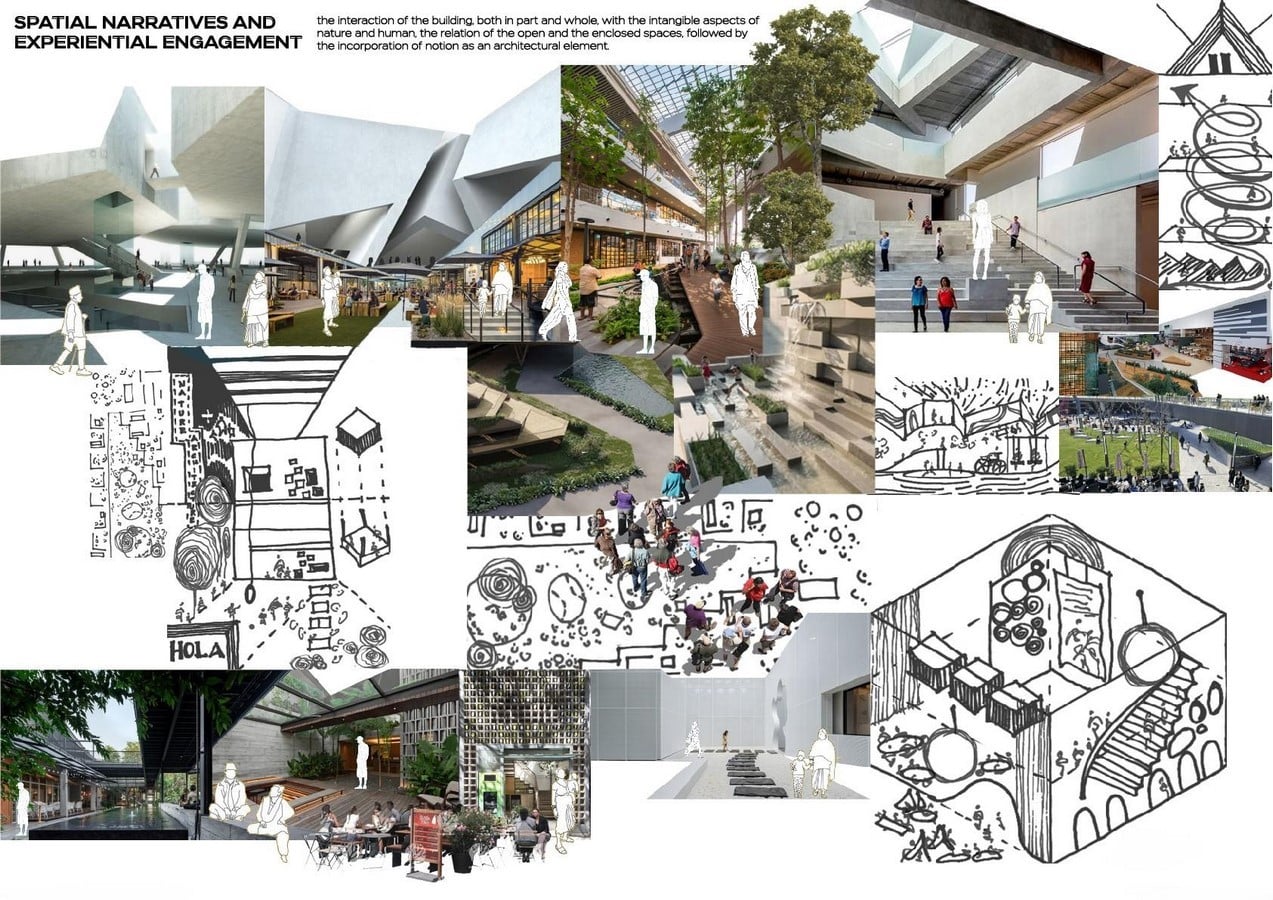
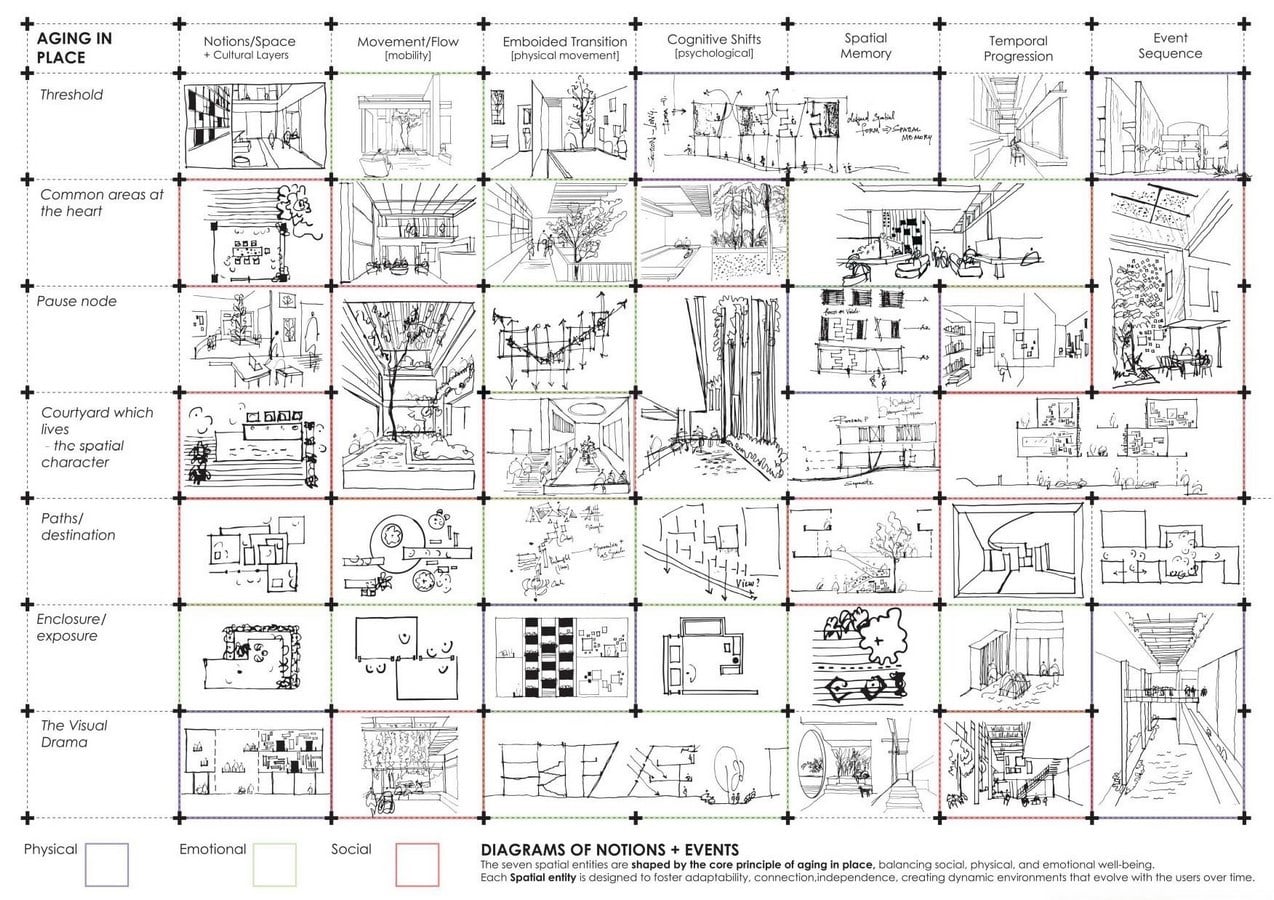
This shift investigates the complex transmutation of intangibilities, narrative, theory, and linguistics, into tangible spatial attributes. By treating language as method, the architect utilizes a heterogeneous grammar of exploration: writing, mapping, algorithmic coding, and collage are no longer mere precursors to a building, but are themselves the site of architectural production. These unconventional methodologies peel away the facade of traditional practice, arguing that the way we ‘speak’ or ‘script’ a space fundamentally dictates the way it is inhabited.”
I. The Linguistic Genesis: Words as Generative Tools
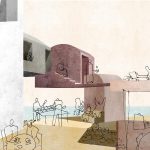
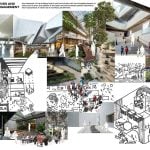
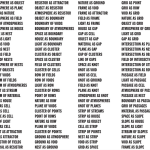
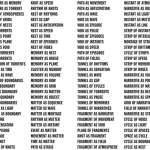
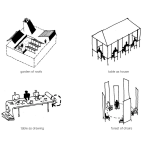
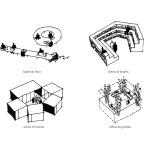
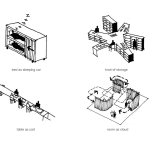
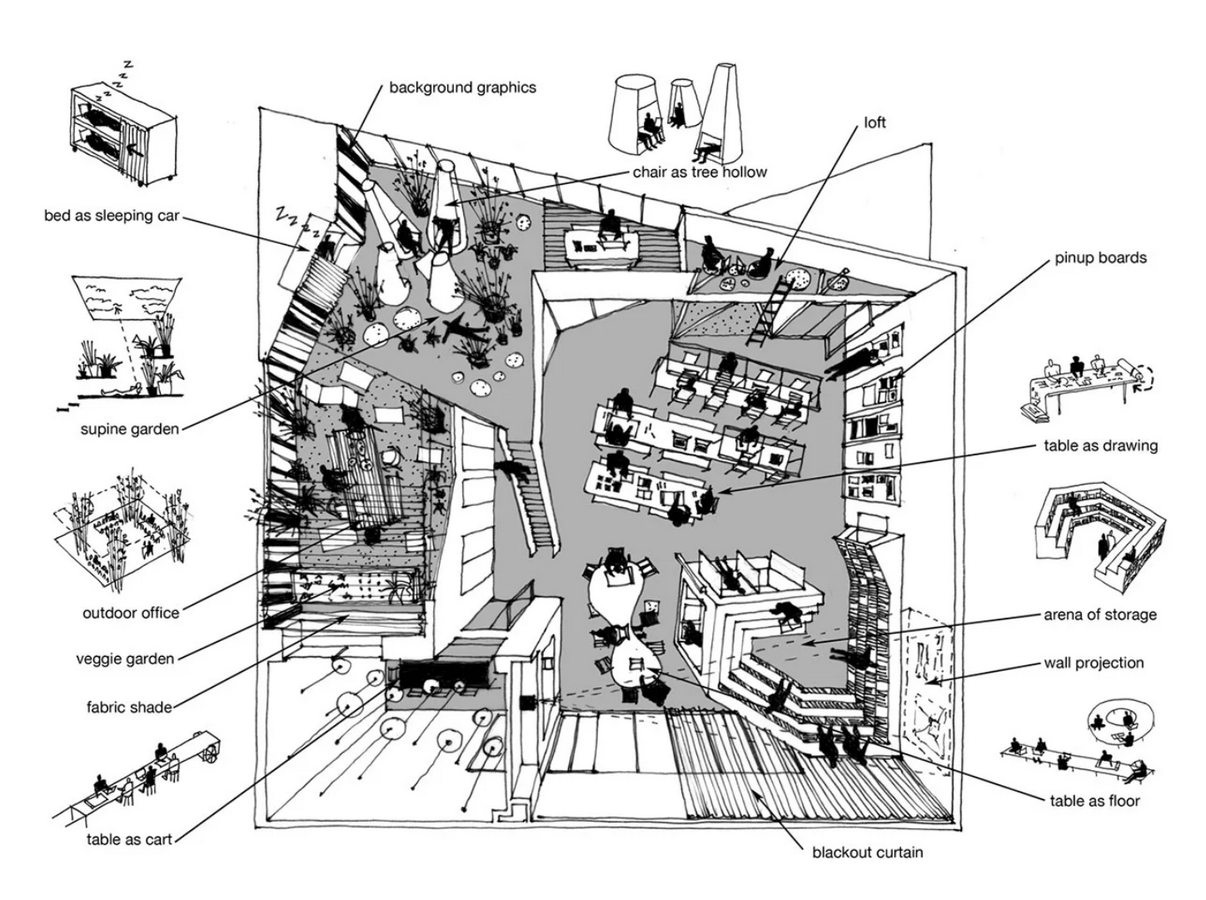
Architectural ideas usually do not originate in words. Rather, images––composed of lines, forms, volumes, and surfaces––normally describe the first impulses of design. Yet, the “Analogues” project (2009-2010) by Edward Ogosta Architecture challenges this visual hegemony by positioning words as the fundamental medium for conceptual generation.
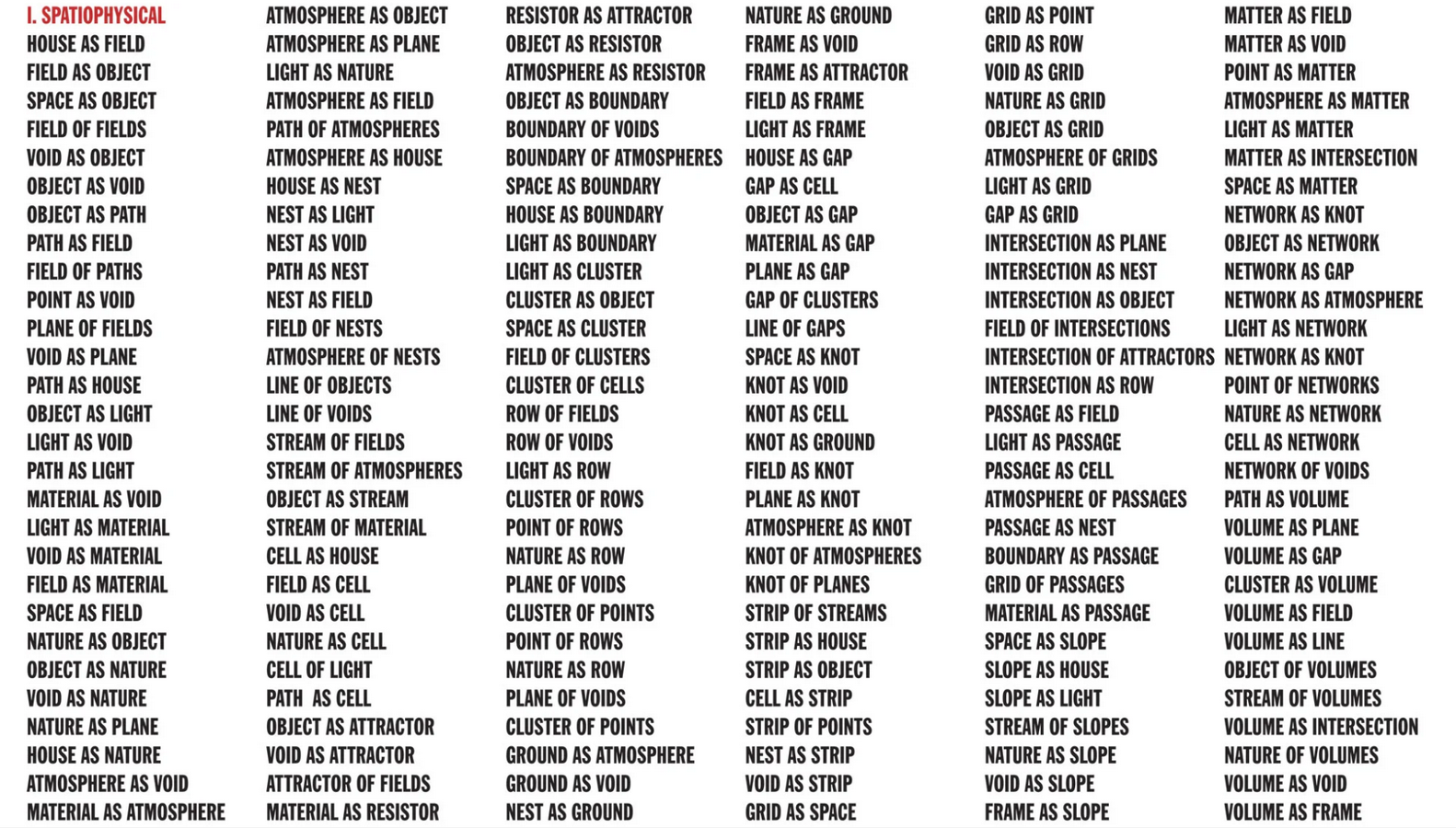
This experiment seeks to bridge the gap between text and practice by utilizing a linguistic scaffold to bypass the limitations of conventional formal habits.
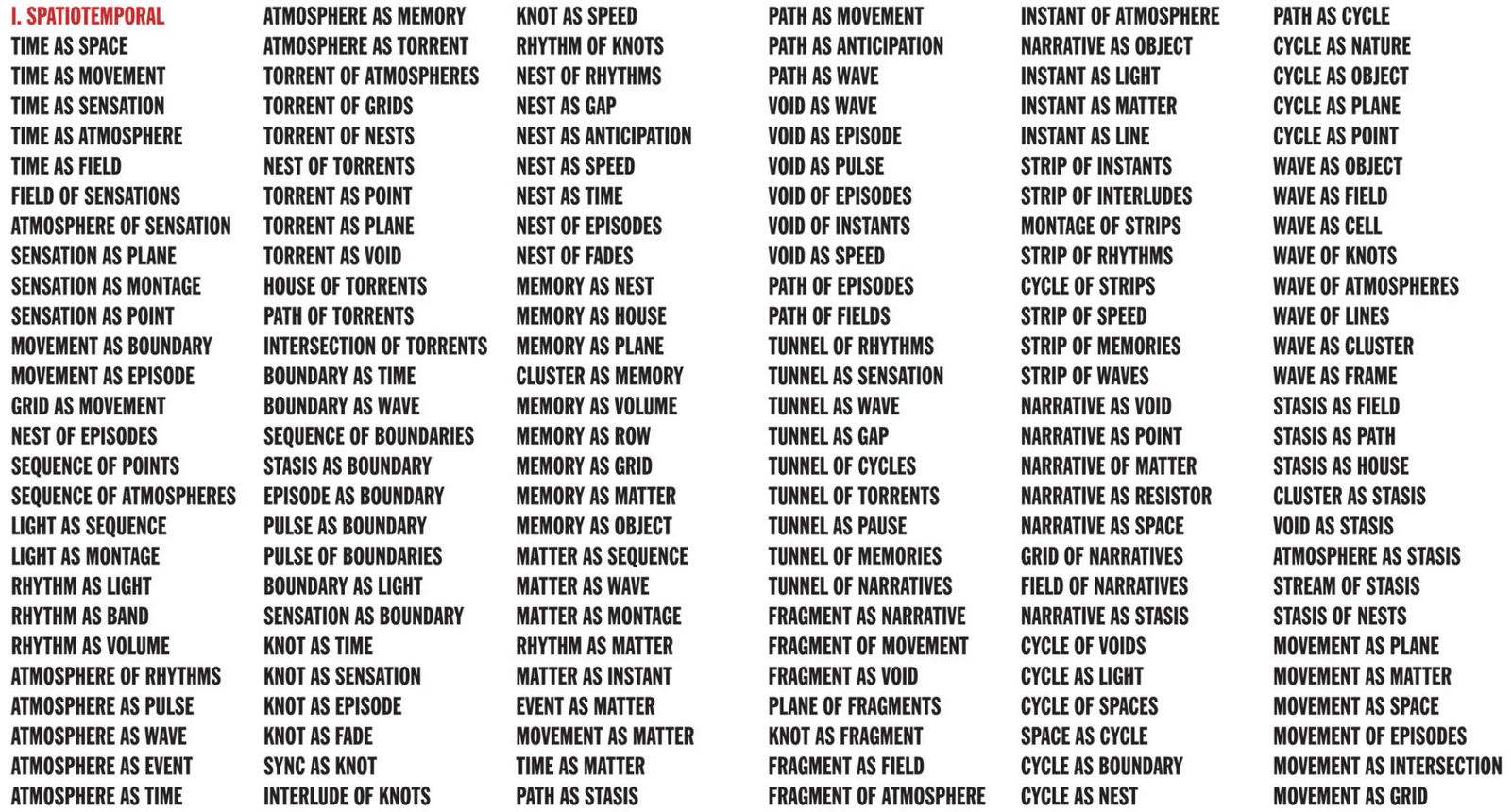
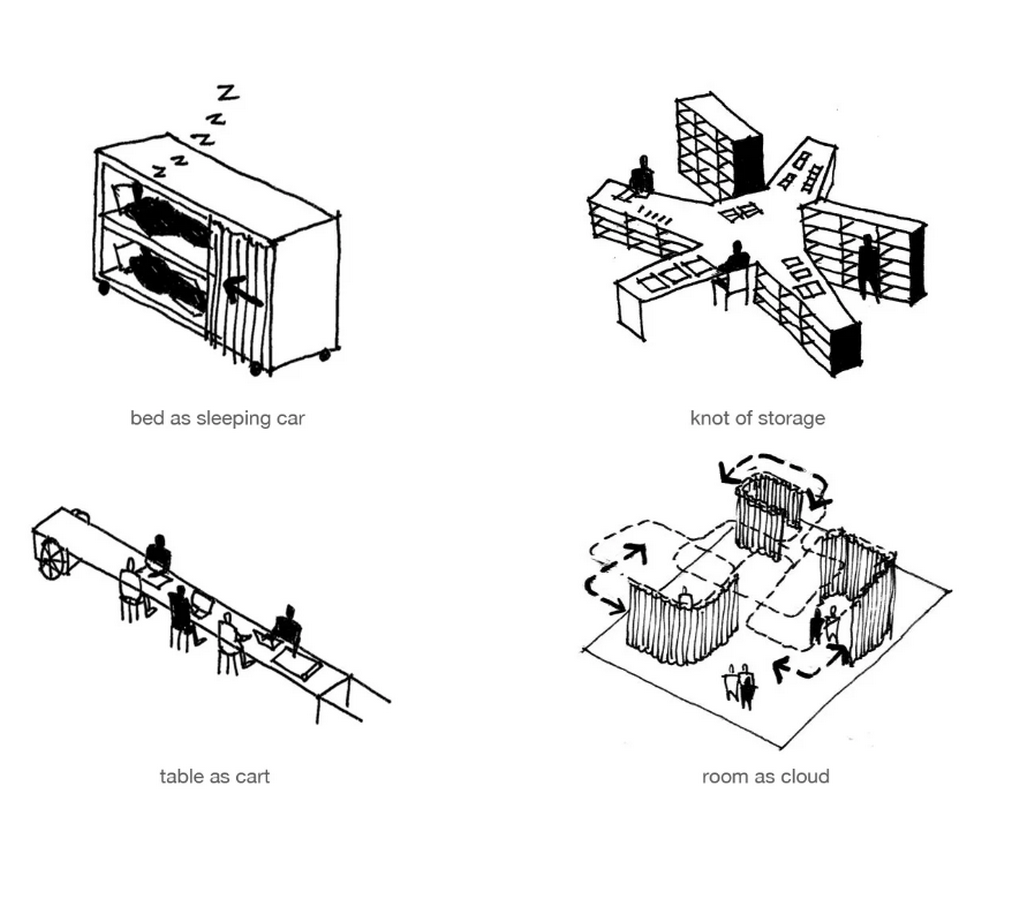
Inspired by Richard Serra’s 1967 “Verb List,” which documented action-oriented infinitives such as “to roll,” “to crease,” and “to curve” to relate material and process, the Analogues project operates through the strategic pairing of words from categorical lists. These lists categorize descriptive variants of fundamental ideas, such as space, time, nature, and furniture. The strategic union of two words from disparate lists gives rise to provocative hybrid concepts that exist in an “in-between” realm of architectural thought.
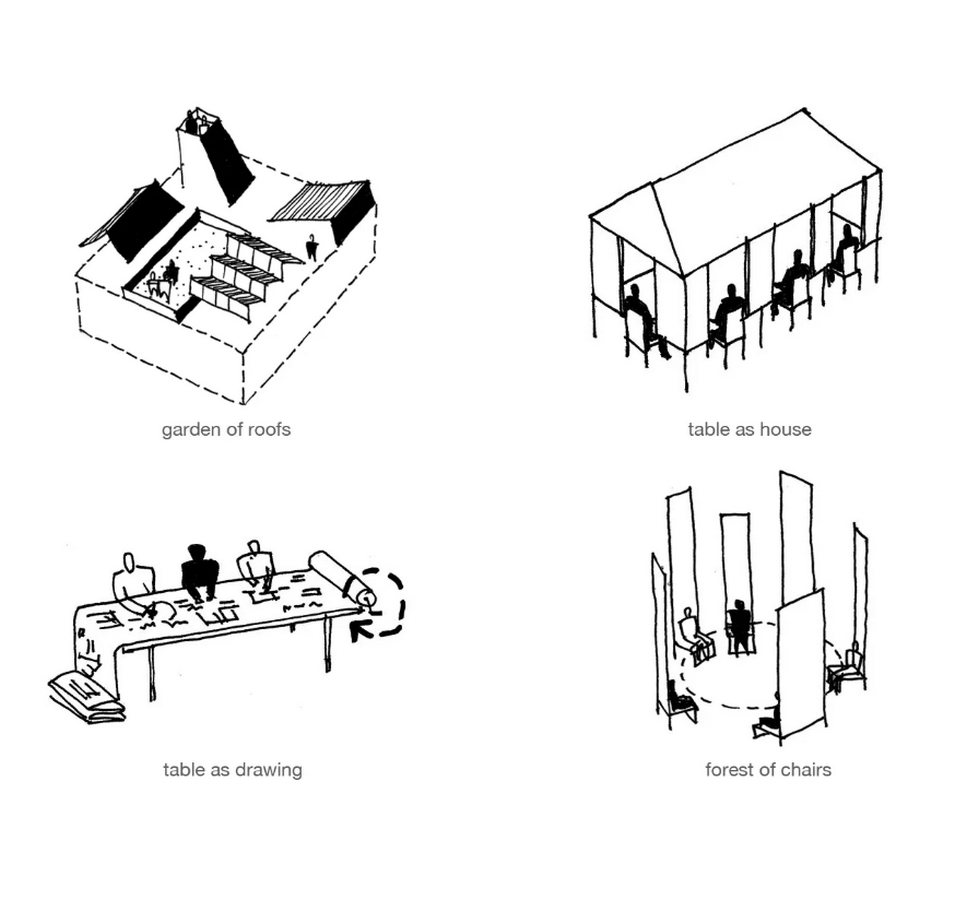
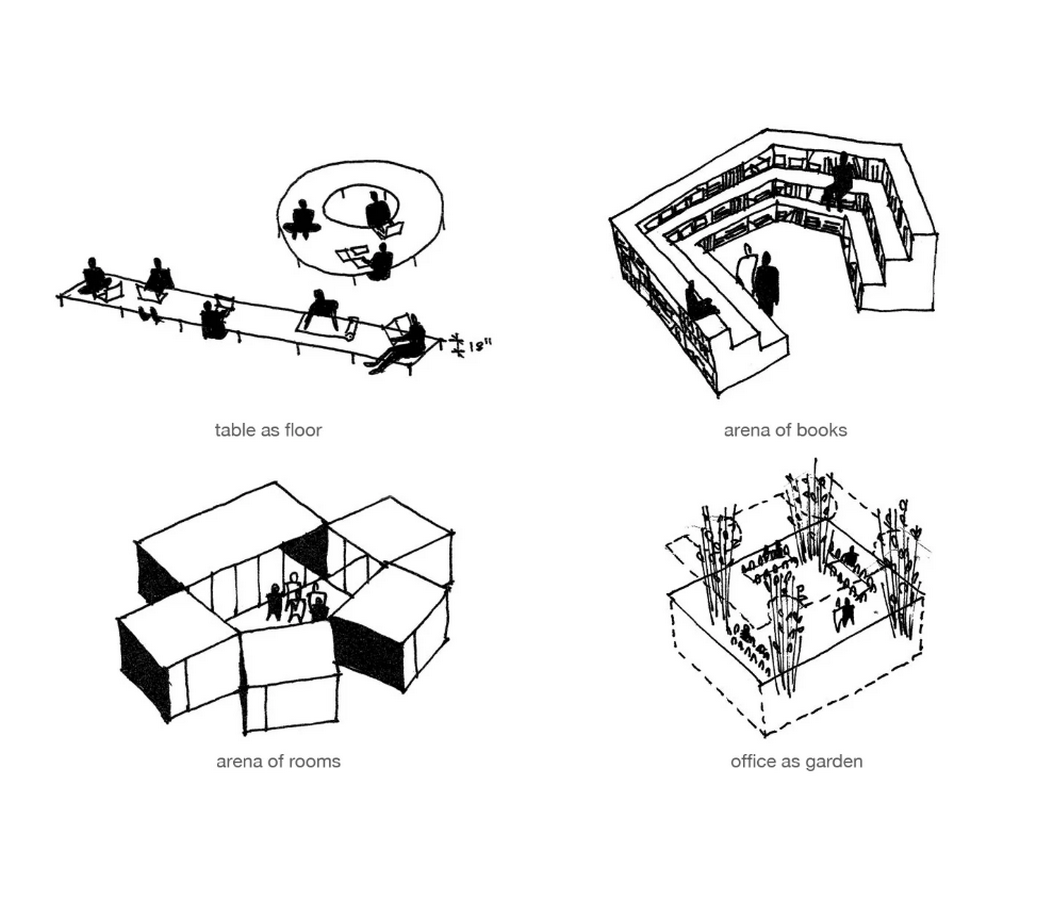
The broader implication of this method is a quest toward the ‘spatial text.’ By treating architectural production as a linguistic operation, the designer engages with algorithmic linguistics, the premise that ‘stems’ (foundational spatial ideas) and ‘affixes’ (architectural attributes or modifiers) can be stringed together to form a potent generative vocabulary.
This marks a departure from reductive, linear workflows in favor of a holistic systems theory. In this framework, the interaction of parts creates a ‘hybrid entity’ where the whole, comprising programmatic sequences and sequential play, transcends the sum of its individual components. As these attributes bridge the gap between the intangible narrative and tangible form, the architect must confront a fundamental decision: which domain of reality are we tapping into, and what new modes of spatiality are being unveiled through this conversion?”
II. Sequential Logic and Programmatic Disjunction: The Manhattan Transcripts
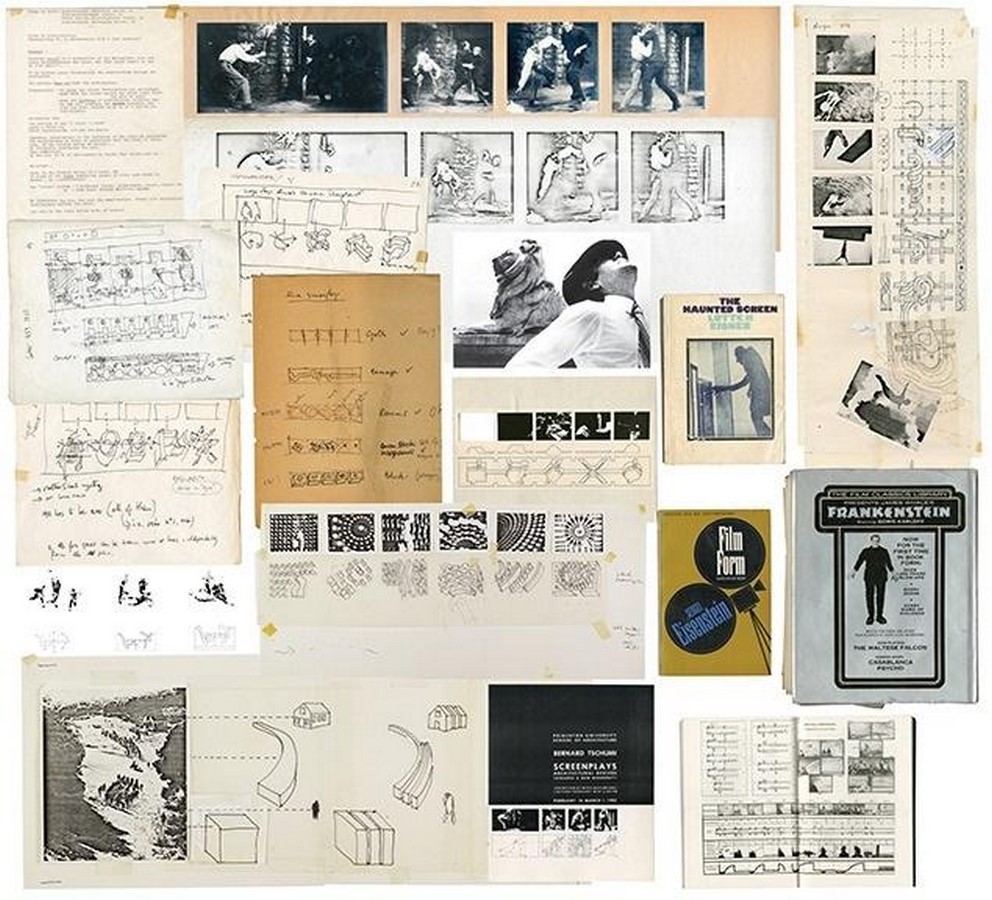
But if Ogosta uses words to generate a static form, the next logical step is to ask how those words can capture the fluid reality of human movement. This leads us from the ‘word-as-object’ to the ‘script-as-event’ found in the work of Bernard Tschumi.
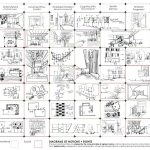
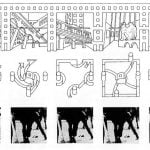
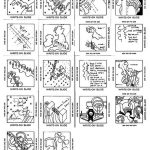
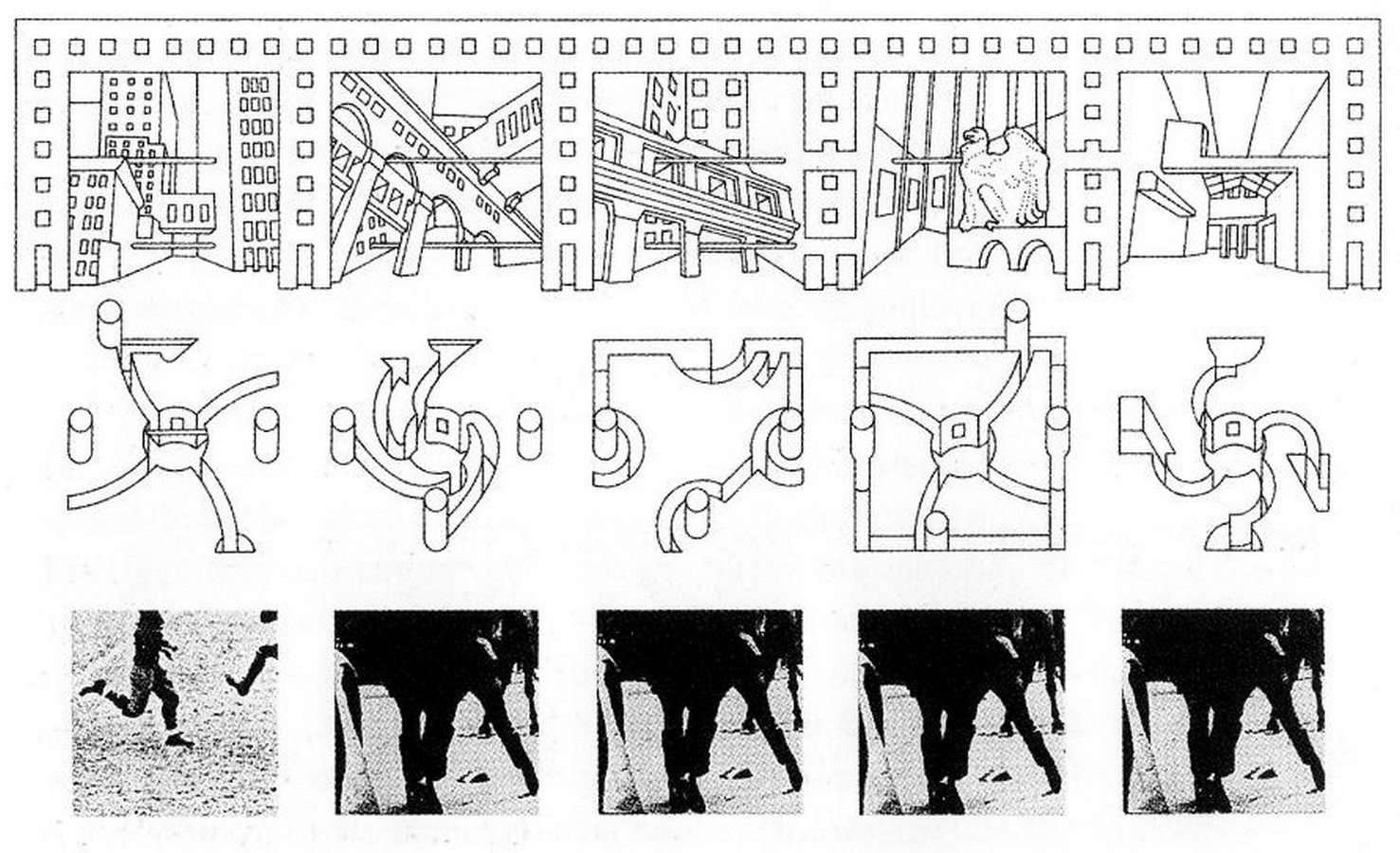
In “The Manhattan Transcripts” (1976-1981), Tschumi argues that architecture cannot be reduced to its physical enclosure alone; it is defined by the actions it witnesses. The Transcripts act as a device to transcribe things normally removed from conventional architectural representation, namely the relationship between the “set” (the space) and the “script” (the program).
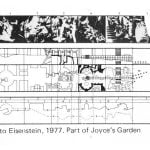
Tschumi’s central grammatical move is the implementation of a tripartite mode of notation. He argues that traditional representations like elevations and perspectives are incapable of conveying sound, touch, or the movement of bodies through space. By separating these layers, he creates a disjunction that challenges the traditional view of architecture as a static, unified totality.
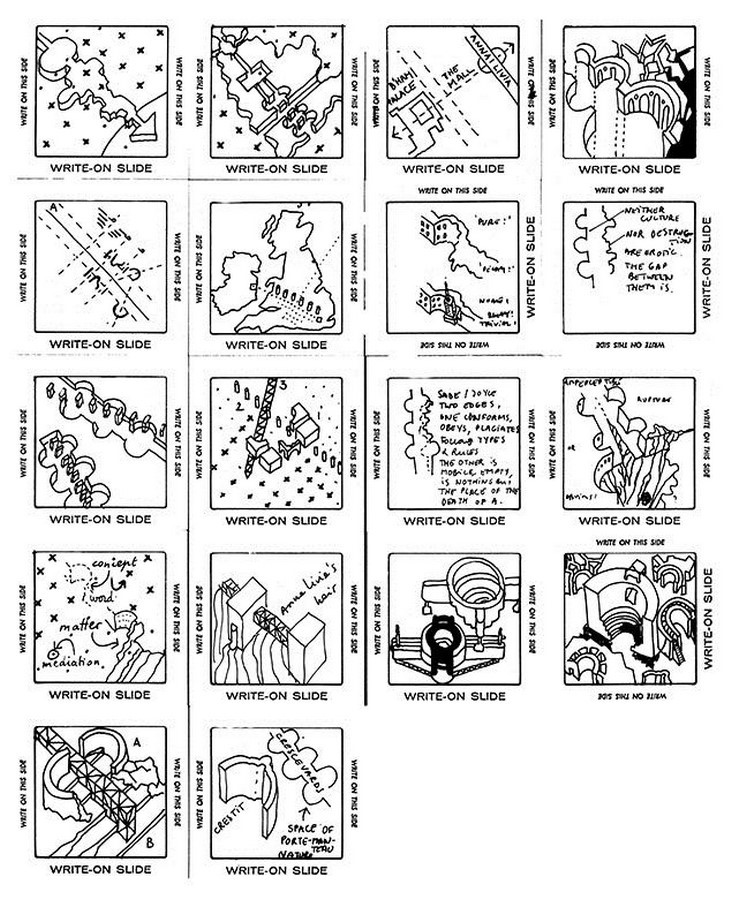
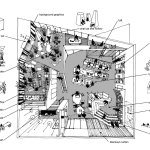
In Joyce’s Garden (1976), Bernard Tschumi transforms the site into a literal transcription of text. Using Finnegans Wake as the program for London’s Covent Garden, he treats the architectural process as a linguistic operation where the grid acts as the primary mediator between “words and stone.”
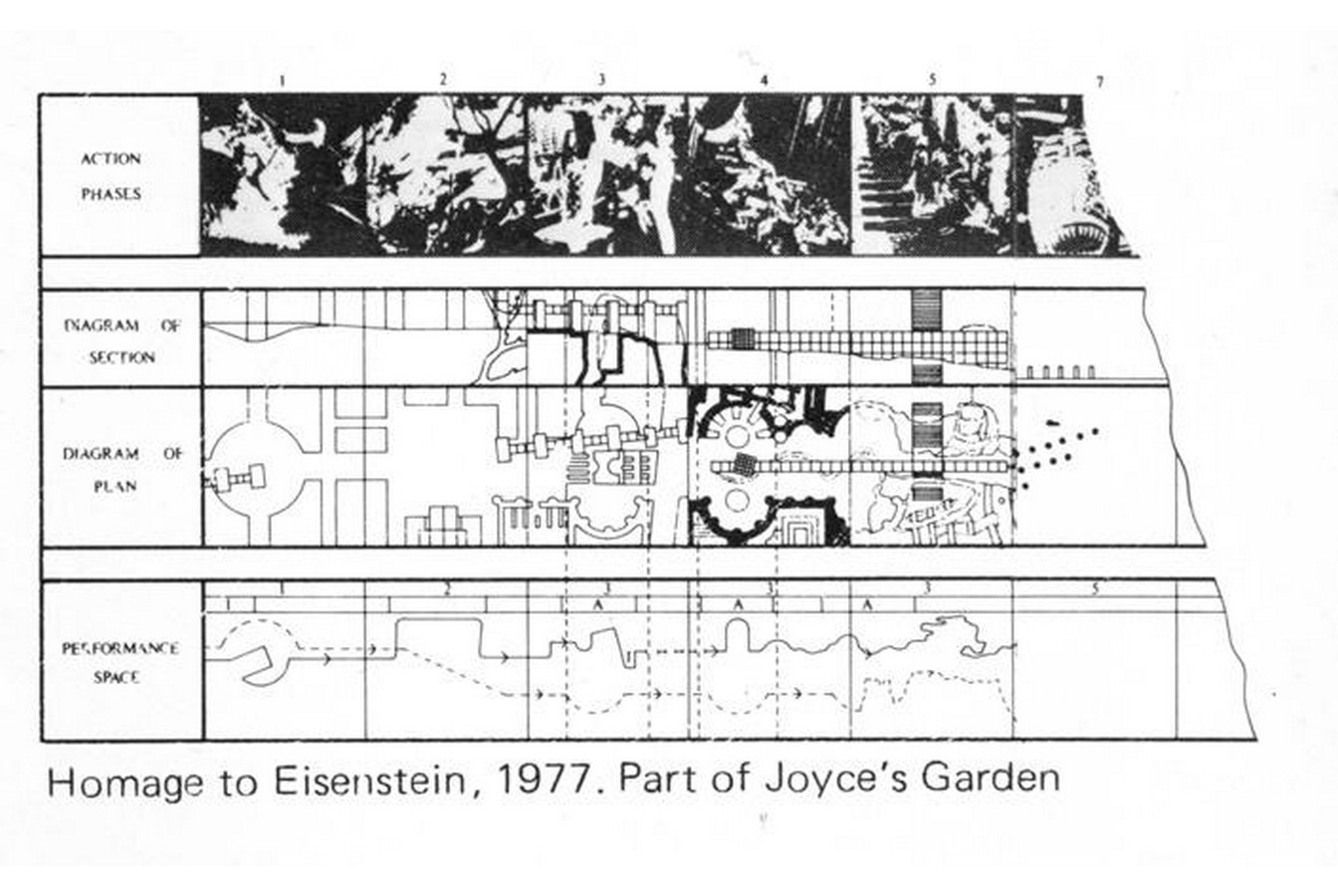
Tschumi breaks the link between space and event, but Peter Eisenman and Jacques Derrida push this separation even further. They move beyond the ‘script’ of human action to explore the ‘language’ of the site itself through a process of radical deconstruction.
III. The Textual City: Khôra and the Architecture of Absence
The relationship between text and practice reaches a level of extreme abstraction in the collaboration between Jacques Derrida and Peter Eisenman for the “Chora L Works” project. Their work for the Parc de la Villette aimed to materialize the Platonic concept of the khôra, a “third form” that is neither a paradigm nor a copy, but an in-between space or “receptacle of becoming”.
For Eisenman, traditional architecture is a “built metaphysics” designed to provide anthropocentric security through symmetry and axes. To subvert this, he employs a Second Order strategy: a linguistic deconstruction that reveals the inherent instability of spatial meaning.
Interference as Method: Rather than synthesizing form and function, Eisenman juxtaposes conflicting historical and formal layers. These layers “interfere” with one another, exposing “excluded” or “third” aspects of the site.
The Palimpsest Site: The site is treated as a spatial palimpsest, a document where traces of former slaughterhouses and demolished canals are integrated as “textual fragments.”
The Insertion of Absence: By utilizing voids and typographic “holes,” the project drains architecture of its traditional semantic weight. It moves from an aesthetic of textual space—where words describe form—to a spatialization of text, where absence becomes a constitutive element of presence.
IV. Collage and Writing: Assembling Space Through Fragments
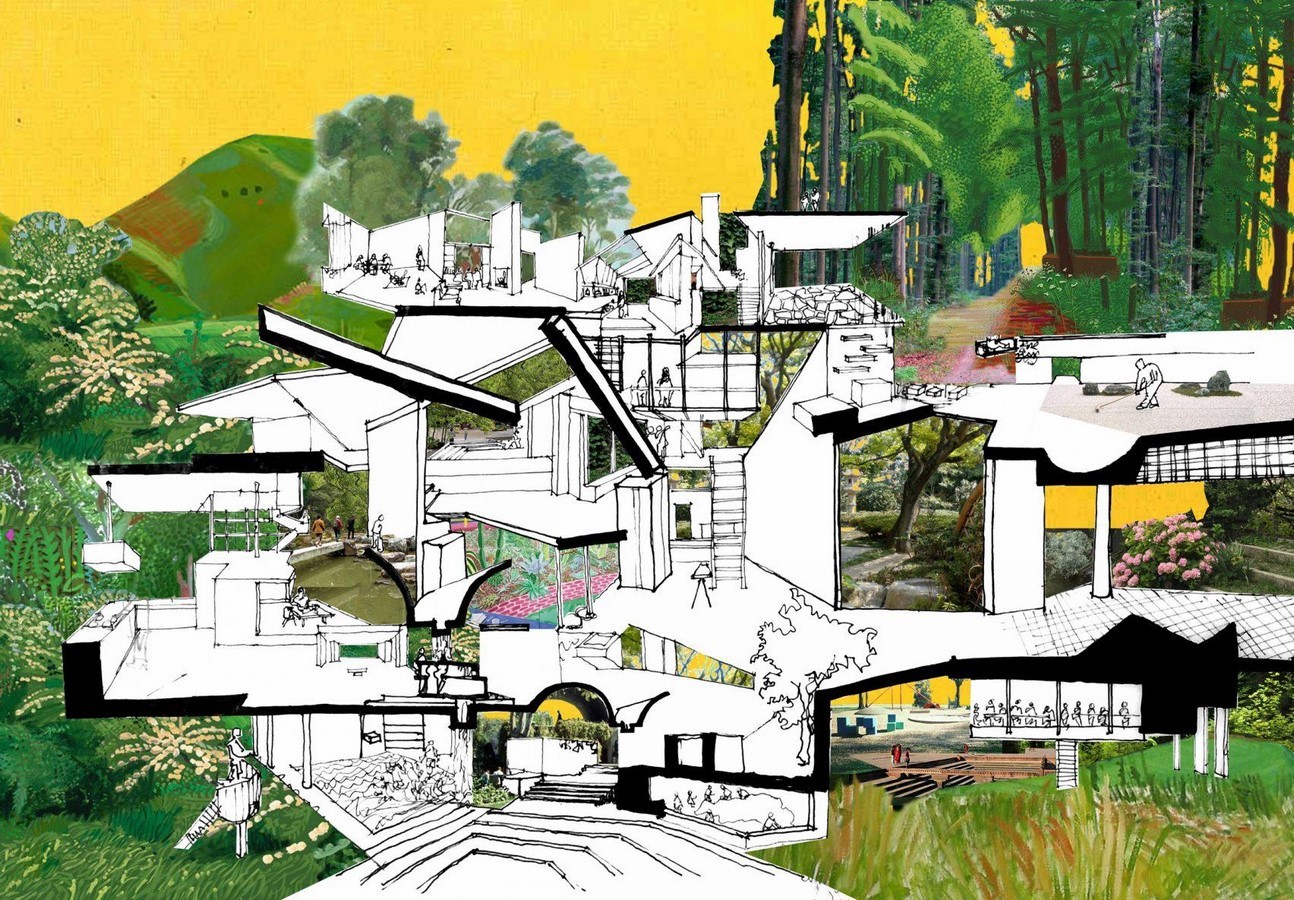
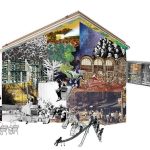
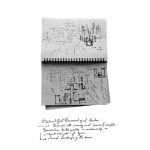
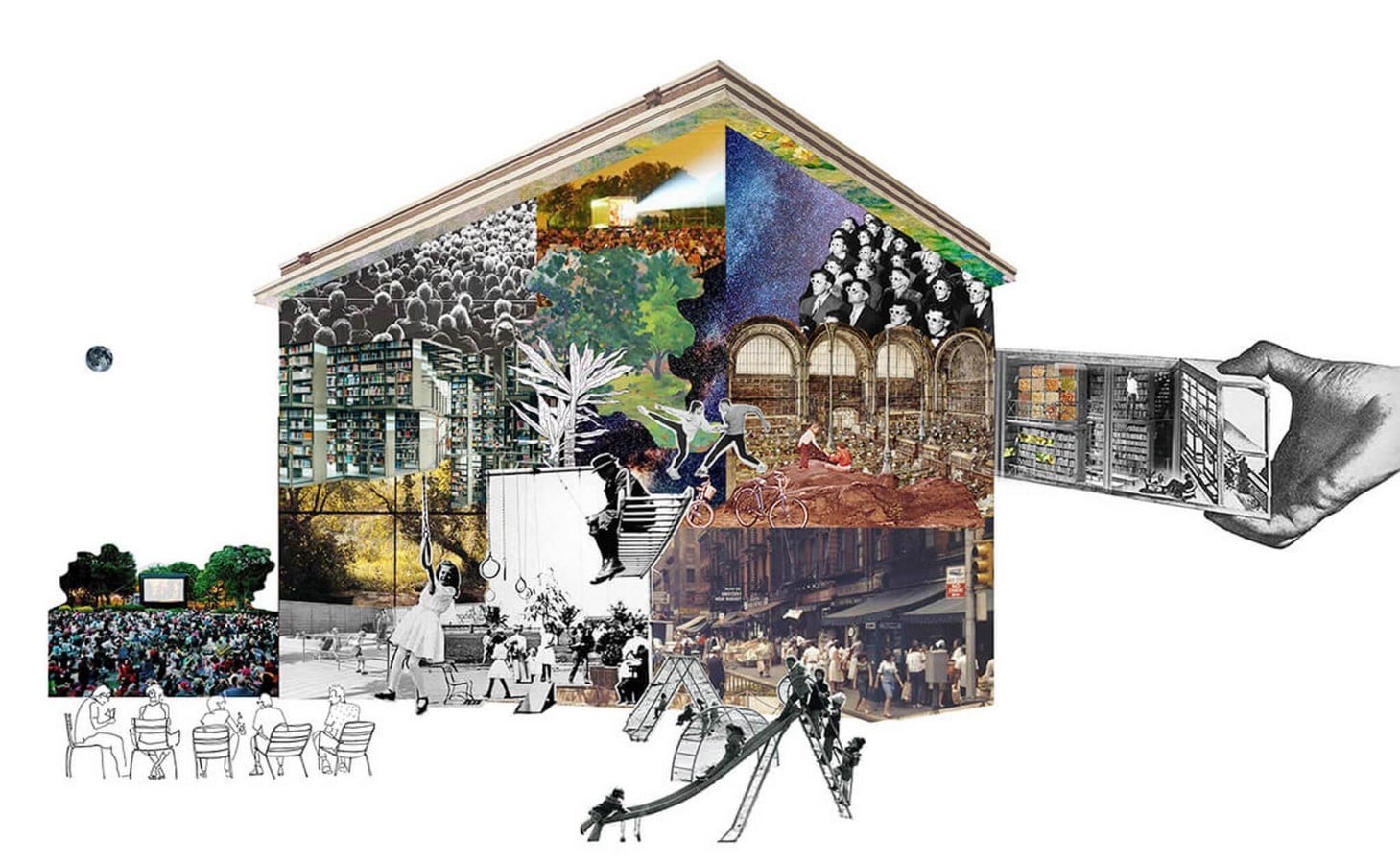
Design often begins with a state of accumulation, a provocation, a question, or perhaps a series of ideograms morphed directly from the context. Whether the starting point is a critical inquiry, a speculative leap, or a deeply grounded observation, these initial sparks re-emerge through the specific cognitive tools of collage and writing. Operating as parallel acts, both are inherently fragmentary and provisional; they allow architecture to be assembled as a process rather than forced into a resolution. In this linguistic medium, the designer isn’t seeking a final answer, but is instead managing a “loose field of intentions” where spatial meaning is constantly negotiated.
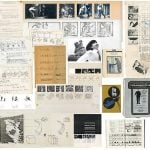
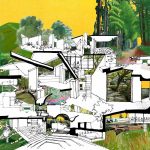
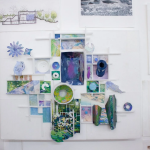
As seen in the practice of Tatiana Bilbao, sketches, text, references, and material traces are layered into a loose field of intentions, where meaning is not fixed but negotiated. Writing becomes a way of thinking through space, using phrases and annotations to probe the site’s potential. Collage performs a similar operation spatially: it brings disparate images, textures, and scales into a productive tension, allowing unexpected relationships to surface. Holistically, this method articulates a rich spatial imaginary, unveiling the latent narratives of a context, the overlapping layers of time, existence, and programmatic activity that define how a space is truly lived.
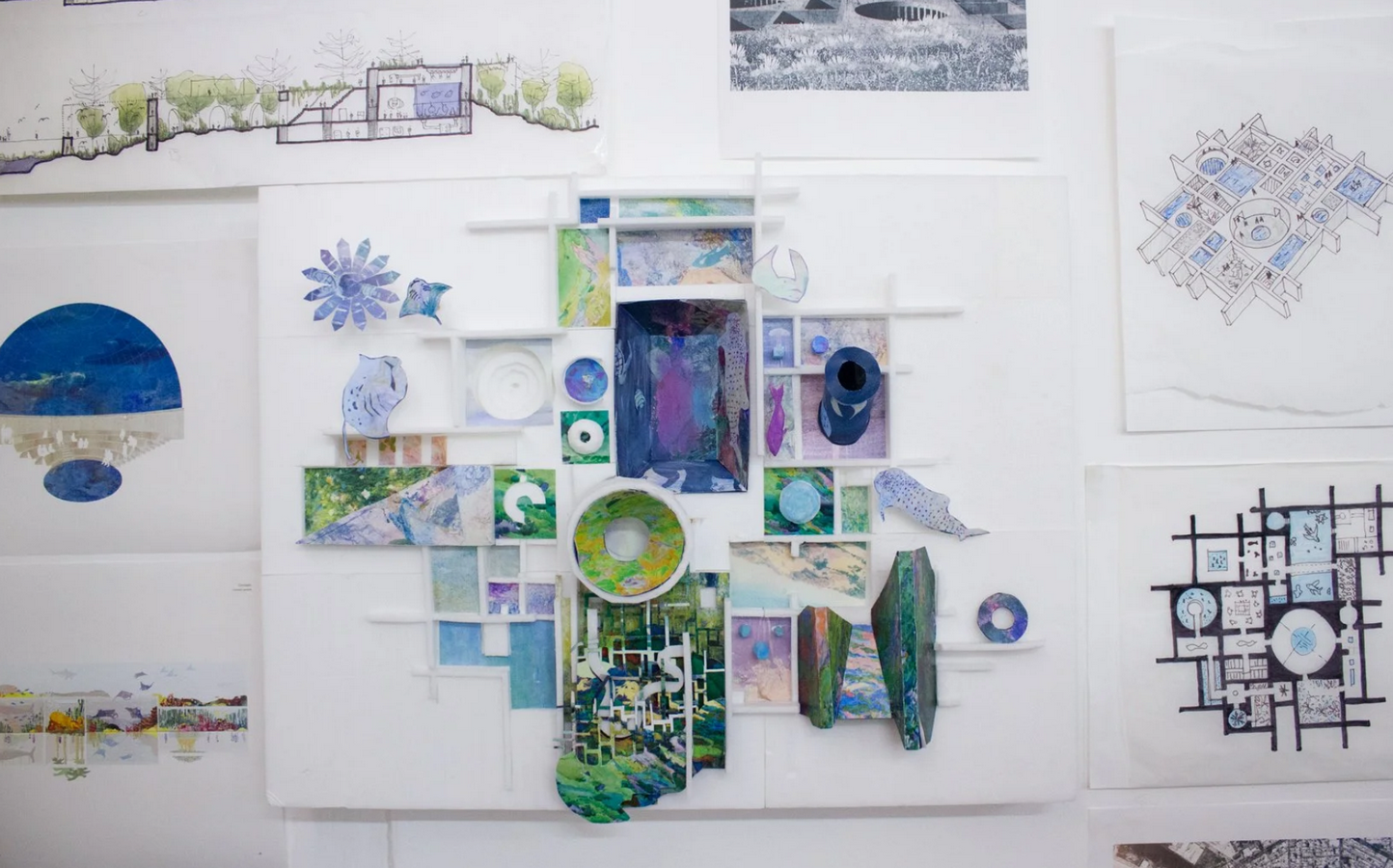
This process resists linearity. Instead of moving from concept to form, it oscillates, between drawing and text, image and memory, abstraction and context. The project develops through this back-and-forth, where each fragment carries partial meaning, and only in their assembly does a spatial logic begin to surface. What is produced is not a singular idea translated into form, but a heterogeneous construct, one that holds contradictions, overlaps, and ambiguities. In this sense, collage and writing are not representational tools but generative grammars, enabling architecture to be composed as a lived, layered narrative rather than a closed object.
The Grammar of the Intangible
The investigation into “Design as Process” reveals that the conversion of intangibilities into tangible spatial attributes is the result of specific grammatical moves. Whether it is the word-play of Edward Ogosta’s “Analogues,” the sequential disjunction of Bernard Tschumi’s “Manhattan Transcripts,” the deconstructive layering of Peter Eisenman, each method seeks to bridge the gap between abstract theory and physical reality.
The core of these creative domains is the idea that a single word, a provocation, or a simple question can generate multiple perspectives, idioms, and domains of intersection. By treating architecture as a “figurative theory” and using literary prompts as tools, designers can move past the cold, data-driven and rationalistic tendencies that characterize the modern age.
However, we are now at an evolutionary crossroads where the ‘intangible’ is being recoded. As our intuitions and desires are fed into AI systems, we are moving into a domain where we are forced to think in numbers. This raises a critical question for the future of the discipline: can a machine ever truly replicate the subtle nuances of spatial atmosphere that define human life, or is the ‘human element’ being permanently adjusted to fit the systematic order of the algorithm?
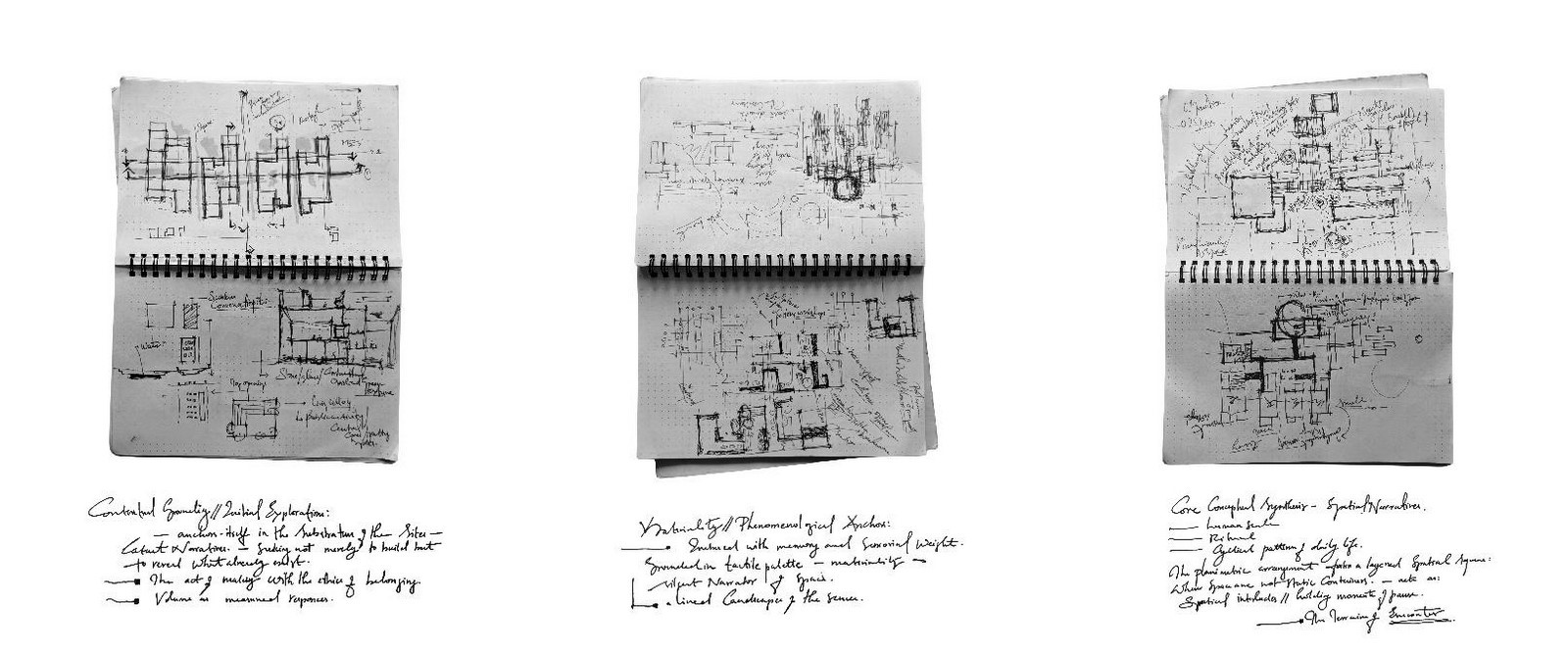
Ultimately, the essence of this transition lies in the tectonic of the unbuilt, the realization that the most profound parts of a space are often the ones that cannot be quantified. In an era of automated logic, the original linguistic spark remains our most vital anchor, ensuring that the ways we inhabit the world are not just calculated, but truly lived.
Reference:
- Eisenman, P. (1999). Diagram Diaries. [online]. Thames & Hudson. Available at: https://thamesandhudson.com/diagram-diaries-9780500280607 [Accessed 12 April 2026].
- Tschumi, B. (1996). Architecture and Disjunction. [online]. MIT Press. Available at: https://mitpress.mit.edu/9780262700603/architecture-and-disjunction/ [Accessed 12 April 2026].
- Holl, S., Pallasmaa, J., and Pérez-Gómez, A. (2006). Questions of Perception: Phenomenology of Architecture. [online]. William Stout Publishers. Available at: https://www.williamstout.com/publications/questions-of-perception [Accessed 12 April 2026].
- Eisenman, P. and Derrida, J. (1997). Chora L Works: Jacques Derrida and Peter Eisenman. [online]. Monacelli Press. Available at: https://www.monacellipress.com/products/chora-l-works [Accessed 12 April 2026].
- Bilbao, T. (2018). Tatiana Bilbao Estudio: Architecture from the Outside In. [online]. Lars Müller Publishers. Available at: https://www.lars-mueller-publishers.com/tatiana-bilbao-estudio [Accessed 12 April 2026].