We are living in the most interrupted era in human history. Phones buzz, multiple tabs, reels, autoplay; and every spare second gets filled with content. Attention today is no longer freely available; it is constantly under attack. In such a world, architecture gains a new responsibility. Buildings can no longer be designed only for efficiency or aesthetics. They must also help people focus, recover mentally, and feel calm. The future of architecture may depend not on how spectacular a building looks but on how well it protects the distracted mind.
This idea is already visible in some of the world’s most thoughtful buildings.
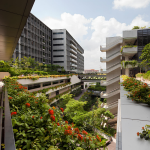
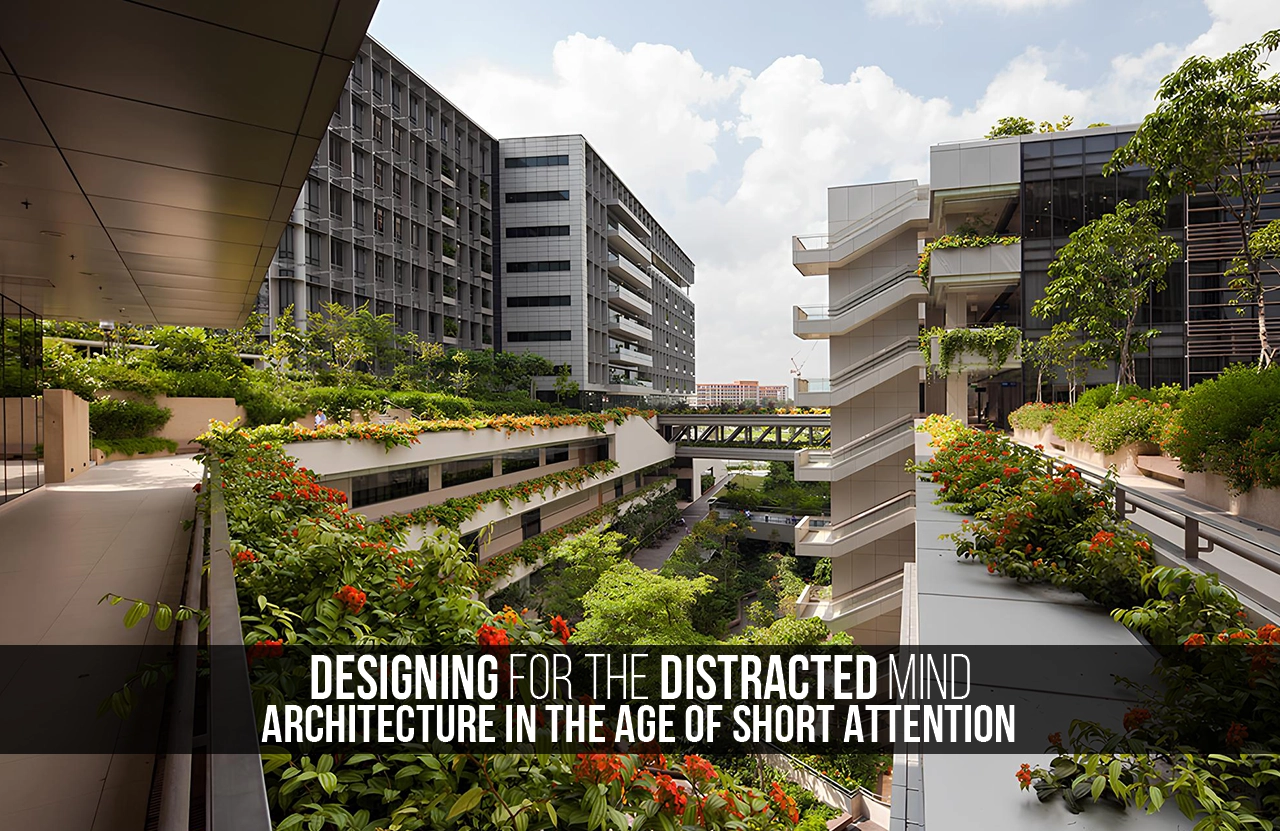
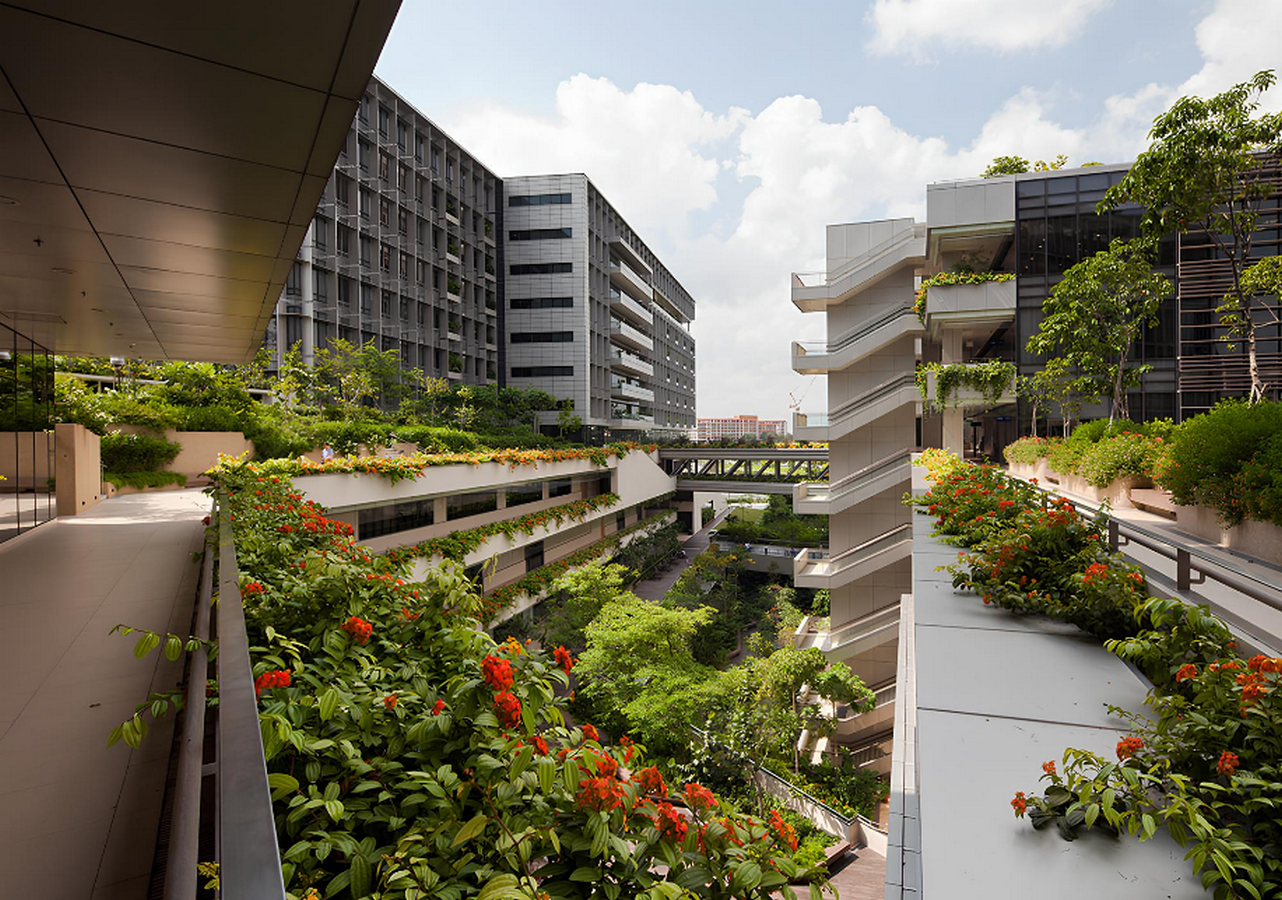
One of the strongest examples is Khoo Teck Puat Hospital in Singapore. Often called a “garden hospital,” it rethinks what healthcare spaces can be. Instead of sterile corridors and stressful waiting rooms, the hospital is filled with rooftop gardens, ponds, shaded courtyards and natural ventilation. Patients, staff, and even nearby residents use the gardens as places to walk, sit and breathe. Studies on the project highlight how access to greenery and fresh air reduces stress and creates a more restorative environment. The hospital proves that healing is not only medical but also spatial.
Now imagine the opposite condition: the modern open-plan office. Designed to increase collaboration, many such offices have instead become factories of distraction. Conversations, ringing phones, movement and visual interruptions constantly pull attention away from work. Research on office acoustics shows that irrelevant speech is one of the biggest causes of reduced cognitive performance in open workspaces. In other words, noise is not just annoying, it is mentally expensive.
Some workplaces have responded by creating quieter, more balanced environments. Offices by companies like Google and Microsoft increasingly include focus pods, phone booths, quiet libraries, wellness rooms and varied work zones instead of endless rows of desks. The lesson is simple: productive spaces need choice. People require both collaboration zones and spaces for deep concentration.
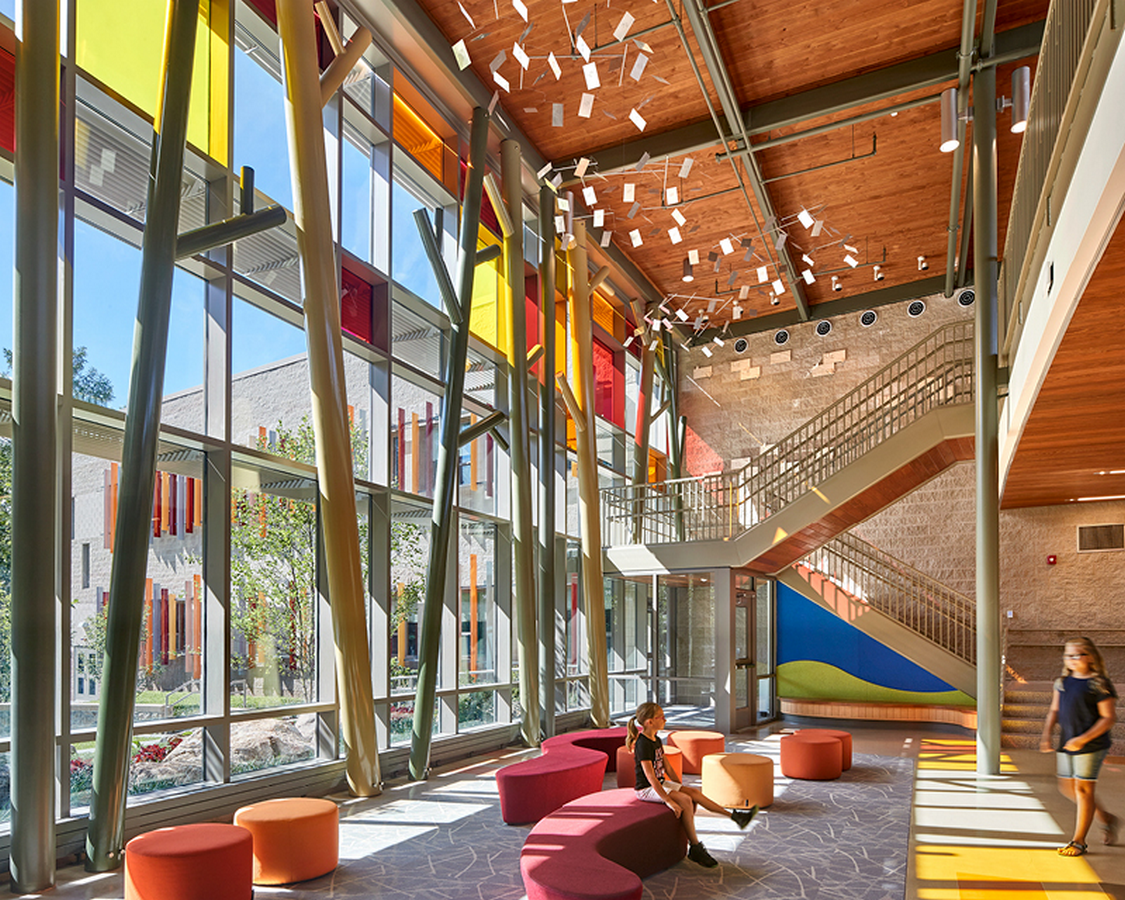
Education offers another important case study. The rebuilt Sandy Hook Elementary School in the United States was designed not only as a school, but as an environment for emotional healing after tragedy. Large windows bring in daylight, classrooms open toward nature, gardens are integrated into the campus, and materials feel warm and non-institutional. Rather than using harsh security-driven design alone, the architecture creates a sense of safety through light, visibility, softness and connection to landscape. It demonstrates that students learn better when they feel psychologically secure.
Universities, too, are recognizing the problem of mental fatigue. A study on restorative campus design found that students studying for long hours often experience attention exhaustion and benefit significantly from access to relaxing outdoor environments. Landscaped courtyards, shaded seating, water features and quiet green paths become more than beautification, they function as cognitive infrastructure. A campus garden can be as valuable as a classroom.
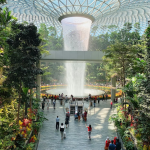
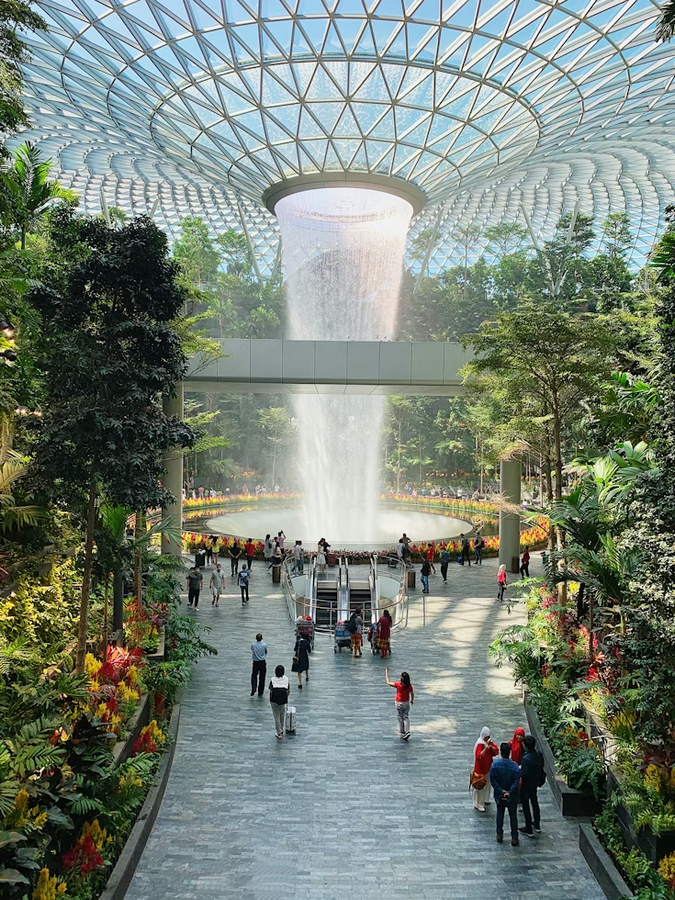
Even airports, perhaps the most stressful public buildings of all, are being redesigned for overstimulated minds. Jewel Changi Airport transforms the typical airport experience through a giant indoor forest, daylight-filled spaces, and the famous Rain Vortex waterfall. Instead of endless fluorescent corridors and retail overload, passengers encounter nature, openness, and visual calm. In one of the busiest travel environments imaginable, architecture creates pause.
What do these examples have in common?
First, they reduce cognitive load. Clear layouts, intuitive circulation and visible destinations mean users do not waste mental energy figuring out where to go.
Second, they use nature as restoration. Trees, gardens, water, sky views, and natural materials help the brain recover from directed attention fatigue. This is closely linked to Attention Restoration Theory, which suggests that certain environments gently engage the mind without draining it.
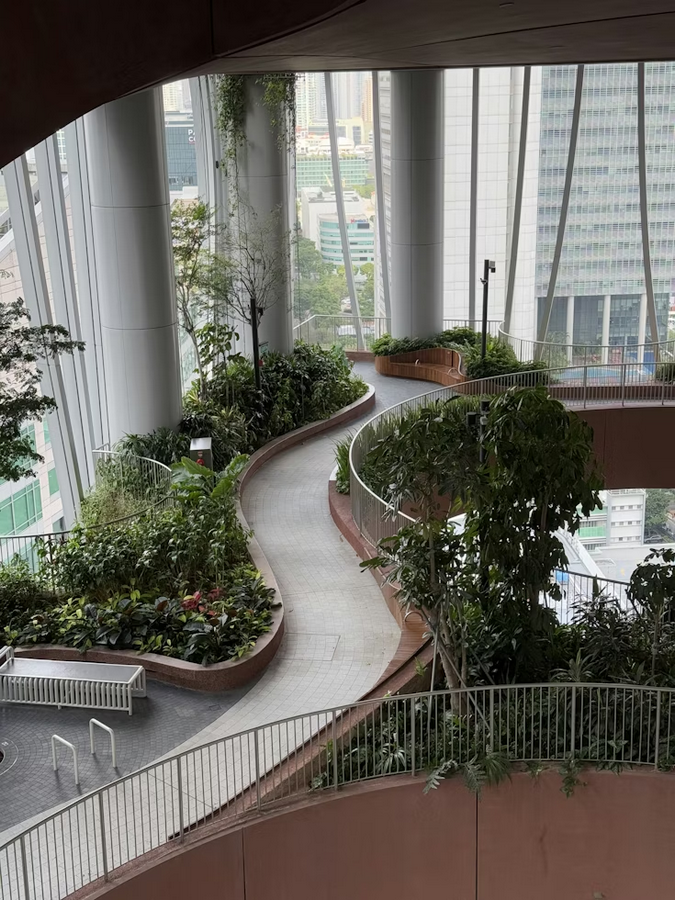
Third, they respect sensory balance. Good lighting, controlled acoustics, fresh air, and material warmth matter more than flashy forms. The distracted mind does not need more stimulation; it needs the right stimulation.
Fourth, they create moments of pause. Courtyards, verandas, benches, terraces, and transition spaces allow people to slow down. In a culture obsessed with speed, slowing down becomes a luxury.
This shift is especially important in cities like Mumbai, Tokyo, London, or New York, where overstimulation is built into everyday life. Traffic, density, noise, screens and speed already exhaust attention before a person even enters a building. Architecture should compensate for that pressure, not amplify it.
Designing for the distracted mind does not mean making every building silent or minimal. Cities still need excitement, energy and surprise. But great architecture knows when to stimulate and when to soothe. A museum can be dramatic in one gallery and contemplative in the next. A workplace can be social in one zone and silent in another. A home can be vibrant yet still contain a corner for solitude.
In the age of short attention, the greatest luxury may not be space, technology, or height. It may simply be the ability to think clearly. And architecture, when designed wisely, can give that back to us.
Ahirwadi, P.L. (2023) Auditory distraction in open-plan office environments: The effect of multi-talker acoustics, arXiv.org. Available at: https://arxiv.org/abs/ (Accessed: 16 April 2026).
Ahirwadi, P.L. (2024) The architectural design strategies that promote attention to foster mindfulness: A systematic review, Content Analysis and meta-analysis, MDPI. Available at: https://www.mdpi.com/ (Accessed: 16 April 2026).