Architecture is an industry shaped by the social and political climate that revolves within and around the world. The current age in the industry calls for a shift from mechanical construction methods that were introduced around 50 years ago, which included advanced machinery and modular prefabrication, to computational construction methods that involve agent-based simulations, parametric modelling and AI-driven processes to improve efficiency in architectural planning. At the dawn of such a shift, the gap between what a regular architect does and the scope of work of a lead architect, or synonymously “Architectural Project Manager”, only grows wider, and thus more valued.

Researchers predict a 3% increase in the number of Architectural Project Managers (APM) employed between 2018 and 2028, making it a low-risk and resilient career goal to have for current young architects. While hard skills related to the architecture profession are necessary for this role, it is the set of soft skills that one possesses that finally qualifies a person to be an APM. Managing a project is similar to managing your own life. Hence, the journey to be an APM not only upgrades your value in the profession but also who you are as a person. Which is why this role isn’t one which graduates can hop into the day after they graduate. Later on in this article, you will discover how and why it would take a minimum of 3 years to be internationally certified, though you can still kickstart the attainment of this certification by acting within managerial roles early on in your career.
The Transition from Project Architect to Project Manager

Just as a director instigates cooperation between the large number of people mentioned in the rolling end credits to produce a complete movie, architectural project managers decide the general vision and workflow of the project and act as a pillar that the several sub-categories of workers, as well as clients and shareholders, lean on for up-to-date information and direction of action. The following points outline the role expected of a project manager during the timeline of a project. This is important to understanding what soft-skills to cultivate within you for this role while you are still an architecture student or someone just stepping into practice as a junior architect. The following can also be related in small ways to how smaller team projects work.
- Detailed Planning and Coordination: Architectural Project Managers consult clients to understand their requirements and help define a project brief. According to this, they further estimate budgets and build a realistic schedule and workflow, which is then communicated by them to all parties involved: the clients, stakeholders, architects, engineers, contractors, vendors, and more.
- Execution and Risk-management: Once the project kicks off, they allocate resources and make sure stage-by-stage deliverables are produced according to schedule. Through daily communications and meetings, any roadblocks are mitigated as the project progresses. They ensure compliance of the deliverables with the adopted codes, track the expenses of materials, labor and timelines, along with developing a mitigation plan in case of risk.

3. Maintain a good relationship and build trust: They must also inculcate the skill of maintaining good relations with all clients and stakeholders by resolving their issues on-the-go and stimulating the operations team to deliver their requirements through regular progress meetings. This also includes the final stage: putting a full stop to the project on good terms whenever suitable.
It can be understood that, other than possessing architectural experience and technical knowledge, if you are also detail-oriented, a diplomatic communicator, a strong leader, level-headed decision maker during crises, an efficient problem solver, an associative and critical thinker, interested in crunching numbers for estimations and good at organising information logically for others to understand, then you are all set to step into the shoes of a project manager!
If that list worries you, then the good news is that no one is born with these skills, it is only built through experience in the field. An architect who is poised to become a manager at some point in their career would have to start honing one or more of these soft skills one by one in their worklife as a regular architect and work upwards until they can be vouched for by their peers and add these skills to their resume and portfolios.
How to Stabilise Your Career as an Architectural Project Manager?
Being promoted to a project manager in one firm may not always mean you’ll step into a similar role in your next firm. This happens commonly, especially when you switch countries, even though you have more than proven to be capable or have several years of architectural experience. This is where certifications for project management come in. Training for these certifications equips you with skills that can broaden your scope to a broader range of situations, rather than the specific situations in the context and scale your firm operates within, establishing your commitment to the position and appealing to bigger and more global platforms. It helps to enhance the credibility, capability, and expertise of a professional in less time.
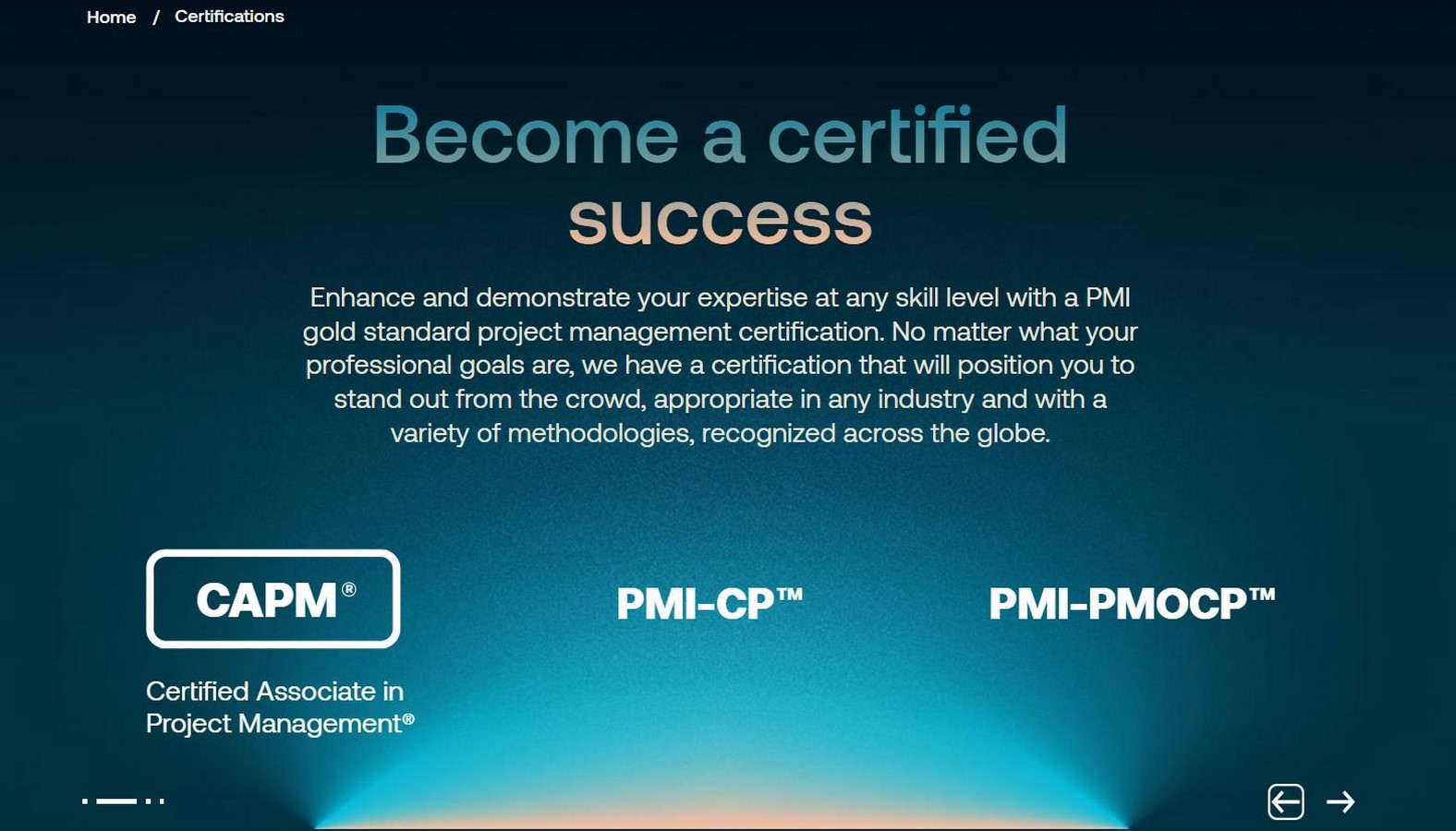
While several well-known region-specific certifications exist, like Certified Construction Manager (CCM) for the US and RIBA Certificate in Project Management for the UK, there are also global management certifications to look out for. These are not specific to architecture, but are a common prerequisite that’s sought by corporate and government clients.
Project Management Professional (PMP) Certification
This is the industry gold standard that project managers aim for due to its worldwide recognition, credibility and automatic command for higher salaries. The Project Management Institute (PMI) draws a few eligibility criteria for their exam, which is a theory exam based on their PMBOK Guide book.
For the application of the PMP exam, the PMI requires proof of mainly 3 items.
- A) A 4-year degree.
- B) Work experience, i.e., a minimum of 36 months of employment performing activities related to project management.
- C) 35 hours of formal project management education verified by the training provider.
As a graduate with zero to minimal experience, what you can do is push to take up activities that come under project management under different phases of the project, like initiating, planning, executing, monitoring, and closing a project. Alongside, start by documenting your management tasks with 200-500-word descriptions along with start and end dates using Excel (Pro tip! Pick up advanced Excel skills as you do this, to help you grasp other advanced software). Don’t forget to maintain good relationships with the people who can vouch for your work, and keep them informed when you later apply for the exam, as PMI might reach out to the referenced contacts as a part of their auditing process.
This certification is as time-consuming as it is valuable, and can take a minimum of 3 years, and usually even more. The next certification acts as a kickstarter for this tedious process.
Certified Associate in Project Management (CAPM)
Also managed by the PMI, this is the entry-level version of the PMP certification, as it does not require any professional experience. Anyone with a secondary degree (high school, GED, or global equivalent) and 23 hours of formal project management training is eligible to write this exam. Possessing the CAPM certification gives you an edge over other architects and marks you as a more credible candidate for project management-related activities within the firm you work at. Additionally, project management-focused internship openings and junior roles become more accessible to you once you have attained CAPM or a Master’s in Project Management. Pursuing a master’s in project management from well-reputed institutions also becomes an attractive option, as their placements allow you to streamline your entry into the core of the industry even further.
Projects IN Controlled Environments 2ndedition (PRINCE2) is another certification which is based on a different project management methodology than the PMP. It is a well-reputed certification to pursue if you are aiming for Europe and Australia, especially to work in public and government projects where this methodology is well integrated.
Future Projections and Expected Software

Certifications in BIM software like Navisworks or Revit for clash detection are also highly sought after in new project managers. Further, project management is a multi-faceted task, which calls for advanced software that assists managers in solving and tracking project issues and progress efficiently. MS Excel, Microsoft Project, Oracle Primavera P6, Autodesk Construction Cloud, are some major software you might have the opportunity to familiarise yourself with while working on project management tasks.
As AI grows to be holistically integrated into design and construction practices, the project management sub-category will only evolve in function, but its framework and methodology are expected to stay resilient to unexpected outcomes, making it a stable and well-paying option for a long time. According to a PMI survey, to meet industry demand, India alone will require more than 70K experienced project managers annually over the next 10 years. Almost every industry needs someone in this position to improve decision-making, outcomes, and revenue growth.
REFERENCES LIST:
D.Davis, K. (2026) How to become an architectural project manager in 2026?, knowledgehut. Available at: https://www.knowledgehut.com/blog/project-management/how-to-become-architectural-project-manager (Accessed: 01 March 2026).
R , V. (2024) How To Become An Architectural Project Manager?, StarAgile. Available at: https://staragile.com/blog/architectural-project-manager (Accessed: 01 March 2026).
Project Management Professional (PMP)® certification | PMI (no date) Project Management Institute. Available at: https://www.pmi.org/certifications/project-management-pmp (Accessed: 01 March 2026).
Certified associate in Project Management (CAPM)® Certification. Available at: https://www.pmi.org/certifications/certified-associate-capm (Accessed: 01 March 2026).
Shastri, S. (2025) Real PMP experience examples for PMP application [with PDF], Techademy. Available at: https://www.techademy.com/pmp-experience-examples (Accessed: 01 March 2026).
Shastri, S. (2025a) PMP audit: How to prepare & what to expect in 2025, Techademy. Available at: https://www.techademy.com/pmp-audit (Accessed: 01 March 2026).
Can a fresher become a project manager? (2022) Techcanvass. Available at: https://techcanvass.com/blogs/can-a-fresher-become-project-manager?srsltid=AfmBOor4x5E-FgnALCKX25XSFz5CLt6TcA9x0db_mG8msza32vY3tYik (Accessed: 01 March 2026).
CAPM vs PMP Certification – A detailed comparison (2022a) Techcanvass. Available at: https://techcanvass.com/blogs/capm-vs-pmp-certification#second (Accessed: 01 March 2026).