Retrofitting is often introduced into architectural discourse through necessity rather than intent. Buildings must consume less energy, meet evolving regulations, and respond to changing patterns of occupation. In this framing, retrofit is positioned as a corrective act, something imposed upon an existing structure to fix inefficiencies or prolong usefulness. Aesthetic considerations are frequently treated as secondary, or worse, as constraints that must be negotiated around.
Yet this understanding is increasingly inadequate. Contemporary research and practice suggest that well-designed retrofits do not dilute architectural character. Instead, they can sharpen it. When aesthetics are treated as integral rather than optional, retrofitting becomes an opportunity to enhance visual identity, cultural relevance, and market value while simultaneously delivering environmental performance.
Aesthetic Anxiety and Resistance to Change
Much of the resistance to retrofitting stems from concern over appearance. Homeowners fear the loss of spatial generosity due to added insulation. Architects worry that solar panels, shading devices, or new materials may disrupt carefully composed facades. In historic contexts, even modest interventions are often viewed with suspicion.
Interestingly, research consistently shows that this hesitation is not rooted in opposition to sustainability itself. Energy efficiency is widely supported in principle. Resistance arises when efficiency is perceived as visually intrusive or spatially compromising. Aesthetic anxiety, rather than technical doubt, becomes the primary barrier.
This distinction is important. It suggests that retrofit adoption is not simply a matter of improving performance metrics, but of aligning upgrades with aspirations for beauty, comfort, and identity.
When Design Takes the Lead
Where retrofitting is led by architectural design rather than engineering necessity alone, outcomes change significantly. Performance upgrades become part of a broader spatial and visual strategy instead of isolated technical insertions.
Customisable photovoltaic systems are increasingly designed as facade elements rather than rooftop add-ons. Insulation strategies are paired with material re-articulation, deepened reveals, or new surface textures that enrich the building envelope. Green roofs are valued not only for thermal benefits, but for the spatial and experiential qualities they introduce.
Research highlights that such visually integrated retrofits are more readily accepted and more highly valued. In many cases, buildings that combine energy efficiency with architectural clarity experience a measurable increase in market value, often between 7 and 17 percent. The appeal lies not only in reduced operational costs, but in the perception of quality and care embedded in the design.
Retrofitting in Heritage Settings
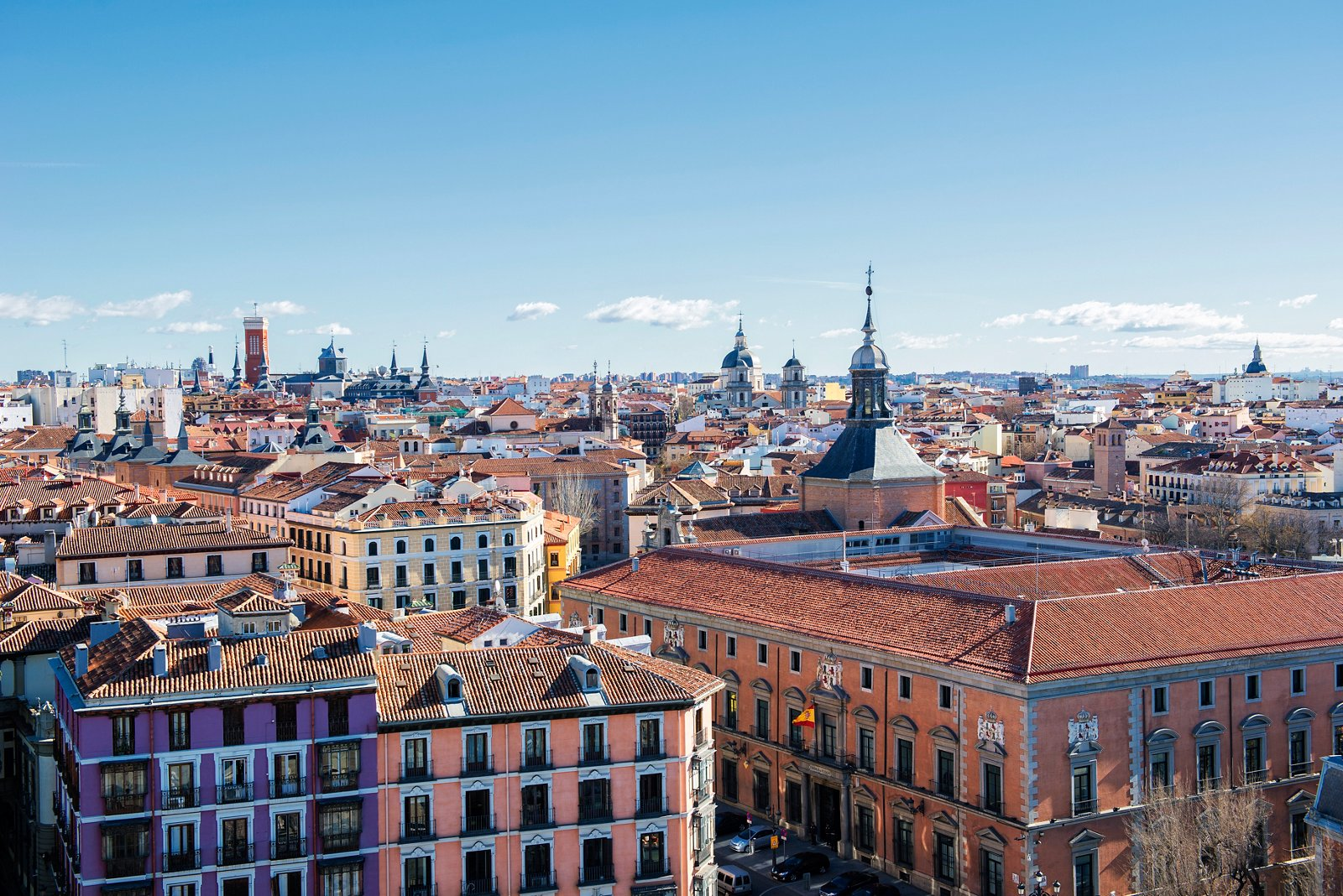
The tension between performance and appearance is most pronounced in heritage buildings. Here, invasive interventions are frequently rejected on the grounds that they threaten historical integrity. As a result, retrofit strategies have traditionally been cautious, prioritising preservation over environmental performance.
Recent literature, however, points to an alternative approach through “soft” retrofits. Measures such as secondary glazing, interior shutters, thermal curtains, and reversible insulation systems operate within the existing architectural language. They improve comfort and energy performance without altering external appearance.
These strategies are often viewed positively by occupants and conservation authorities alike, precisely because they respect visual continuity. Sustainability is achieved quietly, without spectacle. In such cases, the success of the retrofit lies in its restraint rather than its visibility.
Buildings as Evolving Artefacts
Retrofitting also encourages a different understanding of architecture itself. Existing buildings are not static objects frozen at the moment of completion. They are accumulations of time, shaped by changing technologies, regulations, and social expectations.
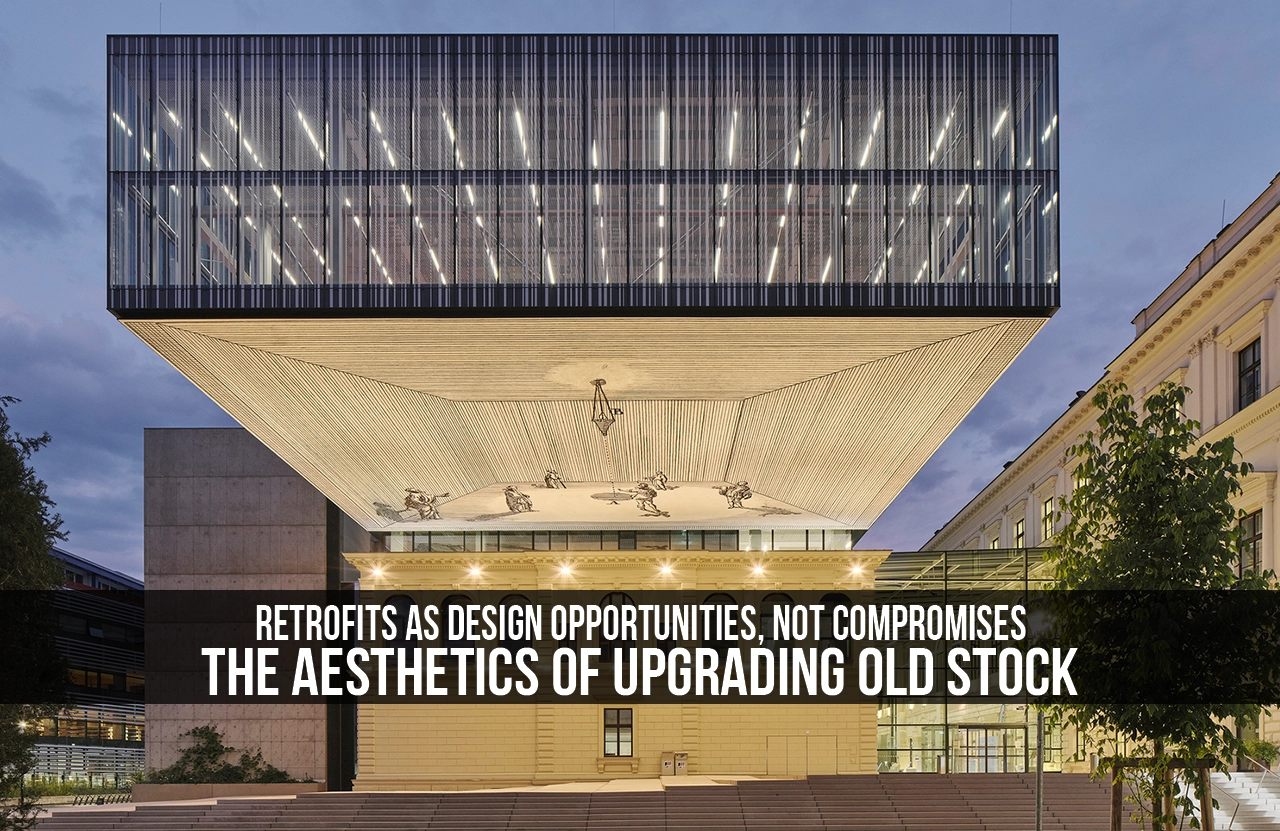
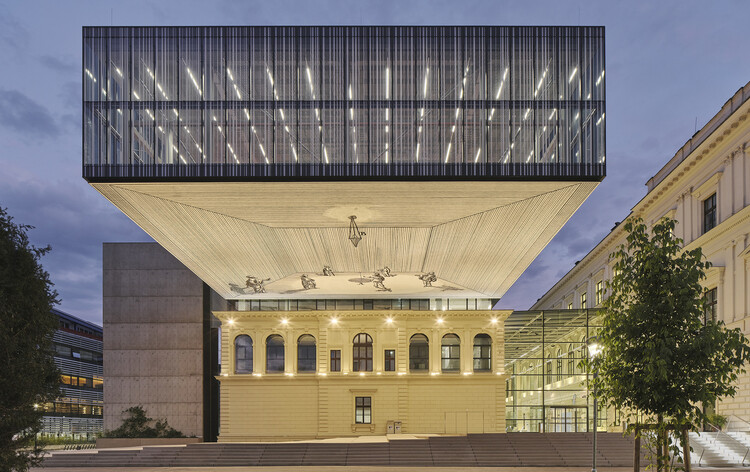
Design-led retrofits acknowledge this layered condition. Rather than seeking seamless integration, they allow old and new to remain legible. Contrast is not treated as failure, but as evidence of continuity and care. The building becomes a record of adaptation rather than an attempt at artificial unity.
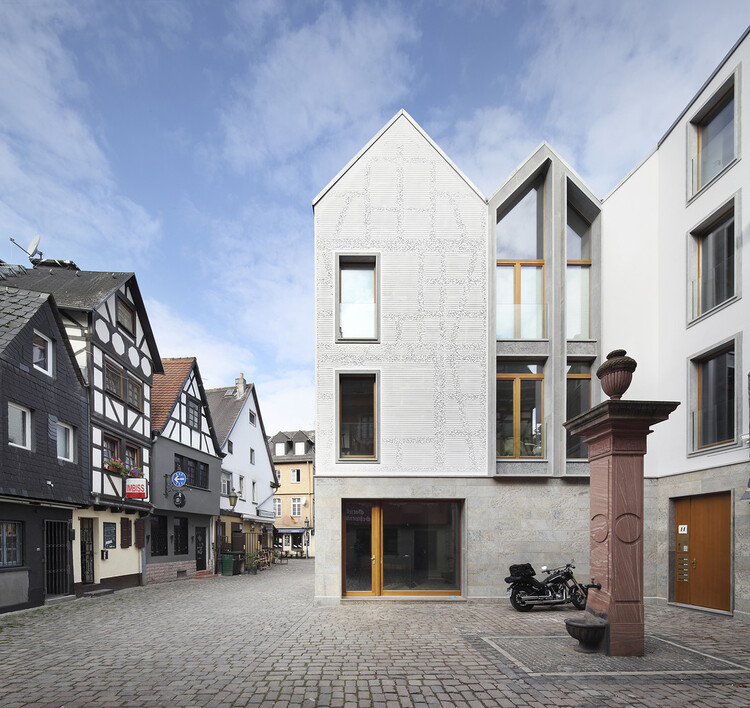
At the urban scale, this approach supports continuity. Cities retain their memory while evolving incrementally. Streetscapes change without becoming anonymous, and architectural identity is strengthened rather than erased.
Rethinking Value and Responsibility
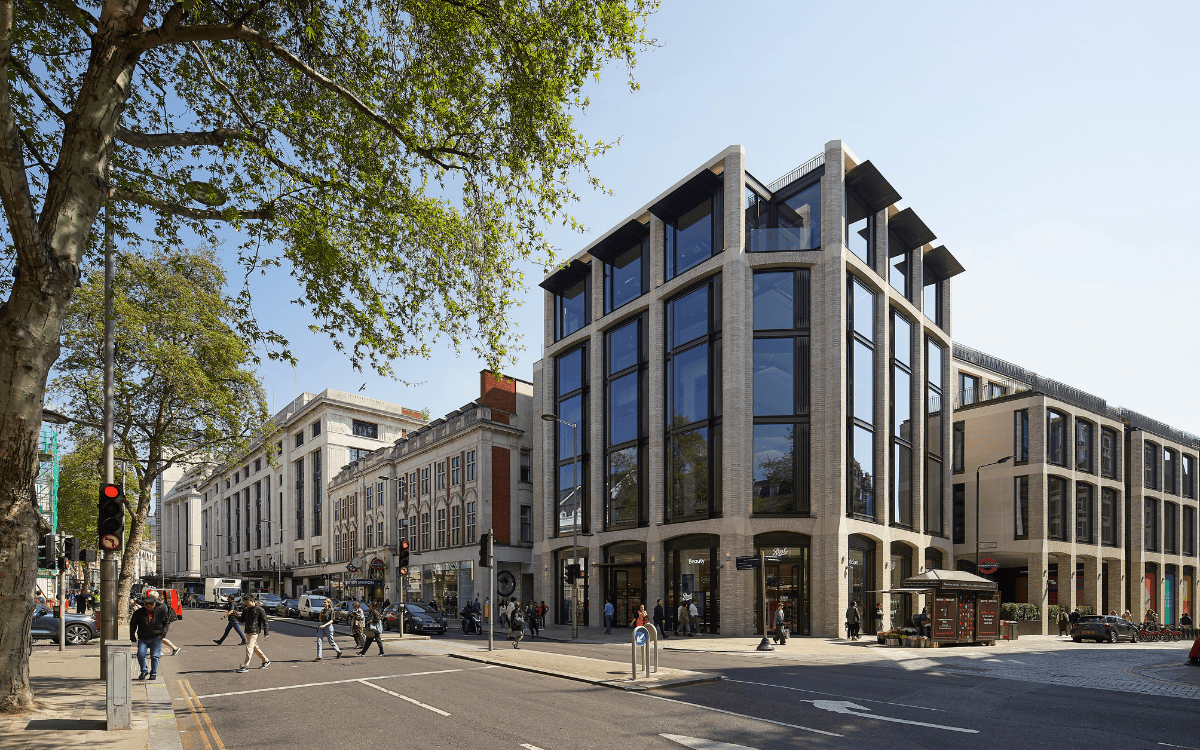
Perhaps the most significant shift is cultural. Retrofitting is no longer understood as a compromise reserved for constrained situations. It is increasingly recognised as an ethical and architectural choice.
Buildings that are carefully upgraded rather than replaced signal respect for material resources, embodied energy, and cultural context. Aesthetically, they tend to feel grounded and deliberate. They are contemporary without being aggressive, efficient without being sterile.
In an era defined by environmental urgency, retrofitting reframes architectural ambition. The question is no longer how to build more, but how to work more intelligently with what already exists.
When approached as a design opportunity rather than a technical obligation, retrofitting allows architecture to do what it does best: think carefully, intervene selectively, and shape a future that remains visibly connected to its past.