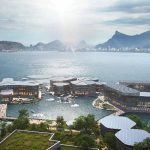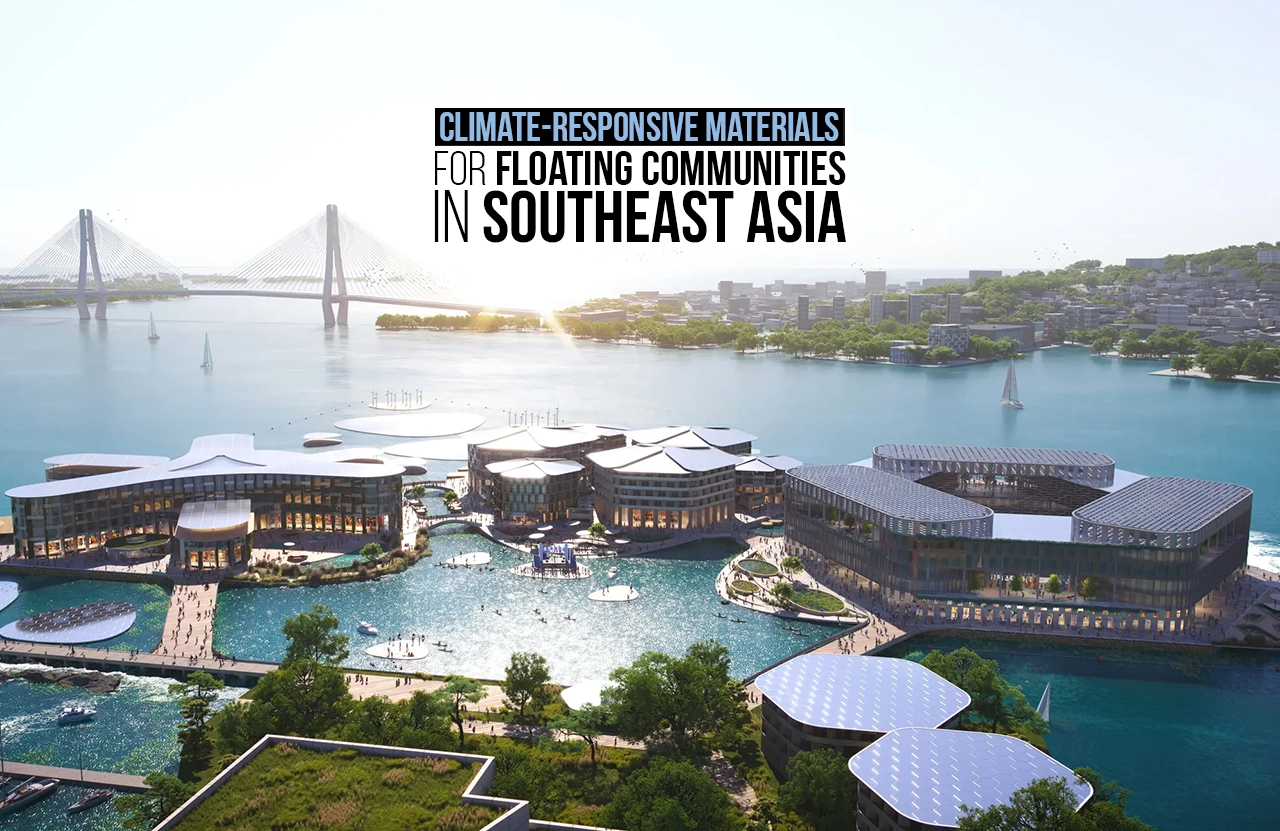
Southeast Asia is a region with a rich marine diversity. It contains vast coastlines, widespread archipelagos and low-lying deltaic plains. For such a region, the rising sea levels aren’t a distant threat, but rather a continuous reality. With the climate crisis intensifying, the relationship between water and architecture is being redefined radically. Conventional defences of using dykes and seawalls are failing. Jakarta sinks steadily, while the Mekong Delta is vulnerable (Glavovic et al., 2022). The future of dwelling in Southeast Asia is thus in communities that float. The success of this amphibious urbanism, however, relies entirely on climate-responsive materials. Materials that can withstand the extreme humidity, high salinity, intense solar radiation and destructive cyclones of the tropical climate.
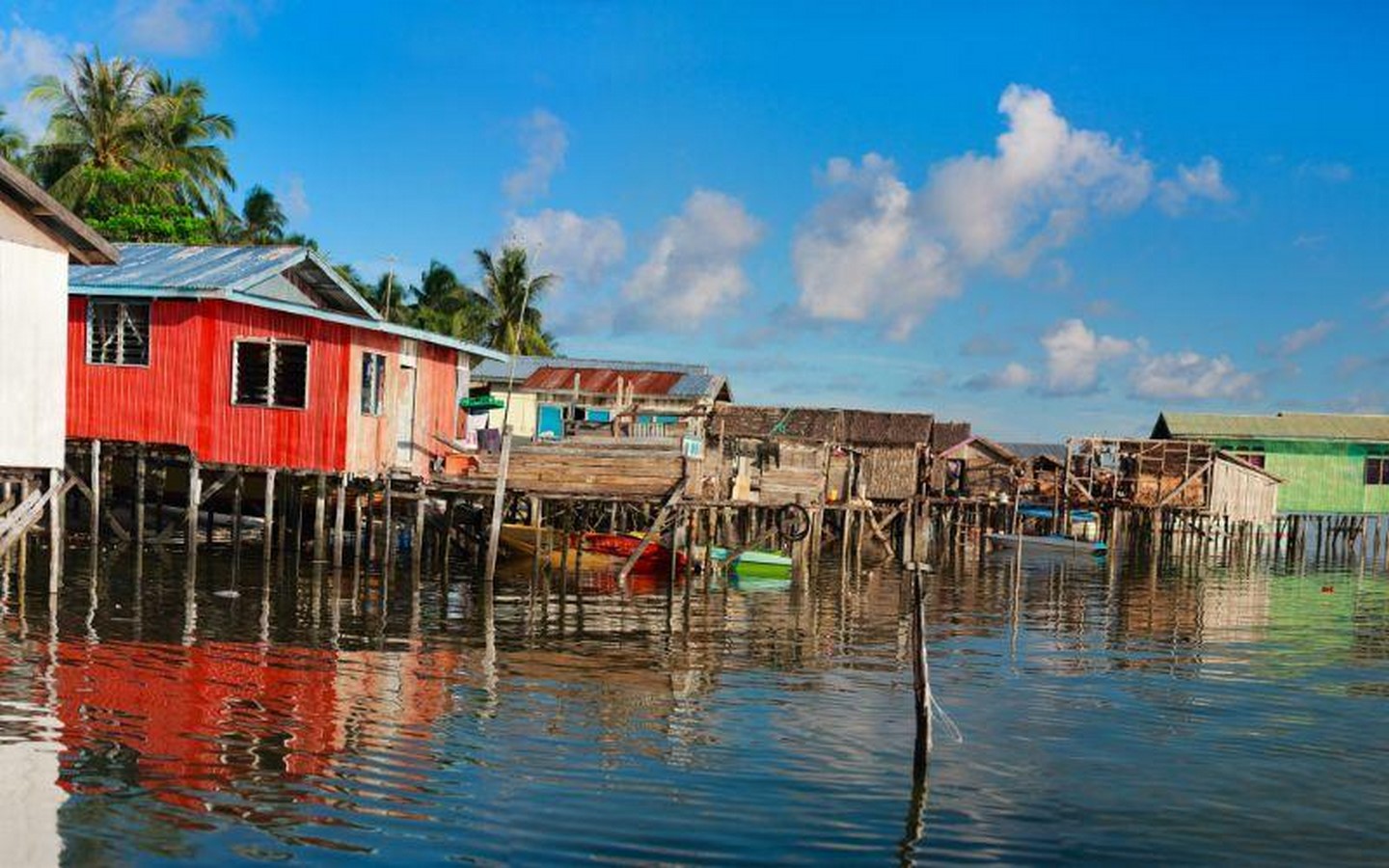
A Region Defined by Water
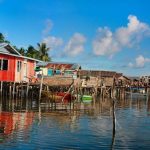
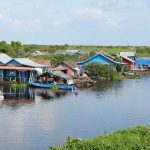
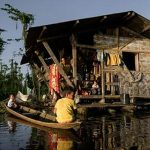
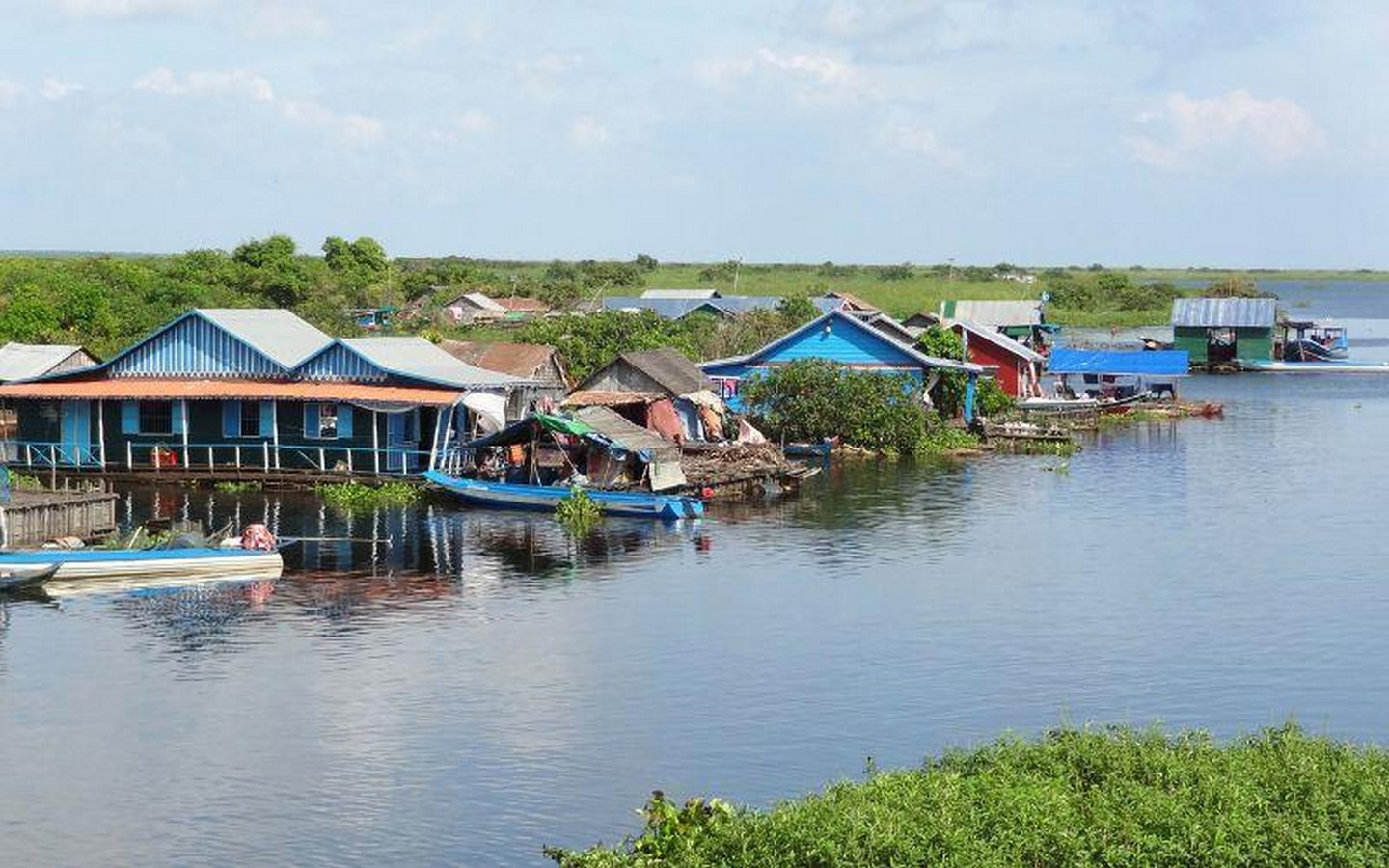
The vernacular architecture of Southeast Asia is largely amphibious. The structures are comfortable with changing water levels. These could include the Rumah Panggung of Indonesia and Malaysia or the floating villages of Tonlè Sap in Cambodia (Wikipedia Contributors, 2025). Designing modern floating communities would require a thorough understanding of the tropical maritime climate and the usage of new-age materials.
The high salt content in coastal air and water degrades standard steel and untreated concrete, while warm waters encourage bio-fouling or the growth of rapid algae, barnacles and fungi, which compromise the buoyancy of floating foundations. High humidity and optimum temperatures would require the usage of materials with a low thermal mass. For the floating communities to be resilient urban settlements, the materials used must be tested against several environmental stressors (Armiwaty et al., 2025).
The Foundation
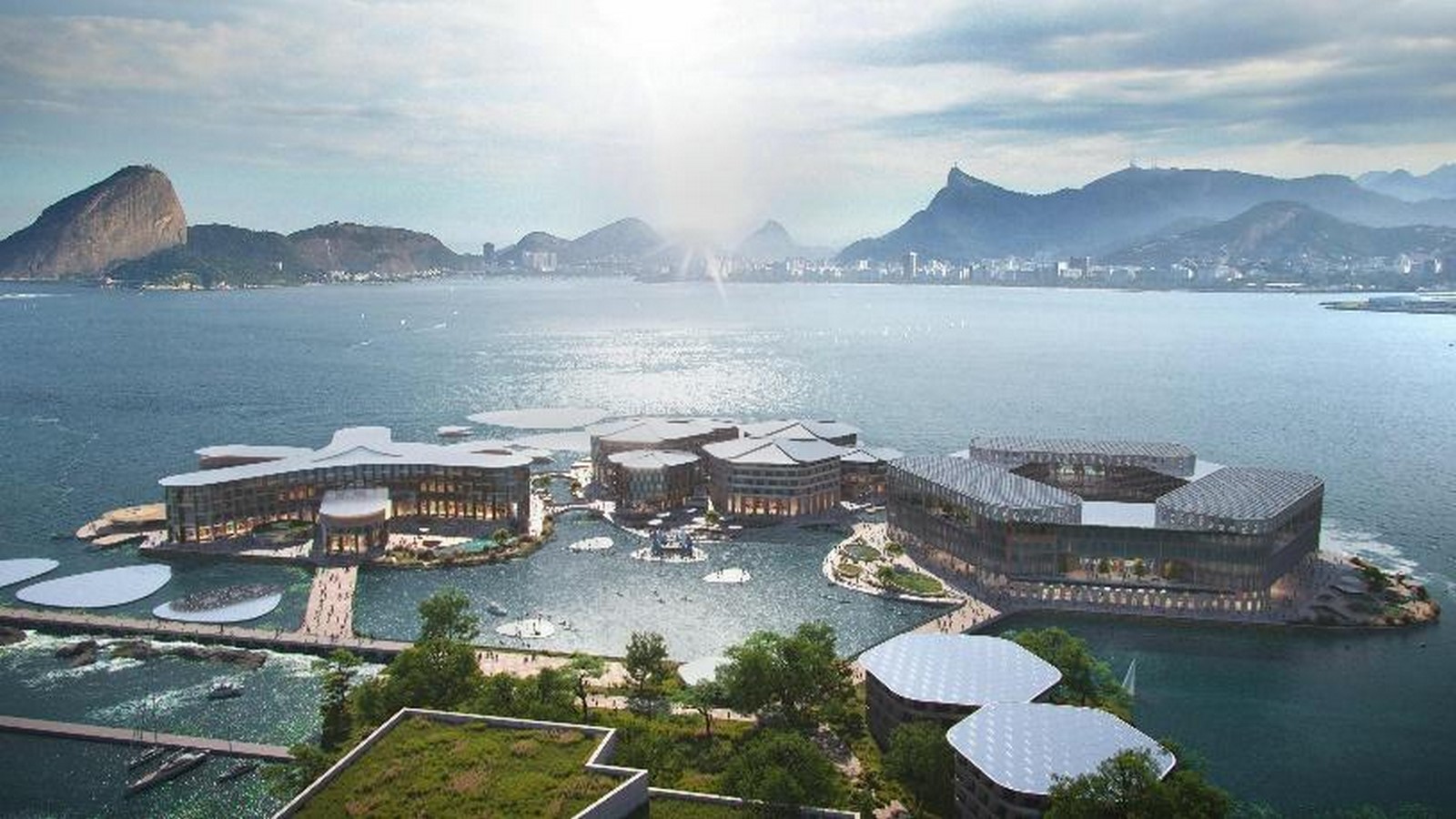
The two most critical properties of an amphibious structure are durability and buoyancy. The pontoon or the hull is thus one of the most important components of a floating community. In Southeast Asia, the affordability of materials is as important as their durability. A choice that is becoming increasingly popular for the foundations of floating structures is ferrocement. It is a system where reinforced mortar is applied over layers of metal mesh. While its high alkalinity prevents the internal wire mesh from corroding and its density provides a natural barrier against bio-fouling, its light weight and resistance to cracking make it easily repairable for the local artisans (I.E.L. Sigit-Arifin, Sheng and P. Nimityongskul, 1990).
The plastic crisis in the ocean reiterates the need for a circular approach in Southeast Asia. Many floating structures use HDPE pontoons made from recycled waste due to their chemically inert nature and immunity to rot or corrosion (Shell, 2025). It absorbs the energy of typhoon surges without breaking apart. Due to its flexibility, it is a highly viable alternative.
The Superstructure
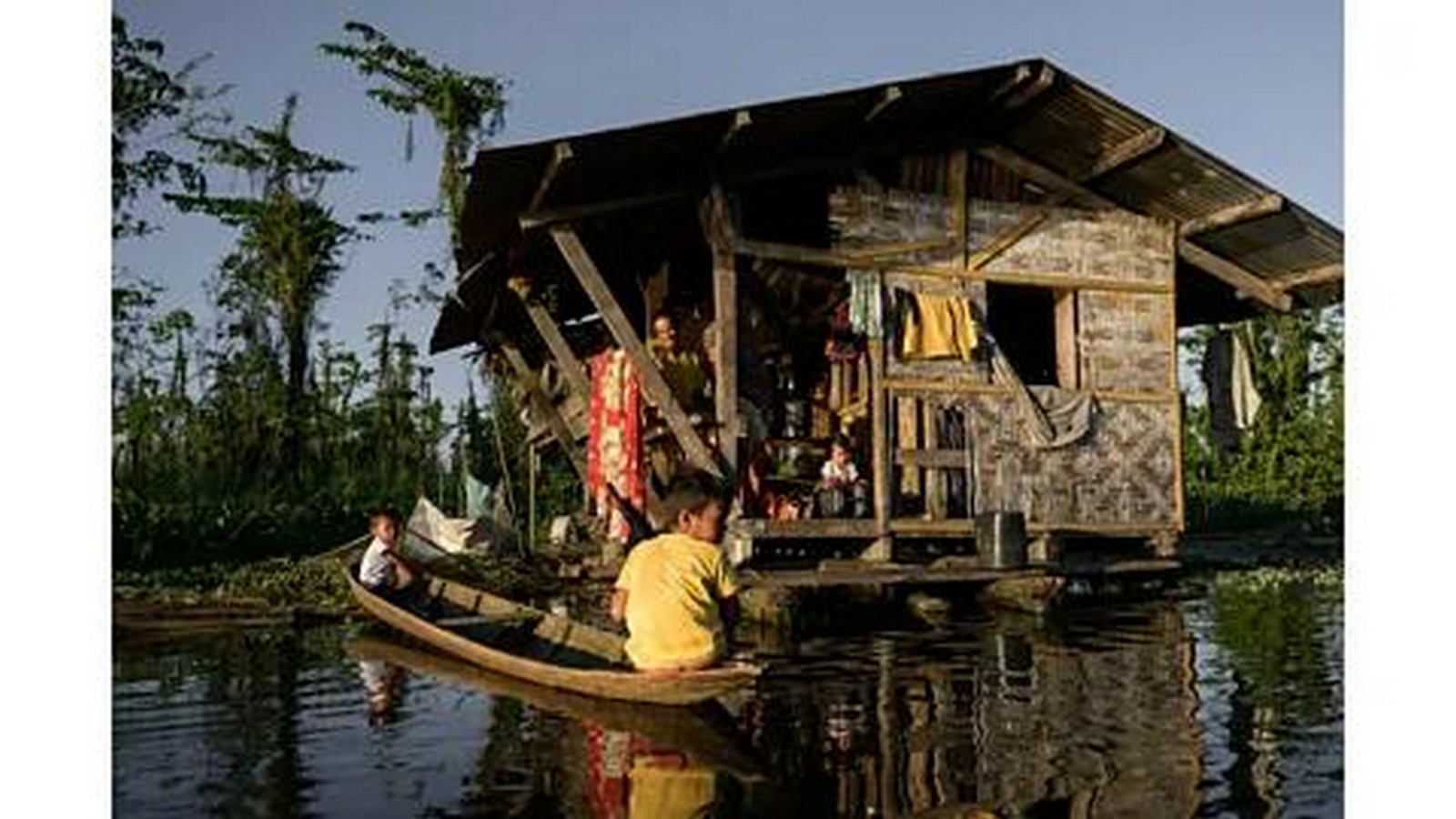
With buoyancy taken care of, the material selection of the superstructure determines the thermal comfort and the carbon footprint of the building. In this regard, Southeast Asia utilises a resource that is as ubiquitous as it is renewable: bamboo. It has an ideal strength-to-weight ratio, reducing the load on the foundation. Bamboo does not store heat during the day. Once the sun sets, this causes the buildings to cool down quickly. It thus has a very low thermal mass, a highly necessary feature for the humid climate of the region. Modern engineered bamboo allows large-span structures, which were previously not possible (Web, 2023).
Bio-Composites and Cool Roofs
While traditional thatch roofs provide good ventilation, they lack durability. Modern projects in Southeast Asia are now working with bio-composites. These are resin reinforced with natural fibres like coir (coconut husk) or pineapple silk. These reinforcements are found in abundance as by-products of agricultural yields (Omar El Hawary et al., 2023). A further challenge for the floating communities is glare bouncing off the water’s surface and reflecting onto the building. The use of phase-change materials in the walls or the roof (PCMs) decreases indoor temperatures significantly. These PCMs reflect the infrared spectrum of solar radiation (US EPA, 2014).
Resilience and the Local Factor
For floating communities to adopt these climate-sensitive materials, the materials must be adaptable. Their upkeep and maintenance should be possible for the local people, using local tools. They should be maintained by the community. If they require special tools and expert builders for repair, they are not adaptable and hence not resilient. A common hybrid emerging is the usage of high-performance, global material for the foundation, which would require little to no maintenance and the usage of local materials in the superstructure for the ease of modifiability and sustainability. This would eventually foster a sense of ownership in the community.
For architecture to thrive in water, the utilisation of climate-sensitive materials, from ancient bamboo to modern-day polymers, is necessary. Such materials that create structures that are light enough to float but strong enough to withstand storms should be selected. Case studies like the Tonlè Sap villages of Cambodia that moved from timber to HDPE pontoons to combat deforestation (De Meulder and Shannon, 2024), or prototype projects like the Floating Bamboo House of the Mekong Delta, demonstrate sustainable alternatives to the community. Southeast Asia’s shift to sustainable materials can increase its resilience to climate change, helping it withstand the rising tide.

Reference list:
Armiwaty, Jamala, N., Hamzah, B. and Mulyadi, R. (2025). Welcome To Zscaler Directory Authentication. [online] Najah.edu. Available at: https://journals.najah.edu/journal/anujr-a/first-online/article/2706/ [Accessed 15 Jan. 2026].
De Meulder, B. and Shannon, K. (2024). The Floating Urbanism of Cambodia’s Tonlé Sap. Blue Papers, 3(2). doi:https://doi.org/10.58981/bluepapers.2024.2.08.
Glavovic , B., Dawson , R., Chow, W., Garschagen, M., Haasnoot, M., Singh , C. and Thomas, A. (2022). Cross-Chapter Paper 2: Cities and Settlements by the Sea. www.ipcc.ch, [online] pp.2163–2194. doi:https://doi.org/10.1017/9781009325844.019.
I.E.L. Sigit-Arifin, Sheng, Y.K. and P. Nimityongskul (1990). Ferrocement floating house for low-income families of Klong Toey, Bangkok, Thailand. Journal of Ferrocement, [online] 20(2), pp.133–142. Available at: https://www.researchgate.net/publication/292599403_Ferrocement_floating_house_for_low-income_families_of_Klong_Toey_Bangkok_Thailand.
Omar El Hawary, Luca Boccarusso, Ansell, M.P., Durante, M. and Pinto, F. (2023). An Overview of Natural Fiber Composites for Marine Applications. Journal of Marine Science and Engineering, 11(5), pp.1076–1076. doi:https://doi.org/10.3390/jmse11051076.
Shell (2025). HDPE’s Chemical Resistance Enhances Safety | Shell Polymers | Business. [online] Shell.us. Available at: https://www.shell.us/business/sectors/shell-polymers/resources-and-insights/enhance-longevity-and-safety-with-hdpes-chemical-resistance.html.
US EPA (2014). Using Cool Roofs to Reduce Heat Islands. [online] US EPA. Available at: https://www.epa.gov/heatislands/using-cool-roofs-reduce-heat-islands.
Web, M. (2023). A Sustainable Project in Vietnam: Floating Bamboo House | DENDRO Parke Sanayi A.Ş. [online] Dendro.com.tr. Available at: https://dendro.com.tr/en/blog/a-sustainable-project-in-vietnam-floating-bamboo-house [Accessed 17 Jan. 2026].
Wikipedia Contributors (2025). Rumah Panggung Betawi. [online] Wikipedia. Available at: https://en.wikipedia.org/wiki/Rumah_Panggung_Betawi.