There’s a quiet conversation happening all around us, not with words, but with walls, light, thresholds, and streets. We move through spaces every day, often without realizing how deeply they shape our emotions and even choices. This is the unspoken language of design, a silent dialogue between people and their surroundings that governs how we interact and feel within a space.

For instance, when you step into an unfurnished apartment, you don’t only see four walls: you read the room. You picture a king-size bed and then check the circulation. “Can I walk from the door to the wardrobe without bumping into the bed?”, “Will there be space for a bedside table, or for guests to sit?” Mental mapping is a form of spatial cognition, involving a quick rehearsal of human movement and behavior within a particular place. The reason we choose to linger in one café over another or prefer a solace corner of our living room has less to do with logic and more to do with how that space feels. Design taps into our instincts, our preference for natural light, spatial balance, and tactile warmth, creating invisible forces that subtly direct our routines and moods.

The Psychology of Movement and Choice
Every environment carries psychological cues that guide behavior. A narrow corridor encourages movement; a sunlit atrium invites pause. Research in environmental psychology suggests that low ceilings foster focus and attention to detail, while higher ceilings stimulate creative thinking. Even something as simple as the height of a ceiling can alter thought patterns, making spatial design a powerful yet often overlooked influencer of human behavior.
This language is scaled up and implemented in cities, too. Urban design writes instructions on the ground about how we should travel. If a destination is ten kilometers away? Your decision would be either to walk, cycle, take the metro, or hail a cab; it depends less on a rational thought process and more on how comfortable the commute would be. Wide, well-lit sidewalks, frequent bus stops, or a direct metro line tell your body and mind that a place is easy to reach; long, fragmented roads with poor pedestrian routes tell you to drive or avoid the trip.

Design as a Conversation: The Power of Affordances
Designers and architects, consciously or not, become storytellers through space. They use what researchers call affordances: the possibilities for action that the environment offers. A long bench invites sitting; a curved seating arrangement encourages conversation. A narrow alley discourages lingering; a window placed to capture morning light suggests where someone might read. These are small design choices, but they compound into everyday routines.
Consider a museum: its lighting, acoustics, and circulation aren’t random; they are carefully orchestrated to guide a visitor’s journey, to evoke curiosity, reverence, or reflection. Similarly, in retail spaces, aisles are arranged to lead customers toward specific products, and textures or color palettes are chosen to trigger emotional responses that encourage purchase decisions. A well-designed classroom encourages collaboration and curiosity; a poorly designed one suppresses engagement. Space becomes language, where walls, materials, and light form the grammar of human experience.
The Subtlety of Good Design
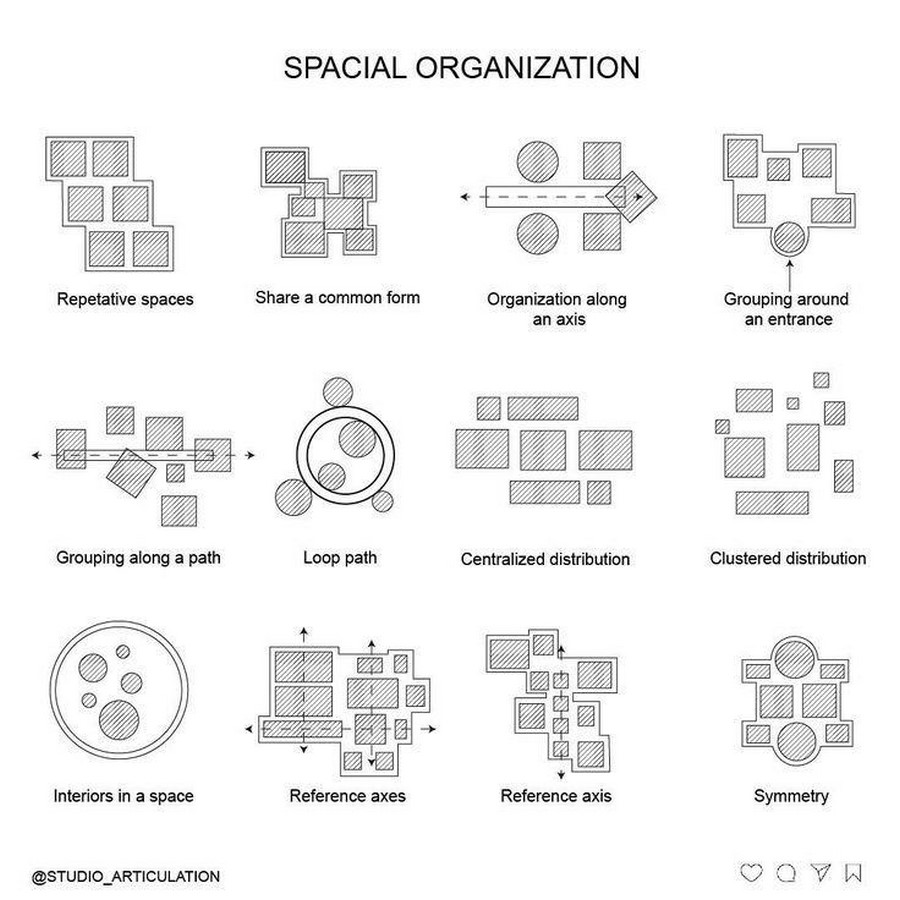
Good design doesn’t shout; it whispers. Its power lies in its ability to influence without being overt. Wayfinding is an excellent example of nonverbal design at work. When a person naturally finds their way through a building without asking for directions, that’s design communicating clearly. Good wayfinding systems, clear circulation paths, consistent signage, and visible landmarks reduce cognitive load. When the path is legible, people make faster and calmer decisions; when it’s confusing, they waste energy, get anxious, or avoid a space altogether. This impacts not just commuters’ comfort, but economics and social life: a shopping street that’s hard to navigate loses visitors; an office with a chaotic layout loses minutes of productivity and patience.
In Scandinavian design, simplicity and functionality go hand in hand, with minimal forms that enhance comfort without visual noise. In Japanese architecture, the concept of Ma (the space between) emphasizes balance and rhythm, reminding us that emptiness can be as meaningful as form. These traditions understand that the most successful spaces are those that anticipate human behavior and respond intuitively.
Cultural Layers and Social Context
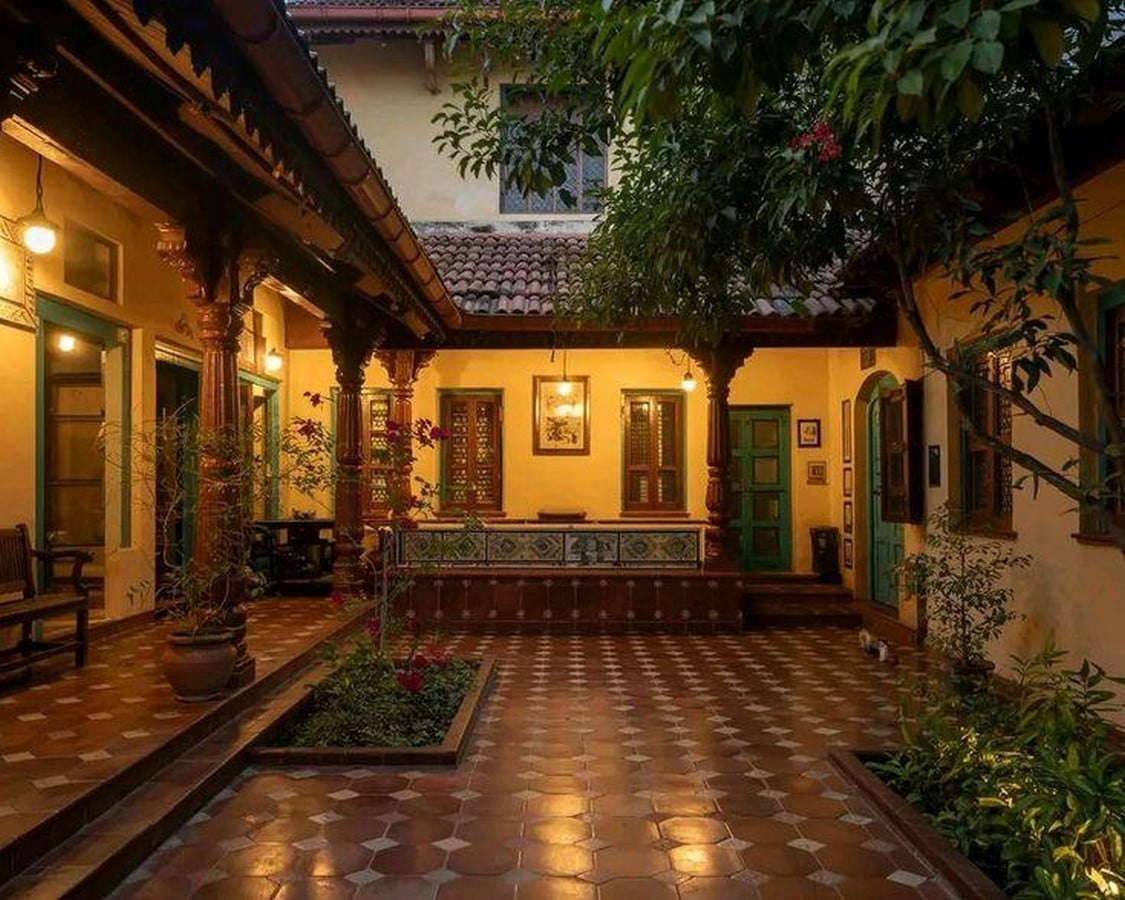
We also need to remember that space is cultural. What feels comforting in one context may feel alien in another. In Indian homes, the concept of threshold, the transitional space between inside and outside, holds symbolic importance, blurring public and private realms. In contrast, Western design often prioritizes clear separations between functions.
Behavior settings, the combination of physical space and the expected social action within it, program behavior. Designers can create places that feel intimate or communal by calibrating scale, thresholds, and visual privacy. People then make choices, where to meet friends, where to work, and how long to stay, guided by those nonverbal cues.
The Silent Architect of Choice
We rarely give credit to design for the choices it shapes. Yet, from how we queue at airports to how we connect in parks or shops, design remains the silent architect behind our behavior. Empathetic design acknowledges that spaces are extensions of our psychological landscape. They have the power to calm, inspire, energize, or alienate. Architects and designers, then, are creators of physical structures and facilitators of emotional and social well-being.
The next time you find yourself instinctively drawn to a cozy corner, following a particular path, or feeling unexpectedly calm in a certain space, pause and notice. That’s the unspoken language of design at work.