Over the last few decades, minimalist building design has achieved widespread acceptance, not just as an appearance, but as a philosophical, ecological, and experiential option. In this article, we examine simplicity with depth as the defining characteristic of excellent minimalist architecture. When we use the term “simplicity,” we are speaking about a clarity of form, minimising ornament, holding back on materials and structure; when we use the term “depth,” we mean richness in spatial experience, emotional depth, sensitivity to light, place, and culture.
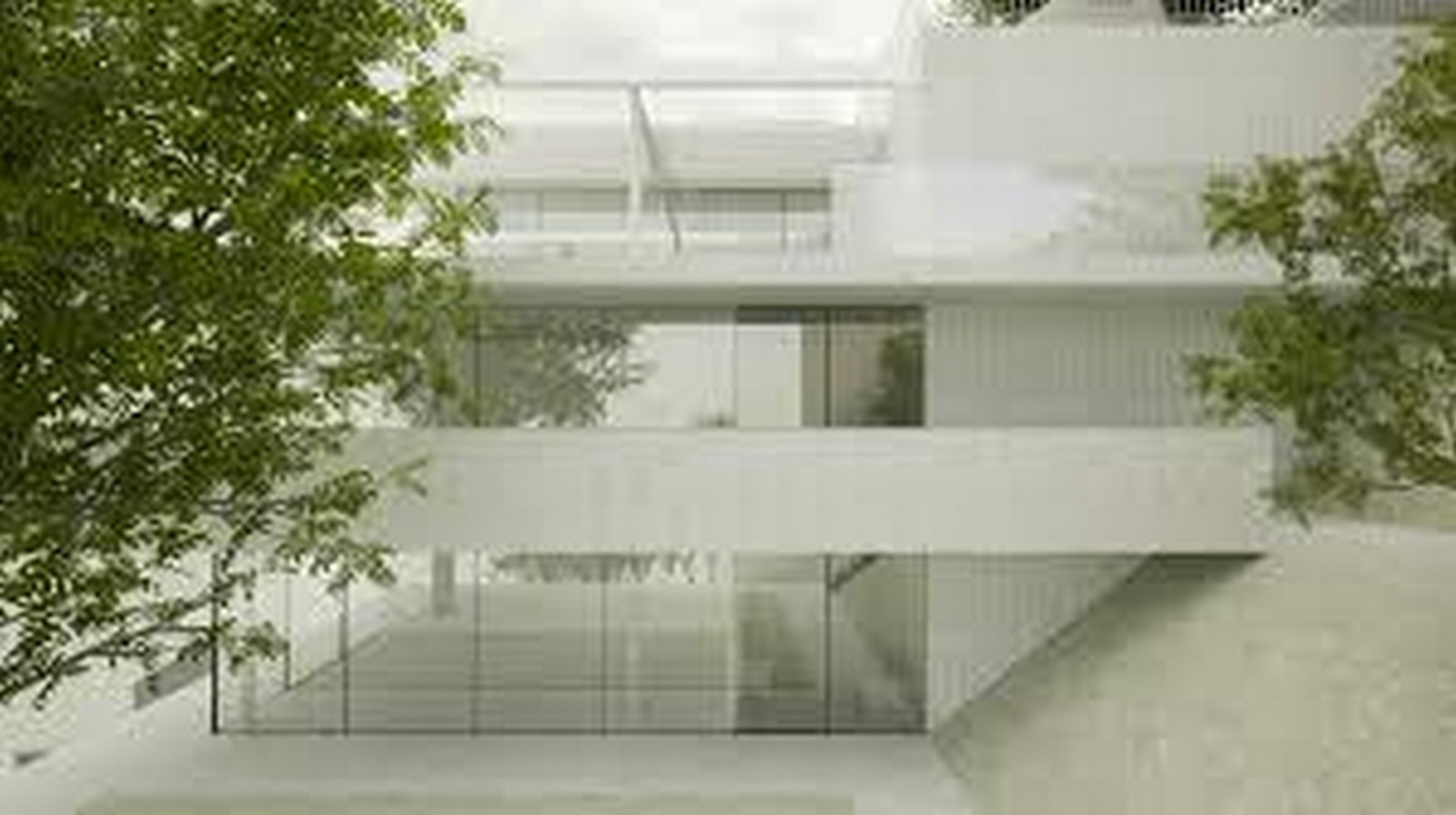
Minimalist architectural design (hereafter “minimalism”) is therefore more than merely minimalist forms. It is a strategy that, through negation, discloses presence—the presence of material, light, space, proportion, silence, and meaning. Just as certain musical compositions have few notes but much silence, minimalism employs few architectural elements to a deep effect.
To get to the bottom of this, we need to look at its origins—not just in the 20th‐century modernist movements but also at ancient philosophies and vernacular traditions. Only then can we view how this simplicity with depth is distilled into principles, how it overlaps with sustainability, where it has boundaries, and how current architects apply it.
- Philosophical and Cultural Foundations
- 2.1 “Less is More” and Modernism

The term “Less is more” is nearly a synonym for modernist architecture, and even more specifically, it is associated with Ludwig Mies van der Rohe. This summarises the concept that beauty and significance in architecture frequently come from elemental simplicity instead of adorning the building with something more. The modernist movement desired honesty in structure, in material, in shape, without ornamentation derived from earlier times. This heritage lends philosophical validity to minimalist architecture as well as functional simplicity.
A recent publication, Minimalism in Architecture: A Basis for Resource Conservation and Sustainable Development (Kamal & Nasir, 2022), reviews how the minimalism of contemporary architecture can be an alternative aesthetic that is also compatible with sustainable objectives. Likewise, Traditional Regionalism or Modern Minimalism? Cao et al. (2024) review how the life satisfaction of residents varies when housed in minimalist versus traditional design, referencing cultural and social aspects that are usually overlooked in strictly formalist discussions.
- 2.2 Eastern and Vernacular Traditions:
Whereas modernism made minimalism mainstream in the West, much of the Eastern tradition—particularly Zen Buddhism, Japanese architecture, and other vernacular philosophies—has long valued simplicity. Japanese architecture, for instance, often prioritises an economy of means: sliding panels, natural materials, voids and solids, and gardens as an extension of interior space. Not impoverishment, but clarity, is simplicity.
Islamic architecture also, in its early phases, tended to practice material honesty, geometric proportions, and decoration of the restrained, abstract kind. For all this, in Kamal & Nasir (2022), the authors actually discuss minimalism’s roots in Islamic architecture.
These traditions teach that simplicity is not minimal variation but a means of allowing deeper qualities to be revealed—light, shadow, proportion, pattern, sound, silence, the weather.
- 2.3 Culture, Place, Identity:
Minimalism doesn’t happen in a vacuum. Culture, climate, materials, social norms, and identity all influence its practice. For example, Cao et al. (2024) discovered that residents in traditional regional architectural styles of residence scored higher in belongingness, social identity, and life satisfaction compared to those in modern minimalist architecture. This begs some profound questions: how can minimalism be used so that it celebrates place and people instead of erasing them?

- Minimalist Architectural Design Core Principles
“Minimalist architecture finds harmony through simplicity through reducing design to its essentials and emphasises form, light, space, and materials.” (Jain, 2023) From this arises a series of closely connected principles that anchor simplicity with depth.
- 3.1 Form and Geometric Simplicity
Simple, typically orthogonal or clean geometry; no unnecessary curves or complicated shapes unless a compelling rationale exists.
Unifying shapes: volumes clearly defined; intersection clean; edges sharp.
Least structural complication — structure is part of the look.
- 3.2 Light and Shadow
Natural light: dominant feature. Big windows, controlled openings, skylights; shadows used to modulate and bring to life space over time.
Contrasts: light and shade, open and enclosed spaces.
Dynamic play, so that spaces are perceived as alive rather than static.
- 3.3 Material Honesty and Texture
Materials are used truthfully: one sees the grain of wood, the texture of concrete, the pattern of stone.
Finishes are often restrained: matte rather than glossy; subtle tones rather than vivid colours.
The choice of a small number of materials that harmonise rather than conflict.
- 3.4 Spatial Clarity and Proportion
Spaces often have a strong sense of order: alignment, repetition, scale.
Proportions drawn from human scale; height, width, volume calibrated to use and experience.
Transition spaces (thresholds, circulation) are treated with restraint.
- 3.5 Ornamentation Restraint
Ornament, if it exists, is subtle, concealed or integral to structure or material rather than applied.
Decoration is not redundant; each detail must earn its position.
Colour, if employed, is often colourless or restricted palette, accent rather than clash.
- Minimalism and Depth: Deeper than the Surface
Simplicity in architecture threatens superficiality unless depth is actively cultivated. Depth occurs through sensorial, temporal, contextual, and emotional dimensions.
- 4.1 Emotional Resonance and Sensory Experience
Spaces constructed minimally tend to prioritise more about what senses and what is sensed than what is viewed. Acoustics, quiet, textures beneath hand and foot, warmth or cold, odours (wood, wet stone), sense of space above—all create depth.
- 4.2 Atmosphere, Silence, Calm, Contemplation
Small spaces usually permit mental serenity. Through lessening visual noise, they provide mental space. Spaces that permit pausing, looking inward, breathing. Monastery architecture, pilgrimage architecture, meditation halls – there is a long history of minimalism in design for contemplation.
- 4.3 Functionality, Flexibility, Adaptability
Depth arises when a minimalist design responds to furniture that can move, spaces that can serve various functions, daylighting that evolves throughout the day, and passive thermal management. A deep minimalist design doesn’t dogmatically dictate but opens to inhabitation, use, and transformation over time.
- Minimalist Design and Sustainability
Part of why minimalism remains relevant is that it coincides with sustainable design strategies. Simplicity with depth can also equate sustainability with honesty.
- 5.1 Resource Conservation
Kamal & Nasir (2022) argue that minimalist architecture can significantly reduce material waste, energy use, overconsumption, and lifecycle environmental impacts. Using fewer materials, simpler forms, less ornamentation—and choosing materials with longer life or lower embodied energy—all contribute to resource conservation.
- 5.2 Passive Design and Environmental Performance
Most minimalist buildings utilize passive solar orientation, natural ventilation, daylighting, and thermal mass. Formal simplicity − fewer complexities in plan and envelopes generally benefits environmental performance and maintenance simplicity. Less complicated shapes have fewer thermal bridges, reduce surface area to volume, and thus can be more efficient in energy terms if properly designed.
- 5.3 Long‐Term Sustainability and Life Cycle Thinking
Minimalism promotes considering durability, reuse, flexibility, not fashion. For example, well‐executed finishes and construction detailing survive longer; flexibility in plan enables buildings to adjust to different uses; simplicity of structure might facilitate future renovation or retrofit. Moreover, minimalism resists short‐term fashions and therefore can prevent obsolescence.
- Tensions, Critiques and Limitations
Though the virtues of minimalism are numerous, some tensions and criticisms need to be dealt with to practice it sensitively.
- 6.1 Cultural Identity and Sense of Place
As mentioned, minimalism threatens to remove local culture or regional identity. Cao et al. (2024) discovered that conventional regional architecture was more likely to promote a feeling of belonging and satisfaction with life compared to modern minimalist styles in their population. Therefore, architects practising in multicultural environments must balance minimalism in such a way that it is compatible with local materials, customs, climate, and social habits.
- 6.2 Danger of Coldness, Austerity, Lack of Warmth
If minimalism is carried too far, rooms can become cold, uninviting, or oppressive. Lacking sensitivity to tactile surface, lighting, human scale, scents, and acoustics, minimal rooms can become too harsh.
- 6.3 Cost and Accessibility
And sometimes excellent craftsmanship, careful detailing, excellence of materials and finishes required to execute minimalism successfully are costly. And even minimalism is occasionally represented in luxury architecture, so there are questions about accessibility: can minimalism be affordable for normal housing, for lower-income situations?
- 6.4 Environmental Trade‐offs
Simpler does not necessarily mean sustainable. For instance, large areas of glazing, although visually light, can be energy-intensive. Material selection is important; high embodied-energy materials, or hard-to-maintain ones, can compromise environmental objectives. It’s not the minimalism itself, but the design choices within it that matter.
- Contemporary Examples & Case Studies
- 7.1 Architects and Designers Famous for Minimalism
John Pawson (British minimalism stalwart): his designs focus on purity, light, material honesty, and simplicity.
Other examples include Tadao Ando, Kazuyo Sejima, SANAA, Álvaro Siza, etc. (to be elaborated on if wanted).
- 7.2 Distinguished Projects
Though comprehensive case studies of specific projects are numerous, here are some representative kinds:
A chapel or religious structure in which light and proportion create a transcendent ambience.
A house or retreat in which the indoor-outdoor transition is fuzzy, materials weather naturally.
Public spaces whose simplicity enables individuals to concentrate on function, gathering, and experience in place of decoration.
(If you’d like, I can add photographs or detailed floor plans of case studies.)
- 7.3 Comparison: Minimalist vs Traditional / Regional
Cao et al. (2024) contrasted residents in modern minimalist versus traditional regional architecture in Huangshan City. Their data indicate that modern minimalist design may provide clarity and efficiency, but traditional regionalism is more likely to deliver a sense of belonging, social identity, and life satisfaction. This implies that minimalism must be balanced with cultural, social, and emotional considerations.
- Guidelines for Practising Minimalist Architectural Design
From theory and examples, some guidelines are evident.
- 8.1 Start with Purpose and Context
Know client requirements, way of life, culture, climate, and location.
Make major decisions first (orientation, topography, views, circulation) before detailing.
- 8.2 Cut back, but Intentionally
For every element: what is its purpose? What does it add up to? If it doesn’t add meaningfully, exclude.
Don’t do “just because it looks clean”—make simplicity meaningful.
- 8.3 Emphasise Transitions
Between interior and exterior, between light and dark, between public and private areas.
Thresholds (verandahs, entrances) can be spare but richly experienced.
- 8.4 Detail, Craftsmanship, Materiality
Joints, edges, and surfaces are important. Small perfection in material and finish adds depth.
Work with materials that age, that develop patina, that react to weather, and use.
- 8.5 Light, Acoustics, Sensory Elements
Natural light composition, views, and openings thoughtfully planned.
Acoustics: minimalist spaces tend to reflect sound; sometimes, there needs to be dampening.
Other senses: smell, touch, temperature.
- 8.6 Flexibility and Adaptability
Spaces that may evolve, simple but adaptable furniture.
Provide for changing uses, potential for expansion or reduction.
- 8.7 Sustainability and Performance
Orientation, sun path, wind, thermal mass, and insulation.
Material selection and systems with a low environmental footprint over the lifetime. Maintenance: simple yet high-quality, often less need for maintenance; provides for durability.
Minimalist building design—when applied with substances, not simply reduction or minimal decoration. It is a process of seeing, choosing, and forming space so that every line, every material, every void counts. Simplicity with substance produces architecture that’s soothing instead of frigid, significant instead of minimalist for the sake of minimalism.
In an environment-stricken world, overdevelopment, and sensory saturation, minimalism is not only a relief for the eyes but a moral and ecological guide. But it must be practised intelligently: sensitive to culture, climate, users, and materiality.
Going forward, research and practice might explore more deeply how minimalism can serve social housing, diverse climates, and collective needs; how minimalism can incorporate digital fabrication and new materials; how its emotional, psychological, and cultural dimensions can be integrated more holistically.
References:
Cao, Z., et al. (2024). Traditional Regionalism or Modern Minimalism? Unveiling relationships among architectural style, social identity, belongingness, and life satisfaction. Sustainability, 16(13), Article 5576.
Kamal, M. A., & Nasir, O. (2022). Minimalism in architecture: a basis for resource conservation and sustainable development. Facta Universitatis: Architecture and Civil Engineering, 20(3), 277–300.
Jain, V. K., et al. (2023). Goodbye materialism: exploring antecedents of minimalism. [Journal].
Idoko, I. E., Uzowulu, O. E., & Onuorah, I. M. (2024). Minimalist Architecture and the Concept of Less is More: The role of Hellenistic Cynicism in the architectural idea of Mies Van Der Rohe. International Journal of Research and Innovation in Social Science, 8(2), 211-224.
Masri, S. E. (2024, September 21). The timeless interplay between minimal and classic architecture. PA | Architecture & Technology. https://parametric-architecture.com/minimal-and-classic-architecture/
Neri, D. (2025, September 23). The essence of minimalism: refined simplicity. Barnebys.com. https://www.barnebys.com/blog/the-essence-of-minimalism-refined-simplicity
Ch, C. a. C. (2024, October 29). Minimalist architecture: the elegance of simplicity. https://www.linkedin.com/pulse/minimalist-architecture-elegance-simplicity-craft-and-concept-ch-zalxf/