In cities across the world, modernist public buildings from the post-war period stand in a strange kind of limbo. Once bold emblems of reconstruction, civic pride, and democratic promise, these structures are now often dismissed as outdated, ugly, or too expensive to maintain. In places like Berlin, Atlanta, and Rio de Janeiro, buildings that once defined their city’s aspirations now risk abandonment or demolition. But what if, instead of being erased, these “modern remainders” were reimagined? What if they were seen not as obsolete artefacts but as spatial opportunities, repositories of material, cultural, and social potential?
Post-war public architecture emerged from vastly different geopolitical contexts, but with a shared belief in architecture as a vehicle for the public good. Whether housing, universities, libraries, or health campuses, these buildings were experiments in a better future. Today, we face new urgencies: the climate crisis, housing affordability, and the erosion of public infrastructure. These buildings may hold overlooked answers if we know how to read them.
The Mäusebunker, Berlin, Germany
Tucked in Berlin’s Lichterfelde district, the Mäusebunker (1981) is a concrete beast. Officially known as the Central Animal Laboratories of the Freie Universität, it was designed by Gerd Hänska to house vivisection laboratories and animal testing units. Its function makes it ethically fraught; its form makes it unforgettable. Sloped concrete walls, steel ventilation pipes jutting out like artillery, and an uncompromising mass that has earned it cult architectural status.
For decades, the building was hidden in plain sight. In 2020, demolition was proposed. But a public outcry led by architects, historians, and cultural institutions reframed the building as a piece of architectural heritage. Activists argued not for freezing it in time, but for adaptive reuse. Could it become a centre for climate research, creative industries, or housing? What emerged was a debate about the legacy of brutalism, the meaning of public memory, and the possibility of transformation.
The Mäusebunker challenges us to confront our discomfort. Its re-use would not only be an act of sustainability (reusing concrete is one of the most effective ways to reduce embodied energy) but also a cultural statement that buildings deserve a second life even when their past is problematic. In this, it becomes a powerful symbol of regenerative practice.
König Galerie, St. Agnes Church, Berlin
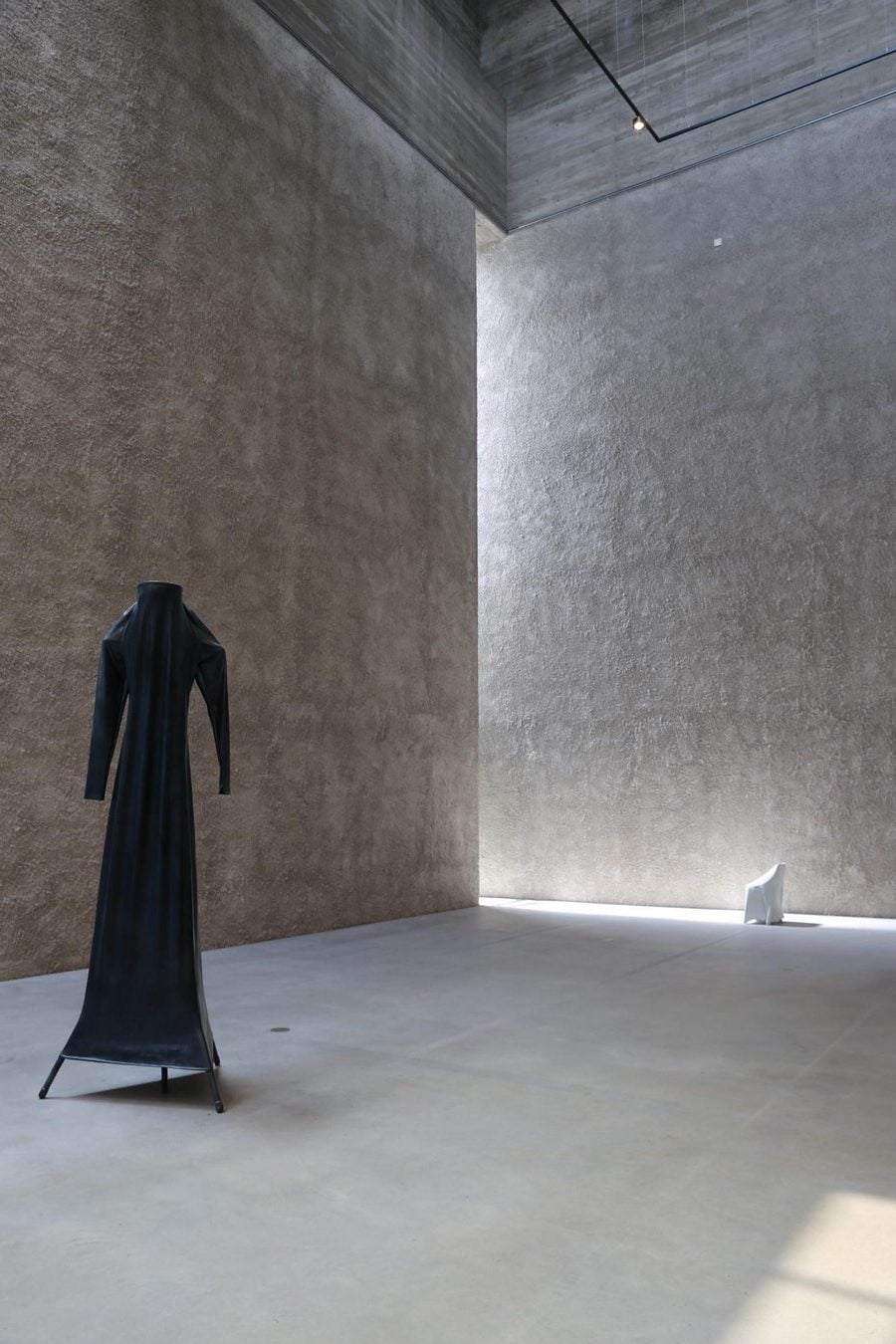
Another Berlin example demonstrates what this future could look like. The König Galerie has been located since 2015 in St. Agnes, a former Roman Catholic church designed by Werner Düttmann in the brutalist style of the 1960s. Rather than demolishing the building when it fell out of religious use, it was transformed into a contemporary art gallery. Its austere concrete shell now houses exhibitions that draw Berliners and international visitors alike, proving that modernist buildings can be reactivated through cultural programming without losing their architectural integrity.
The adaptive reuse of St. Agnes is elegant in its restraint. The building has not been stripped or prettified. Its spatial drama, raw materials, and monolithic geometry remain. What has changed is its purpose, from a sanctuary of faith to a sanctuary of contemporary expression. This case shows how buildings that once served collective needs can do so again, even in altered social conditions.

The Atlanta Central Library, USA
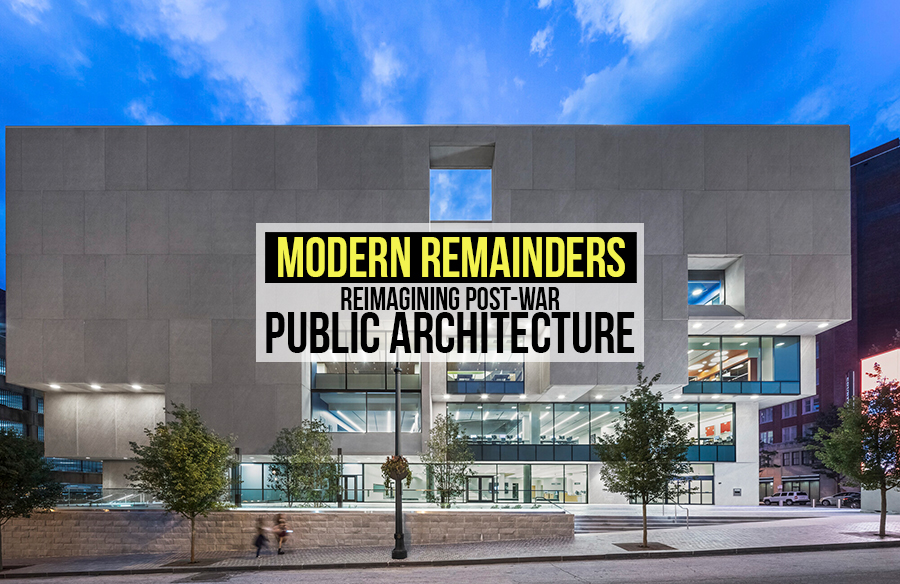
Completed in 1980, the Atlanta Central Library was one of Marcel Breuer’s final works. A striking brutalist volume in downtown Atlanta, it served as the city’s main public library for decades. With heavy concrete massing and deeply recessed windows, it prioritised protection from Georgia’s heat and urban noise, while creating moments of solemn interior grandeur.
Despite its pedigree, the library fell into disrepair. In 2016, a proposal emerged to demolish it, citing functionality and accessibility issues. Again, the public resisted. Architects and community groups lobbied to preserve Breuer’s vision, and in 2018, a major renovation was approved. The redesign respected the building’s integrity while updating it for 21st-century needs.
The story of Atlanta’s library illustrates a broader lesson: maintenance is not preservation. To care for modernist public buildings requires more than sentimentality; it demands a design mindset that honours the past while preparing for the future. In this case, a landmark was not just saved but evolved.
Pedregulho Housing Complex, Rio de Janeiro, Brazil
Designed by Affonso Eduardo Reidy between 1947 and 1952, the Pedregulho Housing Complex is a masterpiece of socially ambitious modernism. Built for public servants in a hilly part of Rio, it includes residential blocks, schools, shops, and community facilities. The serpentine curve of the main building, lifted on pilotis, speaks to the optimism of mid-century Brazil, a belief in architecture’s capacity to shape social cohesion.
But like many public housing projects worldwide, Pedregulho has suffered from neglect. Maintenance has been patchy. Some units are crumbling. Yet it remains inhabited, and recent restoration efforts have sparked renewed interest in its potential.
Pedregulho is not a ruin. It is a lived-in, complex urban fragment that resists simple narratives of success or failure. Its continued existence points to the durability of good design and to the failures of governance and maintenance that undermine it. What it needs is not erasure but reinvestment.
Rethinking Value and Heritage
What links these buildings is not a common aesthetic, but a shared condition: they are public, modern, and vulnerable. Their future is uncertain not because they lack merit, but because the systems around them, funding, planning, and public opinion, have shifted. In an era where carbon budgets matter and land is increasingly commodified, we must ask: can we afford to keep demolishing buildings with decades, if not centuries, of potential life left?
Reimagining post-war public architecture is not about nostalgia. It is about acknowledging the embedded energy, spatial intelligence, and civic imagination already present in these structures. It is about learning to see value not just in stylistic trends, but in social histories, material robustness, and capacity for reuse.
As architects and citizens, we face a choice. We can treat these buildings as burdens or see them as invitations to innovate. The Mäusebunker, St. Agnes, Atlanta Library, and Pedregulho remind us that architecture is never finished. It continues to speak, if we choose to listen.