Cultural heritage, recognised as a crucial storage of human history and civilisation, holds immense academic value and profound cultural significance. The protection and transmission of cultural heritage are essential for maintaining cultural diversity, fostering international cultural exchange, and promoting economic development. Architecture in terms of cultural heritage communicates the identity and values of our society. There are various forms and styles of built environments in shaping the cultural identity. This helps the generations to connect with the forefathers and help them continue the legacy for the future. The materials, design and construction techniques used tie culture and heritage together and provide it a sense of identity.
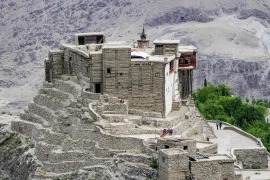
Preserving our heritage buildings tributes to our ancestors and educates our present and future generations about the cultural and traditional values. It helps us gain a clear understanding of cultural identity, which reflects a tangible connection with the community. The havelis of India are built around a central courtyard with a typical layout, which shows the importance of family and communities. The design, materials and decorative elements used convey the characteristics and reflect cultural beliefs. The core component of cultural heritage—its value—offers individuals a sense of identity, facilitates the transmission of historical and cultural knowledge, and fosters the sustainable development of both society and the economy.

Redefining Cultural Identity through Architecture
Cultural identity shapes a community’s values and traditions, which provide insight into their lifestyle and relationship with the built environment. It is seen visually in architectural structures in the form of materials, functions, ideology, and design. The built structures like temples, public spaces and residences show the religious beliefs and social hierarchy of culture. The temples of South India have intricate stone carvings filled with traditional stories which reflect their cultural values. Cultural identity is visible in space planning and used by people in their regular lifestyle, supporting open floor plans. Many challenges are faced by cultural identity due to constant globalisation and urbanisation, which have led to depletion of our cultural roots. A lot of architects used local materials, traditional techniques and climate-responsive designs to include cultural identity. This step helps preserve our heritage buildings and cultural expressions through architecture to sustain the identity of our culture.

Identifying Geographical Adaptations
Geographical Adaptations features local climate, geography, and culture with relation to the communities. A lot of old structures reflected cultural values and lifestyle to meet the needs of people and local climate. Heritage community links local craftsmanship with the craft, providing the artisans with employment. The cultural customs and social standards of people reflected faith and unity, which influenced regional architecture. The approach to balance traditional values with modern needs maintains sustainability. The sustainable development of cultural heritage depends on evidence-based decision-making and management systems, with the central focus of these systems being the comprehensive and scientific evaluation of cultural heritage value.
Heritage Architecture in Modern Society
Historical importance preserves architectural legacy and encourages tourism and cultural exchange, which shapes the aesthetic and cultural richness of the environment. It serves as a continuity to our culture and connects the past with the present generations. A lot of initiatives are being made to conserve and preserve these structures to maintain their integrity and authenticity. Strategies such as restoration, adaptive reuse and maintenance safeguard and encourage sustainable development. The Taj Mahal in India is a detailed marble structure that requires regular maintenance and structural integrity. This helps the modern society connect with the beauty of the Taj as it holds immense cultural significance for India.

Economic Benefits and Challenges
There are various economic benefits to preserving structures, such as attracting a lot of tourists, boosting revenue and providing employment to the locals. There are also many opportunities that strengthen cultural heritage, which encourages trade and property values. Challenges like funding and environmental concerns require participation between government and communities. This ensures long-term sustainability that depends on evidence-based decision-making and management systems, with the central focus of these systems being the comprehensive and scientific evaluation of cultural heritage value. The ancient city of Machu Picchu has been preserved with the aid of a legal framework and as a cultural wonder. A lot of efforts were made to preserve the ancient citadel structure and its natural environment. The impact of tourism and local climate changed due to numerous challenges faced during restoration.
Heritage architecture serves as a reflection of our culture to help us identify our rich history. It holds a lot of stories beneath it and decodes its identity in forms, materials, layouts and symbols. It helps identify the in-depth insight of people and their culture in the form of a visual representation. Our origins, identity and historical development reflect and maintain heritage structures. This leads to our cultural responsibility, whose legacy should live on and helps understand, interpret and conserve the cultural heritage.

Citations:
- Decoding Cultural Identity Through Heritage Architecture (2025) Kaarwan. Available at: https://www.kaarwan.com/blog/architecture/decoding-cultural-identity-through-heritage-architecture?id=665(Accessed: 20 July 2025).
- Decoding Cultural Heritage Values: A Deep Learning Framework for Recognition and Weighted Evaluation (2025) ResearchGate. Available at: https://www.researchgate.net/publication/391520812_Decoding_Cultural_Heritage_Values_A_Deep_Learning_Framework_for_Recognition_and_Weighted_Evaluation(Accessed: 20 July 2025).
- Decoding Architectural Heritage A Formal (2022) Scribd. Available at: https://www.scribd.com/document/555519572/Decoding-Architectural-Heritage-A-Formal(Accessed: 20 July 2025).