Adaptive reuse in architecture refers to the reuse and repurposing of abandoned buildings into functional ones. This keeps the heritage layer of the building intact whilst embracing minimal resource wastage. Beyond this typical discourse of permanent transformation, there exists a lesser-known sub-narrative called “temporary adaptive reuse”. This form of adaptive reuse centres around the impermanence and is primarily seen in set design, temporary exhibits, and pop-up installations. Here, forgotten spaces act as a powerful means of storytelling.
Temporary Adaptive Reuse in Set Design
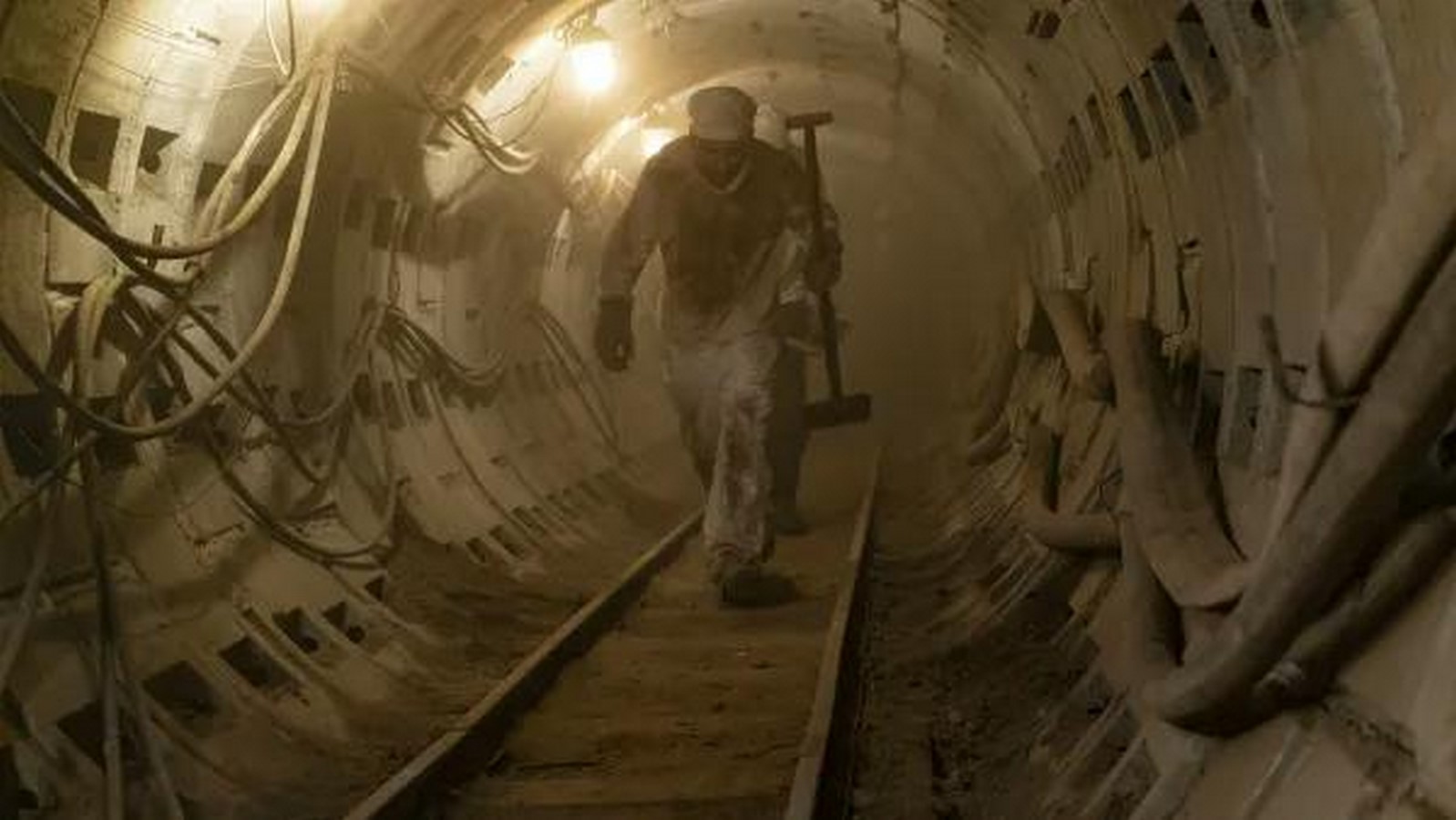
HBO’s Chernobyl: Realism, Authenticity and the Adaptive Reuse of a Decommissioned Power Plant and an Abandoned Film Studio.
The production designer of HBO’s Chernobyl, Luke Hull, was given the task of crafting an environment that represented more than the catastrophe itself; it was to build a set that resonated with the human condition post-disaster and evoked a deep kind of unsettlement in the viewers. It was to immerse the audience in an atmosphere of trauma, and he knew that the sets had to be recreated with meticulous detail to achieve this.
The team chose the decommissioned Ignalina Nuclear Power Plant, Lithuania, as the site. It had an RMBK Reactor, and the whole plant was a network of concrete corridors and stairwells, which gave it a brutalist, labyrinth-like appearance and made it a powerful replacement for the Chernobyl plant. To add to that, the scale of the plant was also similar to the original one, which made for an accurate spatial experience.
Near the plant, the team found an incomplete, abandoned studio. It clicked for them, since the shape of the studio resembled that of destroyed Reactor No. 4 of the Chernobyl plant. They took that “shell” and transformed it spatially with relevant textures and details to be the set for the reactor. Adjacent to this reactor was supposed to be a pump room. It was created by cladding the exterior of the studio in a way that resembles the destroyed pump room. A temporary back lot was built where more sets for the destroyed part of the power plant and the mine were put together.
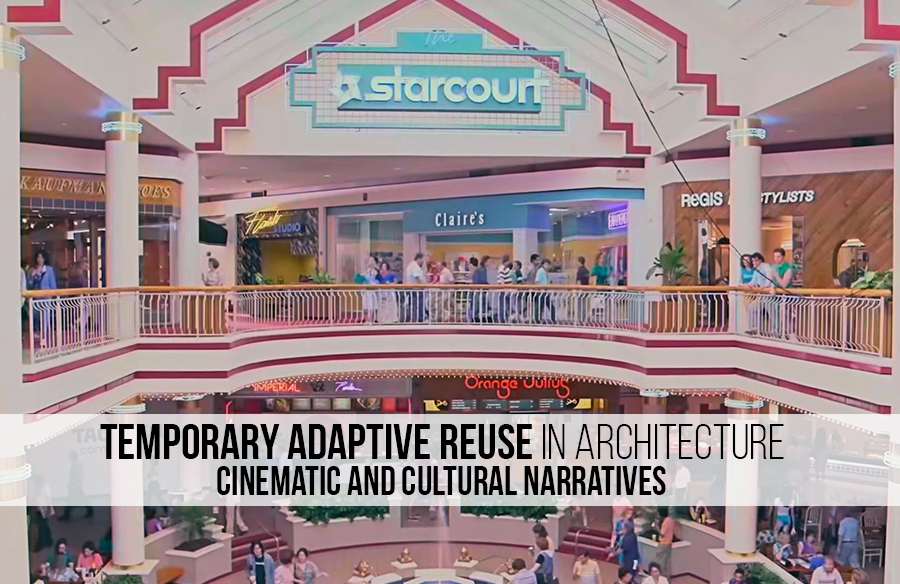
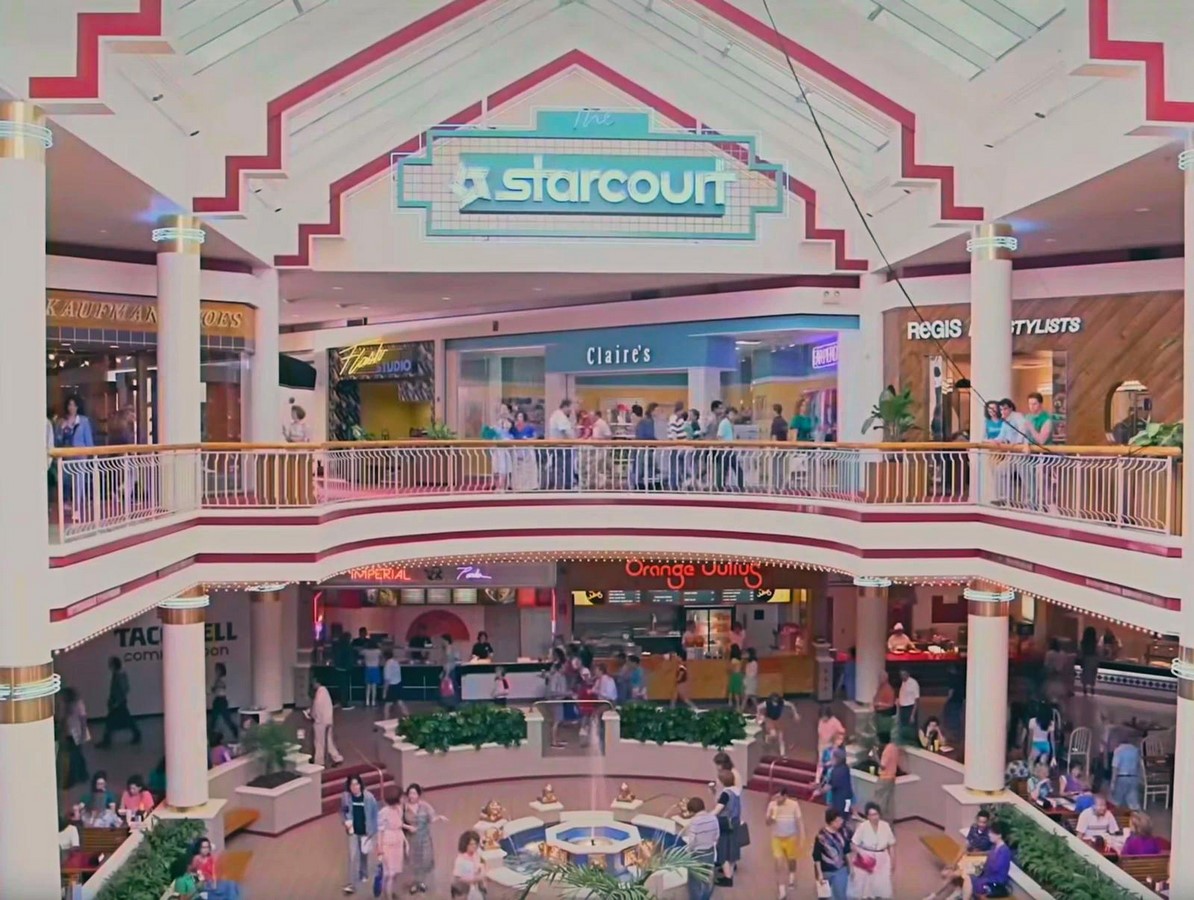
Stranger Things’ Star Court Mall: A Tribute to 80s Consumerism and the Temporary Adaptive Reuse of a Georgia Mall with the Same Fate.
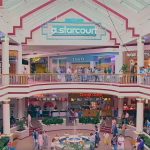
Netflix’s Stranger Things is set in the 1980s in Hawkins, Indiana. Apart from the main plot line, a major theme is the nostalgia of 80s American suburban life. In season 3 of the show, a mall called the Starcourt Mall is built in the Hawkins area, which is shown as the cause of the deterioration of local businesses in the town. This mall was set in Georgia’s Gwinnett Place Mall, which was described by the actors and producers as “a little haunted” or “sad and abandoned”, and so it fit the language of the show, which in itself is eerie. This mall was built in 1984 and is an embodiment of the American consumer architecture, with a two-storeyed atrium, valued ceilings, mosaic tiles, indoor greenery, multiple congregational spaces, and skylights. The central courtyard of this mall became the primary area of interest and the shooting. Over forty storefronts were created with 80s branding, and shops were stocked, some like the Scoops Ahoy store, Radio Shack, etc, were created from scratch to fit into the show. The neon signboards, photobooths, were an ode to the retro suburban charm of the mall culture. These sets were created after deep research, but were mainly built upon the collective memory of the designers and the team involved. The sets were dismantled as soon as the shooting was over, and the mall went dormant again. This was a great financial decision as the cost of building a set from scratch was monumentally cut; moreover, this decision increased the authenticity and legitimacy of the show.
Cultural and Emotional Aspects of Temporary Adaptive Reuse of Spaces for Cinema
Temporary adaptive reuse in movie sets is not just seen from an economic perspective, but also to recreate the emotions connected with a specific era or moment in time. Like the Chernobyl sets, try to capture the human distress post-disaster, and the growth and decline of the Starcourt Mall in the Stranger Things universe tries to replicate the real-life implications of the growth of capitalism and the decline of mall culture, as seen by the Gwinnett Mall. These projects take advantage of the pre-existing materiality of structures and use it as a means of emotional and spatial storytelling.
Beyond the Screen: Temporary Adaptive Reuse for Installations and Exhibits
The temporary reuse of structures is not just limited to cinema; it extends to exhibits, installations, performance arts, shelters, pop-up stores, festivals, etc.
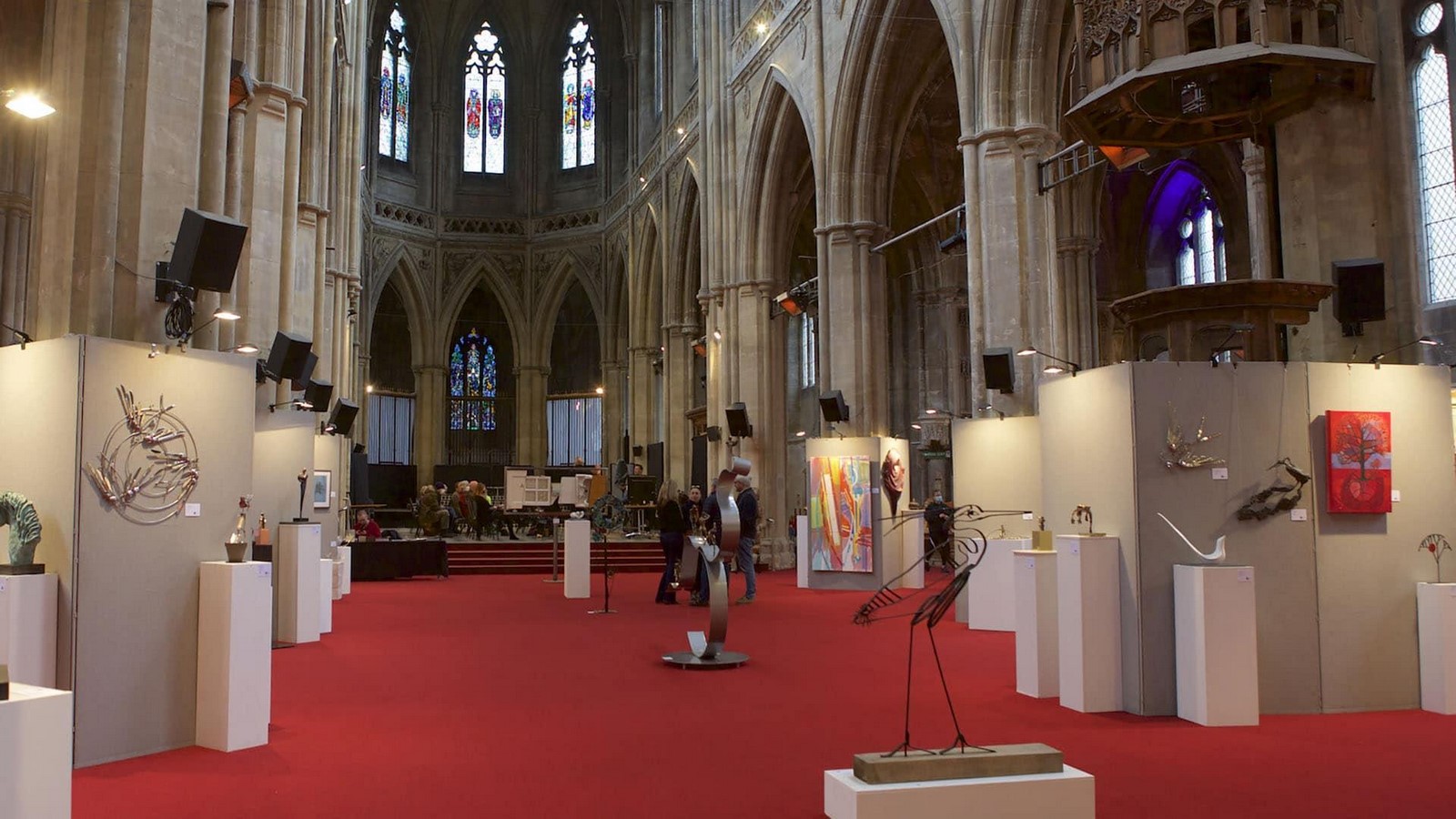
St. Albans Church, England
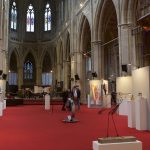
St. Albans Church, England, a French Gothic church, was closed in 1977 and remained abandoned for several years until a Norwegian pop band called A-ha rediscovered it to shoot a music video for their song here. Later, it was acquired by an independent charity called Landmark Arts Centre. Its French Gothic architecture with soaring vaults, pointed arches, and stained-glass windows gives it a historic look and qualities like great acoustics. It is now used as a venue for concerts, exhibitions, festivals, conferences, workshops, and is available temporarily to conduct events.
Tempelhof airport, Berlin
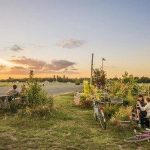
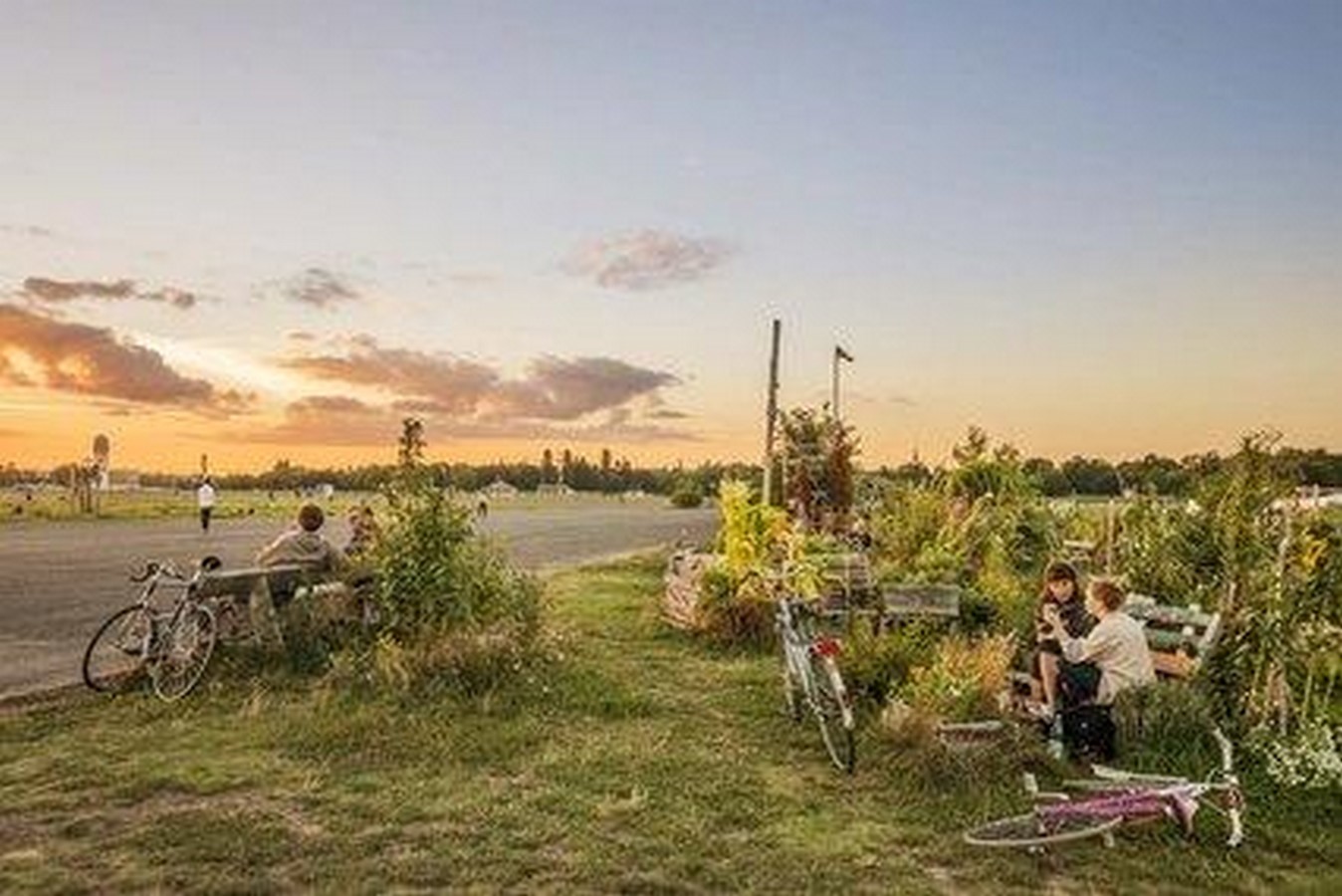
Similarly, the Tempelhof airport, Berlin, was a monumental airport made in the early 20th Century. It was a focal point during the Nazi Rule, the Cold War and multiple such historically important events, but was closed off in 2008. Now, its vast hangars host trade fairs and local cultural festivals. It was also converted into a large public park. This intervention saved the architectural identity of the place and also gave it a new life.
!OM, Copenhagen
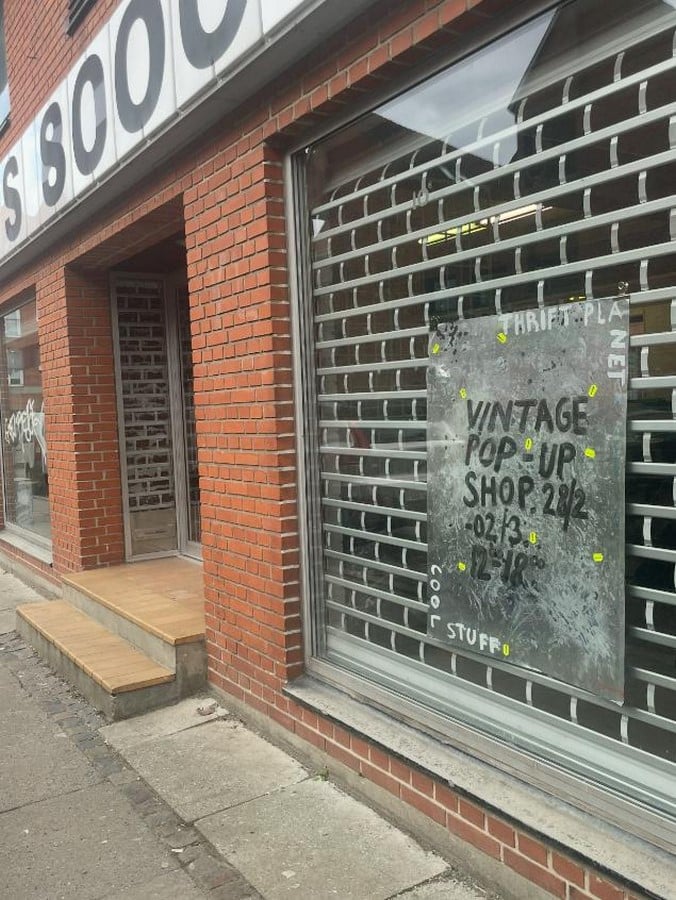
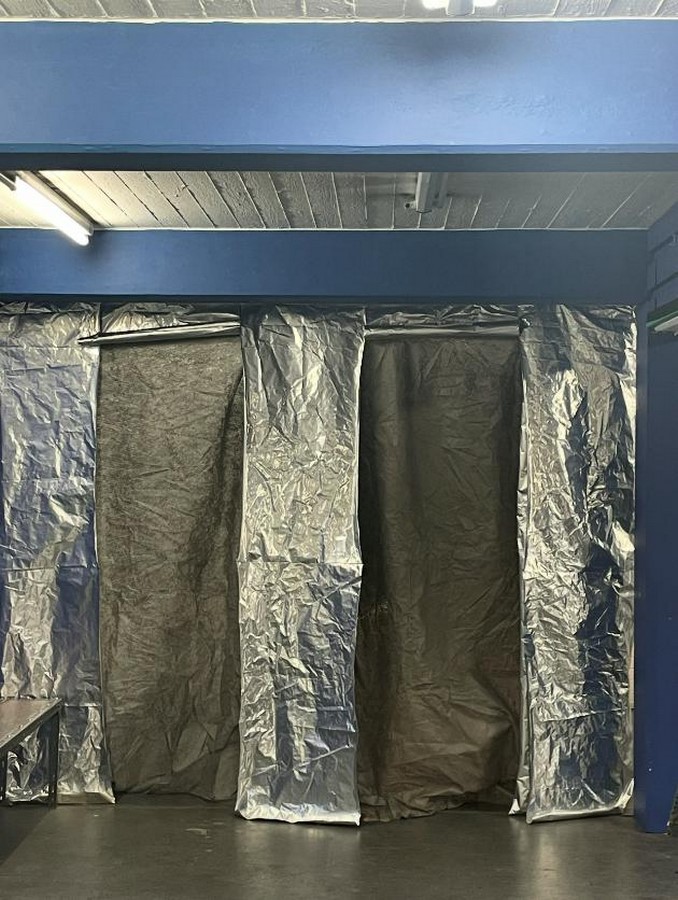
In 2022, a company called ‘iovermorgen’ was started by Anne Bea and Stine Dines. They use a former scooter shop to display various exhibits. A famous example is when they collaborated with Thrift Planet and transformed the shop into an exhibit using objects they found in the store and redesigned some furniture to create a pop-up exhibit, which doubles as a store. These low-cost interventions point to a bigger picture of sustainability and more socially engaging spaces.
Temporary adaptive reuse challenges the idea that in order to be meaningful, the reuse must be long-term. It increases the scope and flexibility of adaptive reuse of structures, and in turn promotes sustainability. The reuse of historically relevant buildings is modern-day conservation, especially given the challenge of space. These buildings, alongside being just reminders of history, are also given a new life and evolve in a way of their own, while a piece of them stays in the past.
Citations:
- Franklin, Sydney. “For Season Three of Stranger Things, They Built an Entire Mall.” The Architect’s Newspaper, 15 July 2019, www.archpaper.com/2019/07/for-season-three-of-stranger-things-they-built-an-entire-mall/.
- Grobar, Matt. “How Chernobyl” Production Designer Recreated Nuclear Power Plant.” Deadline, 27 Aug. 2019, deadline.com/2019/08/chernobyl-production-designer-luke-hull-untitled-game-of-thrones-prequel-emmys-hbo-interview-1202660911/.
- “Landmark Arts Centre – Art Exhibitions, Workshops and Live Events – Teddington, SW London.” Landmark Arts Centre, 14 July 2025, www.landmarkartscentre.org/.
- O’Neal, Sean. “Stranger Things 3 Offers an Unexpected Requiem for the American Shopping Mall.” Vulture, 15 July 2019, www.vulture.com/2019/07/stranger-things-3-starcourt-mall-set-nostalgia.html.
- “Tempelhof Airport.” Www.visitberlin.de, www.visitberlin.de/en/flughafen-tempelhof-tempelhof-airport.
- “Thrift Planet X Iovermorgen — Iovermorgen.” Iovermorgen.dk, 2023, iovermorgen.dk/Thrift-Planet-x-iovermorgen.
- Wikipedia Contributors. “St. Alban’s Church.” Wikipedia, Wikimedia Foundation, 23 Mar. 2025.