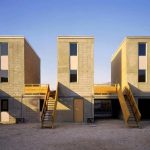
In the realm of architecture, the term “iconic” often conjures images of grand edifices commissioned by affluent patrons or governing bodies. However, the Quinta Monroy Housing Project in Iquique, Chile, challenges this notion by demonstrating that architectural significance can emerge from addressing the needs of everyday people. Designed by Alejandro Aravena and his firm ELEMENTAL, this project exemplifies how innovative design can foster social equity and sustainability, earning its place among the world’s iconic buildings.

Context and Challenges
Located in the heart of Iquique, a city in northern Chile, the Quinta Monroy site was home to 100 families who had informally occupied the land for over three decades. When the landowner passed away in 2000, the residents faced eviction due to the land’s escalating value. The Chilean government intervened, commissioning ELEMENTAL to develop a housing solution that would allow the families to remain on-site. The challenge was formidable: a limited budget of $7,500 per family, which had to cover land acquisition, infrastructure, and construction costs.
Innovative Design Approach
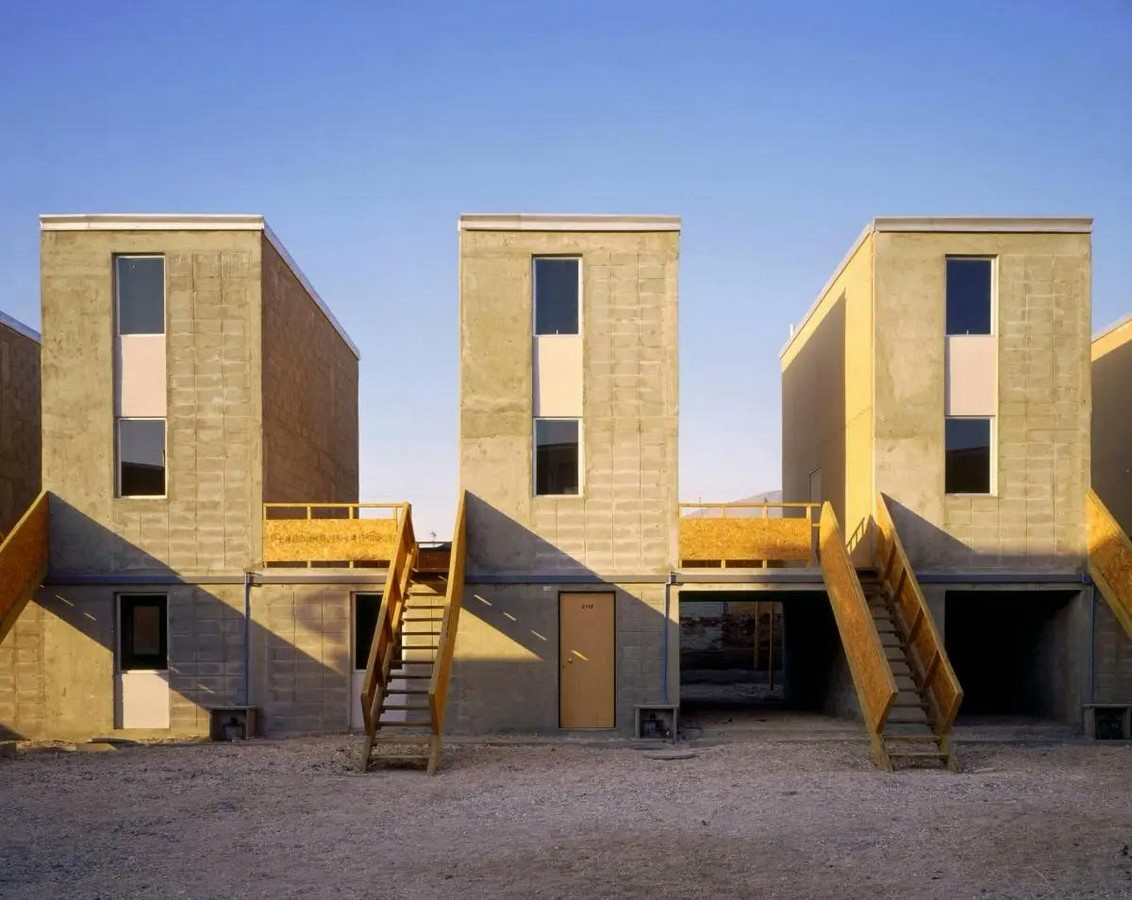
Confronted with financial constraints, ELEMENTAL adopted an “incremental housing” strategy. Instead of constructing complete homes, they provided each family with a “half-house”—a fully functional, structurally sound unit equipped with essential amenities like kitchens, bathrooms, and staircases. The design intentionally left space for future expansions, enabling residents to personalise and enlarge their homes as resources allowed.
This approach not only maximised the utility of the limited budget but also empowered residents to take ownership of their living spaces. By facilitating self-construction and customisation, the project fostered a sense of community and individual agency.
Sustainability and Social Impact
The decision to retain the families within the city’s core, rather than relocating them to peripheral areas, preserved their social networks and access to employment opportunities. This urban integration is a critical aspect of sustainable development, as it reduces commuting distances and promotes social cohesion.
Moreover, the incremental housing model proved economically beneficial. Within a year of completion, property values tripled, yet residents chose to stay and continue improving their homes. This outcome underscores the project’s success in creating not just housing, but lasting value for its inhabitants.

Architectural Significance
Quinta Monroy’s architectural significance lies in its departure from traditional social housing paradigms. By embracing flexibility and resident participation, it challenges the notion that low-cost housing must be uniform and static. The project’s adaptability has inspired similar initiatives worldwide, influencing contemporary discussions on affordable housing and urban development.
In recognition of his innovative work, Alejandro Aravena was awarded the Pritzker Architecture Prize in 2016. Quinta Monroy stands as a testament to how thoughtful design can address complex social issues, redefining what it means for a building to be iconic.
Quinta Monroy exemplifies how architecture can transcend aesthetics to become a catalyst for social change. By prioritising community needs and embracing innovative design strategies, it challenges conventional definitions of iconic buildings. This project serves as a powerful reminder that architecture’s true legacy lies not in monumental structures but in its capacity to improve lives and foster inclusive communities.